A synaptic locus of song learning
Learning by imitation is the foundation for verbal and musical expression, but its underlying neural basis remains obscure. A juvenile male zebra finch imitates the multisyllabic song of an adult tutor in a process that depends on a song-specialized cortico-basal ganglia circuit, affording a powerful system to identify the synaptic substrates of imitative motor learning. Plasticity at a particular set of cortico-basal ganglia synapses is hypothesized to drive rapid learning-related changes in song before these changes are subsequently consolidated in downstream circuits. Nevertheless, this hypothesis is untested and the synaptic locus where learning initially occurs is unknown. By combining a computational framework to quantify song learning with synapse-specific optogenetic and chemogenetic manipulations within and directly downstream of the cortico-basal ganglia circuit, we identified the specific cortico-basal ganglia synapses that drive the acquisition and expression of rapid vocal changes during juvenile song learning and characterized the hours-long timescale over which these changes consolidate. Furthermore, transiently augmenting postsynaptic activity in the basal ganglia briefly accelerates learning rates and persistently alters song, demonstrating a direct link between basal ganglia activity and rapid learning. These results localize the specific cortico-basal ganglia synapses that enable a juvenile songbird to learn to sing and reveal the circuit logic and behavioral timescales of this imitative learning paradigm. ### Competing Interest Statement The authors have declared no competing interest. National Institutes of Health, K99 NS144525 (DCS), F32 MH132152 (DCS), F31 HD098772 (SB), R01 NS099288 (RM), RF1 NS118424 (RM and JP)
Where does learning through imitation happen in the brain?
In juvenile zebra finches, we pinpoint a synaptic locus of song learning in a cortico-basal ganglia circuit and leverage this localization to measure the timescale of consolidation and make birds learn faster! #neuroskyence (1/14)
21.01.2026 16:39 — 👍 71 🔁 26 💬 5 📌 7

Ontogeny of the spinal cord dorsal horn
The dorsal horn of the mammalian spinal cord is organized into laminae where each layer is populated by different neuron types, has distinctive circuit connections, and plays specialized roles in beha...
Excited to share @rbrianroome.bsky.social ‘s beautiful paper on development of the dorsal horn of the mouse spinal cord @science.org
This is how the anatomical organization and cell types that process pain, touch, body position and more are laid down.
www.science.org/doi/10.1126/...
08.01.2026 19:59 — 👍 132 🔁 41 💬 10 📌 2
Congratulations, Ariel! It looks great.
13.01.2026 15:15 — 👍 1 🔁 0 💬 1 📌 0
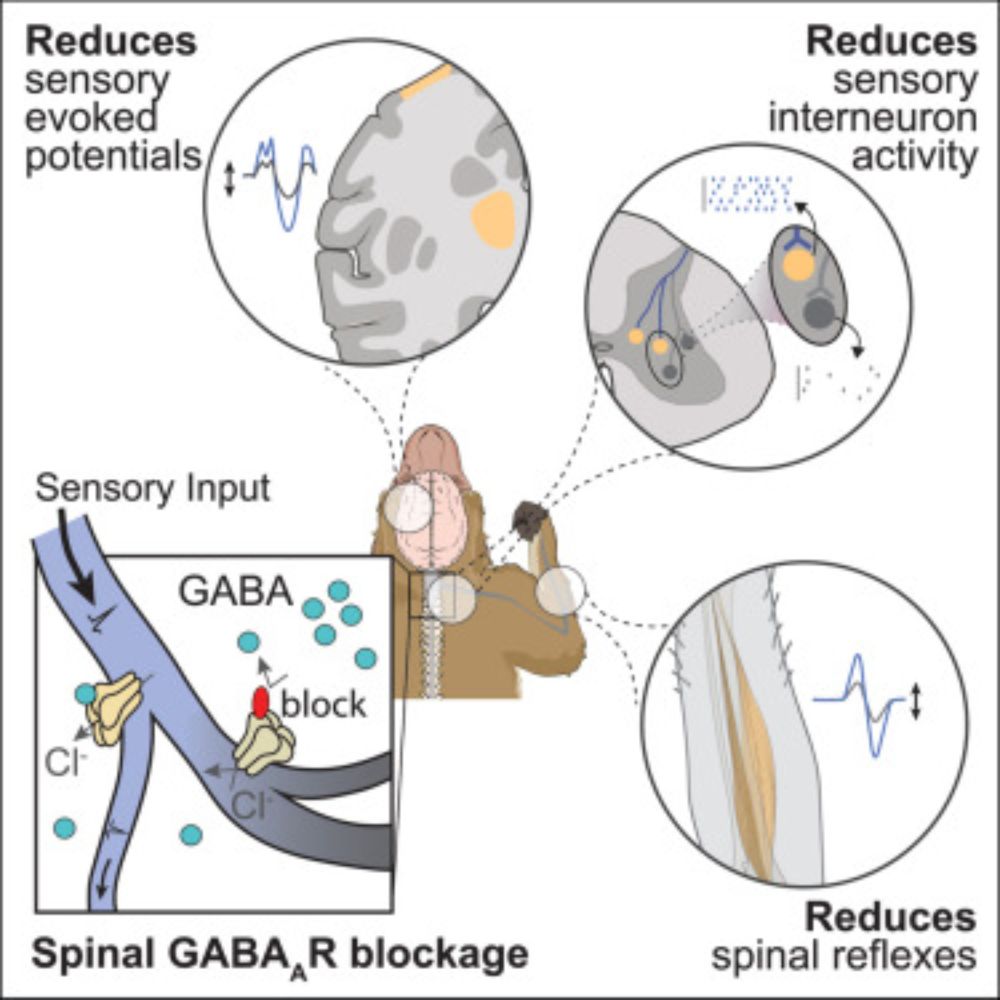
Now out in @nature.com: Our study discovering a neural circuit in Drosophila that predictively inhibits proprioceptor axons during voluntary leg movements, such as walking and grooming. www.nature.com/articles/s41...
17.09.2025 15:14 — 👍 72 🔁 30 💬 4 📌 2
We are hiring a new research assistant! Official job post to follow. Please reach out or visit markrossilab.org if you are interested.
16.06.2025 15:56 — 👍 3 🔁 3 💬 0 📌 1
😱
21.05.2025 19:34 — 👍 0 🔁 0 💬 0 📌 0
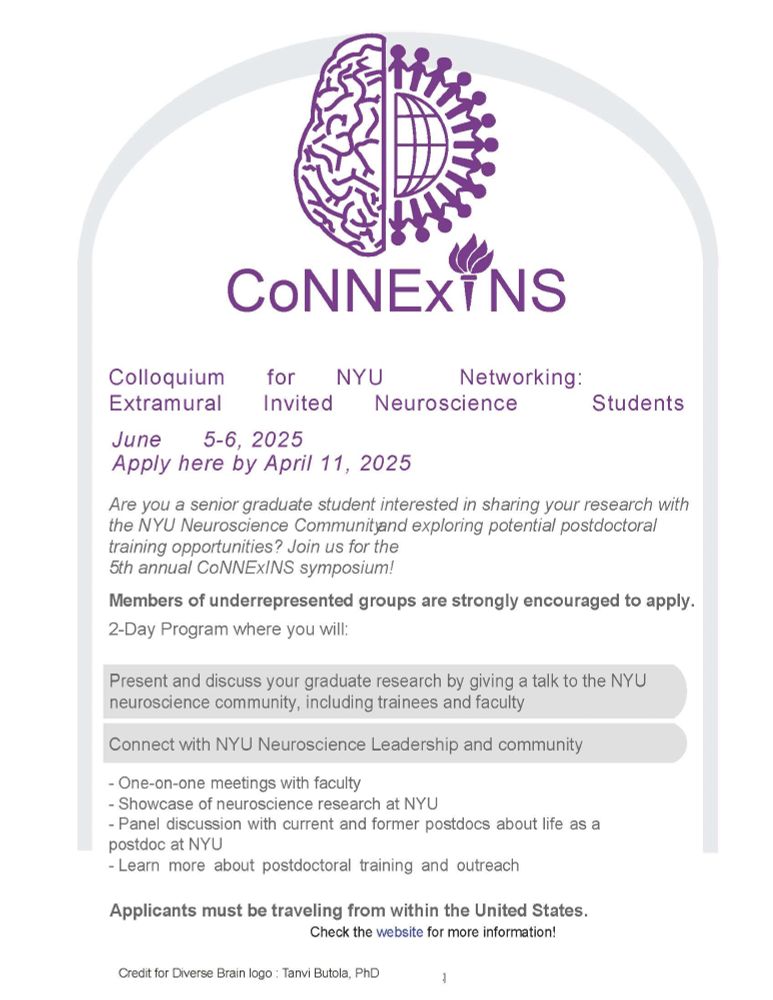
📣📣📣 This is a call for PhD students in neuroscience!
✅ Are you a senior PhD student in neuroscience? 🧠
✅ Looking for career development opportunities?💼
✅ Want to visit NYC in spring?🗽
✅ Considering a postdoc at NYU? 🥼
✅Apply for CoNNExINS!
wp.nyu.edu/connexins/
Deadline extended to April 11th!
31.03.2025 18:27 — 👍 4 🔁 7 💬 0 📌 1
And science continues… check out our new work led by @rbrianroome.bsky.social
16.03.2025 15:01 — 👍 18 🔁 6 💬 4 📌 0
Same here. I've been pushing hard the past 6 months on my resubmission! Now what?
28.02.2025 14:38 — 👍 1 🔁 0 💬 0 📌 0
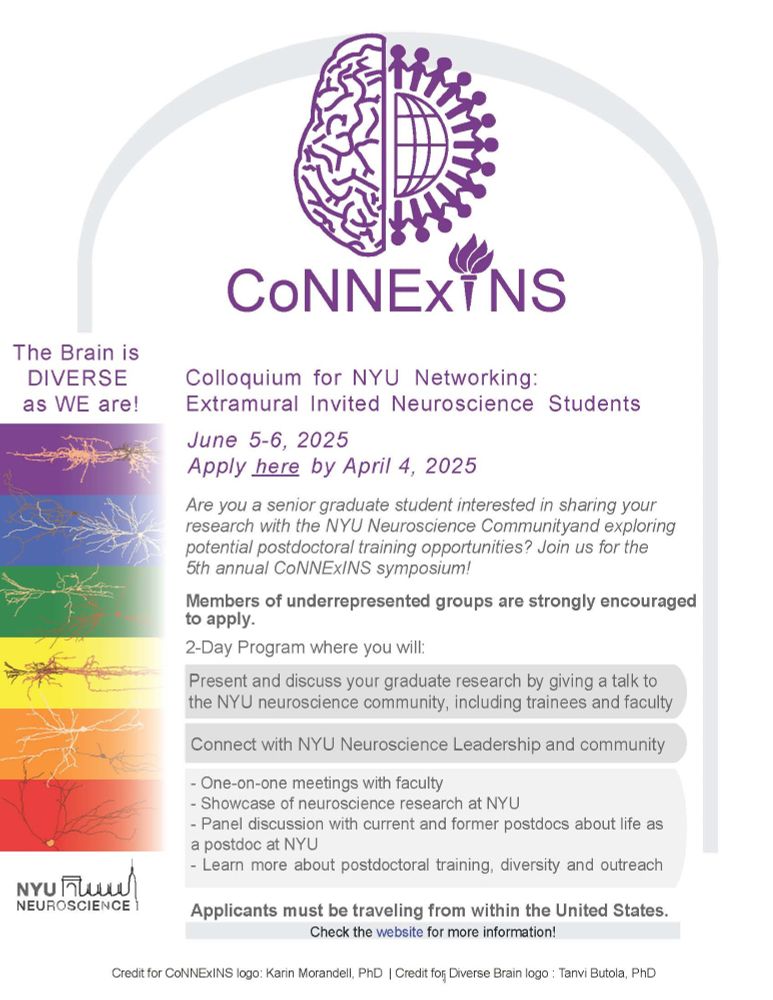
📣📣📣
✅ Are you a senior PhD student in neuroscience? 🧠
✅ Looking for career development opportunities?💼
✅ Want to visit NYC in spring?🗽
✅ Considering a postdoc at NYU? 🥼
✅Apply for CoNNExINS!
wp.nyu.edu/connexins/
Please RT!
21.01.2025 16:17 — 👍 13 🔁 13 💬 0 📌 0
CoNNExINS
CoNNExINS (Colloquium at NYU for Networking: Extramural for Invited Neuroscience Students)
We are now accepting applications for 2025 Connexins! This is an in person symposium for senior graduate students to share their works with the NYU neuroscience community. Please RT!!! wp.nyu.edu/connexins/
15.01.2025 18:50 — 👍 4 🔁 4 💬 0 📌 0
It's official, the Rich lab is now part of the Center for Neural Science at NYU! I'm thrilled to be joining CNS! At the same time, I'll miss my amazing colleagues at Sinai (even though we're not going far).
Here's to new adventures in the new year!🥂
02.01.2025 17:48 — 👍 81 🔁 8 💬 8 📌 0
This year WPI reformulated Kwik-Cast to have a lower concentration of pigment. This increases the shelf stability of the product but unfortunately makes it transparent. Are there alternative cold-curing and biocompatible products?
04.12.2024 16:42 — 👍 1 🔁 0 💬 0 📌 0
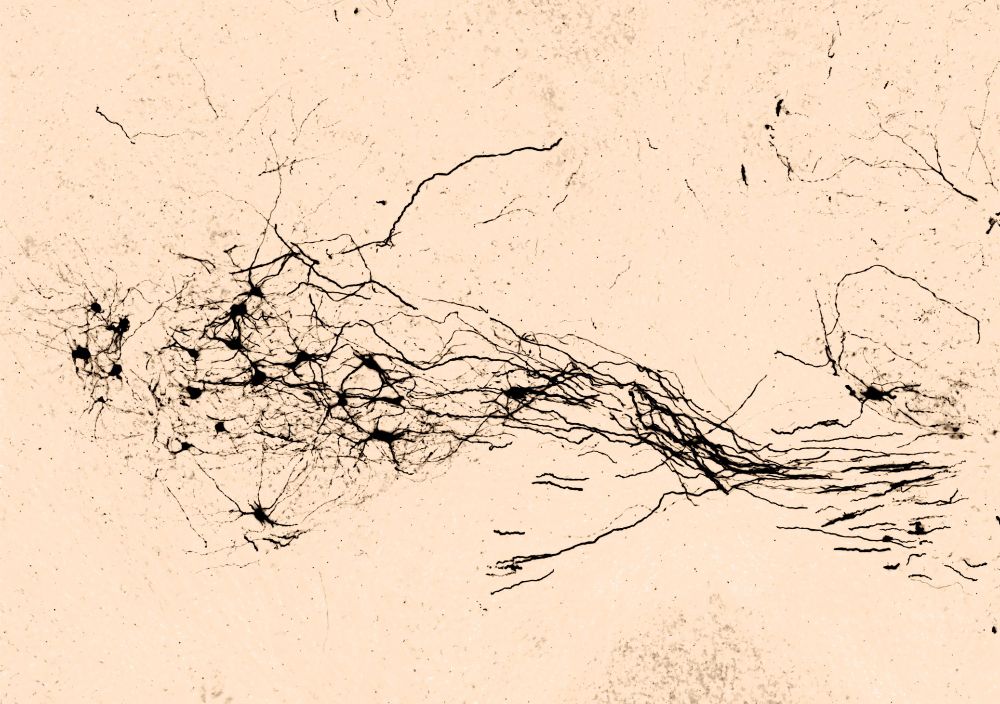
old school 🤝 new school
old school 🤝 new school
21.11.2024 20:30 — 👍 5 🔁 0 💬 0 📌 0
Assistant Professor at Cold Spring Harbor Laboratory. Neuroscientist. Loves explaining. Bibliophile. Amateur singer. Eternal optimist. Writes the occasional paper. Lab website - www.arkabanerjeelab.com
Neuroscientist supporting #OpenScience @HHMI.org
Connecting science & society through #SciPol, #SciComm, & community building for a more equitable & informed future
Past:
📢 Comms @ National SciPol Network
🧠 Ph.D. @DukeBrain.bsky.social
🧬 B.S. x2 @CMU.edu
Postdoc @Rutgers in Mark Rossi Lab | PhD Graduate in Behavioral Neuroscience @Boulder, CO from Dave Root Lab
neuroscience and behavior in parrots and songbirds
Simons junior fellow and post-doc at NYU Langone studying vocal communication, PhD MIT brain and cognitive sciences
1st year PhD student @princetonneuro.bsky.social
Previously: tech @tuthill.bsky.social | undergrad @kamdh.bsky.social
Neuroscientist studying motor control in Drosophila. MSCA Fellow at University of Würzburg (Ache Lab). Previously postdoc at University of Washington, Seattle (Tuthill Lab).
Neuroscientist & Bionic Engineer. Instructor Drexel University College of Medicine
Neuroscience Professor at Mount Sinai, into the science of squad goals.
https://www.wulab.bio/
Postdoc @ Champalimaud Centre for the Unknown - Chiappe Lab - Neuroscience/Sensorimotor Integration - Locomotion - VNC to brain and back - hobbies include poking bugs with glass needles 🧠🪰🦿🔬
Neuroscientist @Duke Neurobiology, Postdoc with Josh Huang. Interested in cortex, thalamus, motor control, development and evolution.
Neuroscientist at the Crick studying cortical microcircuits and cell types.
www.znamlab.org
HFSP postdoc fellow in Claire Wyart's lab at the Paris Brain Institute researching the transformation of a sensory stimulus to movement.
Here to just promote cool science!
lunsfordlab.squarespace.com
Neuroscience PhD student at NYU in the Movshon and Chung Labs.
https://www.cns.nyu.edu/~saraf/
ss6786@nyu.edu
Jane Coffin Childs Fund Fellow; postdoc in David Ginty lab at Harvard Medical School.
Former PhD student in Carandini&Harris lab at UCL.
Assistant Professor at #CUAnschutz interested in how dendrites support learning. In vivo volumetric subcellular imaging, behavior, molecules. We're recruiting! oharelab.org
Researcher at the Paris Brain Institute - Neurobiology, Motor Control & Basketball.
Assistant Professor, NYU Center for Neural Science. We study how neurons use molecules to compute behavioral variables. https://stephenzhanglab.org
Neural dynamics, control, learning. Love talking about the brain, math, poetry, science+arts! Striving for kindness. (She/her)
🌎 Postdoc @ NYU (Prev: UW, UCL, IISc)
🤓 https://harshagurnani.github.io/
Researching the neural basis of computations that guide economic decision-making at the Center for Neural Science at NYU.
Instructor at the MGH Center for Neurotechnology and Neurorecovery and HMS; research associate at Harvard SEAS. Motor learning and control in the healthy and post-stroke brain. Opinions are own. 🇬🇷 🇨🇾🏳️🌈
 06.02.2026 15:58 — 👍 6 🔁 4 💬 0 📌 0