Interested in a short thread about the main findings? Here you go 👉 bsky.app/profile/ymei...
27.01.2026 09:09 — 👍 2 🔁 1 💬 0 📌 0
TLDR: dataveillance chilling effects were measurable but very small. Open questions about meaningfulness or cumulating effects. "Salience shocks" too common? Resignation does not “protect” against chilling effects. Crit. privacy literacy may be an important driver of “rational” chilling effects.
14.11.2025 08:11 — 👍 0 🔁 0 💬 0 📌 0
Critical Privacy literacy (ability to criticize, question, and challenge the status quo of institutional surveillance) positively relates to self-inhibition on within-pers. level. Chilling effects may thus be a “rational” behavioral response of critically reflecting barely avoidable dataveillance.
14.11.2025 08:11 — 👍 1 🔁 0 💬 1 📌 0
Using Bayesian random-effects models, we find evidence that salience shocks increase self-inhibition and crit. privacy literacy. Within-person effects of perceived dataveillance on self-inhibition are pos. but probably too small to be meaningful. Resignation not associated with self-inhibition.
14.11.2025 08:11 — 👍 1 🔁 0 💬 1 📌 0
In a 3-wave panel study w/ 774 German Internet users, we test if making dataveillance salient to users by means of so-called “salience shocks” (articles about dataveillance) increases their a) sense of dataveillance, b) self-inhibition tendency, c) privacy cynicism, and d) critical privacy literacy.
14.11.2025 08:11 — 👍 0 🔁 0 💬 1 📌 0
Technology use is inherently associated with pervasive surveillance by online companies, which can lead to panoptic chilling effects. Chilling effects describe the self-inhibition of legal & legitimate behavior due to feelings of surveillance (e.g., limiting information searches or use of services).
14.11.2025 08:11 — 👍 1 🔁 0 💬 1 📌 0

Screenshot of the title, author names, and abstract of the new publication in HCR.
🚨Publication Alert🚨
New paper with @masurphil.bsky.social in Human Communication Research! In a longitudinal panel study, we connect chilling effects research with the concepts of privacy cynicism and critical privacy literacy: doi.org/10.1093/hcr/...
Short 🧵 about what we found👇
14.11.2025 08:11 — 👍 4 🔁 0 💬 1 📌 2

At this year’s #MePsy25 conference in Duisburg, I presented a position paper about “small” media effects. While our field lacks objective criteria to decide when such effects are practically relevant, I proposed 5 criteria that can help deciding about relevance. Slides & paper on osf 👉 osf.io/d2ah7/
14.09.2025 13:39 — 👍 12 🔁 1 💬 1 📌 0
Thank you for these praising words 🙏
11.09.2025 08:10 — 👍 0 🔁 0 💬 0 📌 0
You heard it here first (maybe): The CAT/Mobile doctoral consortium will officially be happening again at #ica26 in Cape Town! Are you dissertating? Consider applying for mentorship from top scholars in comm tech / mobile.
10.09.2025 14:36 — 👍 12 🔁 7 💬 0 📌 0

🚨Publication Alert🚨
New paper with @nadinebol.bsky.social published in JCMC! We studied inequalities in users’ beneficial and harmful online experiences (3rd level digital divide) and combined this view with arguments about mistrust in online companies and self-inhibited behaviors. Short🧵👇
08.09.2025 05:55 — 👍 9 🔁 3 💬 2 📌 1
In the manuscript, we discuss possible reasons for these patterns of inequality including structural disadvantages and power imbalances.
08.09.2025 05:55 — 👍 0 🔁 0 💬 0 📌 0
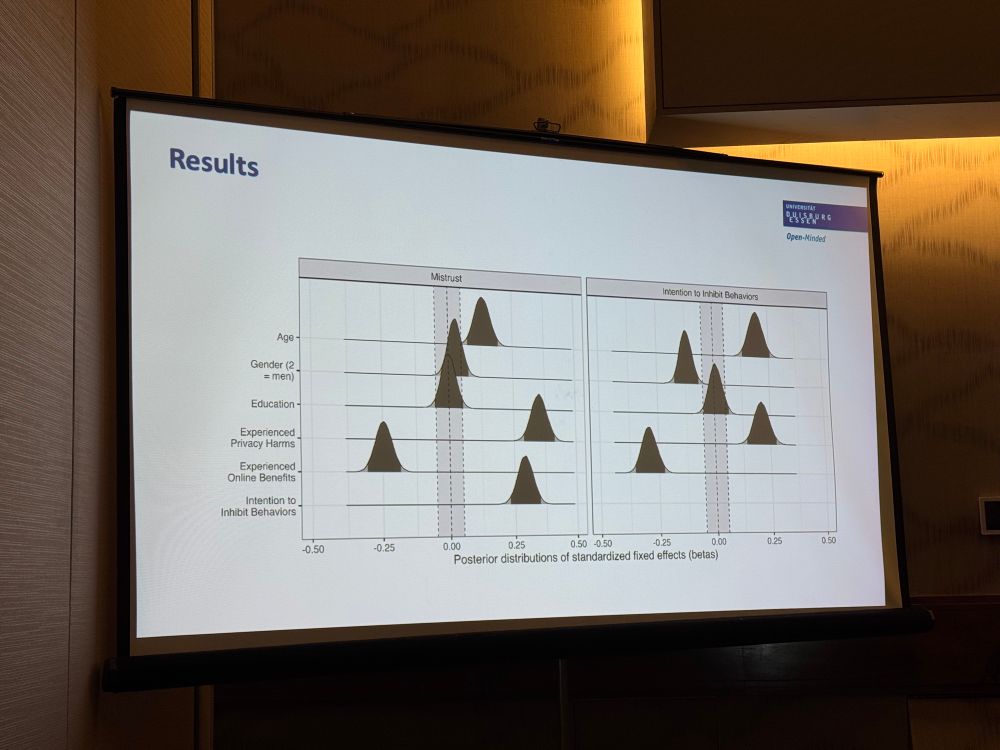
Dig. inequalities: older age relates to both less frequent beneficial and harmful experiences while higher education positively relates to having beneficial experiences. Older age also positively relates to mistrust and self-inhibition. Women are more likely to engage in self-inhibition than man.
08.09.2025 05:55 — 👍 1 🔁 0 💬 1 📌 0
The more beneficial experiences someone has, the lower their mistrust and tendency to self-inhibition are. Interesetingly, positive and negative experiences are positively correlated which implies that you cannot only experience the pos. side.
08.09.2025 05:55 — 👍 0 🔁 0 💬 1 📌 0
With a sample of 1,410 German participants, we find that having harmful experiences like feeling compelled to give up personal data or accidentally accepting cookies positively relates to mistrust into online companies and the tendency to inhibit one’s digital behaviors (e.g., not using a service).
08.09.2025 05:55 — 👍 1 🔁 0 💬 1 📌 0
So far, 3rd level divide studies conceptualized inequality as differences in (not) experiencing benefits by using digital technology. In our view, this ignores harmful experiences such as violations of one’s privacy during tech-use which might be associated with higher mistrust and self-inhibition.
08.09.2025 05:55 — 👍 1 🔁 0 💬 1 📌 0
🚨Publication Alert🚨
New paper with @nadinebol.bsky.social published in JCMC! We studied inequalities in users’ beneficial and harmful online experiences (3rd level digital divide) and combined this view with arguments about mistrust in online companies and self-inhibited behaviors. Short🧵👇
08.09.2025 05:55 — 👍 9 🔁 3 💬 2 📌 1
Amazing news!! Congrats and welcome to UDE🥳
21.08.2025 20:37 — 👍 0 🔁 0 💬 1 📌 0
New Student Column! 🎓✨ Dive into insights from ICA’s new SEC Representative on how student and early career scholars navigate today’s changing academic world. Don’t miss this fresh perspective! buff.ly/qb56Wfl
21.08.2025 19:02 — 👍 1 🔁 1 💬 0 📌 0
New special issue, "Comparative Approaches to Studying Privacy," edited by #CPRN is now published in Social Media + Society!
journals.sagepub.com/topic/collec...
w/ @lutzid.bsky.social, Lemi Baruh, Kelly Quinn, @masurphil.bsky.social, Carsten Wilhelm (comparativeprivacy.org)
07.08.2025 13:30 — 👍 14 🔁 8 💬 1 📌 2

graphic with cats on it
We're still seeking nominations for the CAT executive committee . CAT is seeking our next vice-chair, early career rep, and international liaison. Interested? Details are in your ICA email. Questions? Ask anyone on the current executive team. We'd love to have you join us!
28.07.2025 18:56 — 👍 2 🔁 1 💬 0 📌 0
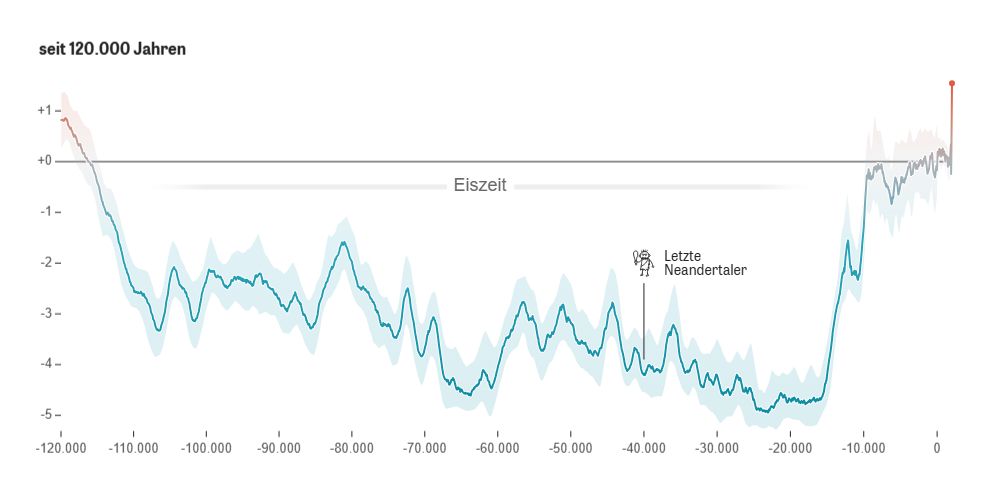
Der Temperaturverlauf auf der Erde relativ zum Vorindustriellen Niveau seit 120.000 Jahren. So warm wie heute war es mindestens seit Beginn der letzten Eiszeit nicht mehr. Die letzten Neandertaler lebten vor etwa 40.000 Jahren. Der menschengemachte Klimawandel heute ist ein senkrechter Strich!!
Quelle: Zeit.de https://www.zeit.de/wissen/umwelt/2025-06/klimageschichte-veraenderung-temperatur-entwicklung-daten
Das letzte Mal, dass es so warm auf der Erde war wie gerade, ist mind. 100.000 Jahre her und ich weiß nicht, was ich erschreckender finde - die Tatsache, dass die menschengemachte globale Erwärmung hier einfach ein senkrechter Strich (!) ist, oder dass es immer noch Leute gibt, die sie leugnen. 🌍🔥😐
27.06.2025 14:16 — 👍 1806 🔁 650 💬 60 📌 13
Support your student and early career colleagues and come to this amazing panel starting in 40 minutes!👇
13.06.2025 18:49 — 👍 2 🔁 0 💬 0 📌 0
Happening in 30 minutes in Capitol 1, Hyatt Regency 4! #ica25
13.06.2025 14:28 — 👍 2 🔁 0 💬 0 📌 0
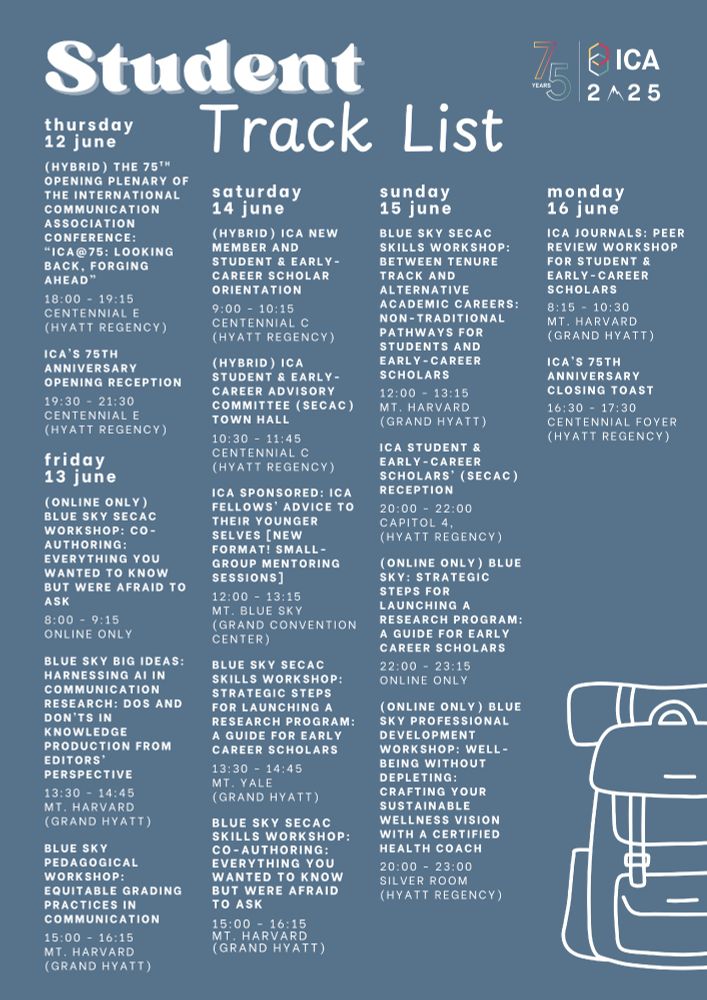
Correction: the previous poster has some wrong dates.
12.06.2025 16:55 — 👍 1 🔁 3 💬 0 📌 1
Computational Communication, Professor at https://ifp.uni-mainz.de | https://mscharkow.de
I am married to an amazing woman.
Both of us are professors at Michigan State university.
Woke. Long time fighter for diversity.
And apparently I like editing journals and conducting what I hope is creative research.
No DMs unless I know you
Human Communication Research (HCR) is a scholarly journal, and an official journal of the International Communication Association.
Global Health Media Consultant
#hiv #tb #infectiousdiseases #CRDs #drugpolicy #ncds #pandemics
💻 Science manager @cais-research.bsky.social
📙 Deputy editor @policyr.bsky.social
PhD from @unihalle.bsky.social
✒️ #writing #digitaltransformation #openaccess #careerdevelopment #ruhrgebiet📍
Our mission is to increase openness, integrity, and reproducibility of research.
Sentientism, food policy for desired/anticipated consumption patterns, plant-based food for climate, consumption behaviour, history and reporting of global goals, framing.
Post-doc & research admin @uscwrigley.usc.edu. Social scientist researching #envcomm #scicomm of climate change, wildfires, Rx fire. Alum of UW-Madison, Colorado State University & UC San Diego. California is home
amandamolder.com
The EU channel for scientists & researchers: opportunities to fund your ideas, updates from EU-funded science, and scientific resources you can use in your work.
Social Media; Communication Studies; Cyberculture; Sociology; Political Communication; Internet Studies. Published by Routledge. https://www.tandfonline.com/journals/rics20
Tenure track assistant professor at the Media Psychology Lab, KU Leuven, Belgium. Interested in media literacy, media effects, well-being, adolescents
PhD researcher at the KU Leuven Media Psychology Lab🤳🧠
Currently researching social media effects and media literacy in different susceptibility groups🔎
Postdoc @univie.ac.at. PhD at KU Leuven. Research in the area of media psychology and political communication.
Lecturer, University of Amsterdam, Amsterdam School of Communication Research (ASCoR). My teaching and research examines the psychology of media entertainment with a focus on ambiguous narratives, meaningful experiences, and interactivity.
Lecturer in Psychology of Communication and New Media, University of Würzburg. Interested in #DigitalMedia, #Misinformation, #MotivatedReasoning, #AutobiographicalMemory, #MetaScience & More. Desperately trying to learn Hungarian.
Psychologist | Assistant Professor (PhD) in Criminology at UCLM (Spain)| Criminology Research Center 🎓🔍 | Research Group on Victimology and Psychopathology of Childhood and Adolescence | Passionate about human behavior, plot twists & dark minds 🎬🕵️♀️
PhD student at University Kaiserslautern Landau. Media Psychology, Currently researching on (Mis)information processing and political orientation. She/her
Researcher at Institute for Media Research, Chemnitz University of Technology
Asst. Professor at University of Kansas, Ph.D. The Ohio State University. Research on narrative persuasion, children and media, media effects, media psychology. Sometimes, I grow sunflowers (see pic) and tomatoes. Aspiring scuba diver.
Research Fellow, University of Oxford
Theology, philosophy, ethics, politics, environmental humanities
Associate Director @LSRIOxford
Anglican Priest
https://www.theology.ox.ac.uk/people/revd-dr-timothy-howles