Sleep and Biological Rhythms
Small shifts in diurnal rhythms are associated with an increase in suicide: The effect of daylight saving
Michael BERK, Seetal DODD, Karen HALLAM, Lesley BERK, John GLEESON, Margaret HENRY
21 February 2008
Abstract
Large disruptions of chronobiological rhythms are documented as destabilizing individuals with bipolar disorder; however, the impact of small phase altering events is unclear. Australian suicide data from 1971 to 2001 were assessed to determine the impact on the number of suicides of a 1-h time shift due to daylight saving. The results confirm that male suicide rates rise in the weeks following the commencement of daylight saving, compared to the weeks following the return to eastern standard time and for the rest of the year.
“Suicides rise following commencement of Daylight Saving Time, compared to the return to Standard Time.”
04.02.2026 21:24 — 👍 1672 🔁 386 💬 153 📌 46

Are episodic and semantic memory really that different? Using closely matched tasks, we found no substantial neural differences between recalling personal experiences and general knowledge: https://www.nature.com/articles/s41562-025-02390-4
29.01.2026 11:01 — 👍 42 🔁 22 💬 0 📌 3

New study by Piotr Szymanek, Magdalena Senderecka & @mateuszhohol.bsky.social is out in 'Psychonomic Bulletin & Review'. Biological motion detection is basic and automatic—but expectations still bias what we see, especially under uncertainty. OA: doi.org/10.3758/s134...
23.01.2026 09:05 — 👍 1 🔁 2 💬 0 📌 0

Episodic memory facilitates flexible decision-making via access to detailed events - Nature Human Behaviour
Nicholas and Mattar found that people use episodic memory to make decisions when it is unclear what will be needed in the future. These findings reveal how the rich representational capacity of episod...
Our experiences have countless details, and it can be hard to know which matter.
How can we behave effectively in the future when, right now, we don't know what we'll need?
Out today in @nathumbehav.nature.com , @marcelomattar.bsky.social and I find that people solve this by using episodic memory.
23.01.2026 13:18 — 👍 117 🔁 45 💬 7 📌 2

New preprint: Inference over hidden contexts shapes the geometry of conceptual knowledge for flexible behaviour.
In this pre-reg study, our core claim was that we don’t just learn stimulus-reward. We infer hidden context and that inference re-wires attention and neural state space on the fly.
1/8
08.01.2026 07:46 — 👍 36 🔁 15 💬 1 📌 0
APA PsycNet
Is WM a gateway to LTM? In this registered report we find that higher WM load rarely impairs LTM encoding - suggesting WM capacity is not a bottleneck for forming LTM traces. @as-souza.bsky.social @edamizrak.bsky.social @cognition-zurich.bsky.social psycnet.apa.org/record/2026-... [1/3]
09.12.2025 07:46 — 👍 27 🔁 14 💬 1 📌 1

(1/4)
🧠 Did you know that kids remember time differently than adults? Our new preprint review w/ @drjeni-mdlab.bsky.social discusses the real implications for juvenile justice & why we need to ask about timing in ways that match kids' developing brains ⚖️
Paper: osf.io/preprints/ps...
12.11.2025 17:26 — 👍 43 🔁 19 💬 1 📌 1
Experimental participants to us
12.11.2025 14:08 — 👍 136 🔁 29 💬 3 📌 1
Memory problems will change how you see the world...literally 👀
Across two new papers, we examined the eye movement patterns of younger adults, older adults, individuals with mild cognitive impairment, and amnesic cases.
1/5
08.10.2025 13:25 — 👍 45 🔁 23 💬 1 📌 2

New Anti-Autocracy Handbook Aims to Give Power Back to Scholars
APS Fellow Stephan Lewandowsky and colleagues recently developed the Anti-Autocracy Handbook, designed to provide guidance to scholars navigating the growing global trend of democratic backsliding.
APS Fellow @lewan.bsky.social & colleagues have recently developed the Anti-Autocracy Handbook, which they describe as “a call to action, resilience, and collective defense of democracy, truth, and academic freedom in the face of mounting authoritarianism.”
29.08.2025 15:33 — 👍 37 🔁 21 💬 0 📌 3
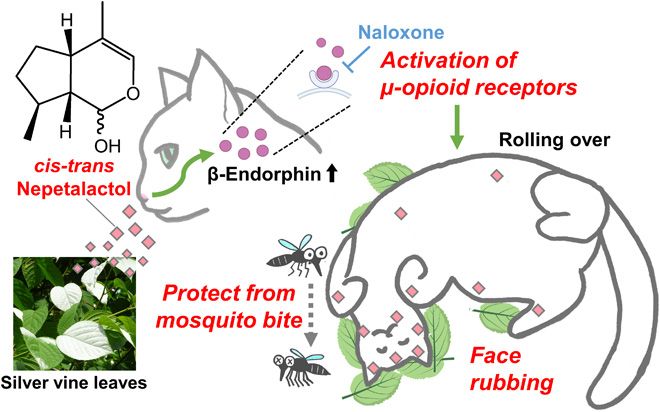
A figure showing the neurophysiological and functional significance of silver vine response in cats.
Not only do catnip and silver vine hold a special place in felines’ hearts, but the intoxicating chemicals in these plants also protect cats from mosquito bites, according to #ScienceAdvances research from 2021.
Learn more on #InternationalCatDay: scim.ag/3HpxYwv
08.08.2025 15:04 — 👍 98 🔁 25 💬 1 📌 1
The diffusion model's drift rate parameter primarily reflects efficiency, rather than speed, of evidence accumulation: https://osf.io/nu9gm
08.08.2025 17:12 — 👍 1 🔁 1 💬 0 📌 0
Scientists unravel how a tiny region of the brain helps us form distinct memories, opening new avenues for PTSD, Alzheimer’s research
The locus coeruleus works like a “reset” button that separates the memory of one meaningful event from the next.
New press on our study linking the locus coeruleus to memory formation 🔵: newsroom.ucla.edu/releases/bra... .
“…at a time when legislation promises ‘big and beautiful change,’ it turns out one of the brain’s smallest players may have the biggest impact on how we understand and remember our lives.”
16.07.2025 00:36 — 👍 33 🔁 8 💬 2 📌 1
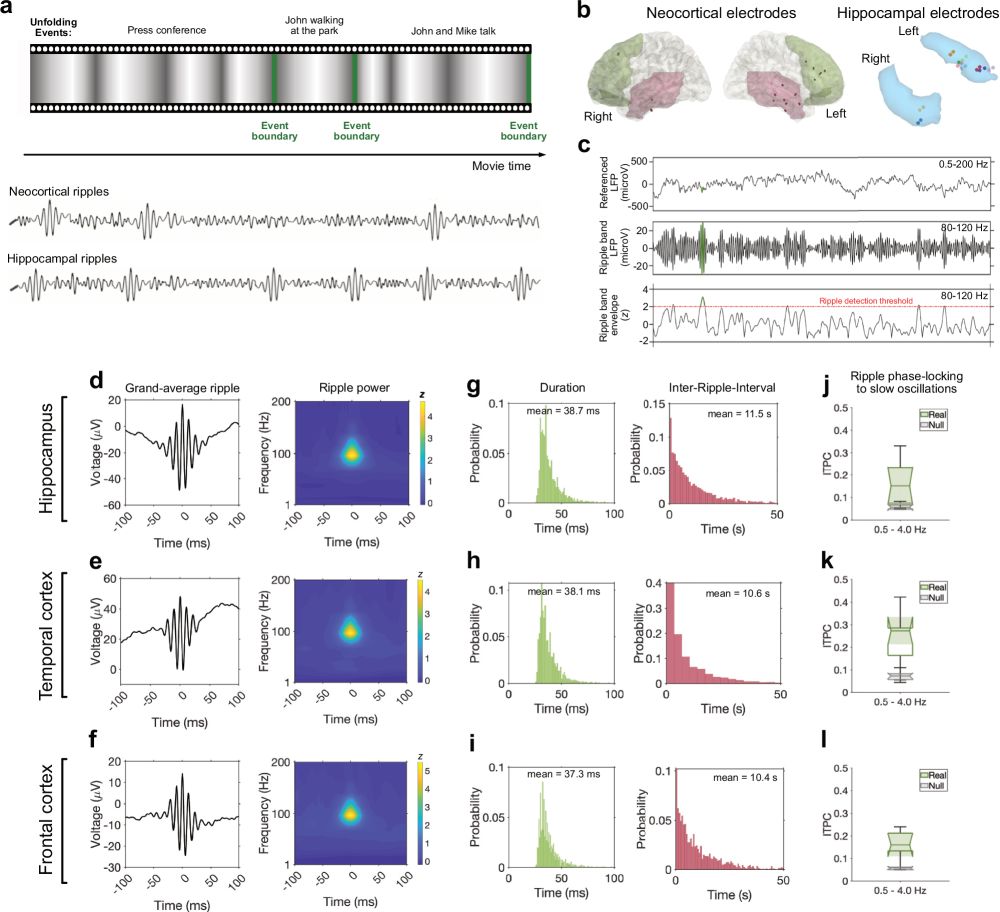
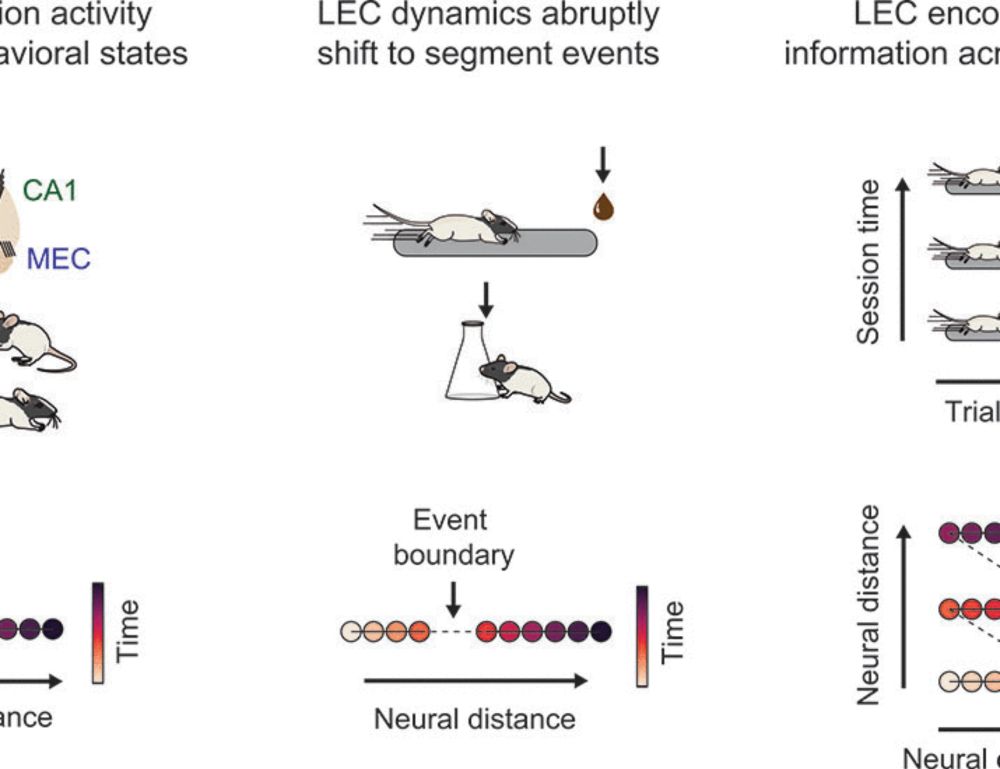
Movie-watching evokes ripple-like activity within events and at event boundaries
Nature Communications - The neural processes involved in memory formation for realistic experiences remain poorly understood. Here, the authors found that ripple-like activity in the human...
🧠 Paper out!
We investigated how hippocampal and cortical ripples support memory during movie watching. We found that:
🎬 Hippocampal ripples mark event boundaries
🧩 Cortical ripples predict later recall
Ripples may help transform real-life experiences into lasting memories!
rdcu.be/eui9l
01.07.2025 13:26 — 👍 153 🔁 67 💬 8 📌 2

Episodic memory and semantic knowledge interact to guide eye movements during visual search in scenes: Distinct effects of conscious and unconscious memory - Psychonomic Bulletin & Review
Episodic memory and semantic knowledge can each exert strong influences on visual attention when we search through real-world scenes. However, there is debate surrounding how they interact when both are present; specifically, results conflict as to whether memory consistently improves visual search when semantic knowledge is available to guide search. These conflicting results could be driven by distinct effects of different types of episodic memory, but this possibility has not been examined. To test this, we tracked participants’ eyes while they searched for objects in semantically congruent and incongruent locations within scenes during a study and test phase. In the test phase containing studied and new scenes, participants gave confidence-based recognition memory judgments that indexed different types of episodic memory (i.e., recollection, familiarity, unconscious memory) for the background scenes, then they searched for the target. We found that semantic knowledge consistently influenced both early and late eye movements, but the influence of memory depended on the type of memory involved. Recollection improved first saccade accuracy in terms of heading towards the target in both congruent and incongruent scenes. In contrast, unconscious memory gradually improved scanpath efficiency over the course of search, but only when semantic knowledge was relatively ineffective (i.e., incongruent scenes). Together, these findings indicate that episodic memory and semantic knowledge are rationally integrated to optimize attentional guidance, such that the most precise or effective forms of information available – which depends on the type of episodic memory available – are prioritized.
Our new paper on how episodic memory and semantic knowledge interact to influence eye movements during search is out now in Psychonomic Bulletin & Review, with @jmhenderson.bsky.social and Andy Yonelinas! (summary below) link.springer.com/article/10.3...
#psynomPBR @psychonomicsociety.bsky.social
24.05.2025 17:41 — 👍 61 🔁 15 💬 4 📌 1
🧪 Detailed data viz NYT article, out today, on the extent of funding cuts at the National Science Foundation.
This "broken pie chart" is neat & new to me: Powerfully shows the slowdown in new NSF awards across areas.
www.nytimes.com/interactive/...
22.05.2025 15:59 — 👍 404 🔁 267 💬 8 📌 33

Dopaminergic processes predict temporal distortions in event memory
Our memories do not simply keep time - they warp it, bending the past to fit the structure of our experiences. For example, people tend to remember items as occurring farther apart in time if they spa...
New from our lab: your brain doesn’t just remember time - it bends it.
We show that the dopamine system responds to natural breakpoints in experience, and this relates to more stretched memories of time. Blinking also increases, signaling encoding of new memories.
www.biorxiv.org/content/10.1...
19.05.2025 21:56 — 👍 94 🔁 35 💬 3 📌 3
Tired of spending months teaching every new student how to clean and analyze sleep EEG? 🧠💤
We were too. @labnir.bsky.social
That's why we built SleepEEGpy- a simple open-source pipeline to make sleep EEG research faster, easier, and standardized! 👇
doi.org/10.1016/j.co...
28.04.2025 19:33 — 👍 19 🔁 8 💬 1 📌 1
New paper out with @karampbell.bsky.social and Caitlin Mahy! We tested whether associative memory improvements in children aged 8-12 were related to the development of associative binding or attentional control. We had children complete an implicit and explicit associative memory task.
22.04.2025 13:43 — 👍 4 🔁 4 💬 1 📌 0
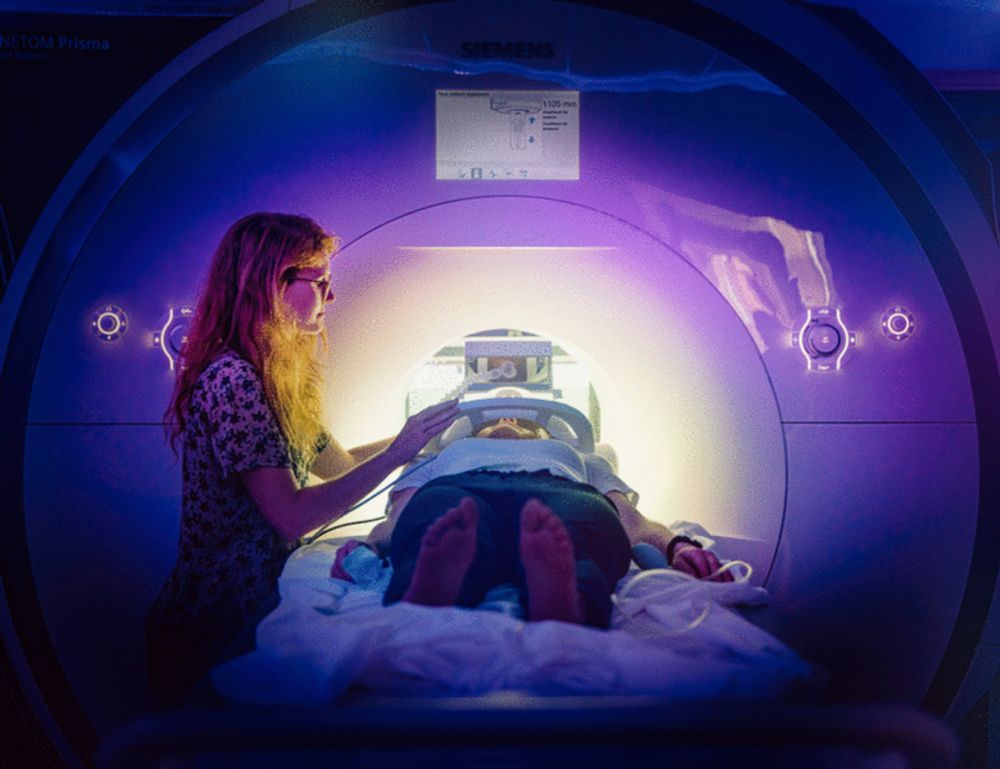
Hippocampal encoding of memories in human infants
Humans lack memories for specific events from the first few years of life. We investigated the mechanistic basis of this infantile amnesia by scanning the brains of awake infants with functional magne...
A novel fMRI study in Science shows that babies as young as 12 months old can encode memories.
The findings suggest that infantile amnesia is more likely caused by memory retrieval failures rather than an inability to form memories in the first place. scim.ag/422LFb9
25.03.2025 17:25 — 👍 64 🔁 9 💬 5 📌 1
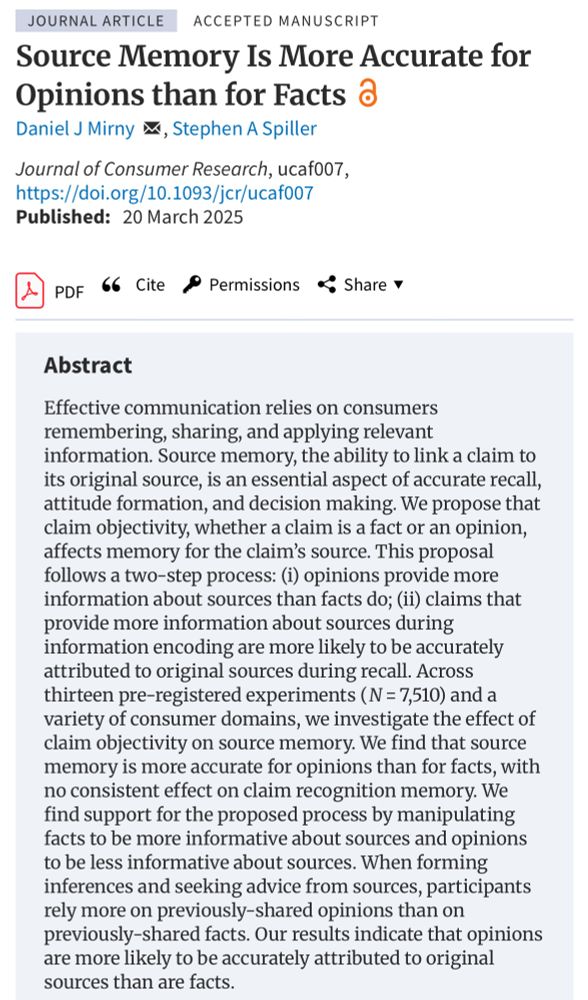
In such a noisy world, it can be difficult to remember who said what. In a new paper at @jcrnews.bsky.social, @spillersas.bsky.social and I find that source memory - the attribution of claims to their original sources - is more accurate for opinions than for facts.
academic.oup.com/jcr/advance-...
20.03.2025 23:52 — 👍 12 🔁 4 💬 1 📌 1
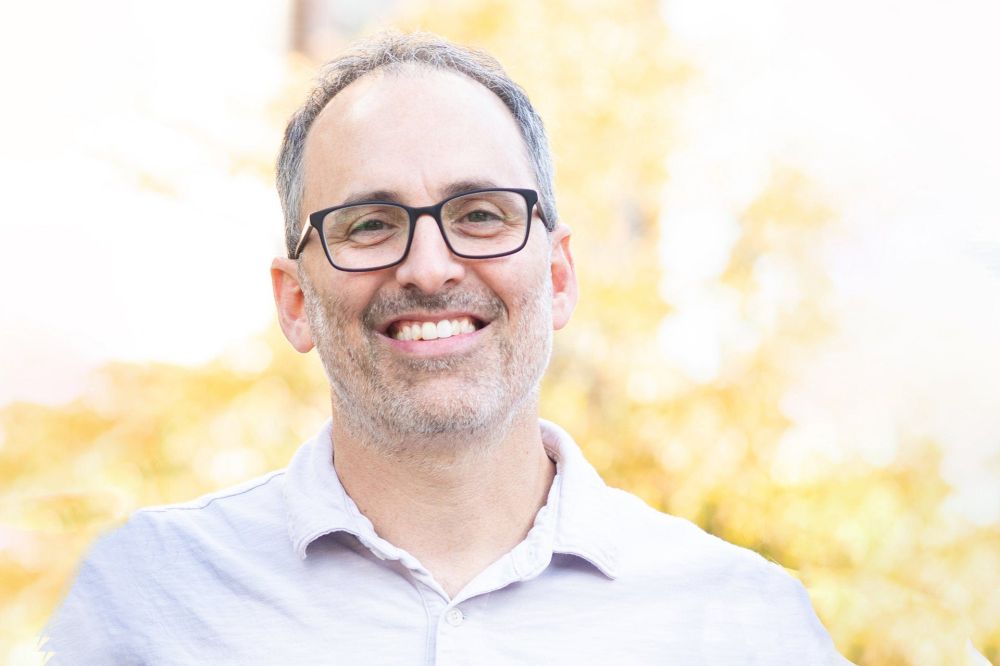
Remembering Psychology Professor Sam Sommers
Sam Sommers, longtime professor at Tufts, studied the psychological causes and consequences of racism
Social psychology lost a giant, and I lost a dear friend and collaborator. Still processing the loss of Sam Sommers, and probably will be for some time. Cherish the time you have with your people, folks.
now.tufts.edu/2025/03/20/r...
20.03.2025 16:10 — 👍 197 🔁 43 💬 25 📌 7
Hippocampal encoding of memories in human infants
Humans lack memories for specific events from the first few years of life. We investigated the mechanistic basis of this infantile amnesia by scanning the brains of awake infants with functional magne...
Why do we not remember being a baby? One idea is that the hippocampus, which is essential for episodic memory in adults, is too immature to form individual memories in infancy. We tested this using awake infant fMRI, new in @science.org #ScienceResearch www.science.org/doi/10.1126/...
20.03.2025 18:36 — 👍 482 🔁 165 💬 19 📌 22
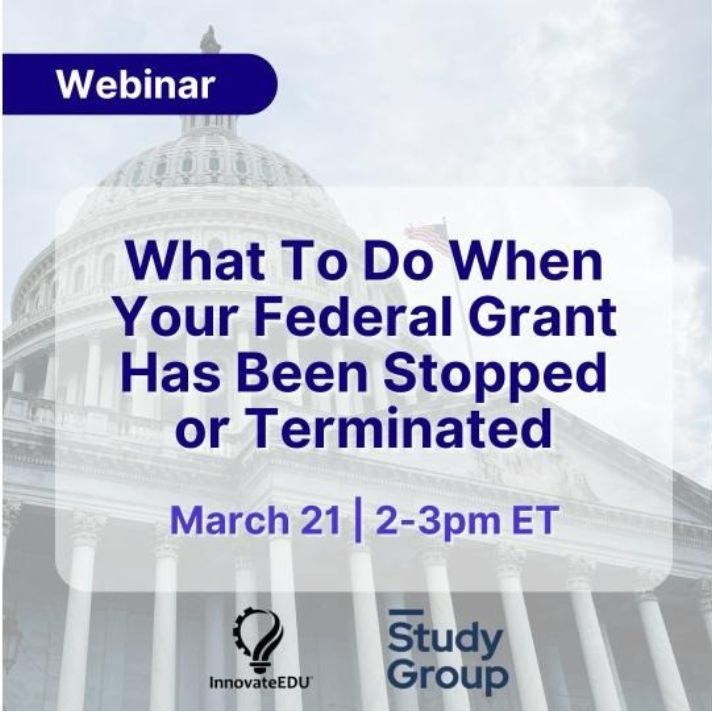
March 21, 2-3 pm ET: What to do when your federal grant has been stopped or terminated
If you have a federal grant, I *highly* recommend going to this Friday's webinar on responding to grant terminations.
Lisa Brown, former general counsel at Dept of Ed, will present along with other lawyers.
Friday, March 21, 2-3 pm. More info & register here: www.linkedin.com/pulse/regist...
18.03.2025 16:37 — 👍 365 🔁 328 💬 6 📌 15
Up to 15% of doctoral, and 20% of postdoctoral awards are slated to be held by international scholars.
16.03.2025 03:49 — 👍 31 🔁 9 💬 1 📌 0
Excited to see this big collaborative project out in the world @naturehumbehav.bsky.social !
Sleep actively enhances memory for the temporal sequence - but not sensory details - of our real-life experiences, even months-to-years later. 🧠 oscillations matter.
Original 🧵: bsky.app/profile/diam...
12.03.2025 15:15 — 👍 18 🔁 7 💬 1 📌 0
Washington State University Foundation
We steward private support to benefit students, research, and service statewide and beyond. Go Cougs!
Social psychologist, relationships enthusiast, Associate Prof at Western University 🇨🇦.
i write at @theverge.com. Portland, OR.
Cosmologist, pilot, author, connoisseur of cosmic catastrophes. TEDFellow, CIFAR Azrieli Global Scholar. Domain verified through my personal astrokatie.com website. She/her. Dr.
Personal account; not speaking for employer or anyone else.
Menswear writer. Editor at Put This On. Words at The New York Times, The Washington Post, The Financial Times, Esquire, and Mr. Porter.
If you have a style question, search:
https://dieworkwear.com/ | https://putthison.com/start-here/
We are an award-winning research university inspiring the next generation of problem solvers - a community of Cougs helping Washington & the world. https://pullman.wsu.edu/ #GoCougs
Computational cognitive neuroscience. And also: memory and cognitive architecture. But also: biking & stargazing & horror movies. Opinions are my own, but I do sometimes share them. http://andreastocco.com/
Professor. Sociologist. NYTimes Opinion Columnist. Books: THICK, LowerEd. Forthcoming: 1)Black Mothering & Daughtering and 2)Mama Bears.
Beliefs: C.R.E.A.M. + the internet ruined everything good + bring back shame.
“I’m just here so I don’t get fined.”
Raised on Coast Miwok land, longtime resident on Ramaytush Ohlone land, writer, climate person, feminist, wanderer. Just started a newsletter at MeditationsInAnEmergency.com.
Engaging collaboration and co-operation between basic and applied researchers in memory and cognition. Contact ExecutiveDirector[at]sarmac.org to join mailing list. https://www.sarmac.org
We champion women’s hockey everywhere.
The Press for the People.
Spokane-based, local, worker-owned independent online media. We hold the powerful accountable and empower the people!
Slide into our DMs with hot news tips, or send them anonymously to rangemedia4all@proton.me
Our democracy is under threat. But we will not yield to fascism. We will stand together and we'll fight back in defense of our rights, our communities, and our values. We’re Spokane’s Indivisible.
Unofficial bot sharing alerts from NWS Spokane WA (GEG).
This account is not monitored. Contact @wandrme.paxex.aero if needed.
Correspondent on the Daily Show. Standup Comic & Emmy-nominated writer. Listen to the Josh Johnson Show podcast on Spotify + Apple
https://linktr.ee/joshjohnsoncomedy
Social Psychologist. Associate Professor of Psychology at Washington State University in Pullman, WA. Researches motivation and social-psych interventions to reduce inequality. On sabbatical 2025-2026 in Berlin as a Fellow of the @wiko-berlin.bsky.social
Cutting-edge research, news, commentary, and visuals from the Science family of journals. https://www.science.org
Contributing Editor | The New Republic
Columnist | The Guardian
Author | The Right of the People (2025)
Newsletter | ositanwanevu.com
I post pictures of my cats. Calico == Caliope, Grey Tabby == Copernicus.