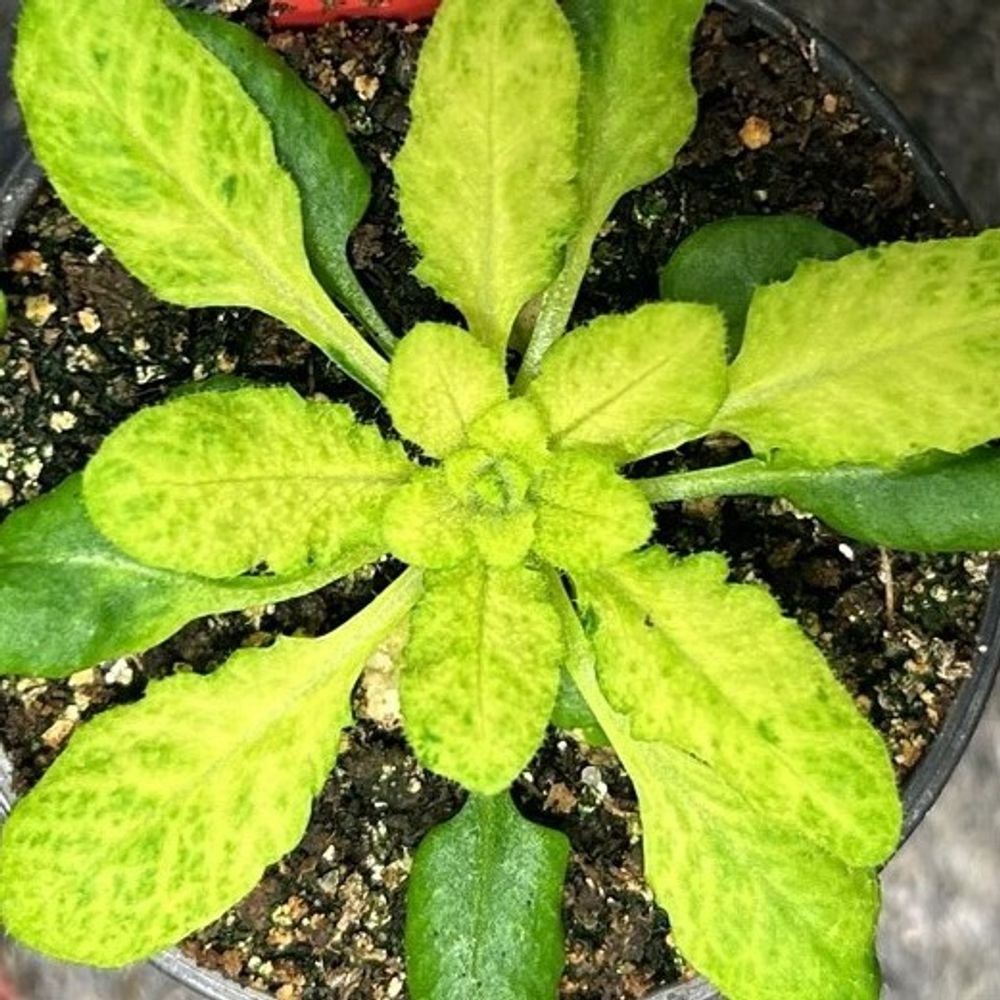
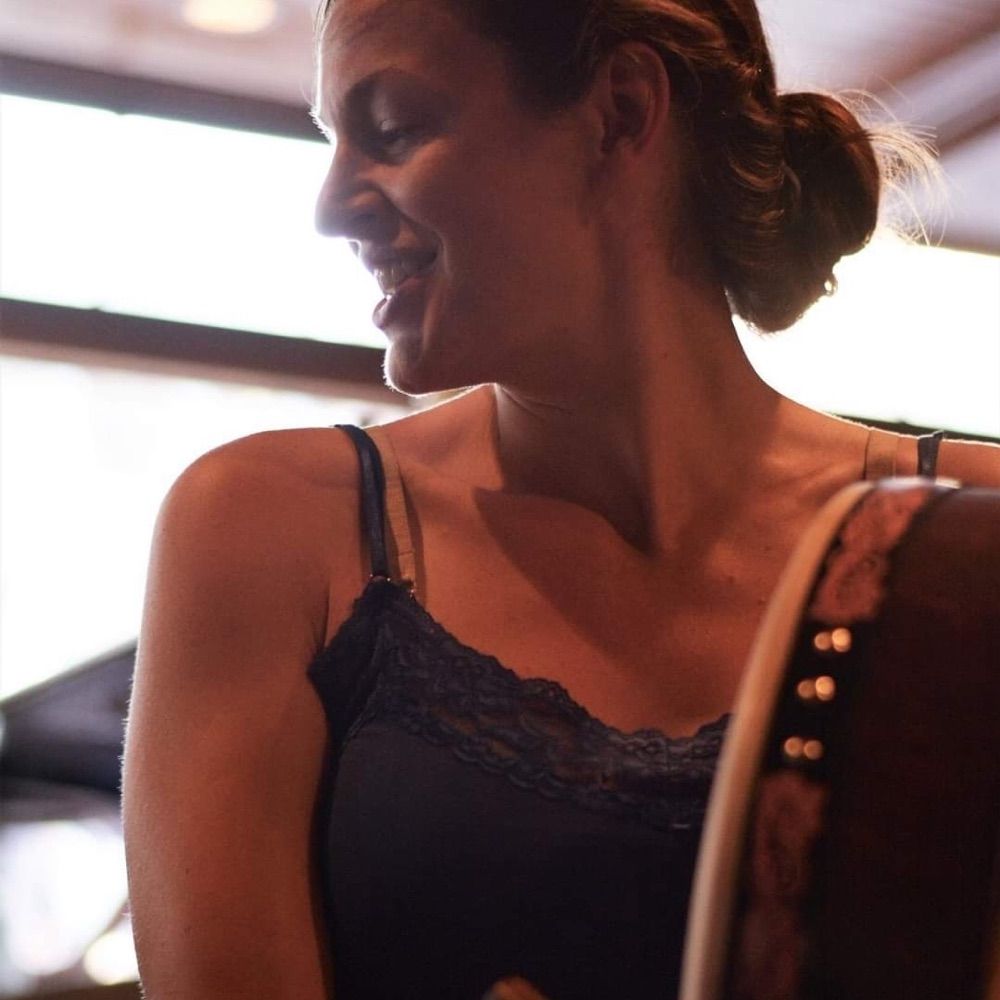
One thing I definitely miss about Amreeka. Happy Thanksgiving!
27.11.2025 22:38 — 👍 0 🔁 0 💬 0 📌 0
Probably a demethylase target.
22.11.2025 16:09 — 👍 1 🔁 0 💬 0 📌 0
Coconut endosperm? :D
08.11.2025 17:00 — 👍 0 🔁 0 💬 0 📌 0
The Control of Arabidopsis thaliana Growth by Cell Proliferation and Endoreplication Requires the F-Box Protein FBL17 - PubMed share.google/kfYf22LoZ3RH...
Also, e2f and del mutants might have a similar phenotype.
08.11.2025 14:07 — 👍 3 🔁 0 💬 1 📌 0
For 61 years the #BBCWorldService has been broadcasting the latest in science via its weekly Science in Action programme. That dies in the next half hour, with this final edition, reflecting on the fall in trust in expertise driven by malign interests over recent years.
30.10.2025 20:20 — 👍 305 🔁 198 💬 25 📌 25
Transposable elements drive much of naturally occurring genetic lethality in Drosophila melanogaster https://www.biorxiv.org/content/10.1101/2025.10.16.682755v1
16.10.2025 19:32 — 👍 25 🔁 14 💬 0 📌 1
Client Challenge
genomebiology.biomedcentral.com/articles/10....
From the Gehring Lab.
Ros1 prevents paternal hypermethylation of the endosperm genome.
13.10.2025 15:12 — 👍 1 🔁 0 💬 0 📌 0
Lab’s 1st preprint!
Menstruation is understudied due to societal taboos + a biological challenge: mice (a key system for research + drug discovery) don’t menstruate.
@cagricevrim.bsky.social made menstruating mice + used them to discover early events in menstruation.
He is on the job market!
10.10.2025 13:26 — 👍 299 🔁 90 💬 18 📌 8
Dr. Jane Goodall filmed an interview with Netflix in March 2025 that she understood would only be released after her death.
05.10.2025 09:08 — 👍 38264 🔁 17087 💬 822 📌 2410
Just an outrageous amount of structural variation in pennycress. While not yet reproductively isolated, its likely these shredded pericentromeres contribute to some reproductive incompatibilities.
29.09.2025 17:33 — 👍 11 🔁 5 💬 0 📌 0
Congratulations!!
25.09.2025 19:47 — 👍 1 🔁 0 💬 1 📌 0

Out today in JAERE! We measure water pollution released at India's industrial clusters. Does it hurt agriculture? Surprisingly: Not by much
Come for how we published a paper of null results & with no regression tables
Stay for new ways to proxy for crop yields & map hydrological relationships
🧵
19.09.2025 20:28 — 👍 16 🔁 9 💬 2 📌 0

Rapid emergence of non-autonomous elements may stop P-element invasions in the absence of a piRNA-based host defence
Author summary Transposable elements (TEs) are short, self-replicating DNA sequences found in nearly all genomes. While they can be harmful to their hosts, many organisms have evolved defence systems,...
Germline defence from TEs largely relies on piRNAs. Yet, @divyaselvaraju.bsky.social and I monitored a P-element invasion in Drosophila that was stopped by an internally deleted copy, no host intervention required!
doi.org/10.1371/jour...
Many thanks to @rpianezza.bsky.social & @rokofler.bsky.social
28.08.2025 13:27 — 👍 31 🔁 18 💬 2 📌 2
A species-wide inventory of receptor-like kinases in Arabidopsis thaliana
Thrilled to announce our new paper is now out in @bmc.springernature.com
rdcu.be/eCB2t
27.08.2025 15:31 — 👍 4 🔁 2 💬 1 📌 0

In Other Journals
Editors’ selections from the current scientific literature
My pick for In Other Journals this week:
MSH1 suppresses organelle mutation - an investigation of how many plants maintain very low mitochondrial mutation rates
My summary here:
www.science.org/doi/10.1126/...
Paper here: doi.org/10.1371/jour...
@sloanevolab.bsky.social
#PlantScience
22.08.2025 08:40 — 👍 17 🔁 7 💬 0 📌 0
Our current carbon economy relies on fossil fuels, from which we isolate small organic molecules to produce medicines, plastics, cosmetic, or other chemicals that we use everyday. However, sustainability requires a more biomass-based carbon economy, where we engineer plants to produce precursor molecules, which can then be assembled to desired chemicals that we use daily. Plants have evolved an amazing diversity of metabolites, but these metabolites are not produced in every cell of the plant. Therefore, it is essential to understand how plants can express different metabolic pathways across different organs, tissues, and even cell types. We are interested in the following questions: How are metabolic pathways (especially specialized metabolism) controlled by cell fate? How can we reprogram plant cell fates for biomanufacturing? How can we toggle between differentiated cell states for metabolic engineering and totipotent cell state for genetic engineering?
Last week I requested a tech and a postdoc position to be created and submitted the ads for those positions. Stay tuned for the official ad. For inquiries, my contact can be found here: cxli233.github.io/cxLi_lab/
14.08.2025 20:24 — 👍 19 🔁 14 💬 0 📌 0
A reminder you/your lab can support FlyBase at Cambridge through the following link. Every bit helps. Please share if you yourself can't donate.
www.philanthropy.cam.ac.uk/give-to-camb...
14.08.2025 05:25 — 👍 80 🔁 111 💬 1 📌 5
What’s your favorite food fact that is true but sounds totally made up?
I’ll start: about half of the mushrooms produced across the United States of America each year (more than 300 million pounds of mushrooms in recent years) are produced in *one county* in Pennsylvania.
09.08.2025 18:22 — 👍 1558 🔁 202 💬 202 📌 289
"Native New Yorker, adoptive Chicagoan, 24-year veteran of being a stranger in a strange land." Drosophila (fly) person. Childless cat man. Cinema buff. "Fascinated by everything except how to dress," as Matt Groening would put it.
Your Jeopardy! pal. Author of 100 PLACES TO SEE AFTER YOU DIE (bit.ly/3kLgJKO) and a bunch of other stuff. OMNIBUS co-founder (patreon.com/omnibusproject).
Bot posting strange spaceships and weird worlds. #AIArt (#midjourney) inspired by vintage scifi art. Text in post unrelated to image. Non-commercial. Owner: @airmindedai.airminded.org
journalist / founder @ thehandbasket.co
email: marisa@thehandbasket.co
signal: https://signal.me/#eu/VssgH88q6WQu7MtH5wF-08JdgWh4iAPWD13eXiOcXQNGdZUXijJBZInD-UtLJKFG
venmo: venmo.com/u/Marisa-Kabas
ko-fi: https://ko-fi.com/marisakabas
Clinical Psych PhD candidate at Emory
Founder and CEO of @standupforscience.bsky.social
Standupforscience.net
"Colette is wearing brass knuckles...w/ spikes tipped in poison"
“Delusional broad”
"Lady Switchblade"
“Ditsy socialist liberal”
Research group leader @mpi-mp-potsdam.bsky.social
Interested in virus-plant interactions, especially those involving vertical virus transmission from parent to progeny and stem cell antiviral immunity. All posts are my own.
I post stories, big and small, from the Great War, currently covering 1918. The project originally started at Twitter, https://x.com/WarHappened
California writer. Ida Tarbell stan. Beat: tech fascism, billionaire extremism, network state, crypto cartels.
Writing a book: “The Nerd Reich: Silicon Valley Fascism and the War on Global Democracy.”
The Nerd Reich: http://www.thenerdreich.com
Assistant Professor at the University of Toronto, Scarborough
Columnist, The Globe and Mail
Author, Kiss the Red Stairs: The Holocaust, Once Removed
Vancouver, Canada
Miami Herald Investigative journalist, author of "Perversion of Justice: The Jeffrey Epstein Story." Philly girl trying to make my way in the South Florida wilderness. Temple Owl.
PI at Institut Curie, Paris. Germ cells, epigenetics, DNA and RNA methylation, transposable elements
45th President of the United Federation of Planets
Author and Chief Economist at Redfin. Get my book Hate the Game: Economic Cheat Codes for Life, Love, and Work out now!
HateTheGameBook.com
Associate Professor-Zoologist at U Toronto Scarborough. Interested in things with high-sugar diets like hummingbirds, bats, bees, and my two daughters. Ecophysiology, ecotoxicology, science communication.
Nat-sec professional, dog and cat lover, martial artist, external processor, Balloon Juice's emergency back up food goddess (I have a tiara and everything!). You can find me here: https://balloon-juice.com/category/silverman-on-security/
EPIGENETIC HULK SMASH PUNY GENOME. MAKE GENOME GO. LOCATION: NOT CENTROMERE, THAT FOR SURE
@ksvesq.bsky.social’s husband; father of daughters; professor @georgetownlaw.bsky.social; #SCOTUS nerd @CNN.com
Bio: www.law.georgetown.edu/faculty/stephen-i-vladeck
"One First" Supreme Court newsletter: stevevladeck.com
Book: tinyurl.com/shadowdocketpb
Political Scientist (all views are own, not employers’). Visiting Prof @ Columbia SIPA; civ-mil relations, military orgs/manpower, public opinion, foreign policy, militarized policing, democratic theory, intl/natsec law, pol econ