Podcasts | TrackTheTwin
🎙️Welcome to the first episode of our podcast series!
Part one: The ideas behind Track the Twin; A discussion with Professor Zeger Hens.
trackthetwin.ugent.be/podcasts
23.01.2026 12:24 — 👍 2 🔁 1 💬 0 📌 0
Events | TrackTheTwin
We are ecstatic to announce that the third #trackthetwin Workshop will take place on February 4 in Antwerp 🇧🇪!
Sign up to participate online through this link!
trackthetwin.ugent.be/events
12.01.2026 14:11 — 👍 1 🔁 1 💬 0 📌 0
Simulations of molten NaCl confirm accurate structural and transport properties and demonstrate the method’s linear scalability and practical advantages.
14.12.2025 16:09 — 👍 0 🔁 0 💬 0 📌 0
The resulting linear system differs from existing real-space formulations and can be solved efficiently with modern iterative methods, achieving near-linear scaling with fewer cycles than multigrid.
14.12.2025 16:09 — 👍 0 🔁 0 💬 1 📌 0
To address this, the paper presents a scalable real-space approach in which field values on the grid are treated as zero-inertia auxiliary variables and the Poisson equation is imposed as a dynamical constraint.
14.12.2025 16:09 — 👍 0 🔁 0 💬 1 📌 0
Abstract:
Efficient computation of electrostatic forces remains a key challenge in large-scale molecular dynamics. Standard particle–mesh Ewald methods scale well but rely on FFTs, which limit performance at extreme processor counts.
14.12.2025 16:09 — 👍 0 🔁 0 💬 1 📌 0
I am also grateful to IISER Mohali for allowing me to pursue my Master's thesis project externally!
14.12.2025 16:09 — 👍 0 🔁 0 💬 1 📌 0
I am extremely grateful to my PI, Prof. Sara Bonella, my supervisor, Federica Troni, and Davide for having guided me through my Master's thesis!
I am also very grateful to NCCR MARVEL for funding my project through the MARVEL INSPIRE scholarships!
14.12.2025 16:09 — 👍 0 🔁 0 💬 1 📌 0
Finally published! 🥳
academic.oup.com/mnras/articl...
08.12.2025 10:57 — 👍 8 🔁 4 💬 0 📌 0

Local Electronic Structure in Lead Halide Perovskite Quantum Dots as Captured by NMR Spectroscopy
Colloidal lead halide perovskite quantum dots (QDs) exhibit size-dependent optical and electronic properties due to quantum confinement, a feature that substantiates their widespread application as classical and quantum light sources. This property is commonly characterized by photoluminescence spectroscopy, where the emission peaks blueshift with decreasing QD size. Apart from the size of the QDs, the electronic structure is strongly influenced by phonons and local disorder, being vastly different between the all-inorganic and hybrid perovskite compositions. In this study, we demonstrate that nuclear magnetic resonance (NMR) spectroscopy can serve as a powerful complementary tool to probe the local characteristics of the ground-state electronic structure. We combine optical and 207Pb NMR spectroscopy to investigate size-dependent confinement in three archetypal lead halide perovskite QDs: CsPbBr3, MAPbBr3, and FAPbBr3. While all compositions exhibit expected size-dependent photoluminescence energy, the hybrid perovskites (MAPbBr3 and FAPbBr3) display strongly reduced size-dependent confinement at room temperature when assessed via NMR. Ab initio molecular dynamics simulations suggest that this effect arises from the disorder-induced wave function modulation driven by dynamic disorder in hybrid perovskites. Experimental support for the hypothesis is provided by freezing the cation dynamics in MAPbBr3 QDs, which leads to the reappearance of the size-dependent chemical shift. By integrating local and global probes of electronic structure, our findings challenge the conventional understanding of quantum effects in soft lead halide perovskite QDs and highlight the role of disorder in shaping the local electronic structure.
🚨 New paper alert!
Lidiia Dubenska, a TTT member working at @ethz.ch has co-authored a new paper revealing how dynamic disorder in hybrid perovskite QDs suppresses expected size-dependent electronic confinement! 🥳
#msca #phd #trackthetwin
pubs.acs.org/doi/10.1021/...
26.11.2025 13:24 — 👍 5 🔁 2 💬 1 📌 0
Super excited for this journey!!
24.11.2025 14:30 — 👍 4 🔁 0 💬 0 📌 0
Track the Twin has officially filled all its PhD positions! 🎓
Over the next few weeks, our doctoral researchers will introduce themselves and share what they’ll be working on. Stay tuned to meet the brilliant minds joining #TTT!
#PhD #QuantumDots #MSCA
05.11.2025 10:45 — 👍 5 🔁 1 💬 0 📌 0
Life update!
I'm super excited to say that I'm starting my PhD in Physics @ FU Berlin! ✨
I will be an MSCA fellow with @trackthetwinqd.bsky.social and will be working on using ML to simulate force fields for Quantum Dots, with @cecclementi.bsky.social!
17.09.2025 09:16 — 👍 10 🔁 0 💬 0 📌 0
By simulating CO emission with more realistic physics, we find that turbulence measurements from CO lines are typically 10–15% too high, and in some cases up to 40% too high. We provide correction factors to make future measurements more accurate.
08.09.2025 03:11 — 👍 3 🔁 0 💬 0 📌 0
This study looks at how well we can measure turbulence in star-forming clouds using CO emission lines. Earlier methods assumed the gas was transparent, but in reality, opacity and radiative transfer affect the signal.
08.09.2025 03:11 — 👍 1 🔁 0 💬 1 📌 0

Turbulence from CO observations
Turbulence influences the structure and dynamics of molecular clouds, and plays a key role in regulating star formation. We therefore need methods to accurately infer turbulence properties of molecula...
I'm pleased to announce that my second first-author paper has been accepted for publication in MNRAS. I thank the FRT Scholarship for allowing me to work at the Australian National University and Christoph Federrath for having faith in me to write this paper!
arxiv.org/abs/2509.04818
08.09.2025 03:11 — 👍 22 🔁 6 💬 3 📌 1
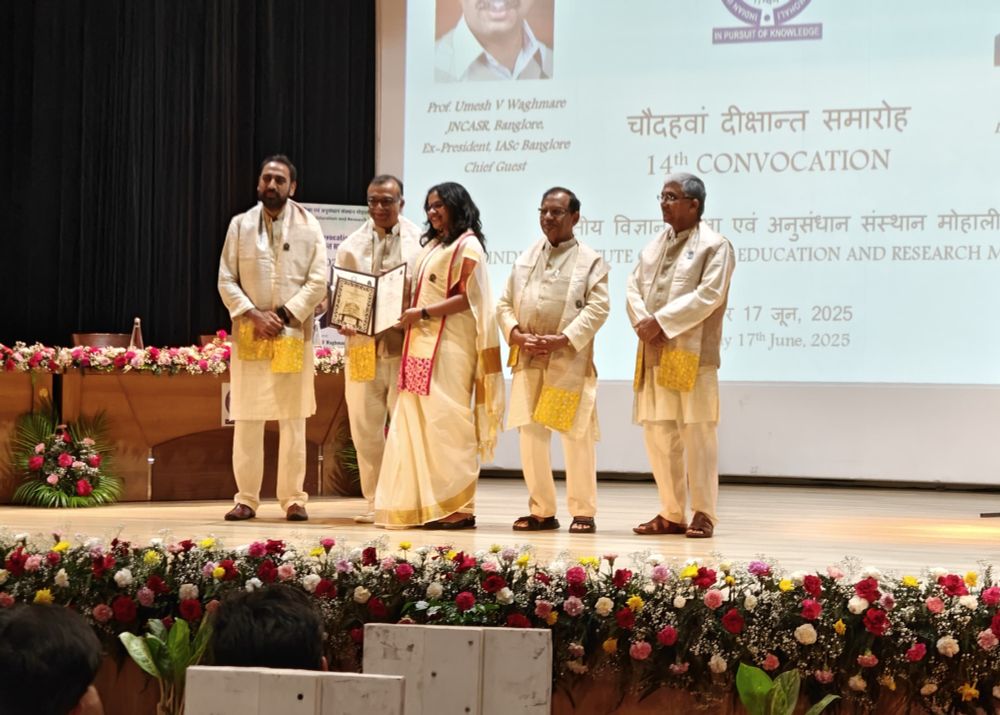
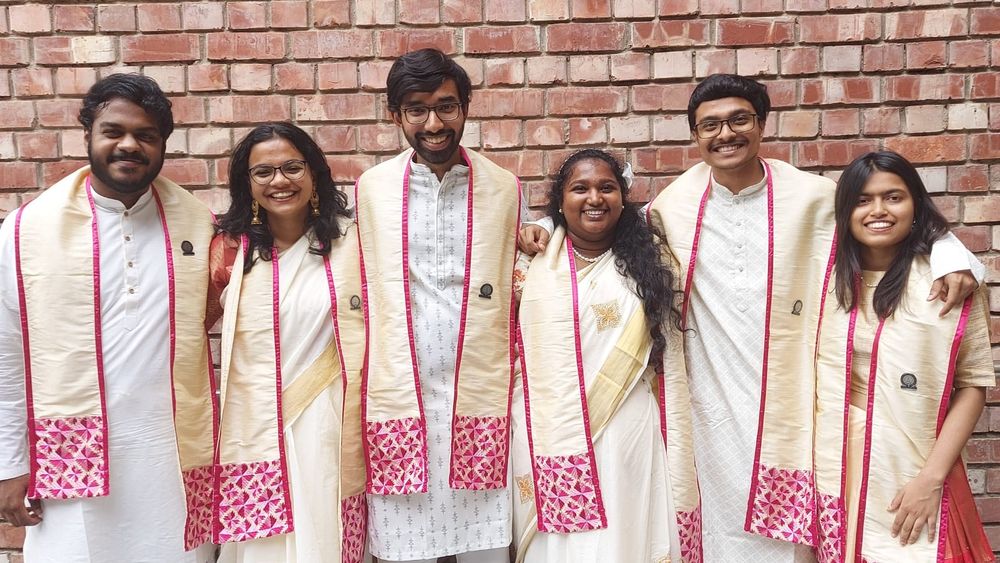
Excited to announce that I officially graduated from IISER Mohali with a Master's in Physics. This journey would not have been possible without the support of family and my amazing friends. I will forever miss the last 5 years.
Hey! I'm no longer just a high school grad!
23.06.2025 06:11 — 👍 9 🔁 1 💬 0 📌 0
Finally published!
academic.oup.com/mnras/articl...
20.06.2025 07:45 — 👍 7 🔁 2 💬 0 📌 0
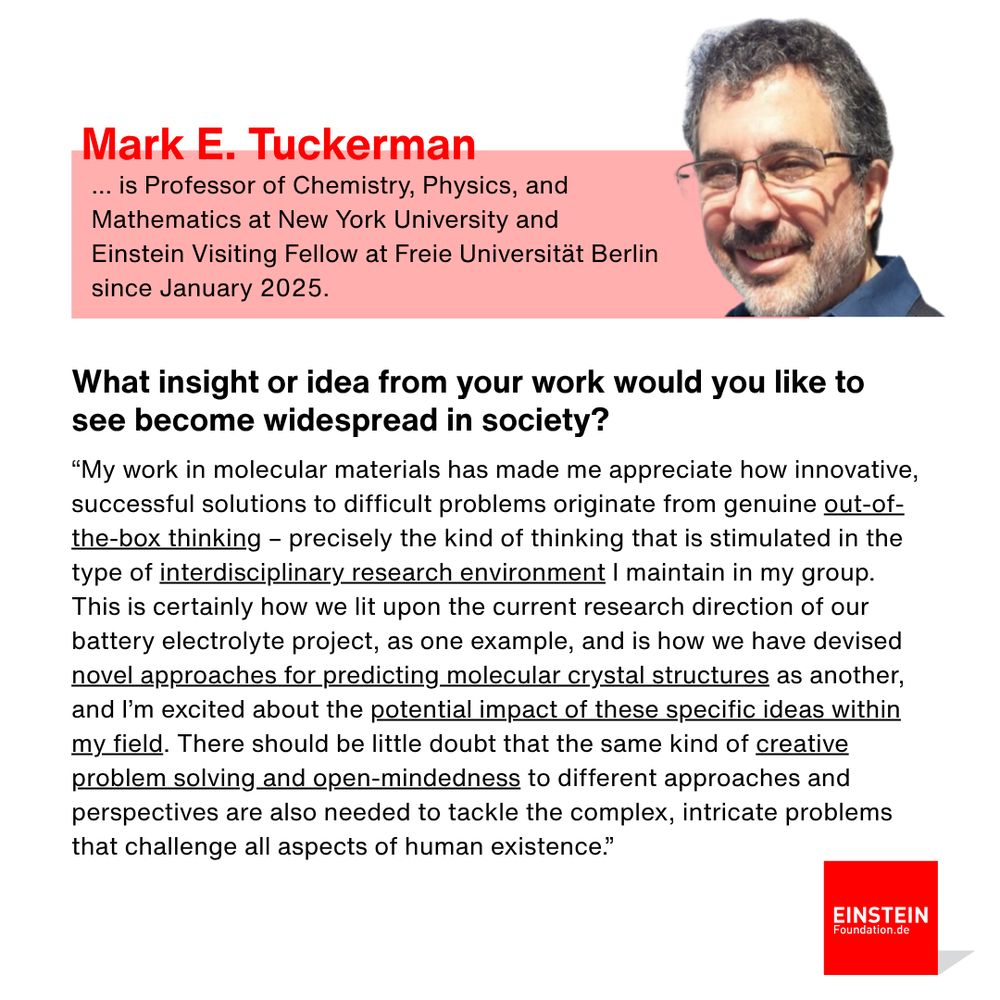
🔋Einstein Visiting Fellow Mark Tuckerman @grouptuckerman.bsky.social / @nyu.edu together w/ @cecclementi.bsky.social / @freieuniversitaet.bsky.social investigates novel liquid electrolytes for battery applications focussing on performance + lifespan.
www.einsteinfoundation.de/en/questionn...
11.06.2025 09:05 — 👍 3 🔁 1 💬 0 📌 0
Take a look to learn more about the prospects of forming close-in exoplanets in-situ by pebble accretion!
02.05.2025 08:14 — 👍 12 🔁 3 💬 0 📌 0
I am also very thankful to the DAAD-WISE fellowship, without which I would not have been able to go to Goettingen!
02.05.2025 04:52 — 👍 2 🔁 0 💬 0 📌 0
This work analyses the influence of some parameters on pebble accretion for planets within 1 au of their parent stars. I am incredibly grateful to #MNRAS for accepting my fee waiver and allowing this work to exist outside my VS code.
02.05.2025 04:52 — 👍 2 🔁 1 💬 1 📌 0

Can Close-In Exoplanets form by Pebble Accretion?
Pebble accretion is the leading theory for the formation of exoplanets more massive than the Earth. Many parameters influence planet growth in the pebble accretion models. In this paper, we study the ...
Excited to announce that my first first-author paper, on pebble accretion, has finally been accepted by #MNRAS! Extremely grateful to @astrojoanna.bsky.social and @turbulenthuman.bsky.social for having helped and guided me on this work for the past 2 years!
arxiv.org/abs/2505.00090
02.05.2025 04:52 — 👍 11 🔁 1 💬 1 📌 2
Jayashree Narayan - INSPIRE Potentials fellows - Equal Opportunities - Outreach - nccr-marvel.ch :: NCCR MARVEL
Happy to have been interviewed by Nicola Nosengo for the MARVEL Inspire scholarship interviews! I was lucky to have been among the most inspiring women at
EPFL!
nccr-marvel.ch/outreach/equ...
28.03.2025 09:44 — 👍 1 🔁 0 💬 0 📌 0
New here! Who should I be following? Looking for astronomers / professional astronomy groups, particularly those from underrepresented backgrounds
17.03.2025 10:27 — 👍 2 🔁 1 💬 0 📌 0
My first act as a physics major was to pick a fight with the dirac delta function.
26.01.2025 18:52 — 👍 5 🔁 0 💬 0 📌 0
Graduate student in the Rhodes Lab at UW-Madison, materials chemistry
Organic synthesis | Methodology | Catalysis | C–H functionalization | Arynes ⬢ Mechanochemistry ⛬ Dept. of Chemistry – BMC, Uppsala University, Sweden.
Acta Physico-Chimica Sinica (IF = 13.5), a journal from Chinese Chemical Society and Peking University @pku1898.bsky.social, focusing on #Physical_Chemistry
I enjoy playing with family, reading science fiction and history, gardening, board games, and jazzercise. I'm a father, husband, Navy veteran, and graduate student studying computer science at George Mason University.
Mastodon: https://scicomm.xyz/@David
Birds, Brains, and Behavior | @mpinb.mpg.de & Undergrad @IIScBangalore
Basque Center for Materials, Applications and Nanostructures
Leioa (Basque Country- Spain)
New Materials for a Better Life!
www.bcmaterials.net
#MaterialsScience
Caltech theoretical physicist
Planeten formazioa ikertzen, PhD at Max Planck Institute for Solar System Research
A career network featuring science jobs in academia and industry.
Visit our platform at www.science.hr
The Institute of Science and Technology Austria (ISTA) is dedicated to cutting-edge basic research and graduate education.
www.ista.ac.at
Software quântico raro que publica tarô e que também está conectado em IAs. Dicas na postagem fixada 🌱🌎 @terraprotege.bsky.social
Keeping you posted on space science activities from the European Space Agency.
Web: http://www.esa.int/science
Privacy Notice: esa.int/connectwithus
#astronomy #space #science
ELISIR group leader at EPFL working on lipids and membranes using chemical biology
Prof @sydneyuni.bsky.social Engineer and scientist building bridges between research & industry at USYD & @ansto.bsky.social, Australia.
She/Her. Mum & wife. Leader & Mentor. Loving ⛷🏄♀️ & life in general! Comments are my own
News and information from the European Commission. Social media and data protection policy: http://europa.eu/!MnfFmT
Deep learning, computational chemistry, generative modeling, AI for Science. Principal Research Manager at Microsoft Research AI for Science.
PhD student at CBS Montpellier 🇫🇷
MD simulations of proteins, RNA and condensates 🧬💻
Data Scientist Generative AI @BayerCropScience. ML for Plant Biology. PhD @IowaStateUniversity https://www.linkedin.com/in/koushik-nagasubramanian/