I just collected more data on first- and second-order misperceptions and will post here at a later date when I post the results 5/5
12.01.2026 22:41 — 👍 2 🔁 0 💬 0 📌 0
because estimating (often obscure) quantities is challenging. So telling someone the correct answer will likely update an answer they subsequently give, but it likely won't affect existing attitudes (especially since the attitudes are likely not caused by the estimate to begin with). 4/n
12.01.2026 22:40 — 👍 1 🔁 0 💬 1 📌 0
PNAS
Proceedings of the National Academy of Sciences (PNAS), a peer reviewed journal of the National Academy of Sciences (NAS) - an authoritative source of high-impact, original research that broadly spans...
Our 2025 PNAS paper (www.pnas.org/doi/10.1073/...) offers one explanation for this: anytime people estimate quantities (% of population that is foreign-born, % of Americans who own an Apple product, % of dots on a page that are blue), they make similar errors ... 3/n
12.01.2026 22:40 — 👍 1 🔁 0 💬 1 📌 0
Barnfield et al.'s paper looks similar: they find that providing correct information leads to more accurate estimates of thing people are estimating (here, second order beliefs), but not attitude-related outcomes ("policy feasibility perceptions, attitudes, and behavioural intentions"). 2/n
12.01.2026 22:40 — 👍 1 🔁 0 💬 1 📌 0
Exactly. This is also in line with a large body of work that shows correcting misperceptions (including numeric ones, see Hopkins et al. and Thorson's work on estimates related to immigration in the JOP and APSR, respectively) often results in updated estimates, but not attitudes. 1/n
12.01.2026 22:35 — 👍 1 🔁 0 💬 1 📌 0
Section28 - American Political Science Association (APSA)
Political Psychology (Section 28) The purpose of this section to facilitate communication across subfields and disciplinary boundaries among individuals
Published a political psychology book this year?
@erincassese.bsky.social, @lchristensen.bsky.social, and I are on the Robert E. Lane Award committee for the best book in political psych published in the past year
Deadline for nominations: March 1, 2026. Details below
apsanet.org/membership/o...
04.11.2025 15:01 — 👍 6 🔁 2 💬 0 📌 0
UNC Political Science is hiring in methods!
UNC has an amazing department and the triangle is a great place to live.
Tenure Track Assistant Professor in Methods (Deadline Oct 24)
link to the posting👇
unc.peopleadmin.com/postings/307...
#polisky #psjobs #poliscijobs
24.09.2025 18:00 — 👍 13 🔁 13 💬 1 📌 0
Every time this worry comes up (www.ft.com/content/d419...) I post some Landy et al. (2018).
People just answer questions about proportions (of anything) in a rather particular way. So I think it's unlikely that what they are being asked about is as important as you might expect it should be.
18.09.2025 08:41 — 👍 22 🔁 11 💬 4 📌 2
@fguelzau.bsky.social Here's the ungated draft of the PNAS paper: www.brianguay.com/files/guay_2...
18.09.2025 16:59 — 👍 1 🔁 0 💬 0 📌 0
Zaller remains undefeated
27.06.2025 13:08 — 👍 45 🔁 10 💬 1 📌 0
Thanks @florianfoos.bsky.social !!
25.04.2025 19:32 — 👍 1 🔁 0 💬 0 📌 0
thanks so much Conrad, I'll fix this!
08.04.2025 23:42 — 👍 2 🔁 0 💬 0 📌 0
Thanks to my fantastic co-authors @tylermarghetis.bsky.social , @david-landy.bsky.social , Cara Wong and everyone who gave us feedback over many years
Ungated earlier version of the paper here: www.brianguay.com/files/guay_2...
07.04.2025 12:00 — 👍 14 🔁 0 💬 0 📌 0
Our findings suggest that the public knows more about politics than we give them credit for:
People make errors when estimating politically-relevant percentages, but this is due to the format of the question not underlying misinformation about what they are estimating
07.04.2025 12:00 — 👍 13 🔁 0 💬 2 📌 1
Of course, characteristics of specific groups may matter, but only at the margins. We should first account for the domain-general errors people make *anytime* they estimate a percentage, then examine group-specific explanations
07.04.2025 12:00 — 👍 11 🔁 1 💬 1 📌 0
The same is true of theories that people overestimate the size of groups that they have a lot of social contact with. Very little evidence of this!
07.04.2025 12:00 — 👍 11 🔁 0 💬 1 📌 0

We also test popular theories that people overestimate the size of groups they fear. Not the case.
Again, misestimates result mainly from the psychological errors we make anytime we estimate %s, not from anything specific to the group being estimated
07.04.2025 12:00 — 👍 15 🔁 3 💬 1 📌 2
We argue that this pattern of over-under estimation arises from 🧠Bayesian reasoning under uncertainty🧠: people often have uncertain ideas in their minds about the size of these groups, but when they convert these ideas to percentages they ‘hedge’ their estimates toward a prior
07.04.2025 12:00 — 👍 16 🔁 1 💬 2 📌 0

And this is the same pattern of errors people make when estimating things like the percentage of dots on a page that are red 👇
07.04.2025 12:00 — 👍 18 🔁 1 💬 1 📌 1

Here’s the key figure: people make the same estimation errors regardless of what they are estimating---political and *entirely non-political* quantities.
These are 100k estimates of the size of racial and non-racial groups made by 37k people in 22 countries
07.04.2025 12:00 — 👍 21 🔁 3 💬 1 📌 2
Instead, people are just really bad at estimating percentages
They systematically overestimate smaller %s and underestimate larger %s, including ENTIRELY NON-POLITICAL %s, such as the % of the population that owns an Apple product, has a passport, or has indoor plumbing
07.04.2025 12:00 — 👍 31 🔁 7 💬 2 📌 3

We argue that journalists and academics are *wrong* when they interpret these misperceptions as evidence that the public is ignorant and misinformed 👇
07.04.2025 12:00 — 👍 20 🔁 3 💬 2 📌 1

New paper on misperceptions out in PNAS @pnas.org
www.pnas.org/doi/10.1073/...
Why do people overestimate the size of politically relevant groups (immigrant, LGBTQ, Jewish) and quantities (% of budget spent on foreign aid, % of refugees that are criminals)?🧵👇
07.04.2025 12:00 — 👍 270 🔁 97 💬 12 📌 21
This is not a time for passive citizenship. Silence means approval. So what to do?
03.02.2025 13:56 — 👍 524 🔁 72 💬 42 📌 8
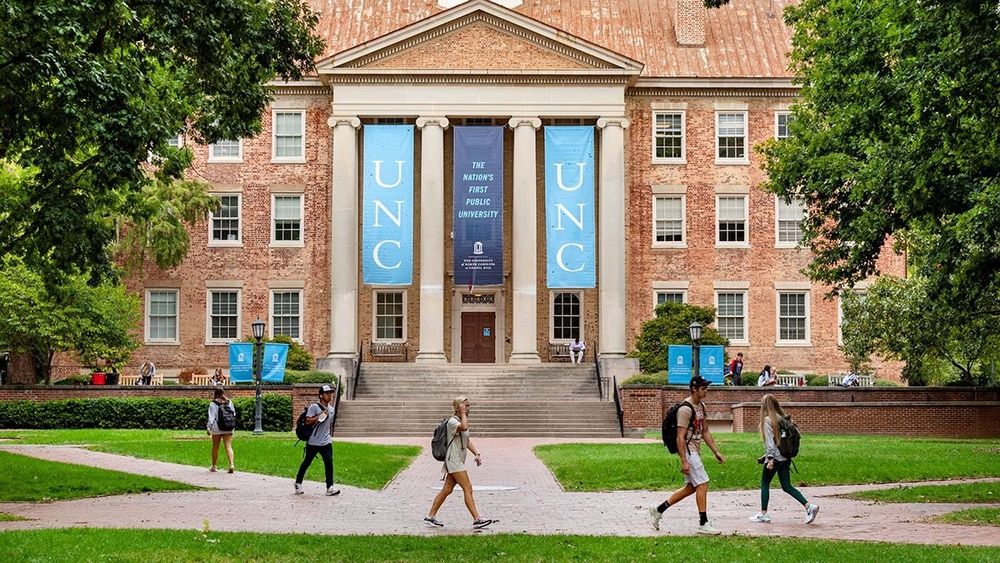
I'm very happy to share that I'll be joining the Department of Political Science at UNC Chapel Hill as an Assistant Professor this fall. I'm excited for this next chapter and will always be incredibly grateful for my amazing experience at Stony Brook.
21.01.2025 15:06 — 👍 25 🔁 0 💬 2 📌 0
I haven't been on bsky for almost a year. It's nice over here!
13.12.2024 15:11 — 👍 2 🔁 0 💬 0 📌 0
But the MOST important thing is that researchers *justify* their research design & analysis approach on normative/theoretical grounds and *pre-register* it
Doing so will help prevent researchers from talking past each other and move toward tackling problem of misinfo
29.03.2024 20:32 — 👍 1 🔁 0 💬 1 📌 0
Key takeaway: choose the design that aligns with your normative claim about how people should interact with information
e.g., the normative claim that aligns with discernment is that people should maximize accuracy of the content that they believe and share
29.03.2024 20:32 — 👍 0 🔁 0 💬 1 📌 0

We demonstrate these differences empirically by re-analyzing data from recent misinformation studies
Different research designs and outcomes = different conclusions about whether misinformation interventions work
29.03.2024 20:32 — 👍 1 🔁 1 💬 1 📌 0
The Journal of Race, Ethnicity, and Politics is the official journal of the Race, Ethnicity, and Politics section of the American Political Science Association, published by @cambup-polsci.cambridge.org.
Researcher @svrmigration.bsky.social | research: migration, citizenship, borders, social inequality
The Center for the Study of Democratic Politics (CSDP) at Princeton University supports research and educational programming on democratic political institutions and behavior.
https://csdp.princeton.edu/
Asst Prof @ Ohio State. I study how we perceive and represent the (spatial) world. More here: spatialcognitionlab.org
Political Science PhD Candidate @StonyBrookU. Political psychology, public opinion, economic attitudes.
I’m on the job market!
www.adampanish.com
Professor of Political Science at UC Berkeley
Ars Technica's science editor. Various other things that are far less interesting.
Check my author profile on Ars for my email. jtimmer.95 on Signal.
Demography nerd at Pew Research Center
Global religious change, sociology
Explore groundbreaking news and research from PNAS, one of the world's most-cited scientific journals. Discover its sibling journal, @pnasnexus.org, both official research journals of the U.S. National Academy of Sciences. Visit www.pnas.org for more info.
Editor of The Bulwark
https://www.thebulwark.com/
Host of a Secret Podcast.
Also a super double-secret podcast you can't find.
Associate Professor of Political Science at UNC.
www.simonweschle.com
State & local politics + computational social science.
tylersimko.com
Prof at UC Berkeley. Formal theory, political beliefs, democracy.
Associate Editor at @ajpseditor.bsky.social
https://anthlittle.github.io/
Assistant Prof | UNC at Chapel Hill | '24 Carnegie Fellow | Studying US public opinion, parties, Congress and American Political Development | Go Bills! | www.neilobrian.com
computational social scientist
Political scientist; Associate Professor at New York University. Author of “Envy in Politics” and “From Pews to Politics.” Founder of Identities&Ideologies Project at NYU. https://sites.google.com/site/gwynethmcclendon/
Professor of climate + energy policy at UCSB. Alumni of MIT, Columbia and UToronto. Hosts "A Matter of Degrees" podcast. Cuts carbon pollution! Proudly 🇨🇦 Gardener 🌱 leahstokes.com
Professor of Sociology, Psychology, & Org Behavior, Stanford University
Director, Polarization and Social Change Lab, @pascl-stanford.bsky.social
Co-Director, Stanford Center on Philanthropy and Civil Society
Duke Professor directing https://scai.duke.edu, https://sicss.io & https://polarizationlab.com. Author of Breaking the Social Media Prism.