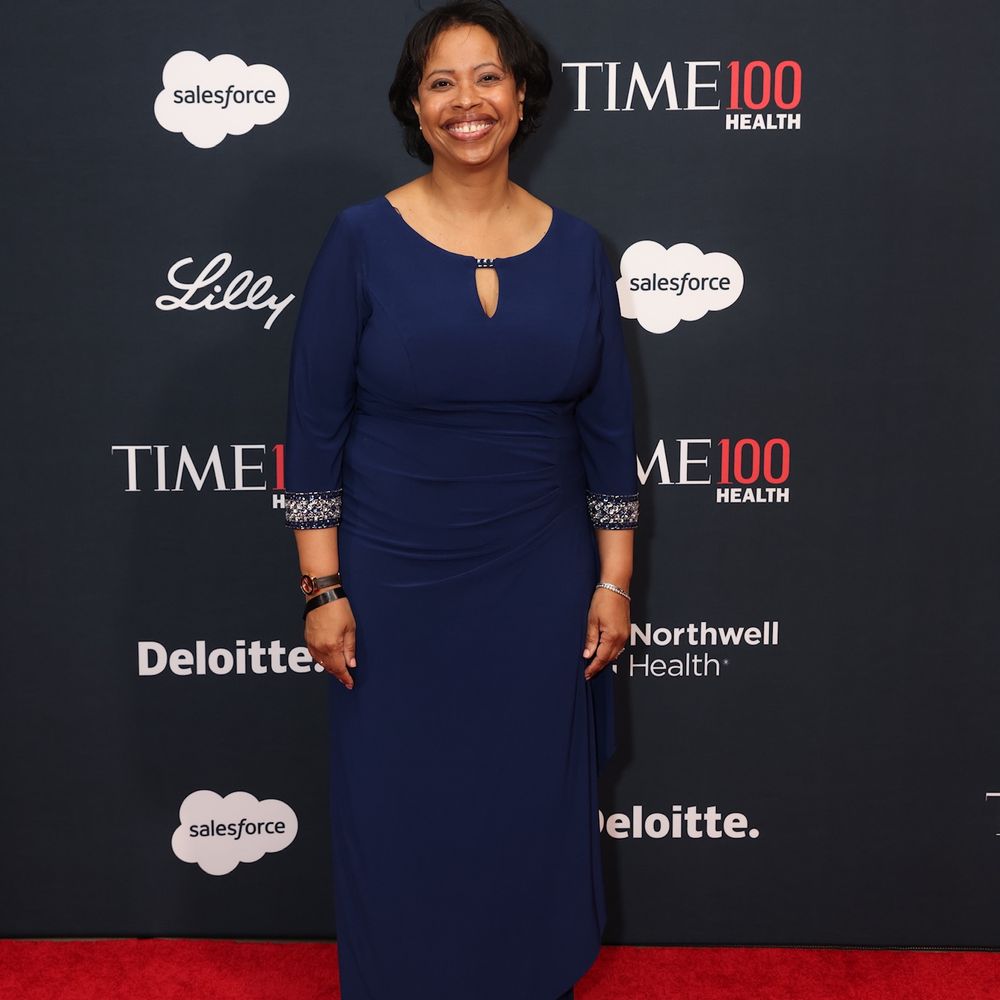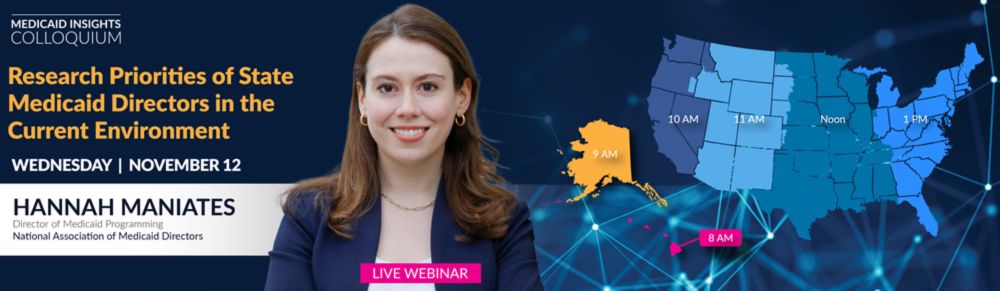
Very excited that Hannah Maniates from the National Association of Medicaid Directors will be joining us for our next Medicaid Insights Colloquium on Nov. 12.
Register: us06web.zoom.us/webinar/regi...

@wschpero.bsky.social
Assistant professor @weillcornell.bsky.social. Health economist studying Medicaid, the health care safety net, and inequity. Website: williamschpero.com
Very excited that Hannah Maniates from the National Association of Medicaid Directors will be joining us for our next Medicaid Insights Colloquium on Nov. 12.
Register: us06web.zoom.us/webinar/regi...
We are grateful for support from @commonwealthfund.org and @rwjf.org.
cc @acinthedc.bsky.social @khemp.bsky.social @chpc-cornell.bsky.social
6/6

For more:
➡️ Publication in @jamahealthforum.com: jamanetwork.com/journals/jam...
➡️ Checklist and Related Resources: tafchecklist.org
➡️ Video Explainer: www.youtube.com/watch?v=27_t...
5/N
The Checklist represents a multi-year effort to develop best practices by a sub-committee of the Medicaid Data Learning Network (MDLN), hosted at @academyhealth.bsky.social.
We benefited from a ton of input across a broad cross-section of the Medicaid research community.
4/N
The TAF Checklist — akin to the STROBE checklist for observational research — recommends a series of items that should be reported in analyses using these data to ensure that TAF-derived research is both high quality and reproducible.
3/N
The advent of TAF in 2019 has done much to catalyze timely research on the Medicaid program.
Yet, the data are highly complex, with varying quality across data elements and states.
2/N

We are excited today to launch the T-MSIS Analytic Files (TAF) Analysis Reporting Checklist, which is designed to guide reporting of research using the TAF, the new generation Medicaid claims data.
See @jamahealthforum.com: jamanetwork.com/journals/jam...
Links to resources in thread below ⬇️
1/N

🚨📝 New CHPC memo out now! This brief titled, “State Policy Levers to Improve Medicaid Pediatric Provider Payment” synthesizes a recent study by CHPC/Weill Cornell faculty members Drs. Beth McGinty, Kayla Tormohlen, Sallie Permar, Cori Green, & Ilina Das Ewen.
📖 Read here: buff.ly/fxNfaMG

For decades, the narrowly defined Emergency Medicaid (EM) program has reimbursed hospitals for emergency care provided to uninsured, low-income immigrants.
In @nejm.org, we write in defense of state flexibilities in EM, which seem at risk: www.nejm.org/doi/full/10....
cc @chpc-cornell.bsky.social
➡️ Please spread the word:
The Medicaid Data Learning Network (MDLN) is launching a survey to gain insights into researchers’ use of federal Medicaid claims data (TAF).
The survey will help the MDLN advocate for improvements to data access / quality.
weillcornell.az1.qualtrics.com/jfe/form/SV_...
Check out our article in Health Affairs Forefront:
www.healthaffairs.org/content/fore...
Dig through individual responses (with comments) on the CHPC website:
healthpolicycenter.cornell.edu/chpc/surveys...
3/3
Every 5-6 weeks, the Cornell Health Policy Center (@chpc-cornell.bsky.social) will survey 64 leading health policy researchers on the most pressing health policy topics of the day.
To start: effects of Medicaid work requirements under the One Big Beautiful Bill Act.
2/N

For many years, the Clark Center at Chicago Booth has regularly surveyed leading economists to assess consensus on timely economic policy issues.
We are excited today to launch the Cornell Health Policy Insight Panel, where we extend that model to health policy.
1/N ⬇️

📣 It’s not too late to join us THIS THURSDAY for our September CHPC Journalism Series webinar: “Supporting Data-Driven Journalism on Medicaid Policy!”
🗓️ Thursday, September 25th | 2:00-3:00 PM ET
Register: buff.ly/PqOT9rD
Not great apples-to-apples estimates out there, but roughly my sense is rx is comparable, ED in Medicaid is higher, outpatient care in Medicaid is lower.
18.09.2025 18:36 — 👍 1 🔁 0 💬 1 📌 0
Link to Paper:
academic.oup.com/healthaffair...
6/6
cc @chpc-cornell.bsky.social
2. The OBBBA includes work requirement exemptions for certain groups, including folks who are "medically frail" or in treatment for SUD.
Our paper is an early proof-of-concept that states could use claims to automate exemptions (if allowed to do so in final regs).
5/N
➡️ We see two important implications:
1. Most expansion enrollees are actively receiving care. The coverage losses predicted under the OBBBA's work requirement will thus likely introduce discontinuities in care.
4/N

➡️ Key Finding 2: There was meaningful variation in health care use across states.
Rx use exhibited the largest variation across states, followed by outpatient visits, ED visits, and inpatient visits.
3/N

➡️ Key Finding 1: In 2022, over one-third of adult expansion enrollees had at least 1 diagnosed health condition.
One-quarter had an ED visit, while over 60% had outpatient visits and prescription drug fills.
2/N
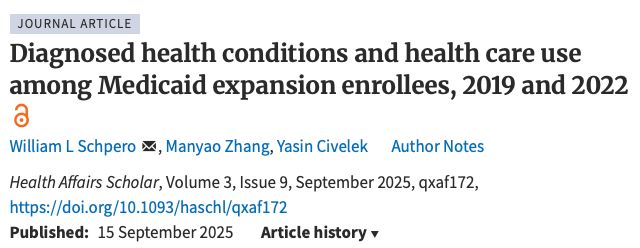
During debate on the OBBBA, I realized we know very little about health care needs and use in the adult Medicaid expansion population.
We have a short paper out in Health Affairs Scholar this week that uses national Medicaid claims data in an attempt to fill that gap:
⬇️ 1/N
Calling all health policy journalists:
Come to our session next week on data resources for reporting on Medicaid!

Dan Sacks and I are looking for a postdoc to work on Medicaid evaluation projects at UW-IRP. See posting: hr.wisc.edu/postdoc-and-... . Email your resume and cover letter to Tim Connor at tim.connor@wisc.edu.
For any questions regarding the position, please contact Dan Sacks at dan.sacks@wisc.edu

📢 Calling all journalists 📢
Join our third session of the Cornell Health Policy Center Journalism Series “Supporting Data-Driven Journalism on Medicaid Policy!”
🗓️ Thursday, September 25th | 2:00 PM–3:00 PM ET on Zoom
Register now:
🚨 Want to learn more about key public data resources for reporting on Medicaid policy issues?
Join our third session of the Cornell Health Policy Center Journalism Series
“Supporting Data-Driven Journalism on Medicaid Policy!”
🔗 Register: buff.ly/WsGMU4H
Please spread the word -- our next @chpc-cornell.bsky.social event for journalists is focused on data resources for reporting on Medicaid policy.
Details below:
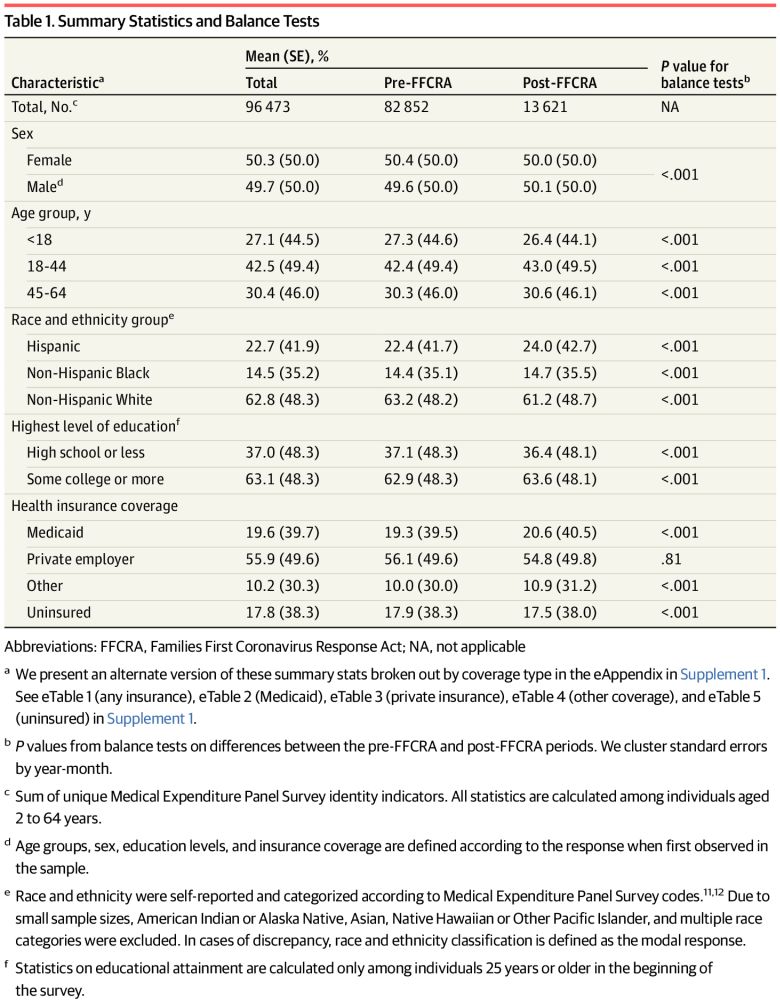
My co-authors Sarah Shubeck (UCM) & Emily Crawford (Booth PhD student) & I have a new paper in JAMA Health Forum studying the effects of the Families First Coronavirus Response Act (FFCRA) on insurance churn (defined as losing health insurance over the next 12 months) jamanetwork.com/journals/jam...
29.07.2025 16:56 — 👍 6 🔁 3 💬 1 📌 0Please spread the word!
Happening tomorrow.
Very clear article discussing our @beckerfriedman.bsky.social / @nber.org working paper and other aspects of healthcare job growth.
The full paper together with @nealemahoney.bsky.social @siepr.bsky.social @kevinrinz.bsky.social @victoriaudalova.bsky.social is here: gottlieb.ca/papers/Healt...
This portends another addition to the Cape Cod house that is subsidies for the safety net: Medicare DSH, Medicaid DSH, the Critical Access Hospital program, 340B, etc.
All have overlapping purposes and are subject to gaming and mis-targeting.