#SuperbOwl
08.02.2026 21:25 — 👍 1 🔁 0 💬 0 📌 0

McCoy's elf skink from northeastern Australia. Look at those stubby little arms, likely an adaptation to its burrowing lifestyle.
07.02.2026 18:18 — 👍 574 🔁 70 💬 15 📌 11

Other-wordly looking snail with half see-thru head and tail with white dots and green trim. Her shell is solid pink with squiggly lines. Completely alien looking.
I posted a video of this remarkable creature yesterday, here's a photo. It's a sea snail called a Miniature Melo. Amazing that I saw it because it's the size of a few grains of rice. This is at 10x zoom.
#marinelife #eastcoastkin #photography #love #ocean #maui #seascape #nokings #nature #amazing
03.02.2026 16:10 — 👍 66 🔁 8 💬 1 📌 1

Sea cucumbers spend their lives burrowing into and eating mud + sand. But this beautiful species—Enypniastes—is also capable of swimming by slowly undulating the cape-like structure around its top. And it's not a trick of the light: its organs actually glow in the dark, which may deter predators.
03.02.2026 19:00 — 👍 80 🔁 25 💬 0 📌 0
A beautiful Tritonia (nudibranch) from @schmidtocean.bsky.social dive 600 #CliffReefs #MarineLife
02.02.2026 16:36 — 👍 67 🔁 12 💬 0 📌 1
The taxonomic family Caprellidae contains 400+ species. They're sometimes called skeleton or ghost shrimps.
Here's what a male Caprella mutica looks like.
Trying NOT to imagine these as 9 foot tall and with a craving for human flesh. The swarm of tiny ones is terrifying enough.
02.02.2026 18:25 — 👍 79 🔁 14 💬 9 📌 1

Each division of #SICB is working on having a named role of media rep to build community and support for members throughout the year. 9/12 divisions have a rep now!
Welcome DEE's
Camille Boucaud of
www.heathheckmanlab.org
mgi.natsci.msu.edu/people/micro...
Thanks for coming aboard Camille!
02.02.2026 11:45 — 👍 1 🔁 1 💬 0 📌 0

Two milk colored gribbles with beady black eyes. from https://lastwordonnothing.com/2013/08/13/snark-week-the-gribble/

A milky bug with big black eyes looking alarmed. From: https://simple.wikipedia.org/wiki/Gribble

Wood munched on by gribbles. From https://lastwordonnothing.com/2013/08/13/snark-week-the-gribble/
Meet the gribble. These tiny pill-bug relatives live in the ocean and nosh on wood and plant debris. They were Enemy #1 during the days of wooden ships (along with shipworms), but have since faded into peaceful obscurity.
Like the gribbles of yore, may your future be filled with uneventful days.
30.01.2026 21:20 — 👍 196 🔁 36 💬 10 📌 7

Even in the frigid seas of Antarctica, life blooms 🪸
In just 24 hours of brooding in the lab, these Antarctic deep-sea coral larvae began to sprout their very first tentacles, giving WHOI biologist Rhian Waller a glimpse into the earliest stages of life far below the surface.
27.01.2026 17:00 — 👍 25 🔁 7 💬 0 📌 0

The most beautiful #snail ever to exist!
Many #marine snails go through an early life stage called #veliger, wherein they drift along with the #plankton before settling onto the sea floor as an adult. We call this, #sparkles
#blackwater #blackwaterdiving #mollusk #gug
30.01.2026 12:33 — 👍 117 🔁 35 💬 1 📌 3

La entrada sobre Acociles (cangrejos de río en Náhuatl) de la Historia general de las cosas de Nueva España muestra que Bernardino de Sahagún no los conocía de Castilla
Normal, mediado el sXVI el cangrejo italiano, eso que @miteco.gob.es llama cangrejo ibérico, aun no había sido introducido
(sigue)
26.01.2026 13:58 — 👍 20 🔁 11 💬 2 📌 2
Disco slugs (for science!) This sea slug steals chloroplasts from the algae it eats, making it one of the few animals that can do photosynthesis. But what kind of relationship does the slug have with these organelles stolen from a different kingdom of life? 🦑🧪
20.01.2026 18:19 — 👍 16 🔁 3 💬 1 📌 1
Baby Squid Kindergarten 🦑🫧 ͛.*
16.01.2026 10:53 — 👍 340 🔁 94 💬 6 📌 4
Home from another wonderful #SICB2026! A special thanks to all the symposium hosts and contributors who spoke with me for the SICB/ICB blog. I learned so much this meeting! ❤️
09.01.2026 20:25 — 👍 3 🔁 1 💬 0 📌 0

The US Academic Alliance for the IPCC (USAA-IPCC) was formed in March 2025 in part to prepare for this possibility and to ensure that US scientists remain able to engage in IPCC work regardless of the status and role of the US government. With the support of the USAA-IPCC, more than 70 US citizens and US-based experts who are currently serving the IPCC as coordinating lead authors, lead authors, review editors and committee members will continue to play these roles.
“US climate scientists have made incredible contributions to understanding our planet’s life support systems and the impacts and risks of climate change. Their role as key players in IPCC reports have helped the US maintain our preeminent position in science and technology, and this global scientific cooperation will continue despite this unfortunate decision,” said Dr. Pamela McElwee, Professor of Human Ecology at Rutgers University, who serves as chair of the steering committee of the Alliance.
“There is a reason we call our community the global scientific enterprise. We cannot grow, innovate, or advance unless we are linked together sharing, analyzing, and deliberating on vital climate data through critical international organizations like the IPCC. In the wake of this devastating move, AGU pledges to do all it can to bridge global partnership, research, and dialogue,” said Dr. Brandon Jones, President of the American Geophysical Union (AGU), which hosts the Alliance.
The Trump Administration began disengaging from IPCC prior to yesterday’s formal announcement. Since February of 2025, the US State Department has not nominated experts for involvement in IPCC work, nor supported travel to IPCC meetings for selected authors, a role they have played in all prior administrations. The US government also did not participate in either of the IPCC business sessions in 2025, the first time the US has not been in attendance since the IPCC’s founding in 1988.

As a result, the USAA-IPCC has assumed a key leadership role in nominating US scientists for consideration as authors for IPCC reports, including for the Seventh Assessment Report (nominating 282 authors in April 2025) and the Methodology Report on Carbon Dioxide Removal Technologies, Carbon Capture, Utilization and Storage (nominating 33 authors in December 2025), as well as for roles on the IPCC Task Group on Data Support and for participation in several expert workshops. AGU and the USAA-IPCC have also raised funds to support travel for US scientists and technical experts selected by IPCC to attend author meetings and workshops.
Since the founding of the IPCC over four decades ago, US scientists and other experts have made critical contributions, leading formal processes as Working Group co-chairs as well as filling vitally important author and reviewer roles. IPCC findings have shaped science-based policy at all levels—from global climate agreements to local resilience plans—and strengthen the ability of policy communities to make informed decisions. Ensuring US scientists remain fully engaged in the IPCC and the global climate science community will lead to important new research opportunities and international collaborations that benefit the US in substantial ways. The USAA-IPCC looks forward to continuing our support of US climate experts, climate science research, and the IPCC.
—--
The USAA-IPCC (https://www.usaa-ipcc.org/) is composed of all the US academic institutions that have observer status with the IPCC – Colby College, College of the Atlantic, Dickinson College, Emory University, Indiana University, Princeton University, Rutgers University, Washington University in St. Louis, University of California San Diego, Woods Hole Oceanographic Institution, and Yale University – together with the American Geophysical Union (AGU), which hosts the Alliance.
The Trump Administration's announced withdraw from the IPCC is disappointing, but not surprising. US scientists will continue to play key roles in the @ipcc.bsky.social. A statement from the US Academic Alliance for the IPCC:
08.01.2026 20:08 — 👍 44 🔁 18 💬 2 📌 1
The world feels rough right now
So please enjoy this shrimp, filmed off Cozumel, Mexico. It may be a larval reef shrimp, but we don’t know what species or how long it lives or what it eats. The world is still full of wonder and beauty and mystery.
🎥 @pedrovalenciam scuba diver on Insta
08.01.2026 20:20 — 👍 1875 🔁 655 💬 43 📌 48
If you haven't already - please help us shape our next academic conference in Autumn 2026 by filling out a quick survey!
07.01.2026 10:58 — 👍 3 🔁 3 💬 0 📌 0
Umvvelt
All originally designed sea life merchandise to show your love for the ocean & its wonders!
Umvvelt.fish! (I swear I should start asking them for business cards to hand out given how many times I recommend them every conference!)
06.01.2026 06:07 — 👍 10 🔁 1 💬 2 📌 0
Today! #SICB2026
05.01.2026 14:51 — 👍 2 🔁 0 💬 0 📌 0

Logo for the Sex Across Origins symposium. A round cell looks like it’s about to divide, with spindle fibers. In the middle there are two rainbow-colored phylogenies. Outside the cell, it says “Sexes Across Origins” on top, and “SICB 2026” on the bottom
It’s happening!!
#SICB2026 Tomorrow, from 8AM to 3:30PM come to C120/121/122 for ✨Sex Across Origins: Questioning animal-centric assumptions and developing integrative frameworks.✨
Also! 3 fantastic complimentary sessions Tuesday in B113, with a special focus on education in the morning.
05.01.2026 04:32 — 👍 31 🔁 15 💬 0 📌 1
SICB friends!
Want to learn about how crayfish eat invasive aquatic plants? Come for the science, stay for my fabulous crayfish fashion!
8:15am tomorrow in B110/111. #SICB2026
05.01.2026 07:10 — 👍 3 🔁 3 💬 0 📌 1

A flyer for a webinar on the ecology and life history of Midwestern crayfishes happening on Wednesday December 17 at 10 AM CT
The Invasive Crayfish Collaborative is closing out 2025 with a webinar tomorrow (Wednesday Dec. 17) at 10 AM CT from Dr. Chris Taylor (@prairieresearch.bsky.social). Learn about all things Midwest crayfishes (sorry Chappell fans, no princesses here) by registering: invasivecrayfish.org/events1/
17.12.2025 01:00 — 👍 6 🔁 3 💬 0 📌 0
S T Y L I S H
02.12.2025 22:38 — 👍 4 🔁 1 💬 0 📌 0


The rare & beautiful violet sea snail - a predator of Portuguese Man O’War & by-the-wind sailors. It lives its whole life at the surface of the open ocean, using a bubble raft to stay afloat. It’s normally more common in warmer waters but occasionally seen here
#marinebiology #marinelife #oceanlife
17.11.2025 19:03 — 👍 282 🔁 63 💬 6 📌 3

A brown snail with a cone-shaped shell sits on the head of a black salamander with yellow spots.

A brown snail with a cone-shaped shell sits on the head of a black salamander with yellow spots.

A brown snail with a cone-shaped shell sits on the head of a black salamander with yellow spots.

A brown snail with a cone-shaped shell sits on the head of a black salamander with yellow spots.
Snail traveling via salamander express — specifically, a Fire Salamander (Salamandra salamandra) — not something you see every day.
📷 harukano on iNaturalist
📍 Bulgaria
🔗: www.inaturalist.org/observations...
#ObservationOfTheDay
17.11.2025 19:56 — 👍 139 🔁 42 💬 2 📌 4

Parrot's Feather (Myriophyllum aquaticum)
Spotlight: Parrot's Feather (Myriophyllum aquaticum) 🌿
This plant is a major aquatic threat, forming dense mats that choke native life, deplete oxygen, and block waterways.
#GuardIAS is managing its spread in Italy.
See our work: guardias.eu
#InvasiveSpecies #BioInvasions #IAS
17.11.2025 08:06 — 👍 5 🔁 4 💬 0 📌 0

Honoring the life of James A. Estes, a pioneering ecologist.
Honoring James A. Estes, a pioneering ecologist whose research on sea otters in Alaska revealed how predators shape entire ecosystems. His work helped define the concept of trophic cascades and inspired generations of ecologists. Read the PNAS Retrospective: https://ow.ly/leKs50XrKBH
14.11.2025 22:00 — 👍 23 🔁 8 💬 0 📌 3
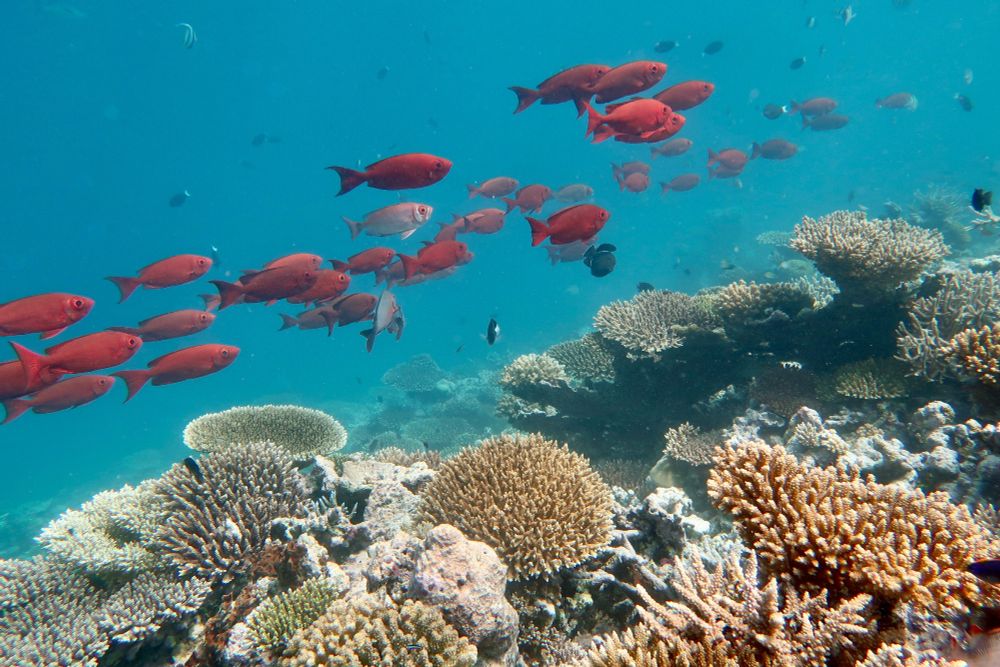
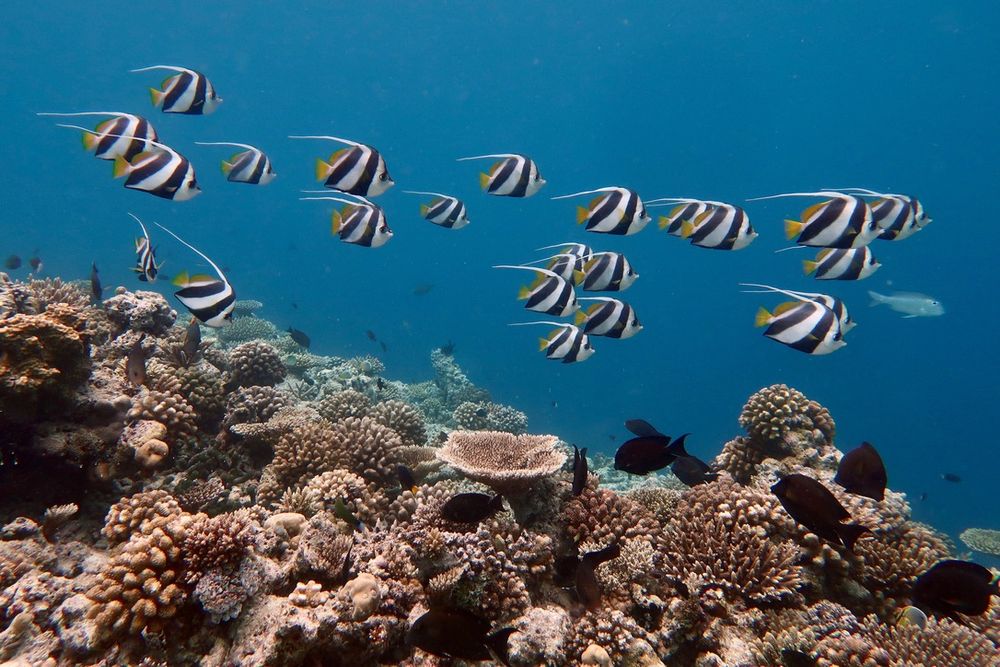
Heard of "Darwin's paradox"? It refers to Charles Darwin's observation that coral reefs are wildly productive despite occurring in nutrient-poor tropical oceans. Reefs are, so the story goes, oases in marine deserts 🏝️...
Turns out that 2/3 of these assertions are very wrong...
🌐
🦑🧪
🧵⬇️
06.06.2025 13:32 — 👍 121 🔁 55 💬 3 📌 3
Hi! I'm Stephanie, an aquatic ecologist working on species interactions at multiple scales.
Unfortunately, the ecology moderator's post seems to be missing, so hopefully you can help me out!
Here's a link to my ORCID profile: orcid.org/0000-0002-88...
04.11.2025 09:03 — 👍 0 🔁 0 💬 0 📌 0
posts autodelete; posts my own views | she/elle
🎧http://MeteorSciComm.org & Meteor #SciComm podcast
📖Teaching & Mentoring Science Writers (From UChicago Press)
✒🎨 https://schoolofgoodtrouble.substack.com
🎓Prof of Practic
🇨🇦 Animal model maker, biologist, high school science teacher, and lifelong learner of new ways to express creative energy.
#SciArt 🐡
3D-printable animals: Savimade.ca
Behavioural ecologist, meta-analyst & manga-lover
Evolutionary biologist & paleontologist. Website: http://bit.ly/JTCsite Macroevolution, phylogenetic comparative methods, diversification, phenotypic evolution of 🐠🌿🦋 Postdoc @iDiv in Leipzig
The official bsky account of
The Society for Integrative & Comparative Biology (sicb.org) If you’re a society member, feel free to tag us or email content to share SICBmedia@sicb.org & follow @sicbjournals.bsky.social
Immune cell evolution and cardiac innervation puns coming soon
Postdoc, Davidson Lab
🧬 Biomed experts mobilizing scientists to fight transphobia through education 🏳️⚧️
🌐 beyondxandy.org
✉️ info@beyondxandy.org
M.S. in Biology. 🐟🧬| PhD Student in the CEE Lab at USC 🌊🪸
https://doliva13.wixsite.com/website
Postdoctoral Fellow focusing on marine ecosystem functioning from temperate reefs 🌱 to tropical ones 🪸 in the face of global change 🌡️| Diver 🤿, Bodyboarder 🌊 and Swimmer 🏊🏼.
📍Based at @icmcsic.bsky.social 🇪🇸
🌐 https://jaycrlt.github.io
PhD, Prof. UQAR Québec
Mammal & Bird Ecology, Climate Change, Biodiversity, Arctic, Birding. To my 3 kids: Joy & Hope!
Écologie des mammifères & des oiseaux, changements climatiques, biodiversité, Arctique, ornitho. À mes 3 enfants : Joie & Espoir
Dad, ecologist & conservation scientist living on unceded Wurundjeri Country in Narrm. He/him.
Research: https://euanritchie.org/
The Conversation: bit.ly/2rjBg9A
Nature, SciComm, Politics, Music, Shodan🥋, 🏀, Carlton FC
🌈 Ally Born: 331 ppm CO2
Conservation Geographer @uni-hamburg.de. Land system science🏔️ | Conservation science🐼 | Protected area🏞️ | Spatial analysis🛰️
Senior researcher @CNRS (EDYSAN) @UPJV, Amiens, France #PhD in #forest #sciences 🌳🌲🌴 I study #biodiversity #plant #species #redistribution #microclimate #ecology #biostatistics #climatechange #BioShifts I don't wear 👨🔬 & never used a 🧪, yet I'm a scientist
Associate Prof. in Sapienza University. Interests in Macroecology, Conservation Biogeography, Global Change Biology, Urban Ecology and Animal Ecology. EIC for Diversity & Distributions. www.ecaslab.com
Senior scientist in #Ecology 🌍 #Biogeography 🗺 #Conservation #biology 🦇 at National Research Council of #Italy - @mail: luciano.bosso@cnr.it - Senior Editor of Journal of Biogeography 📚 Enthusiastic for #scientific #communication 🗣 and #outreach 📢
Trait-based ecology | Biodiversity
Professor of functional ecology
Department of Botany. University of Tartu
Environmental Scientist🌏👣🔥💀⌨️🌿🦎🦏🦋🐆🦉🐊🦑🍄🐠🕷️🐨🦘✊🏿Matthew Flinders Professor of Global Ecology @flindersuniversity.bsky.social Tarndanya/Adelaide, Sth Aus, Kaurna-Peramangk-Ngarrindjeri Country @globecoflinders.bsky.social & @ciehf.bsky.social
Biodiversity scientist at the University of Bern in Aquatic Ecology and Evolution
Researching biodiversity change under human influences.
Postdoc at @ LEC REEFS, Leadership Council member at BioTIME. Reef functioning, biodiversity, community ecology, nutrient fluxes. I try to love fish and corals equally.
(she/her)
cherchow.com
lec-reefs.org
biotime.st-andrews.ac.uk