www.sciencefocus.com/news/cow-too...
Tool use - when idiot humans land clear, what's a cow gotta do to keep preened, hey?
#sentience #philsci #animals #philsky #welfare #climate
22.01.2026 03:25 — 👍 9 🔁 5 💬 1 📌 2
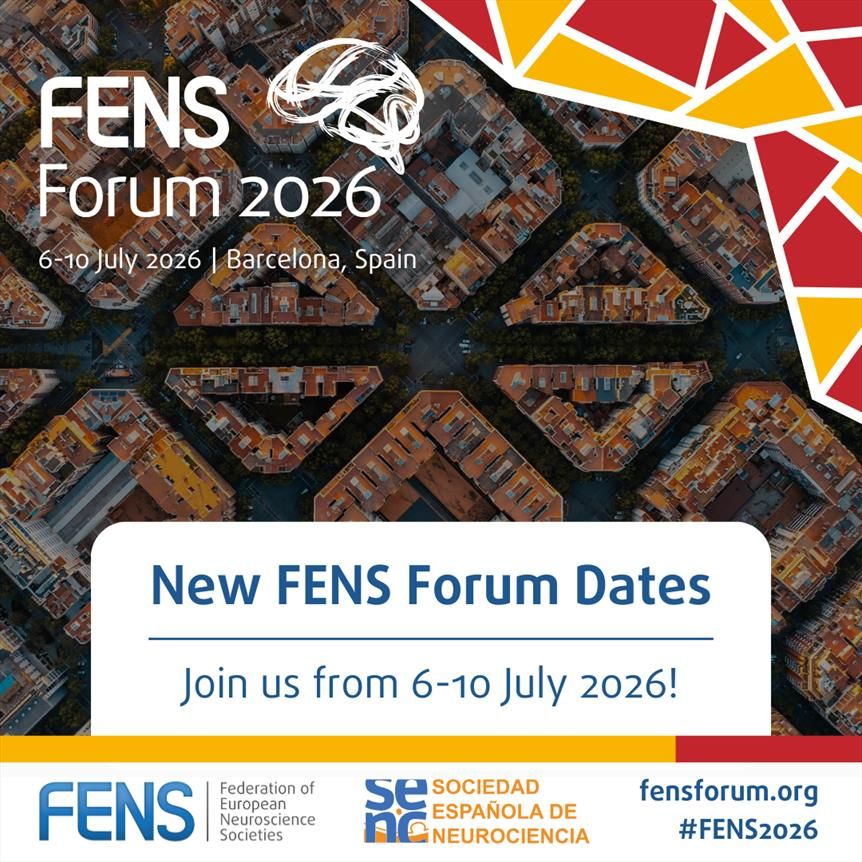
🚨 #FENS2026 NEW DATES 🚨
First, Formula 1 sent us from Madrid to #Barcelona. Now the Tour de France Grand Départ has us switching gears again—we're updating our dates to 6-10 July 2026! 🗓️
Find out more 👉: https://loom.ly/zMkMKcA
🔔 Stay tuned!
01.08.2025 10:30 — 👍 13 🔁 9 💬 1 📌 3

Globally, no single day in 2025 was cooler than its 1991-2020 average.
climate.copernicus.eu/global-clima...
14.01.2026 12:44 — 👍 1003 🔁 677 💬 19 📌 74
This 2017 preprint by @suryaganguli.bsky.social is foundational: the dimension of a neural code can't be > that of the experiment used to measure it. Yet it is not very widely known. Maybe because people don't like the message? And because it's "unpublished"? (After writing it, Gao left for SpaceX)
24.11.2025 09:16 — 👍 23 🔁 5 💬 2 📌 0

Part of a Lancet Infographic summarising the findings from the Lancet Series on Ultra-Processed Foods and Human Health.

Part of a Lancet Infographic summarising the findings from the Lancet Series on Ultra-Processed Foods and Human Health.

Part of a Lancet Infographic summarising the findings from the Lancet Series on Ultra-Processed Foods and Human Health.
Ultra-processed foods – what’s the impact?
In a new Lancet Series, experts warn a global rise in #UPFs presents a growing public health threat.
Read the evidence & policy recommendations ⬇️
spkl.io/63327AduhR
19.11.2025 14:33 — 👍 54 🔁 34 💬 3 📌 9

Universities should be more ambitious in the climate transition, according to The Young Academy - De Jonge Akademie
News
Proud to share our manifesto - with a vision and concrete steps towards just sustainability transitions in Dutch academia!
With @rogierk.bsky.social, De Jonge Akademie, Green Young Academy
www.dejongeakademie.nl/en/news/3148...
04.11.2025 11:43 — 👍 12 🔁 4 💬 0 📌 0
Very proud to have launched our manifesto and report to make Dutch academia more sustainable - a moment to celebrate after two years of hard work with the Green Young Academy, DJA and many inspiring colleagues
dejongeakademie.nl/en/news/3148...
05.11.2025 19:29 — 👍 24 🔁 7 💬 0 📌 0

Is academic research becoming too competitive? Nature examines the data
Applications for European research grants increased in 2025. Scientists say they’re feeling the competition.
“Is academic research becoming too competitive?”
Alternative framing:
“Is academic research becoming too unsupported?”
The former suggests the blame is on the researchers. The latter highlights underlying causes.
www.nature.com/articles/d41...
18.10.2025 15:17 — 👍 50 🔁 21 💬 5 📌 2
New article “Disentangling Metabolic & Neurovascular Timescales Supporting Cognitive Processes” by CIMeC_UniTrento in collaboration with leading partner institutes
Congrats F.Saviola, S. Tambalo, L. Beghini, A. Ferrari, B. Cassone, D. Van De Ville, J. Jovicich!
#PNAS: doi.org/10.1073/pnas.2506513122
23.09.2025 21:21 — 👍 5 🔁 3 💬 0 📌 0

This is the kind of public intellectualism that makes the public hate intellectuals. Instead of showing what ideas have to teach us about life, Pinker holds a gun to life’s head and demands it conform to his thought experiments. And he does it with the patronizing tone of someone telling his readers what to think from on high. In one passage, prompting us to imagine increasingly higher-order levels of knowledge about knowledge, he virtually pats us on the head. “Now let’s try four layers,” he writes. After we’ve tackled four, he asks, encouragingly, “Think you can handle a fifth layer?”
This new book sounds interesting
06.10.2025 01:35 — 👍 23 🔁 4 💬 2 📌 0

Public engagement: building common ground
How can we help to bridge this divide? Simply producing more excep tional science will not be enough to rebuild public trust. Rather, we must adopt a new model that recognizes communication and advocacy as core pillars of science, on a par with rigor and reproducibility. Public engagement efforts should be valued for faculty promotions, much like obtaining grants and publishing our findings in scientific journals. Researchers should be recognized and rewarded for activities such as giving public talks, working with local schools, engaging with policy makers, developing social media campaigns and platforms or writing accessible articles for general audiences. Developing these skills must be an integral part of scientific training, reinforcing the notion that the responsibility to champion science lies with us. Courses that teach graduate students and postdocs to communicate complex ideas clearly, to use social media effectively and to advocate for evidencebased policies must be deemed critical and supported by our universities. These efforts should not be viewed as distractions from research but woven into the fabric of what we do as scientists. Rebuilding public trust requires a cultural paradigm shift: scientists must see themselves not just as producers of knowledge, but also as its ambassadors and translators. Such a fundamental change will occur only if it is embraced by our scientific leaders and institutions, emphasizing the critical role of public engagement for science to succeed.
A thought-provoking piece in Nature Neuroscience by many neuroscience colleagues: "Science must break its silence to rebuild public trust". Lots to think about here.
www.nature.com/articles/s41...
14.10.2025 20:51 — 👍 57 🔁 22 💬 1 📌 2

Un estudi del Clínic-IDIBAPS ha demostrat que, en animals sans, càrregues moderades d’exercici físic poden desencadenar fibril·lació auricular, una alteració del ritme cardíac caracteritzada per batecs auriculars ràpids i irregulars
👉https://f.mtr.cool/yghyhfyhij
14.08.2025 18:02 — 👍 1 🔁 1 💬 0 📌 0

Camila is doing a very good job at presenting her poster "Long Range Cortical Interaction during comparison of sensory and cognitive information" today at #CCN2025!
15.08.2025 14:12 — 👍 5 🔁 1 💬 0 📌 0

Sad to miss #CCN2025. It will be the 1st conference where a PhD working w/ me will speak 😭
go see Lubna's talk (Friday) about distributed neural correlates of flexible decision making in 🐒,
work done in collaboration w/ @scottbrincat.bsky.social @siegellab.bsky.social & @earlkmiller.bsky.social
10.08.2025 15:56 — 👍 59 🔁 18 💬 1 📌 0
If you are around for #CCN2025, come to B71 poster to know more how we (internally) forage for information and how RL can explain it!
13.08.2025 09:57 — 👍 14 🔁 3 💬 0 📌 0

@davidpoeppel.bsky.social points out the elephant in the conference: whichever direction of the planet we look, things are bad.
Einstein, chomsky and arendt point out to us that silence is not neutral
👏 #CCN2025
14.08.2025 06:39 — 👍 68 🔁 12 💬 1 📌 2
Oh look, tech company emissions are already up 150%, and the AI data center build out has just gotten started.
10.06.2025 19:40 — 👍 314 🔁 174 💬 13 📌 10
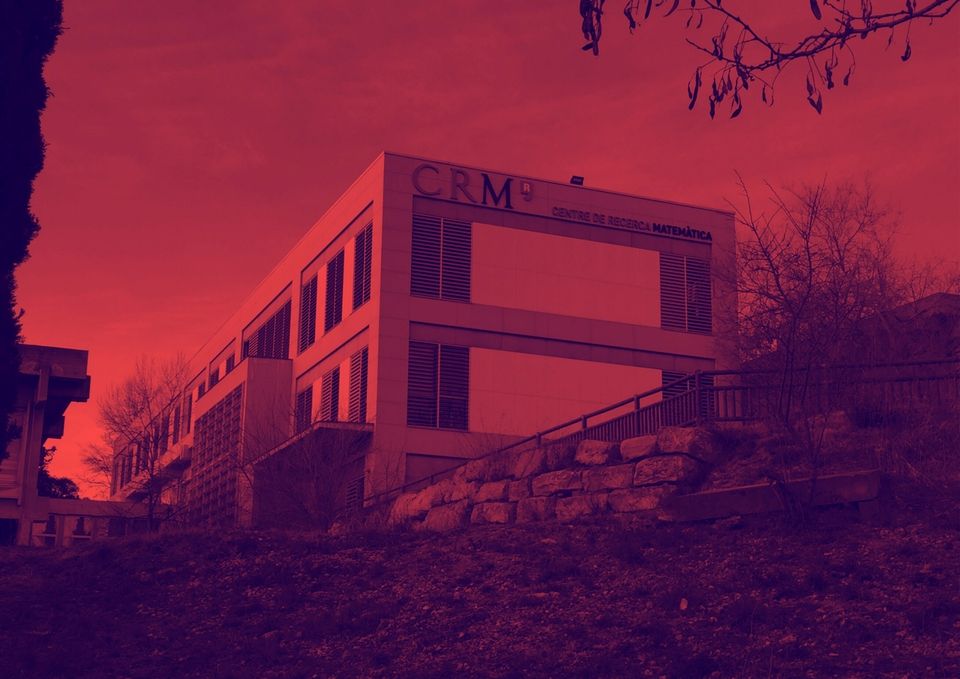
BARCCSYN 2025 - Centre de Recerca Matemàtica
DEADLINE FOR TALKS OR POSTER PRESENTATIONS April 21st, 2025 REGISTRATION FEE 130 € (100 € for Members of the Catalan Society of Mathematics or Members of the Catalan Society of Biology) Barcelona Comp...
🎉 Excited to announce #BARCCSYN2025 – May 22–23 in Barcelona!
Keynotes by:
🧠 Matteo Carandini ( @carandinilab.net )
🧠 Megan Carey ( @megancarey.bsky.social )
🧠 Chris Summerfield ( @summerfieldlab.bsky.social )
Submit your talk/poster by April 21 & register by May 11!
🔗 crm.cat/barccsyn-2025
04.04.2025 13:34 — 👍 20 🔁 8 💬 0 📌 0
Accumulation of virtual tokens towards a jackpot reward enhances performance and value encoding in dorsal anterior cingulate cortex https://www.biorxiv.org/content/10.1101/2025.03.03.640771v1
10.03.2025 17:16 — 👍 1 🔁 1 💬 0 📌 0
Just posted a @biorxiv-neursci.bsky.social preprint! 📝
Accumulating tokens towards a jackpot enhances decision speed and accuracy, as well as value encoding in dorsal anterior cingulate cortex 🧠. www.biorxiv.org/content/10.1...
Thanks to @morenobote.bsky.social, @benhayden.bsky.social, and @upf.edu
10.03.2025 18:15 — 👍 10 🔁 3 💬 0 📌 1
Accumulation of virtual tokens towards a jackpot reward enhances performance and value encoding in dorsal anterior cingulate cortex https://www.biorxiv.org/content/10.1101/2025.03.03.640771v1
10.03.2025 17:16 — 👍 3 🔁 3 💬 0 📌 1
Yes, Southern Europe and other regions shaded grey here will face extreme heat at 2.7C (and already are even at 1.2C). Grey does not mean OK. This study is focused on serious extremes, like 80+ days per year with max temps above 40C.
Source: https://www.nature.com/articles/s41893-023-01132-6
06.08.2023 08:35 — 👍 10 🔁 1 💬 1 📌 0

This image breaks me. At 2.7 degrees of warming, which is our present policy trajectory, two billion people will be exposed to extreme heat.
99.7% of those people live in the global South. People who have done nothing to cause this crisis. The injustice is staggering.
06.08.2023 08:33 — 👍 129 🔁 71 💬 4 📌 9
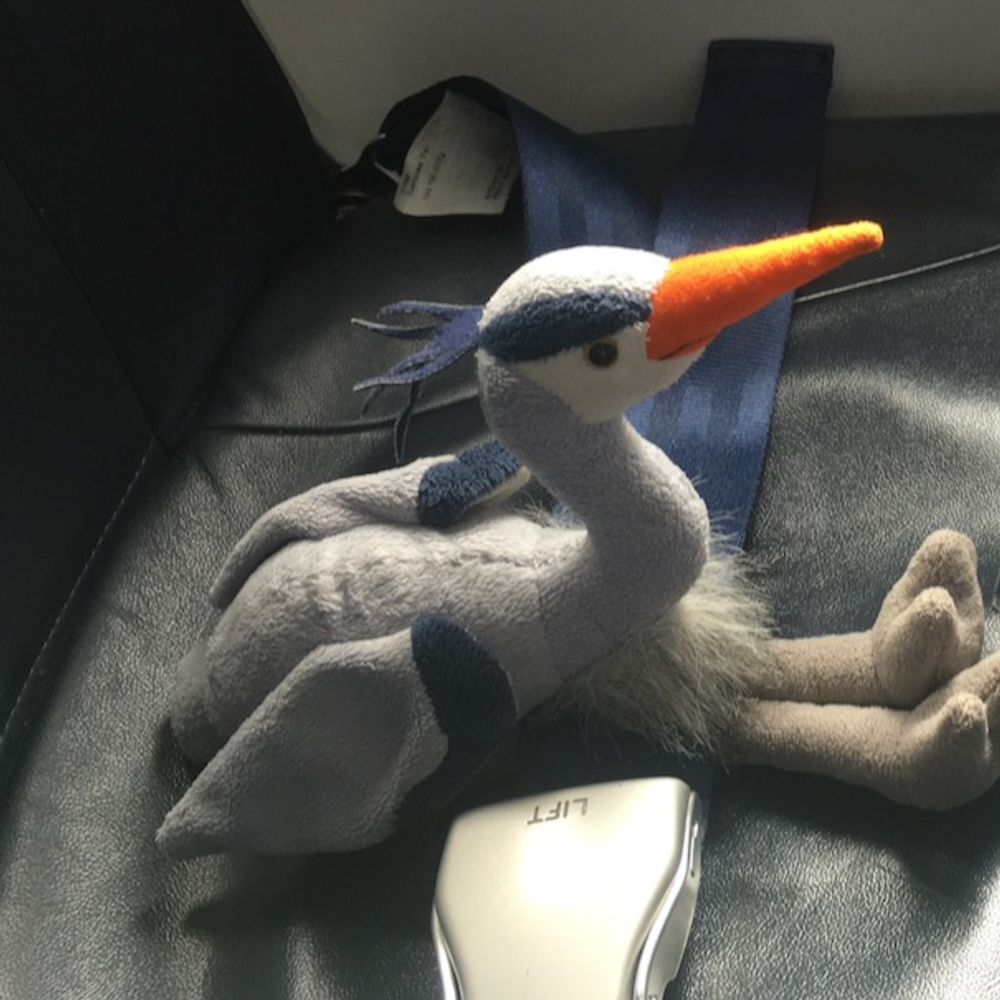
Active-transportation-based non-driver who loves birds and car-free places, and who travels with a plush heron.
Virtual assistant in the market for opportunities to help people help birds.
I stand with Europe against the threat of the US.
Stanford University Press has been publishing books across the humanities, social sciences, law, business, and other areas since 1892.
Assoc. prof. at LUMC/@unileiden. Cdiff, DNA replication, AMR, microbiome, anaerobes. Clostpath Steering committee. Education officer ESGCD. Previously: @unigroningen and @mitofficial. https://sites.google.com/view/expbac-lumc/homepage
PhD Student in Cognitive Neuroscience @doellerlab.bsky.social
We investigate temporal cognition and conceptual spaces.
Part of @unicog.bsky.social @inserm.fr @cea.fr @univparissaclay.bsky.social.
Team leader: @virginievanw.bsky.social
PI: @herbstso.bsky.social, @vigano.bsky.social
https://brainthemind.com/about/
Professor, Stanford
Vision Neuroscientist
Interested on how the interplay between brain function, structure & computations enables visual perception; and also what are we born with and what develops.
Neuroscientist. Neuro-Oncologist. Mom.
Neuroscientist | Clinical Psychologist | Postdoc Fellow @McGill | Exploring #Pain, #Cognition, #Passion, #Emotion, & #SocialNeuroscience | Advocate for #SciComm & #OpenScience
Computational neuroscientist.
Research Fellow @imperialcollegeldn.bsky.social and @imperial-ix.bsky.social
Funded by @schmidtsciences.bsky.social
neuroscientist (postdoc). motor learning and control. sleep. memory consolidation. 🇦🇷 CONICET - UNSAM
Bioengineer (UNER)
looking for a better place for interacting
an american neuroscientist in paris • CNRS researcher in the Faure lab @ ESPCI Paris • PhD McGill • she/her/elle
Developmental cognitive neuroscientist
Associate Professor @ University of Illinois Urbana-Champaign, IL, USA
https://publish.illinois.edu/danielchyde/
neuroscientist in consciousness research they/them 🏳️🌈
Biocurator, feminist, molecular neuroscientist, pagan, Drosophila geneticist, comics geek, cat adorer, coping with disability
DrGlam nearly everywhere
Blue Heeler on Faux Dairy Farm
(I still do most of my shitposting on bluebird to support NAFO Fellas)
Neuroscientist
#AnimalCaucus
#NAFOFellas
Героям слава!
ALS is a death sentence...Cure NOW!
Neuroscientist. Associate Professor at Neurobiology & Biophysics, University of Washington.
Cognitive Neuroscientist & Asst. Professor | Auburn
Research: Social Decision Making | Moral Cognition | Risk Taking | Alc & Substance Use | Criminality | MRI | TMS
Formerly: NIAAA | UNM | VA Tech
Lab: aub.ie/scampi
Hobbies: writing | cooking | video games
Research psychologist,
neuroscientist and associate professor at the University of Sussex looking at interoception, affective processing, empathy, social motivation and kindness through the lens of neuroimaging, physiology, pharmacology, and behaviour
Neuroscientist, professor, writer.
Cell Biologist and Neuroscientist at Yale University. Outdoor explorer.