NEW PUBLICATION
“How the Media Cordon Sanitaire Crumbles: Lessons from Germany” now out in @prxjournal.bsky.social
🔓 doi.org/10.1080/2474736X.2026.2621808
I’m very happy that this paper is out – this project is particularly important to me.

@klingelt.bsky.social
Lecturer (Assistant Professor) HebrewU; Ph.D. from JohnsHopkins; Party Politics, Political Psychology, Elections, Democracy; and 🎮 and 🥨; 🏳️🌈
NEW PUBLICATION
“How the Media Cordon Sanitaire Crumbles: Lessons from Germany” now out in @prxjournal.bsky.social
🔓 doi.org/10.1080/2474736X.2026.2621808
I’m very happy that this paper is out – this project is particularly important to me.

🚨🎉 New Publication! 🎉🚨
Measuring Factional Conflict: A Comparative Approach Using Party Leadership Contests
w/ @malpas.bsky.social & @blumrm.bsky.social
Out now in Party Politics. 🔗 doi.org/10.1177/1354...
(🧵 below)
I feel truly honoured to confer the degree of Doctor Honoris Causa on behalf of Ghent University to Richard Katz. We celebrate him on 20 March for his contribution to political science, and to the study of political parties in particular.
@gasparugent.bsky.social

🎉 New paper out in Political Behavior (with @gijsschumacher.bsky.social & @mrooduijn.bsky.social)
Why do some people feel stronger emotions about politics than others?
💡Not political knowledge, but interest and confidence-in-knowledge drive emotional engagement.
link.springer.com/article/10.1...
🧵

New and open access, in @psrm.bsky.social: What happens when we make politicians draw distributions? Nic Dias, @jacklucas.bsky.social and I explore whether the large errors politicians make about public opinion are artificially inflated by how researchers ask them to estimate it /1
cup.org/4kltoyE

Super proud that our 9-country-study is finally published in @cpsjournal.bsky.social!
A Populist Axis? Analyzing Connections Between Populist, Economic, and Cultural Dimensions of Political Space
👉Populist axis exists, effect on voice choice differs by country
journals.sagepub.com/doi/10.1177/...
🧵
Two new articles in Party Politics
With
@gessler.bsky.social
Measuring party positions and issue salience with mass media and manifesto data"
doi.org/10.1177/1354...
With Hanspeter Kriesi
"Restructuring party systems in Northwestern Europe"
doi.org/10.1177/1354...
Feedback very welcome!

Same old, same old?
Germany held an early election after the implosion of the traffic-light coalition in Feb 25. Some takeaways from our election report @klingelt.bsky.social @wepsocial.bsky.social
www.tandfonline.com/doi/full/10....

🔔 New paper on party brands with @swenhutter.bsky.social in @poppublicsphere.bsky.social
We study the supply (how parties call themselves) and demand (what voters reward) sides. We pair a new European dataset of party names with conjoint experiments on voter reactions
OA 👉 doi.org/10.1017/S153...

After 3 years and 5,322 emails (and counting) our Encyclopedia of Political Communication is finally out at @elgarpublishing.bsky.social
📚 Three volumes
⭐ 431 entries
🎓 581 wonderful authors from across the world
A very short 🧵

With my project IMMERSE I investigate whether immersive narrative interventions (storytelling, live theatre, video games and virtual reality) can strengthen support for liberal democracy by engaging people more deeply than conventional communication. See: www.uva.nl/en/content/n... 2/2
09.12.2025 11:13 — 👍 48 🔁 6 💬 8 📌 0
🎁 Christmas has come early for @ammassarisofia.bsky.social & me with the publication of our article "The geography of the party on the ground: Local branches in Italy and Sweden in the late twentieth century" in @politicalgeography.bsky.social:
www.sciencedirect.com/science/arti...

Cover page of the article. "Affective States: Cultural and Affective Polarization in a Multilevel-Multiparty System" by Dylan Paltra, Marius Sältzer and Christian Stecker. "Affective Polarization—the growing mutual dislike among partisan groups—has been identified as a major concern in democracies. Although both economic and cultural ideological divides contribute to ideological polarization, their affective consequences can differ. This paper argues that cultural polarization becomes especially consequential when mobilized by far-right parties. Using data from 116 elections in Germany’s 16 states (1990-2023), we combine more than 550 state-level manifestos with more than 150,000 survey responses to examine how party polarization translates into voter affect. Our analyses show that both economic and cultural polarization increase affective divides, but cultural disagreements fuel hostility only in the presence of the Alternative for Germany (AfD). Acting as a cultural entrepreneur, the AfD amplifies the emotional impact of cultural divisions such as immigration, employing affective rhetoric and provoking strong rejection from other parties and voters. These findings highlight the catalytic role of far-right parties in transforming ideological competition into affective polarization."
🚨Publication Alert!
My first first-author publication with @msaeltzer.bsky.social and @pluggedchris.bsky.social is out in @polbehavior.bsky.social, which began as my bachelor's thesis. We study how party polarization shapes affective polarization—with a particularly important role of the AfD. (1/7)🧵

Thrilled to share my new article in Political Psychology: “The psychology of political attitudinal volatility.” In it, I attempt to answer why do some people change their political views more than others? Open access at: onlinelibrary.wiley.com/doi/epdf/10....
@ispp-pops.bsky.social
🌟 JOB ALERT! 🌟
I’m hiring 1 postdoc for my ERC project ECONENGAGE (@ Gothenburg 🇸🇪)! Starting ca. Aug '26! Congenial colleagues + int'l & supportive environment. 💸 for conferences + workshops! Lots of professional networking opportunities with scholars! Deadline Jan 7th. Apply! (see more below 🧵)


Interested in the theory and empirics of multi-party governments? Thomas Bräuninger and I edited a Handbook on Coalition Politics with Edward Elgar Publishing: lnkd.in/eis8Yc2y /1
24.11.2025 09:08 — 👍 63 🔁 20 💬 2 📌 0Our paper just got accepted in the @thejop.bsky.social 🎉 and is now on the journal website: www.journals.uchicago.edu/doi/10.1086/... For me personally, it's a milestone: my first paper accepted after a peer review!
22.11.2025 19:05 — 👍 87 🔁 14 💬 9 📌 2This 👇 is not only a new, but also my first publication! 🎉 @asheinze.bsky.social and I investigate why #youngpeople support the AfD in eastern Germany. Read it here (#openaccess): www.tandfonline.com/doi/full/10....
22.11.2025 11:07 — 👍 33 🔁 11 💬 3 📌 0
I‘m excited to take part in the
@zweitstimme.bsky.social Workshop on Elections, Public Opinion & Elite Behavior at the @hertieschool.bsky.social this week! I'll be presenting first results from a project with @klingelt.bsky.social on the Geography of Electioneering in Multi-Party Systems.
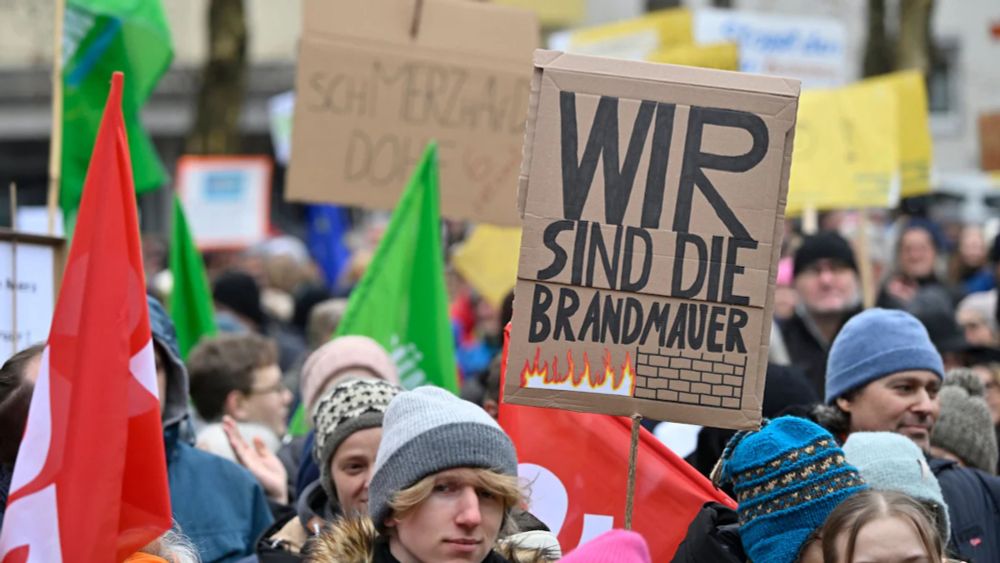
📣 New op-ed in Süddeutsche Zeitung: What the data say about the “Brandmauer”
I summarize key findings from a study with @anninahermes.bsky.social across 57 democracies
➡️ Far-right parties don’t get weaker in government, they get stronger (~6 points by the next election)
tinyurl.com/4j6jaud2

In sum, the politics of pre-electoral coalition formation can increase disproportionality, particularly when voters decide late. The phenomenon is not limited to the Italian case, just particularly visible there. The article is open access here: doi.org/10.1080/1360...
13.11.2025 12:53 — 👍 1 🔁 0 💬 0 📌 0
Consider, as another example, the Italian election of 1994, where the dynamics we identify disadvantaged Berlusconi’s at-the-time nascent political formation.
13.11.2025 12:53 — 👍 2 🔁 0 💬 1 📌 0Importantly, pre-electoral coalition formation might drive disproportionality beyond our case. Particularly, this should hold in contexts where parties are new, volatility is high, and voters “decide late”.
13.11.2025 12:53 — 👍 1 🔁 0 💬 1 📌 0Studying the resulting “intra-coalition disproportionality” is relevant because it tells us how the principle of giving each citizen an equal opportunity to influence the political process is applied by political partners within the parliamentary and the governmental arena.
13.11.2025 12:53 — 👍 1 🔁 0 💬 1 📌 0
By election day, electoral support shifted away from the Lega significantly but candidacies had already been allocated. Thus, a generous ex-ante endowment of candidacies for the Lega led to its overrepresentation in terms of seats.
13.11.2025 12:53 — 👍 2 🔁 0 💬 1 📌 0For the center-left coalition, striking a proportional bargain proved difficult, given the low number of promising districts. Additionally, the PD needed to make concessions to compensate the risk that smaller partners would defect or fail to cross the electoral threshold in the PR tier.
13.11.2025 12:53 — 👍 1 🔁 0 💬 1 📌 0
We analyze the allocation of (FPTP) candidacies among the partners of the main pre-electoral coalitions. The right-wing coalition distributed candidacies (largely) proportional to their partners’ momentary strength in the polls as well as in a manner that safeguarded incumbent MPs.
13.11.2025 12:53 — 👍 1 🔁 0 💬 1 📌 0We study the Italian election of 2022, after which the Lega received more seats (and subsequently more ministers) than their share of votes would have suggested. Importantly, part of this disproportionality cannot be explained by the electoral system itself.
13.11.2025 12:53 — 👍 1 🔁 0 💬 1 📌 0Scholars have long paid attention to disproportionality between parties’ votes and seats emerging from the electoral system. In @sespjournal.bsky.social, Gianni Del Panta, @mattiaguidi.bsky.social, and I show that disproportionality can also be a by-product of pre-electoral coalition formation.🧵
13.11.2025 12:53 — 👍 15 🔁 9 💬 1 📌 0