
Have a look at this new honours course coordinated and taught by many GENE Amsterdam researchers in Amsterdam🧬: vu.nl/en/education...
20.11.2025 09:31 — 👍 2 🔁 1 💬 0 📌 0Have a look at this new honours course coordinated and taught by many GENE Amsterdam researchers in Amsterdam🧬: vu.nl/en/education...
20.11.2025 09:31 — 👍 2 🔁 1 💬 0 📌 0
First time on Bsky and first big announcement!
I am excited to announce that our new study explaining the missing heritability of many phenotypes using WGS data from ~347,000 UK Biobank participants has just been published in @Nature.
Our manuscript is here: www.nature.com/articles/s41....

Two birds of a gene - catch Matt Keller's webinar at @uio.no on October 15th. Please share
www.sv.uio.no/promenta/eng...
@ispg.bsky.social @behaviorgenetic.bsky.social @unioslo-svfak.bsky.social @essgn.bsky.social @ibg.colorado.edu

Introducing FEMA-Long for high-dimensional large-scale mixed-effects modelling! Includes modelling unstructured covariance, non-linear effects using splines, time-dependent effects with spline interactions, and longitudinal GWAS with time-dependent genetic effects!
www.biorxiv.org/content/10.1...
My first postdoc was all about exploring the intertwined nature of insomnia, anxiety, and depression. Looking at this through the neuroimaging lens, @siemon.bsky.social published this huge effort in Nature Mental Health today 🧠 Stay tuned for the genetics counterpart... 🧬
02.05.2025 10:21 — 👍 3 🔁 0 💬 0 📌 0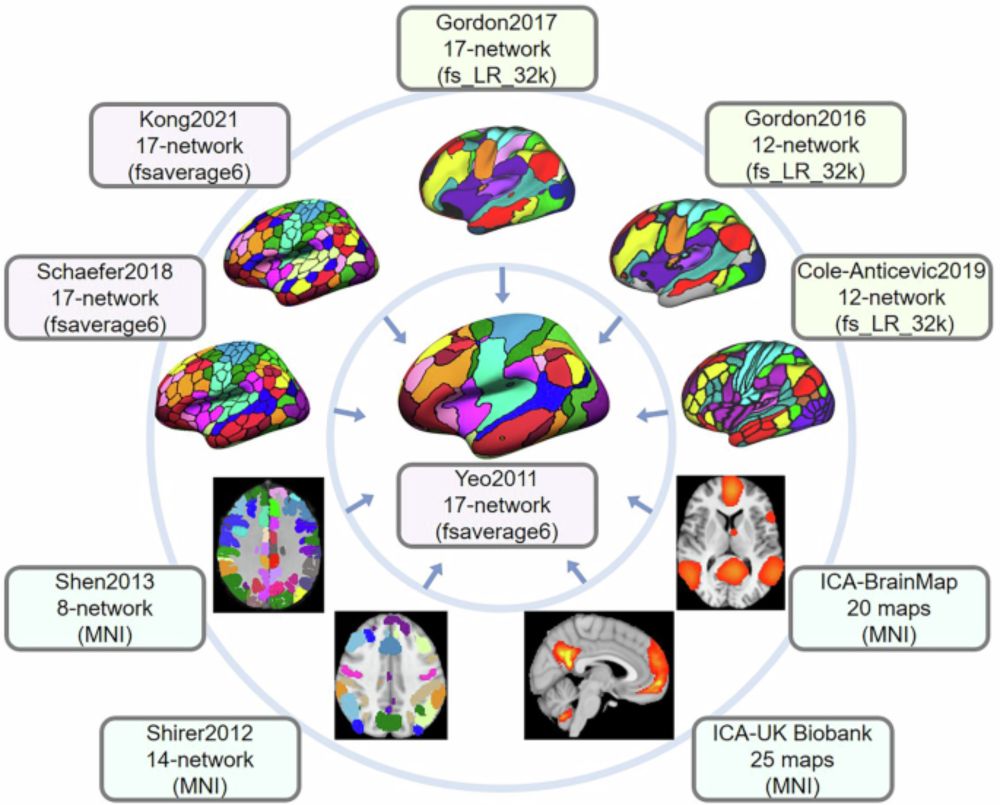
It's finally here! Use the Network Correspondence Toolbox to help contextualize your neuroimaging findings 🧠
26.03.2025 01:54 — 👍 180 🔁 85 💬 11 📌 2
image showing a figure that illustrates the brain age prediction framework, whereby a machine learning algorithm is trained with multiple brain MRI images and then tested with new brain data. The new brain data is without an age tag, meaning the machine learning algorithm has to estimate age based on its training. The resulting brain predicted age (here 11) is compared to the actual age in the last panel (here 9), and a difference between them is calculated, known as the brain age gap (here 2).
New preprint! 🗞️
Lucy Whitmore and I discuss the many potential challenges in using the brain age prediction framework in children and adolescents, and make recommendations for future directions.
🔗: osf.io/preprints/ps...
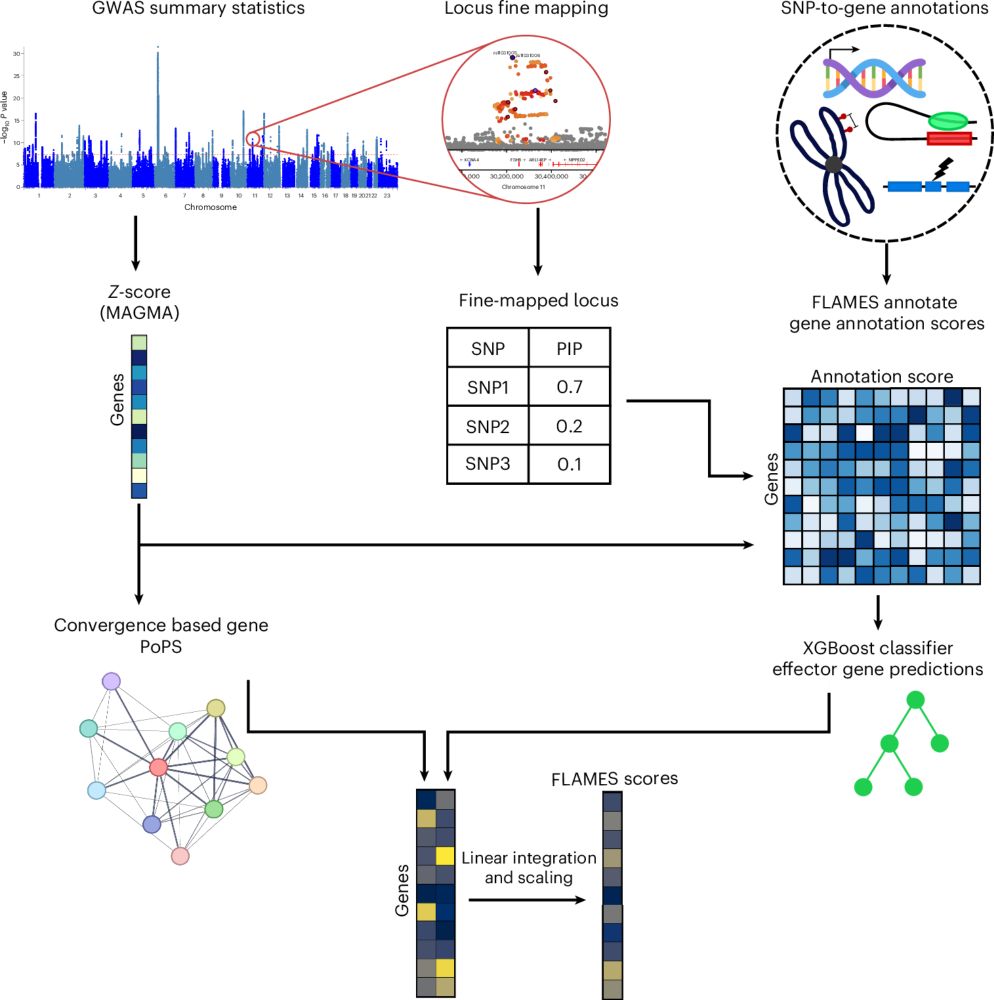
Incredibly proud to see our latest work out in Nature Genetics: www.nature.com/articles/s41...
Here we share our FLAMES framework, which predicts the effector genes in GWAS loci with state-of-the-art precision🔥
Special thanks to @daniposthu.bsky.social
A full thread describing findings below!
The ENIGMA-EEG working group of the ENIGMA consortium is looking for a PhD candidate to investigate the development and genetics of electrophysiological brain activity. Read all about it (and apply) here: werkenbij.amsterdamumc.org/en/vacatures...
11.02.2025 10:28 — 👍 1 🔁 1 💬 0 📌 0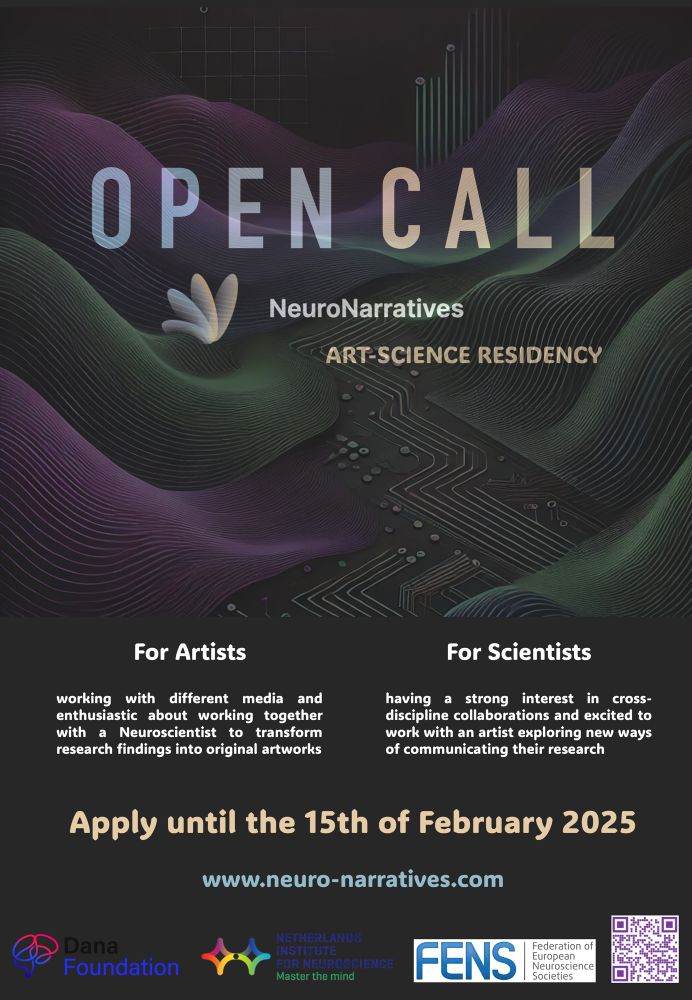
𝐎𝐏𝐄𝐍 𝐂𝐀𝐋𝐋
We are excited to launch NeuroNarratives, an art-science residency bringing neuroscientists and artists together to create meaningful art based on science!
Sign up via de link in bio!
#opencall #artandscience #art #science #artscienceresidency #neuroscience