Phold's manuscript is now available @narjournal.bsky.social thanks to @susiegriggo.bsky.social @npbhavya.bsky.social @vijinim.bsky.social @linsalrob.bsky.social @martinsteinegger.bsky.social @milot.bsky.social @eunbelivable.bsky.social & others not on bsky #phagesky academic.oup.com/nar/article/...
14.01.2026 05:10 — 👍 82 🔁 44 💬 1 📌 1
Congratulations Zam! Very well deserved 🥳🍾🎉👏
14.11.2025 15:55 — 👍 0 🔁 0 💬 1 📌 0

Delighted to see our paper studying the evolution of plasmids over the last 100 years, now out! Years of work by Adrian Cazares, also Nick Thomson @sangerinstitute.bsky.social - this version much improved over the preprint. Final version should be open access, apols.
Thread 1/n
25.09.2025 21:28 — 👍 299 🔁 153 💬 14 📌 8
🌟 Exciting news! We’re launching three fully-funded postdoc positions for "New Horizons for Synthetic Phages”
Join us in tackling antimicrobial resistance with cutting-edge synthetic biology + AI bioinformatics. Based at Flinders Uni in vibrant Adelaide.
👇 Read on for details!
#Phage
25.07.2025 08:15 — 👍 47 🔁 42 💬 2 📌 1
Why does this matter?
✔️ Advances our understanding of host-range evolution
✔️ Highlights the importance of capsule modification, not just degradation, in phage infection
✔️ Challenges how we type capsules and assess phage specificity
✔️ Has direct implications for phage therapy and vaccine design
🚨🧬💉
26.06.2025 07:12 — 👍 4 🔁 0 💬 1 📌 0

This underscores the complexity of predicting enzyme specificity — even similar proteins may target different capsules.
Yet, the study reveals an enormous functional and structural diversity encoded in temperate phages.
26.06.2025 07:12 — 👍 5 🔁 0 💬 1 📌 0

But predictions are just the start.
Together with the group of Zuzanna Drulis-Kawa, we experimentally tested 50 candidate enzymes from prophages on a panel of 119 capsule types.
Only 14 were active — and not always on the predicted target.
🧪🧫
26.06.2025 07:12 — 👍 3 🔁 0 💬 1 📌 0

We discovered a widespread class of SGNH hydrolase–containing RBPs — enzymes structurally related to deacetylases.
They likely modify capsules (e.g. by removing acetyl groups) instead of degrading them — a very different phage infection strategy!
26.06.2025 07:12 — 👍 4 🔁 1 💬 1 📌 1

We found 16 capsule types (K-loci) with strong genetic predictors, mostly receptor-binding proteins (RBPs).
Some were classical depolymerases… but many were not.
26.06.2025 07:12 — 👍 4 🔁 0 💬 1 📌 0
This is one of the first large-scale GWAS efforts focused on phage–host interactions — and shows how prophages carry hidden information about viral host range.
🔥 Here’s what we found!
26.06.2025 07:12 — 👍 3 🔁 0 💬 1 📌 0

But...
temperate phages (those that integrate into the bacterial genome) are less understood.
We analysed 3,900 Klebsiella genomes and identified over 8,100 prophages, then applied GWAS to link phage genes to capsule types.
26.06.2025 07:12 — 👍 1 🔁 0 💬 1 📌 0

Phages use surface-binding proteins to recognise their bacterial hosts.
In Klebsiella, this often means targeting the capsule — a sugary layer that varies across strains. Some phages bring depolymerases, enzymes that slice through these polysaccharides to enable infection.
26.06.2025 07:12 — 👍 3 🔁 0 💬 1 📌 0
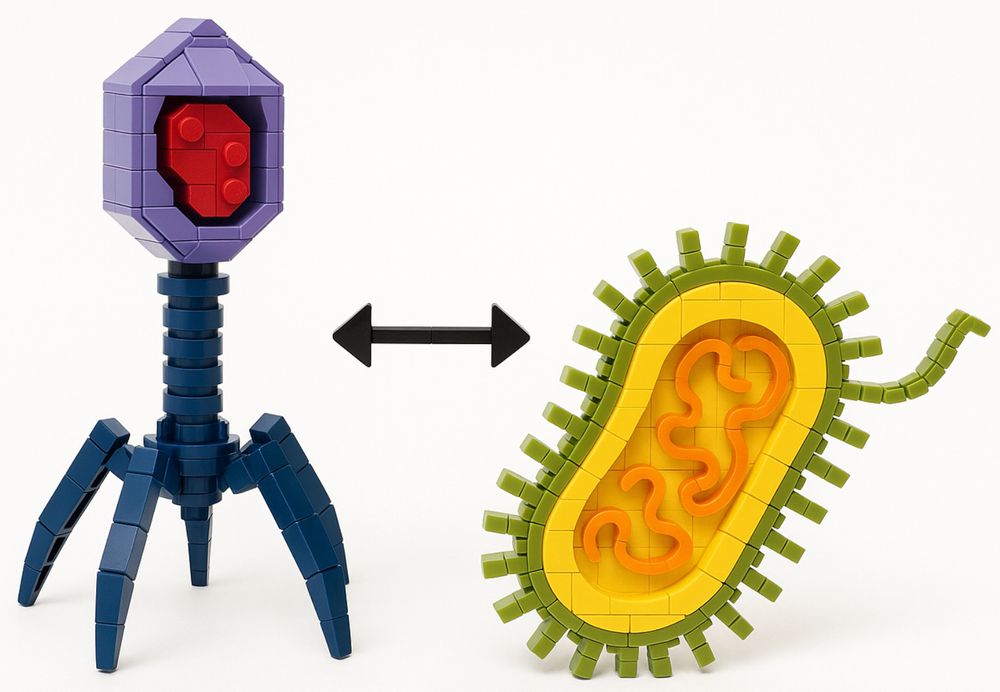
What determines who a phage can infect?
We tackled this question for temperate phages of Klebsiella — a bacterial pathogen — using a genome-wide association study (GWAS) and a massive protein testing effort.
👇 A thread!
26.06.2025 07:12 — 👍 75 🔁 29 💬 3 📌 2

I'm looking for a postdoc in computational evolutionary phage genomics, with the goal to better understand how protein innovation arises in viruses, at @jagiellonskiuni.bsky.social in Krakow (Poland).
Drop me a line if it sounds cool!
Deadline: 20.06.
Link here:
mcb.uj.edu.pl/documents/15...
20.05.2025 07:52 — 👍 23 🔁 24 💬 2 📌 0
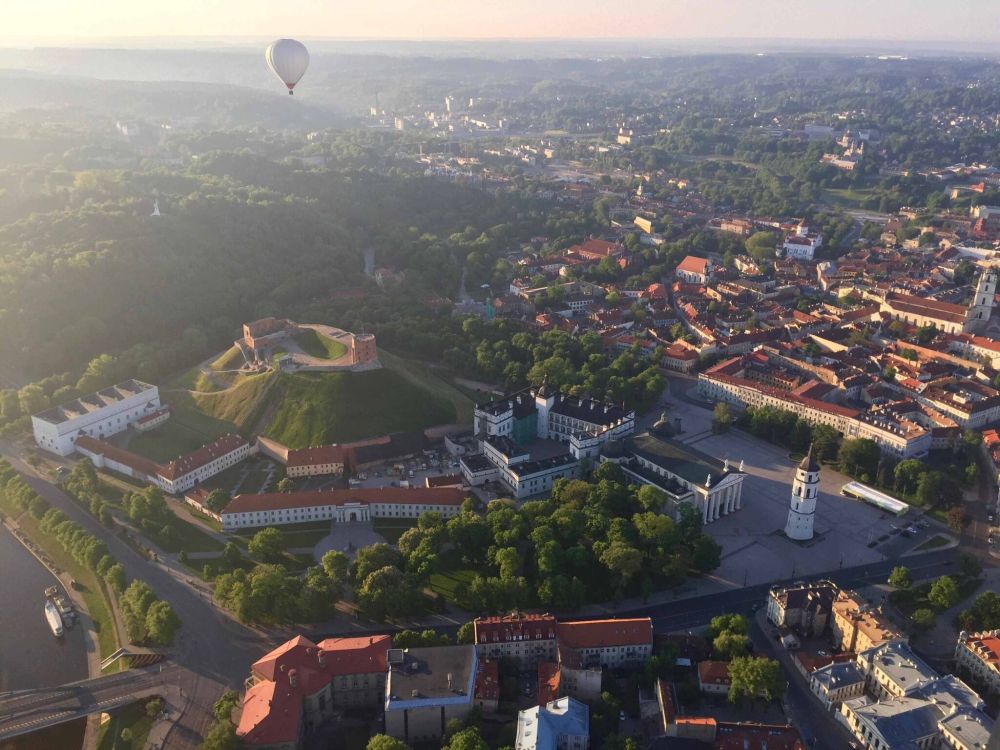
We're looking for a PhD student to join us at Vilnius University in Lithuania. We work on RNA virus evolution computationally but we'd like to generate more mosquito RNA virus sequence data. Official ad: www.gmc.vu.lt/en/doctoral-.... Please share & continue reading if interested.
03.04.2025 05:45 — 👍 51 🔁 46 💬 1 📌 0
PS: MANIAC is offered in three modes: Fragment Mode (inspired by bacterial approaches), CDS (using best-bidirectional hits) and Protein (like CDS but with protein sequences. The latter two also offers the calculation of wGRR proposed by @epcrocha.bsky.social, so is great for prophages.
30.01.2025 09:49 — 👍 0 🔁 0 💬 1 📌 0

GitHub - bioinf-mcb/MANIAC: Computation of average nucleotide identity with the use of MMseqs2
Computation of average nucleotide identity with the use of MMseqs2 - bioinf-mcb/MANIAC
Finally, we prioritised usability. While no tool is perfect, Maniac is designed to be easy to install & run. If you work on viral comparative genomics or metagenomics, give it a try! 🛠️ Open-source & available here:
github.com/bioinf-mcb/M...
30.01.2025 09:49 — 👍 3 🔁 0 💬 1 📌 0

With MANIAC we also obtained some insights into ANI-based taxonomic assignments of dsDNA phages: we found that while it works well for lytic phages, it struggles with temperate phages—likely due to their extensive recombination & mosaicism, as seen in λ-like phages.
30.01.2025 09:49 — 👍 0 🔁 0 💬 1 📌 0

To me, this bears resemblance to a recombination threshold hypothesis in bacteria, where above this threshold recombination maintains species cohesiveness (high AF), and below it enhances diversification and evolution (low AF). But it's a hypothesis at this stage. (Figure from PMID 19197054)
30.01.2025 09:49 — 👍 0 🔁 0 💬 1 📌 0


Using MANIAC, we noticed that ANI distribution in dsDNA phages shows a distinct gap around 80%. Above this, genomes align well; below it, AF drops. This pattern holds even in large, metagenome-derived datasets like PhageScope, though there we see many more recent recombinants (high ANI and low AF).
30.01.2025 09:49 — 👍 0 🔁 0 💬 1 📌 0

MANIAC isn’t just accurate—it’s fast. Its "Fast" setting, which is still reliably accurate for ANI~70%, can process RefSeq on a laptop within minutes and can handle metagenomic datasets on HPCs.
30.01.2025 09:49 — 👍 0 🔁 0 💬 1 📌 0

We benchmarked MANIAC's accuracy against both BLAST-based & simulated datasets, showing it estimates ANI reliably over a wider range of sequence divergence than existing tools like CheckV, FastANI or MUMmer, which are better suited for the ANI>80% range.
30.01.2025 09:49 — 👍 0 🔁 0 💬 1 📌 0

Most ANI tools handle closely related genomes well (>80% ANI). But for viruses, we often care about ANI around 70%—a range where alignment can be tricky due to genome diversity & rearrangements. MANIAC tackles this using a fragment-based approach inspired by bacterial genome comparisons.
30.01.2025 09:49 — 👍 0 🔁 0 💬 1 📌 0

🚀 Follow-up on my recent MANIAC tweet: our new MMseqs2-blased tool is optimised for ANI and alignment fraction (AF) calculation in viral genomes. Unlike many other tools, it excels at ANI ~70%, an important range for viral taxonomy & evolution.
Here’s why that matters ➡️ a thread! 🧵
30.01.2025 09:49 — 👍 3 🔁 2 💬 1 📌 0
It was a pleasure working with you and Wanangwa on this project and I'm happy to see it published. Congratulations all!
29.01.2025 15:28 — 👍 1 🔁 1 💬 0 📌 0
And now with the working link!
journals.asm.org/doi/10.1128/...
30.01.2025 08:33 — 👍 15 🔁 9 💬 0 📌 1
Methods Nerd │ PCI RR Recommender
Dev Cog Neuroscience │Disability Research
Assist Prof
Open Science Coach
Linköping University 🇸🇪
Views my own
Asst. Prof. at Copenhagen University. Excited about phages, plasmids, and bacterial immunity!👨🔬🔬 https://pinillaredondolab.com/
🧪 Bacteria & Mobile Genetic Elements 💻 Synthetic Biology Group @institutpasteur 👩🔬 PhD @GVAfisabio @i2sysbio
Frustrated football player, I moved to a less relevant work: microbiologist interested on mobile genetic elements
Reader (Associate Professor) in School of Life Sciences, University of Warwick, UK.
Interested in bacteriophages and phage therapy.
PhD student @ Computational Systems Biology & Lab of Gene Technology. Investigating PTMs in viruses and bacteria with bioinformatics 💻🦠
UKRI Future Leaders Fellow and Group Leader in Microbial Genomics at UCL Genetics Institute @ugiatucl.bsky.social.
Reconstructing the evolution of us and our pathogens past, present and future using large-scale genomics.
https://www.ucl.ac.uk/~ucbpvan
Multipartite parasitic interactions in the microbial world,
Phage co-infection studies (ERC_StG: MULTIPHAGE)
Wallenberg Academy Fellow
#curiosity_driven #microbiology_without_borders
www.bionomics-mmlab.com
Prof & Canada Excellence Research Chair | UBC Zoology, M&I | Oxford Biology | Evolution, ecology, host-pathogen, biodiversity | #firstgen | she/her/hers
Phage Biology, Bacterial defense systems, CRISPR-Cas, Microbial communities, Mucus interactions
http://www.fnobregalab.org
http://www.klebphacol.org
http://www.phage-collection.org
Research Professor & Group Leader at Vilnius University, LSC-EMBL - CRISPR, Gene Editing and Microbiology
NRPDTP PhD student with Evelien Adriaenssens @ QIB 🦠 Previously at UKHSA & Warwick Uni 👩🔬
School of Microbiology and APC Microbiome Ireland, University College Cork 🇮🇪
Microbial Ecology | Microbial Evolution | Gut Microbiome
Bacterial Immunity and Synthetic Biology enthusiast. Head of Lab at Institut Pasteur. Co-Founder of Eligo Bioscience.
Bioinformatics @ University of Adelaide
- phages, microbes and more
Computational ‘Microbiologist’ - Structural and evolutionary biology to study bacteria-phage coevolution| PhD student - Microbial Genomics Group, MCB, UJ
Prof. and Head of Phage-host interactions (Phi) lab. Phage defences, counter-defences, CRISPR-Cas, toxin-antitoxin. FRSNZ / James Cook Fellow
‖ Permanent Researcher / INRIA Start. Faculty @ INRIA Rennes 🇫🇷 ‖
BioInfo/CompBio: algorithms, genomics, pathogens & rapid diagnostic of antibiotic resistance《 https://brinda.eu | https://github.com/karel-brinda 》
Scientist | President-Elect @FNP | Professor @JU
🇵🇱🇪🇺
J6WP644F
k.pyrc@protonmail.com