Copéret Group's Avatar

Copéret Group

@coperetgroup.bsky.social

Student-run account of the Copéret Group at ETH Zürich https://coperetgroup.ethz.ch/

368 Followers  |  86 Following  |  37 Posts  |  Joined: 14.12.2024
Posts Following

Posts by Copéret Group (@coperetgroup.bsky.social)

Preview
35Cl Nuclear Quadrupole Resonance: A Cl-specific Probe of Local Structural Motifs in PVC 35Cl nuclear quadrupole resonance (NQR) and Density functional theory (DFT) computations are combined to characterize chlorine environments in polyvinyl chloride (PVC) and detect structural defects. Calculations validated against reference data enable to classify two main groups of signals: terminal and internal chlorines, the former having ∼1 MHz higher ν. We also predict distinct 35Cl NQR signatures for chlorine vacancies and additional vicinal/geminal chlorines, resulting in an increased ν. Using this methodology, two types of PVC samples are analyzed: commercial high-MW and low-MW PVC. Both show numerous Cl environments associated with both terminal and internal Cl, as well as additional features indicating the presence of Cl defects. Analysis of a partially dechlorinated PVC reveals that dechlorination primarily occurs at the terminal positions, while multichlorinated sites are less reactive and remain mostly untouched. This combined computational–experimental approach demonstrates that 35Cl NQR can sensitively distinguish chlorine sites in PVC, enabling the direct detection of defects relevant to stability, degradation, and recycling strategies.

Higher field doesn’t always mean better!
Read our work on the use of 35Cl Nuclear Quadrupole Resonance as A Cl-specific Probe of Local Structural Motifs in PVC. @ACSPublications pubs.acs.org/doi/full/10....

11.02.2026 16:46 — 👍 3    🔁 1    💬 0    📌 0
Preview
XXVI Swiss NMR Symposium The 26th Swiss NMR Symposium will take place at EPFL on Thursday 5th February 2026. This biennial one-day meeting brings together workers in the field of magnetic resonance from across Switzerland and...

The 26th Swiss NMR Symposium will take place at EPFL on Thursday 5th February 2026 www.epfl.ch/labs/lrm/swi... #NMRchat 🧲

16.01.2026 15:02 — 👍 3    🔁 2    💬 0    📌 0

The group celebrated Christophe election to the French Academy of Science by gifting him a sword! Albeit a less traditional one than usually done ⚔️

14.01.2026 11:52 — 👍 8    🔁 1    💬 1    📌 0
Press release | Eighteen new members of the Academy of Sciences for 2026 | Académie des sciences Press release | Eighteen new members of the Academy of Sciences for 2026 The Académie des Sciences is delighted to welcome eighteen new members from 2026, exceptional scientists and leading figures in...

www.academie-sciences.fr/en/press-rel...

08.01.2026 14:11 — 👍 1    🔁 0    💬 0    📌 0
Post image

Congratulations to Christophe who has just been appointed as a member of the Académie des Sciences for his work on surfaces and interfaces of functional materials and heterogeneous catalysts. He joins an outstanding group of scientists across disciplines, recognised through their appointments.

08.01.2026 14:11 — 👍 13    🔁 3    💬 2    📌 1
Post image Post image

During the celebration of ETH Zurich’s 170th anniversary, Prof. Mercouri Kanatzidis was awarded an honorary doctorate for his ground-breaking advances in solid-state chemistry. @ETH
ethz.ch/en/news-and-...

26.11.2025 14:24 — 👍 4    🔁 2    💬 0    📌 0
Post image Post image

During the celebration of ETH Zurich’s 170th anniversary, Prof. Mercouri Kanatzidis was awarded an honorary doctorate for his ground-breaking advances in solid-state chemistry. @ETH
ethz.ch/en/news-and-...

26.11.2025 14:24 — 👍 4    🔁 2    💬 0    📌 0
Preview
The Universal Role of Gallium in Promoting Methanol Formation across CO2 Hydrogenation Catalysts ConspectusThe production of value-added chemicals from CO2 has been a thriving topic of research for the past few decades because of its contribution to a circular carbon economy. Combined with CO2 capture and storage, thermocatalytic hydrogenation of CO2 to CH3OH with green or blue hydrogen, offers an attractive route to mitigate CO2 emissions and to decarbonize the chemical industry. Numerous studies have been focused on catalysts based on supported metallic nanoparticles; these catalysts consist of at least one transition or coinage metal and a promoter element combined with an oxide support to disperse the active phase. Besides Zn-promoters used in Cu-based hydrogenation catalysts, numerous reports point to Ga as a promoter for methanol synthesis. In recent years, Ga has been shown to convert almost all transition metals toward selective methanol synthesis, but its specific role remains a topic of discussions.In this Account, we summarize how surface organometallic chemistry (SOMC) has enabled the discovery of novel catalysts and the development of detailed structure–activity relationships. Particularly, we show that Ga uniquely generates alloys with transition and coinage (Cu) metal elements across groups 8–11 and converts them into selective methanol synthesis catalysts. Specifically, we highlight the role of M–Ga alloy formation, alloy stability, and the formation of M(Ga)–GaOx interfaces under reaction conditions. This has been possible thanks to the combination of SOMC, which enables the formation of supported nanoparticles with tailored compositions and interfaces, and state-of-the-art characterization including operando techniques along with computational modeling, including ab initio molecular dynamic calculations. Dynamic alloying–dealloying behaviors under reaction conditions and the formation of M/MGa–GaOx interfaces are identified as key drivers for efficient methanol formation.

In this Account, we recapitulate experimental and computational work on gallium promoted methanol synthesis catalysts, that our research group and collaborators have performed over the last 10 years!

Find out more in @pubs.acs.org

pubs.acs.org/doi/full/10....

14.11.2025 16:41 — 👍 1    🔁 1    💬 0    📌 0
Preview
Si‐Doping Switches the Reactivity of Cobalt from Methanation to Reverse Water–Gas Shift in CO2 Hydrogenation Si-doping is found to switch the reactivity of cobalt catalysts in CO2 hydrogenation from methanation to the reverse water–gas shift reaction. Using a surface organometallic chemistry approach, cobal...

Si-Doping Switches the Reactivity of Cobalt from Methanation to Reverse Water–Gas Shift in CO2 Hydrogenation onlinelibrary.wiley.com/doi/full/10....

03.11.2025 23:41 — 👍 4    🔁 2    💬 0    📌 0
Preview
Disentangling the Promotional Roles of Interfacial and Alloyed Sites in PtCr Catalysts for CO2 Hydrogenation Promotional effects are ubiquitous across catalytic processes involving supported nanoparticles, where additional elements, known as promoters, significantly enhance the catalytic performances (activity, selectivity, and/or stability) of nanoparticles. However, the inherent complexity of catalytic materials, comprising multiple species located both in the bulk and at the surface, makes it difficult to pinpoint the role of promoters at the molecular level. In this study, we disentangle the effect of alloying and interfacial sites in a low-temperature reverse water–gas shift (RWGS) reaction, a key process in the chemical industry, by precisely constructing catalysts featuring narrowly dispersed alloyed PtCr nanoparticles with or without Cr(III) interfacial sites. Notably, we show that a catalyst containing exclusively PtCr alloys, PtCr@SiO2, displays a substantial increase in catalytic activity compared to monometallic Pt@SiO2, while having additional Cr(III) interfacial sites (PtCr-Crint@SiO2) further improves the catalyst performance. In situ spectroscopic results reveal that the PtCr alloy facilitates a redox reaction pathway, whereas the presence of Cr(III) interfacial sites greatly facilitates CO2 adsorption and opens an additional formate-mediated pathway, further accelerating the reaction. These findings highlight the power of well-defined model systems in elucidating the promotional effects at the molecular level.

Disentangling the Promotional Roles of Interfacial and Alloyed Sites in PtCr Catalysts for CO2 Hydrogenation
pubs.acs.org/doi/10.1021/... @jacs.acspublications.org

03.11.2025 16:14 — 👍 3    🔁 1    💬 0    📌 0
Post image

Our work on the elucidation of g-alumina surface through multinuclear NMR has recently been highlighted in the AMPERE bulletin; congrats to Domenico for being granted the AMPERE Travel Award.
www.ampere-society.org/bulletins/Am...

05.10.2025 20:27 — 👍 4    🔁 2    💬 0    📌 0
Post image

Congrats to Colin and other awardees of the Talent Program of Catalysis and Sustainabile Chemistry prizes sponsored by
Clariant. @ethz.ch

25.09.2025 13:35 — 👍 7    🔁 2    💬 0    📌 0
Post image Post image Post image Post image

Yesterday, Anna, Enzo and Domenico delivered their public presentation. Topics included the study of chlorinated materials with NQR; advanced microscopy of supported catalysts and NMR of metal centers. One further step before their PhD defence. Congratulations!

24.09.2025 18:13 — 👍 6    🔁 2    💬 0    📌 0
ICONS Series Konstantin Ivanov intercontinental magnetic resonance seminar series started on April 8, 2020. It organises seminars on a range of topics in magnetic resonance covering NMR, EPR, hyperpolarisation, co...

Friday, September 12, noon CEST / 6 am EDT, Konstantin Ivanov Seminar, Christophe Copéret @coperetgroup.bsky.social ETH Zurich sites.google.com/view/nmr-sem... #NMRchat #NMR 🧲

02.09.2025 19:53 — 👍 0    🔁 1    💬 0    📌 1
Preview
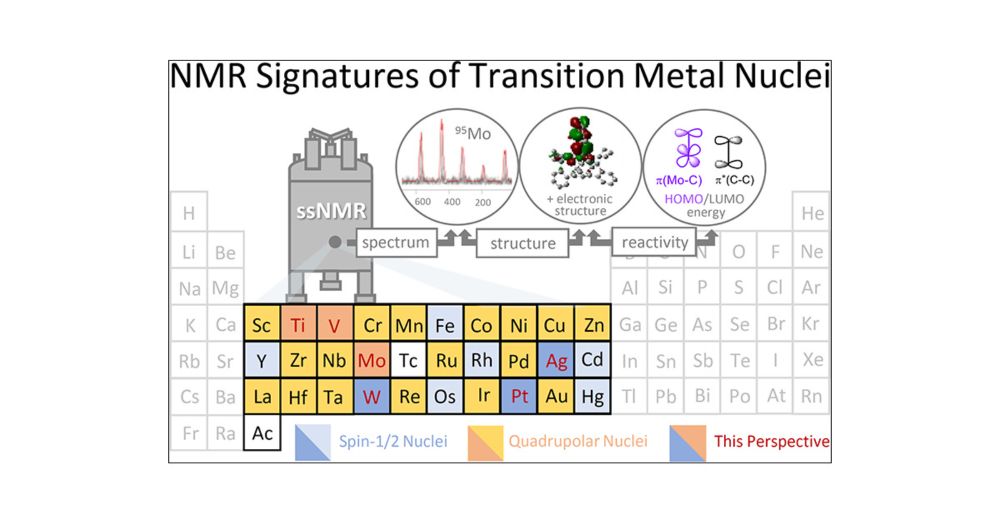
NMR Signatures of Transition-Metal Nuclei: From Local Environments and Electronic Structures to Reactivity Descriptors in Molecular and Heterogeneous Catalysis This Perspective summarizes the current state of the art in understanding the local environments of metal sites across homogeneous and heterogeneous catalysts by means of solid-state nuclear magnetic ...

NMR Signatures of Transition-Metal Nuclei: From Local Environments and Electronic Structures to Reactivity Descriptors in Molecular and Heterogeneous Catalysis | JACS Au pubs.acs.org/doi/10.1021/...

16.07.2025 20:57 — 👍 5    🔁 2    💬 0    📌 0

Paolo Arosio, professor ETH Zurich, receives an ERC Proof of Concept grant to develop a technology for the rapid, specific, and scalable isolation of vesicles and molecules from biofluids with applications in diagnostics and disease monitoring as well as drug manufacturing. ethz.ch/staffnet/en/...

14.07.2025 14:06 — 👍 6    🔁 2    💬 0    📌 0
Preview
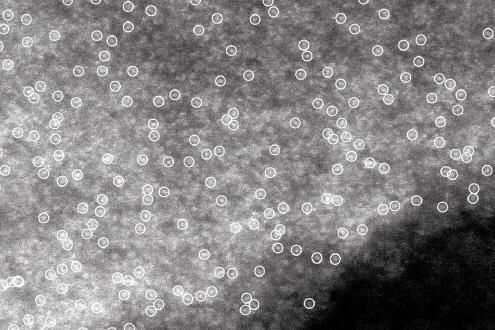
‘Landmark paper’ reveals how environment affects individual catalytic atoms’ activity Research could improve single-atom catalyst design

‘Landmark paper’ reveals how environment affects individual catalytic atoms’ activity
www.chemistryworld.com/news/landmar...
28.06.2025 03:12 — 👍 14    🔁 4    💬 0    📌 0
Preview
Coordination of Pt Single-Atom Catalysts via NMR: Experiment and Theory - SCM

Thanks to the Software for Chemistry & Materials (SCM) for highlighting our recent work on Pt SAC in their website. Adf computations were used to translate the SACs NMR fingerprints into chemical information on their coordination environments.
www.scm.com/highlights/c...

30.06.2025 12:15 — 👍 4    🔁 1    💬 0    📌 0
Preview
‘Landmark paper’ reveals how environment affects individual catalytic atoms’ activity Research could improve single-atom catalyst design

‘Landmark paper’ reveals how environment affects individual catalytic atoms’ activity
www.chemistryworld.com/news/landmar...
28.06.2025 03:12 — 👍 14    🔁 4    💬 0    📌 0
Preview
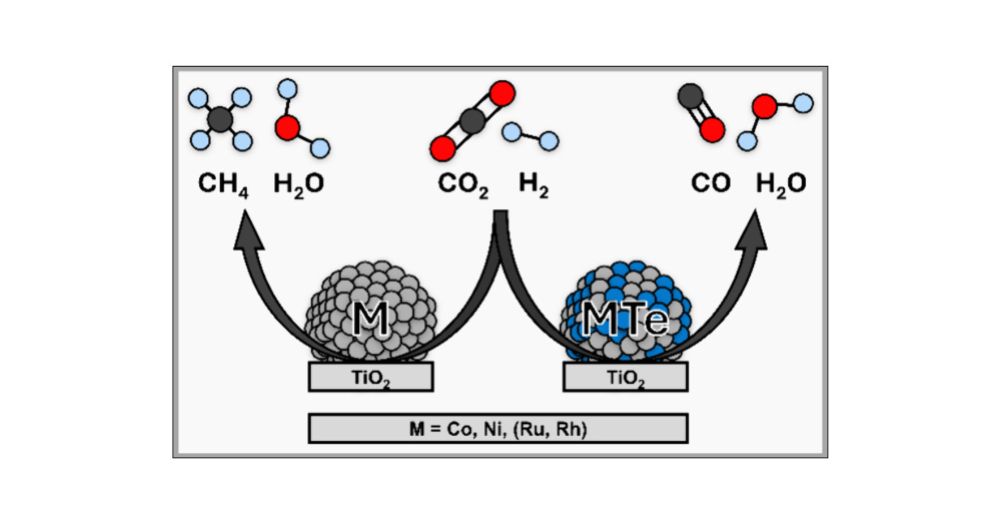
Tellurium-Induced Noble-Metal Reactivity in CO2 Hydrogenation Catalysts The reverse water–gas shift (RWGS) reaction is a pivotal industrial process that is central to CO2 utilization. It typically relies on rare platinum group metal catalysts and high temperatures (over 1...

Tellurium flips the script - transforming abundant transition metals into low-temp RWGS catalysts rivaling platinum. CoTe & NiTe hit near-equilibrium CO₂ conversion with >98% CO selectivity. @jacs.acspublications.org
pubs.acs.org/doi/10.1021/...
27.06.2025 07:42 — 👍 6    🔁 0    💬 0    📌 0
Preview
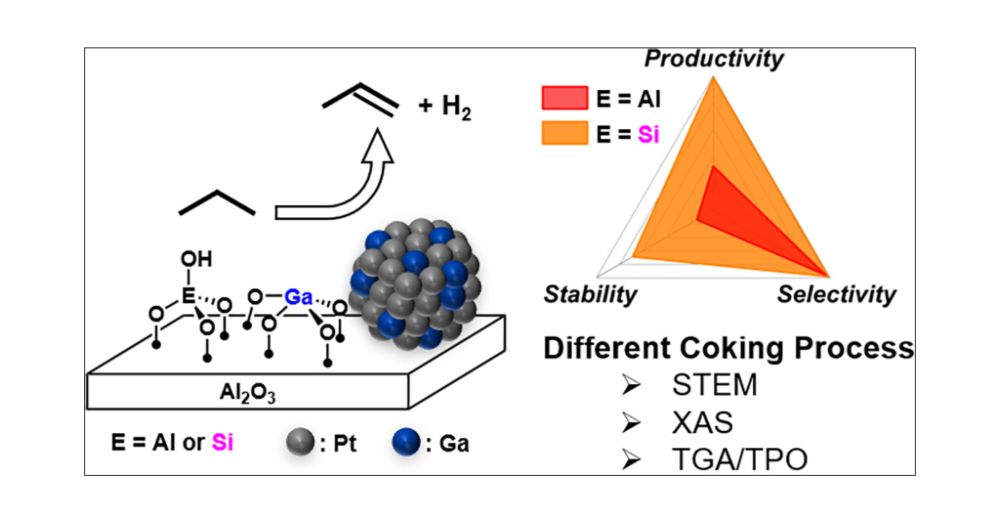
Silicon: A Surface Dopant for Stable Alumina-Supported PtGa Propane Dehydrogenation Catalysts by Favoring Redox and Carbon Dynamics The exploitation of shale gas has stimulated the use of on-purpose propane dehydrogenation (PDH) technologies. These technologies rely on continuous and rapid catalyst regeneration to maintain high pr...

Doping the alumina-supported PtGa propane dehydrogenation catalyst with Si increases its stability, as a result of a change in the coking mechanism and carbon dynamics. Read our work in @jacs.acspublications.org
pubs.acs.org/doi/10.1021/...
19.06.2025 08:58 — 👍 5    🔁 1    💬 0    📌 0
Preview
QS rankings: ETH Zurich secures 7th place once again According to the recently published QS World University Rankings 2026, ETH Zurich ranks among the world’s ten best universities once again this year. It took the top spot in continental Europe, with o...

ETH Zurich ranks 7th globally in the QS World University Rankings 2026 — and #1 in continental Europe. With global research impact and a top-2 spot in hashtag#Sustainability, we’re proud to keep driving #Science and #Education forward.

Read more:

19.06.2025 07:53 — 👍 20    🔁 6    💬 1    📌 2
Preview
Silicon: A Surface Dopant for Stable Alumina-Supported PtGa Propane Dehydrogenation Catalysts by Favoring Redox and Carbon Dynamics The exploitation of shale gas has stimulated the use of on-purpose propane dehydrogenation (PDH) technologies. These technologies rely on continuous and rapid catalyst regeneration to maintain high pr...

Doping the alumina-supported PtGa propane dehydrogenation catalyst with Si increases its stability, as a result of a change in the coking mechanism and carbon dynamics. Read our work in @jacs.acspublications.org
pubs.acs.org/doi/10.1021/...
19.06.2025 08:58 — 👍 5    🔁 1    💬 0    📌 0
Preview
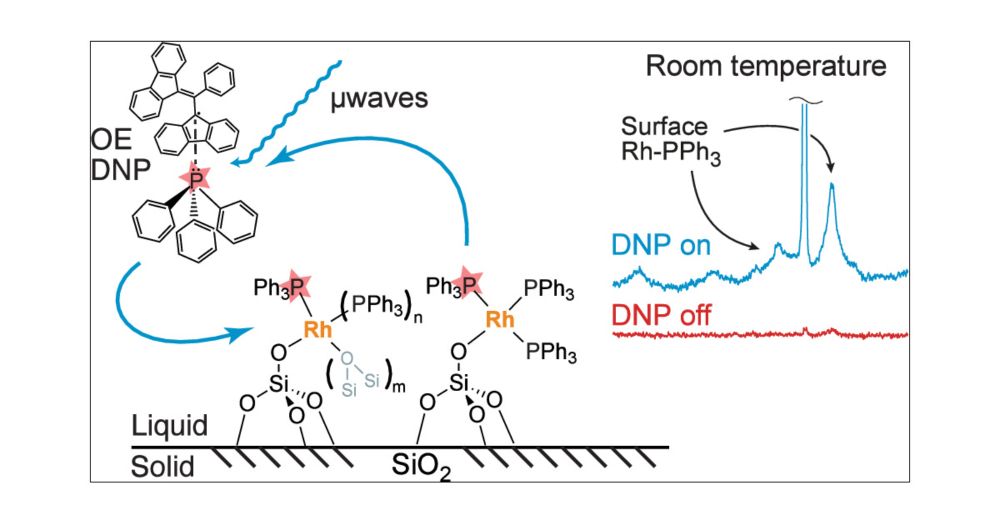
Surface Enhanced Nuclear Magnetic Resonance Spectroscopy at Solid–Liquid Interfaces Using Overhauser Dynamic Nuclear Polarization While solid–liquid interfaces are ubiquitous, detecting the associated surface sites under ambient conditions remains a grand challenge. Here, we demonstrate an approach to efficiently enhance the NMR...

DNP NMR at solid-liquid interfaces is now possible!
In this collaborative work we applied Overhauser DNP to a supported catalyst to gain molecular understanding of interfacial chemistry. @jacs.acspublications.org @ethz.ch
pubs.acs.org/doi/10.1021/...
16.06.2025 11:30 — 👍 8    🔁 2    💬 0    📌 1
Preview
Coordination environments of Pt single-atom catalysts from NMR signatures - Nature This study presents a nuclear magnetic resonance-based method to determine local structure and bonding of Pt single-atom catalysts.

Nature research paper: Coordination environments of Pt single-atom catalysts from NMR signatures

https://go.nature.com/4dSAt6v

11.06.2025 07:59 — 👍 7    🔁 3    💬 0    📌 0

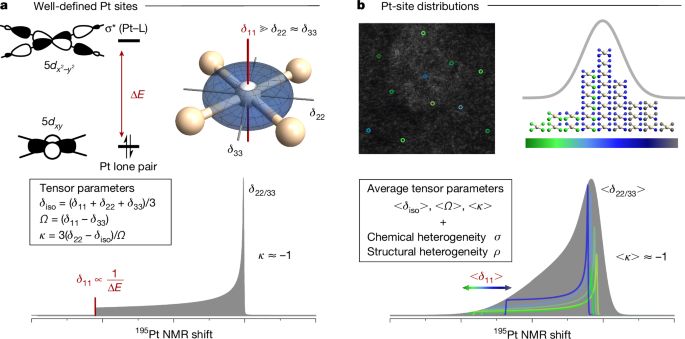
This great collaborative work is finally out! Proud to see how the advancement of our understanding of 195Pt NMR signatures enables to describe heterogeneous catalysts in such detail.

05.06.2025 18:44 — 👍 4    🔁 2    💬 0    📌 0
Preview
Coordination environments of Pt single-atom catalysts from NMR signatures - Nature This study presents a nuclear magnetic resonance-based method to determine local structure and bonding of Pt single-atom catalysts.

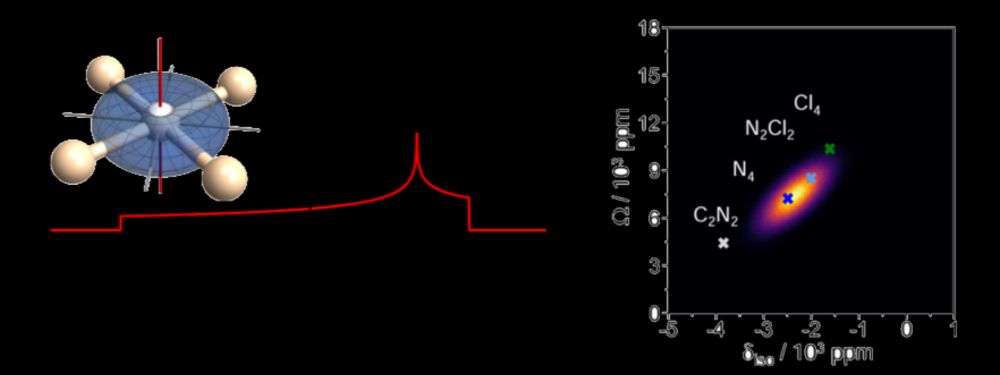
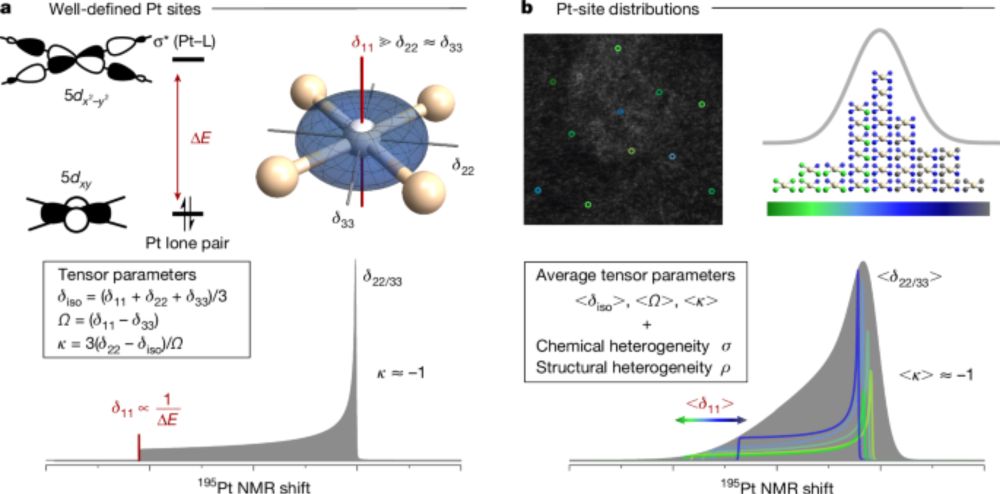
Are Single Atom Catalysts (SACs) Single-Sites? Not really according to our latest development in 195Pt ssNMR, now out in @nature.com . Our methodology enables to understand the nature and distribution of the coordination environment of Pt SACs! www.nature.com/articles/s41...

04.06.2025 21:38 — 👍 9    🔁 2    💬 1    📌 1

This study has been possible thanks to an amazing set of collaborators at @ethz.ch (Perez-Ramirez group), C-RMN Lyon and Aarhus University, participating in the NCCR Catalysis and a joint ANR @snsf.ch research program.

04.06.2025 21:40 — 👍 4    🔁 1    💬 0    📌 0

This study has been possible thanks to an amazing set of collaborators at @ethz.ch (Perez-Ramirez group), C-RMN Lyon and Aarhus University, participating in the NCCR Catalysis and a joint ANR @snsf.ch research program.

04.06.2025 21:40 — 👍 4    🔁 1    💬 0    📌 0
Preview
Coordination environments of Pt single-atom catalysts from NMR signatures - Nature This study presents a nuclear magnetic resonance-based method to determine local structure and bonding of Pt single-atom catalysts.

Are Single Atom Catalysts (SACs) Single-Sites? Not really according to our latest development in 195Pt ssNMR, now out in @nature.com . Our methodology enables to understand the nature and distribution of the coordination environment of Pt SACs! www.nature.com/articles/s41...

04.06.2025 21:38 — 👍 9    🔁 2    💬 1    📌 1