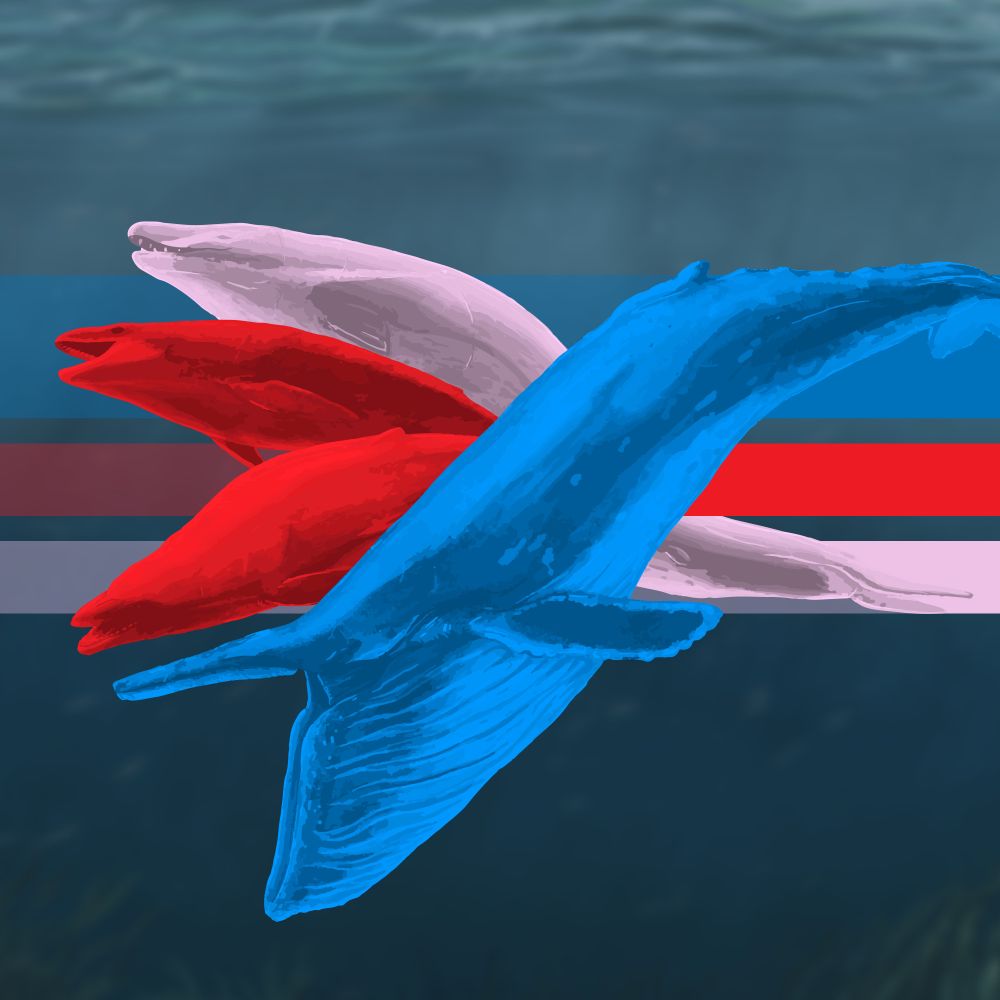
Janjucetus dullardi, a fantastic, newly described mammalodontid mysticete from the oligocene of Australia!
#paleoart #sciart
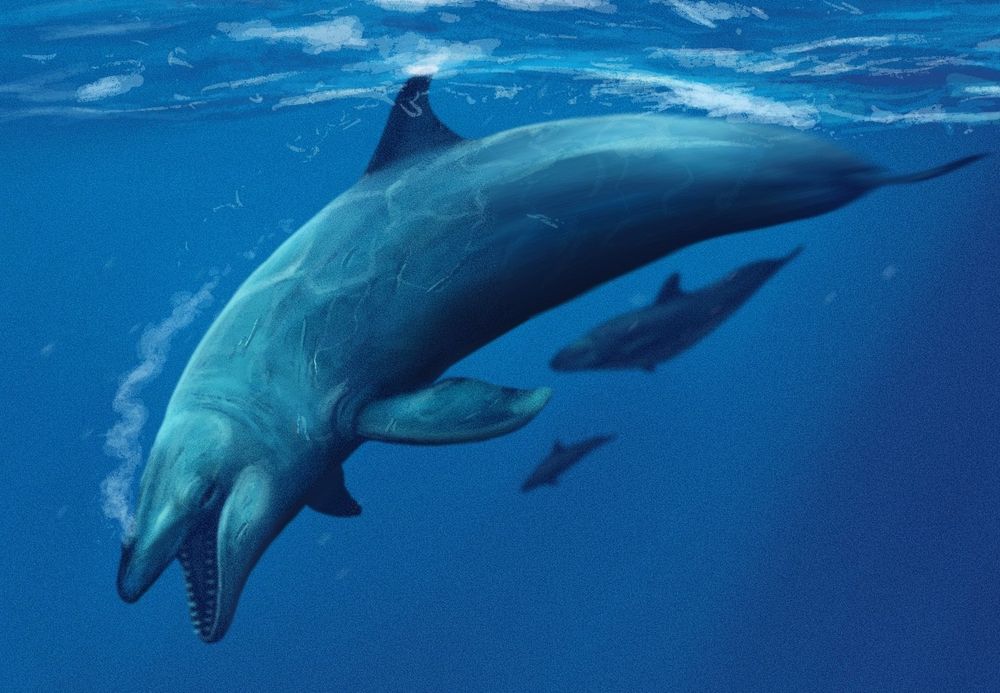
Janjucetus dullardi, a fantastic, newly described mammalodontid mysticete from the oligocene of Australia!
#paleoart #sciart
"I sleep in a racing car, do you?"
15.08.2025 02:21 — 👍 7 🔁 1 💬 0 📌 0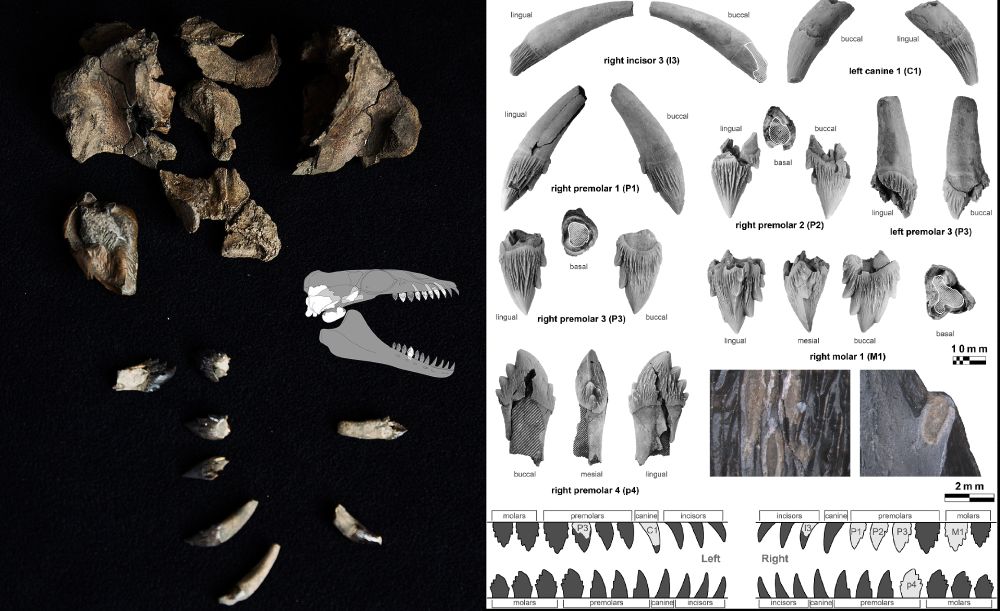
The skull fragments and teeth of Janjucetus dullardi.
#whalewednesday New paper - introducing the new toothed baleen whale from down under, Janjucetus dullardi - a 26 myo juvenile specimen closely related to the more completely preserved Janjucetus hunderi, published yesterday by @inxcetus.bsky.social. Read it here: academic.oup.com/zoolinnean/a...
13.08.2025 16:53 — 👍 42 🔁 9 💬 2 📌 1Putting this on my CV
14.08.2025 01:00 — 👍 1 🔁 0 💬 0 📌 0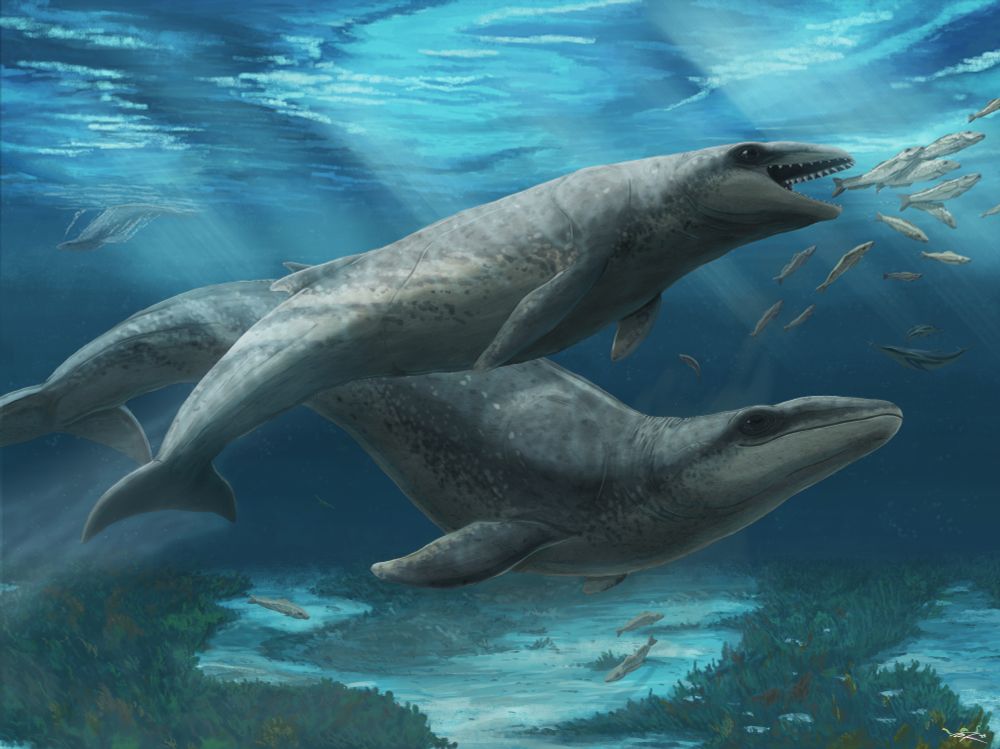
Thank you to all my co-authors and supervisors @palaeowhales.bsky.social, @palaeo-jrule.bsky.social, Travis Park, Alistair Evans and Justin Adams. The artwork associated with this work is also only as good as it is thanks to the input of the excellent Zev Landes.
13.08.2025 01:39 — 👍 20 🔁 5 💬 0 📌 0
The discovery of the third Australian mammalodontid species suggests that whatever that history was, the nexus was to be found in the shallow oceans that once covered prehistoric Jan Juc.
The paper was published in open access and can be found here: academic.oup.com/zoolinnean/a...

Mammalodontids are perhaps one of the weirdest groups of whales ever discovered. Janjucetus is especially so, with complex, razor-sharp teeth, gigantic eyes and short, stubby snouts. They have an evolutionary history that spans back several more million years.
13.08.2025 01:39 — 👍 12 🔁 3 💬 2 📌 0
The holotype specimen (NMV P256471) was discovered in 2019 by a member of the public for which the species is named: Ross Dullard. It was found in what we informally call unit 1 of the Jan Juc Marl, other taxa from which can be seen in the artwork.
13.08.2025 01:39 — 👍 12 🔁 4 💬 2 📌 0
We think this individual was just over 2 metres long when it perished—so, just about able to uncomfortably lie on a single bed.
13.08.2025 01:39 — 👍 15 🔁 5 💬 1 📌 3
As well as showing different ear bone characteristics and different (and largely unworn!) tooth anatomy, Janjucetus dullardi is unique amongst mammalodontids for its clearly immature stage of growth, permitting insights into how whales in this group changed as they grew.
13.08.2025 01:39 — 👍 14 🔁 3 💬 1 📌 0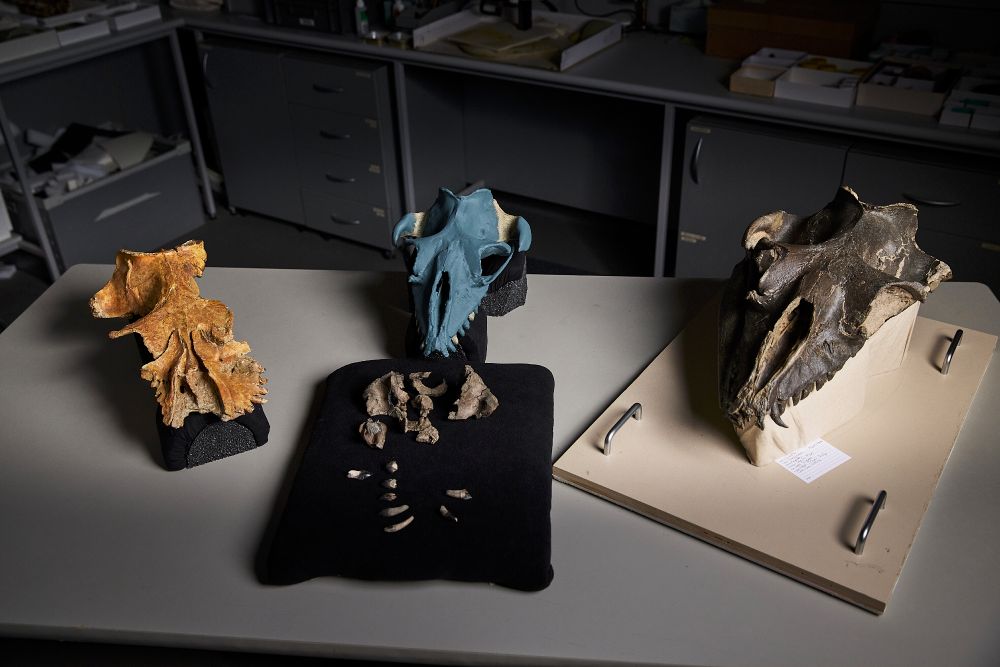
Janjucetus dullardi was found in rocks 25-26 million years old and is only the fourth species of a group called mammalodontids and the third named from Australia (hypothetical skull modelled by David Hocking, Matt McCurry and painted by @dinoman-jake.bsky.social)
13.08.2025 01:39 — 👍 11 🔁 2 💬 1 📌 1
A few years in the making, but I can finally share my first PhD paper and my first ever first-authored whale paper. In it, we name a new species of toothed baleen whale: Janjucetus dullardi. You can find our conversation article here: tinyurl.com/dullardi
13.08.2025 01:39 — 👍 53 🔁 20 💬 1 📌 1
New publication: taxonomy and classification of every fossil mammal species in Australasia—Wallace Line to New Zealand!
www.tandfonline.com/doi/full/10....
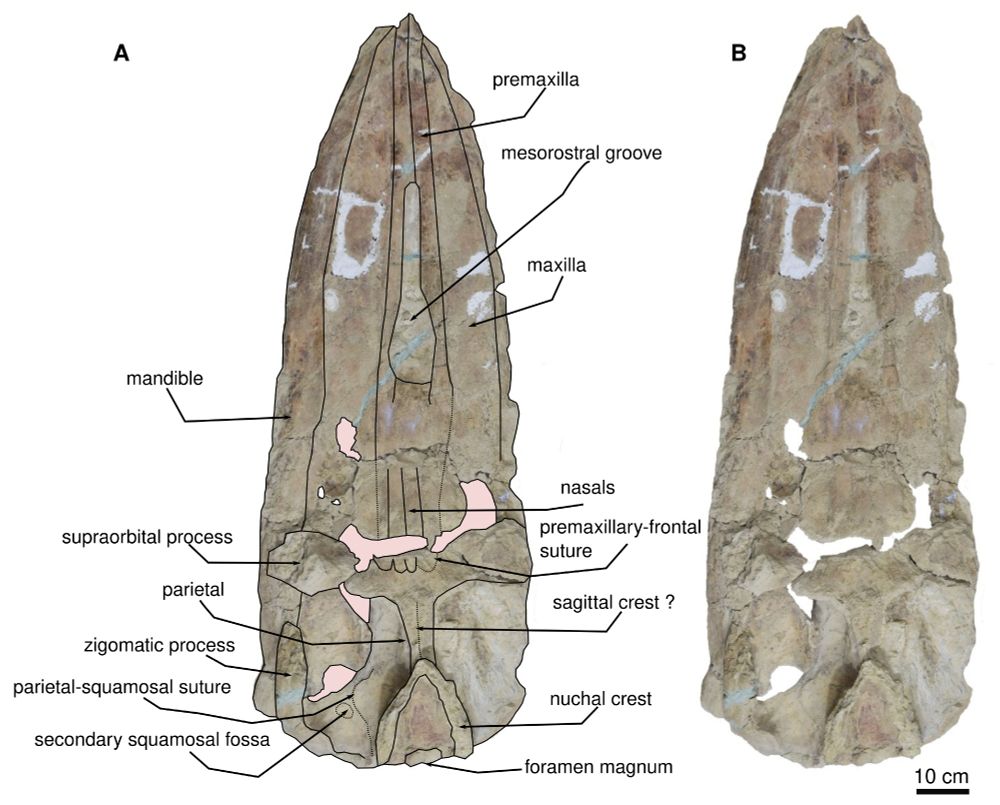
Photographs of the skull and mandible of Cochimicetus convexus in dorsal view - like other baleen whales, the skull resembles a surfboard in shape. Unlike modern species, the blowhole is located very far anteriorly and there are very large temporal fossae.
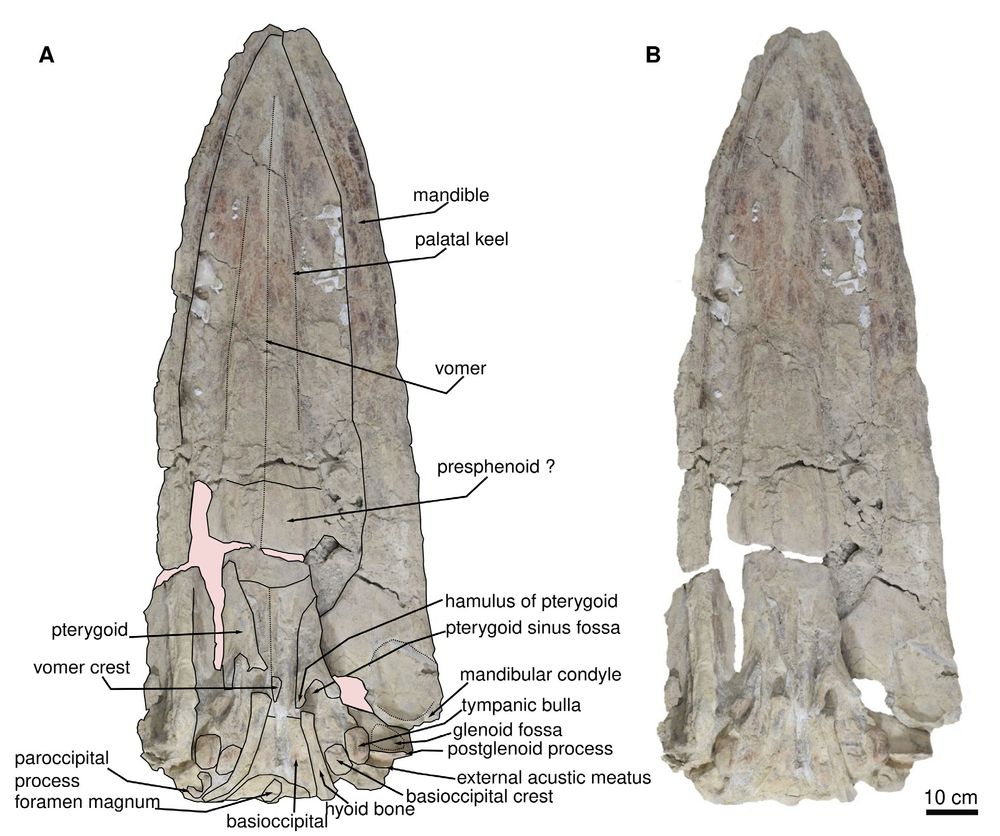
Photographs of the skull and mandible of Cochimicetus convexus in ventral view - the palate is broadly exposed here and is long and flat.
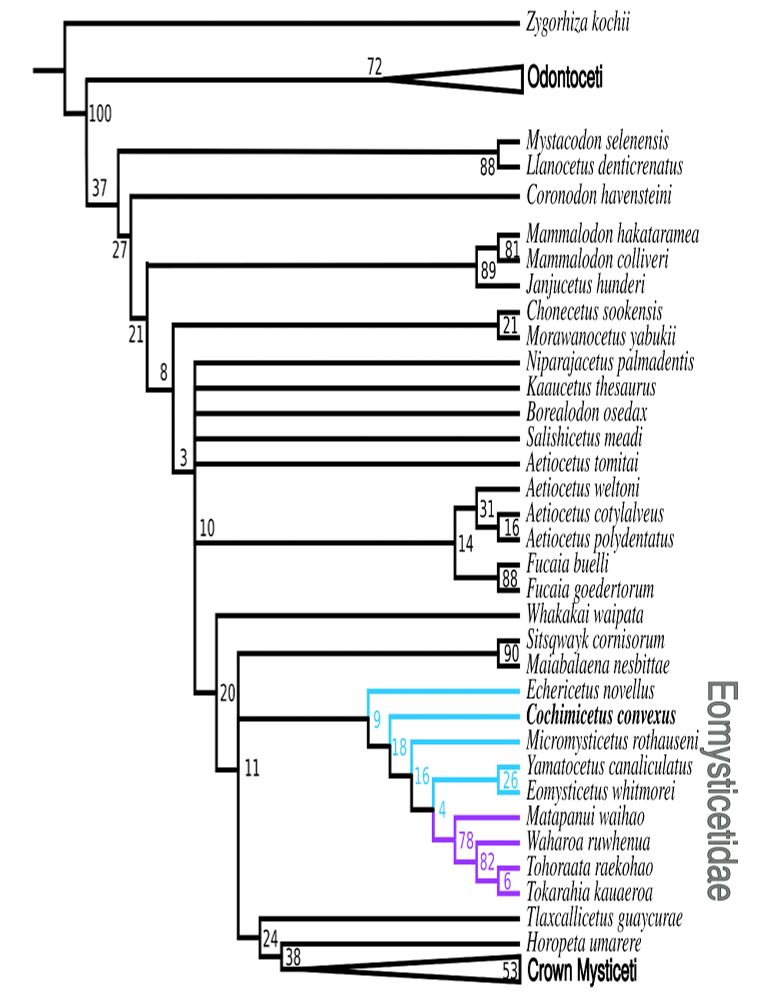
Cladogram or evolutionary tree for the study, showing eomysticetid whales, including Cochimicetus, as a single clade. toothed baleen whales are positioned further down the tree, along with dolphins and an archaeocete.
🐬🦖 New paper by Cedillo-Avila et al. in Palaeo-Electronica: newly named eomysticetid baleen whale from the Oligocene of Baja California, Cochimicetus convexus! Elated to see another eomysticetid named from the Pacific coast. Read it here: palaeo-electronica.org/content/in-p...
06.01.2025 18:37 — 👍 16 🔁 4 💬 0 📌 0
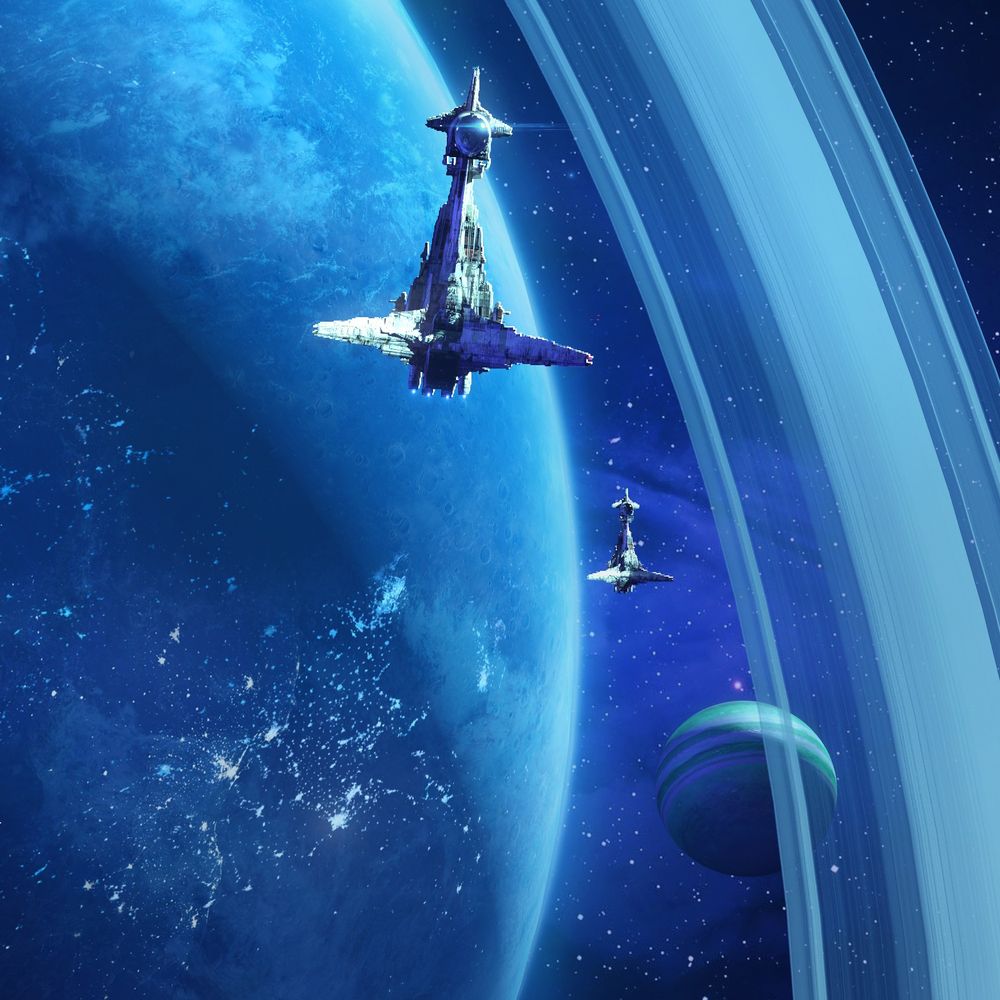
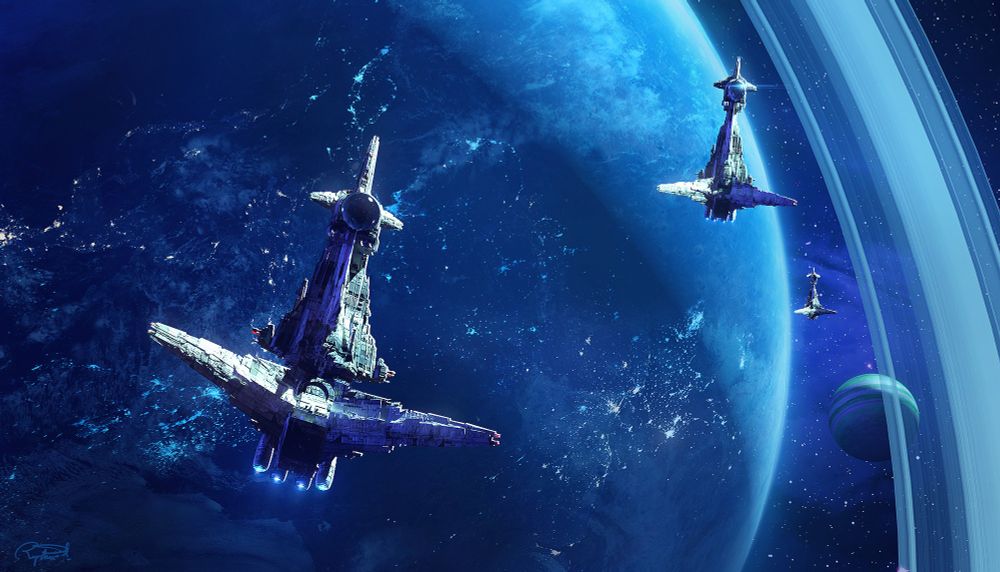
New Artwotk - " Migration "
12.12.2024 23:38 — 👍 120 🔁 21 💬 2 📌 0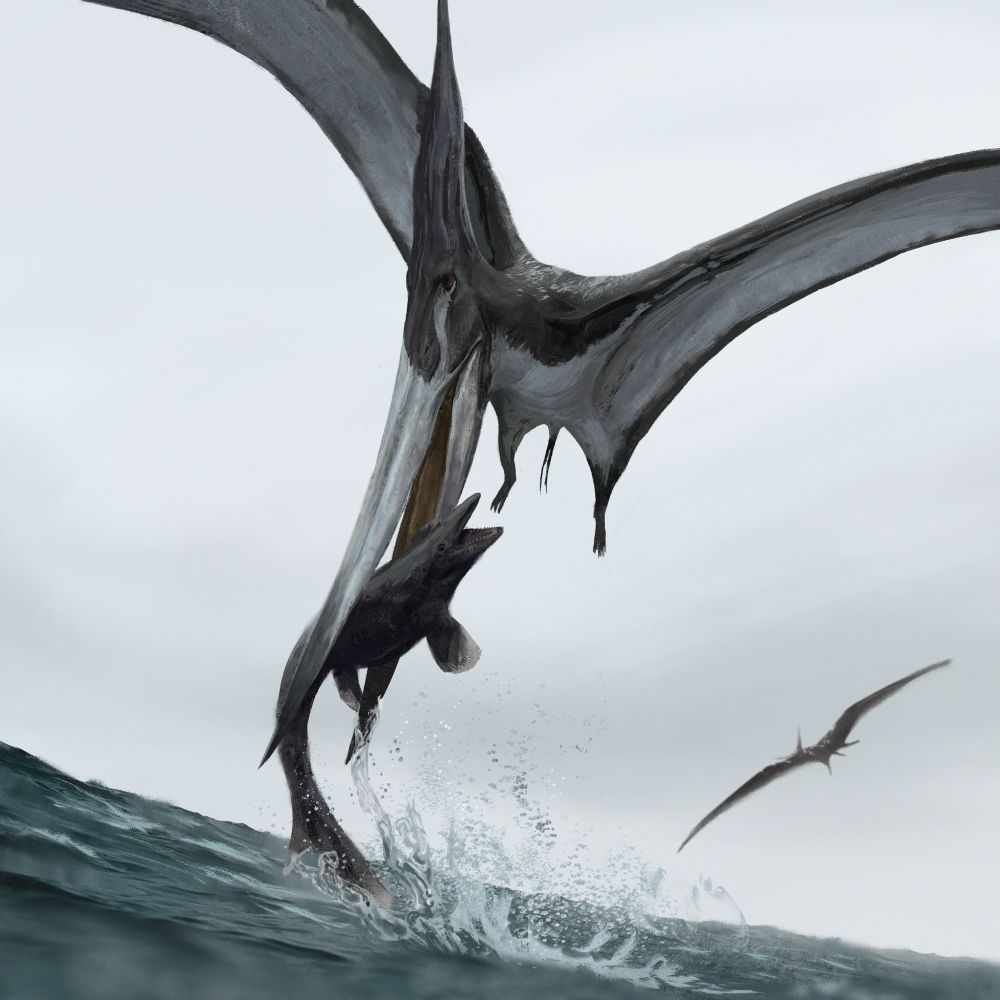
seafood.
05.12.2024 22:07 — 👍 998 🔁 224 💬 10 📌 3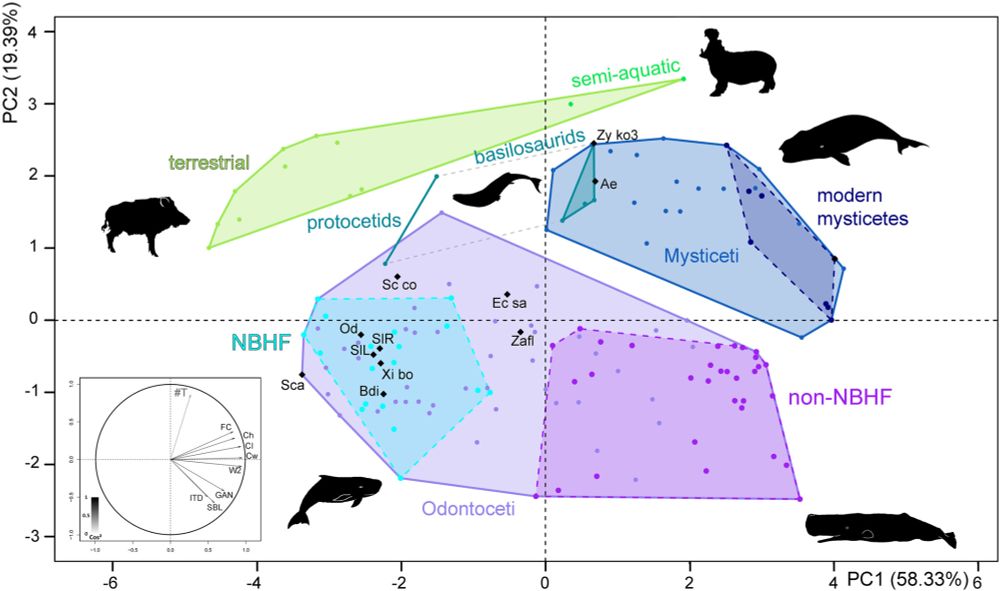
I have a new paper out on the evolution of hearing in toothed whales! It looks like a narrow range of high-frequency auditory sensitivity in some living dolphins and porpoises may be an ancestral physiology rather than novel specializations in select groups.
onlinelibrary.wiley.com/doi/10.1111/...
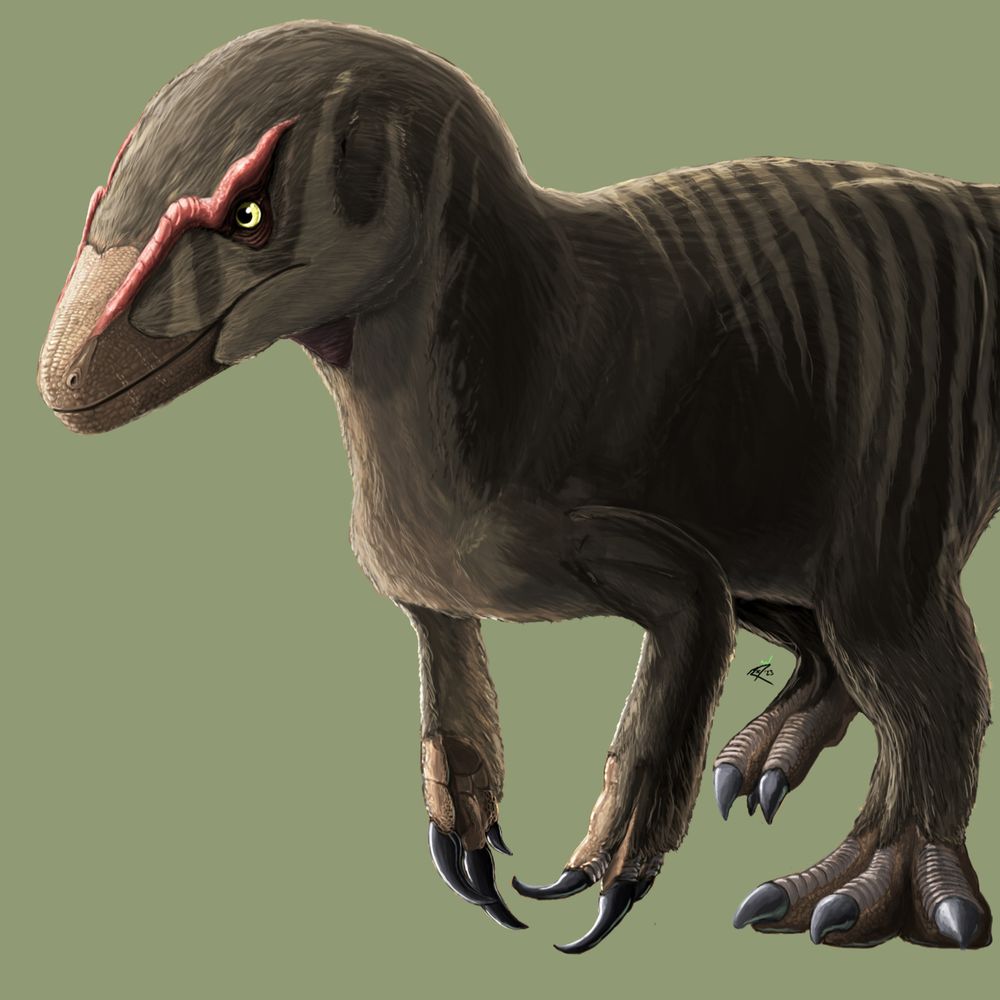
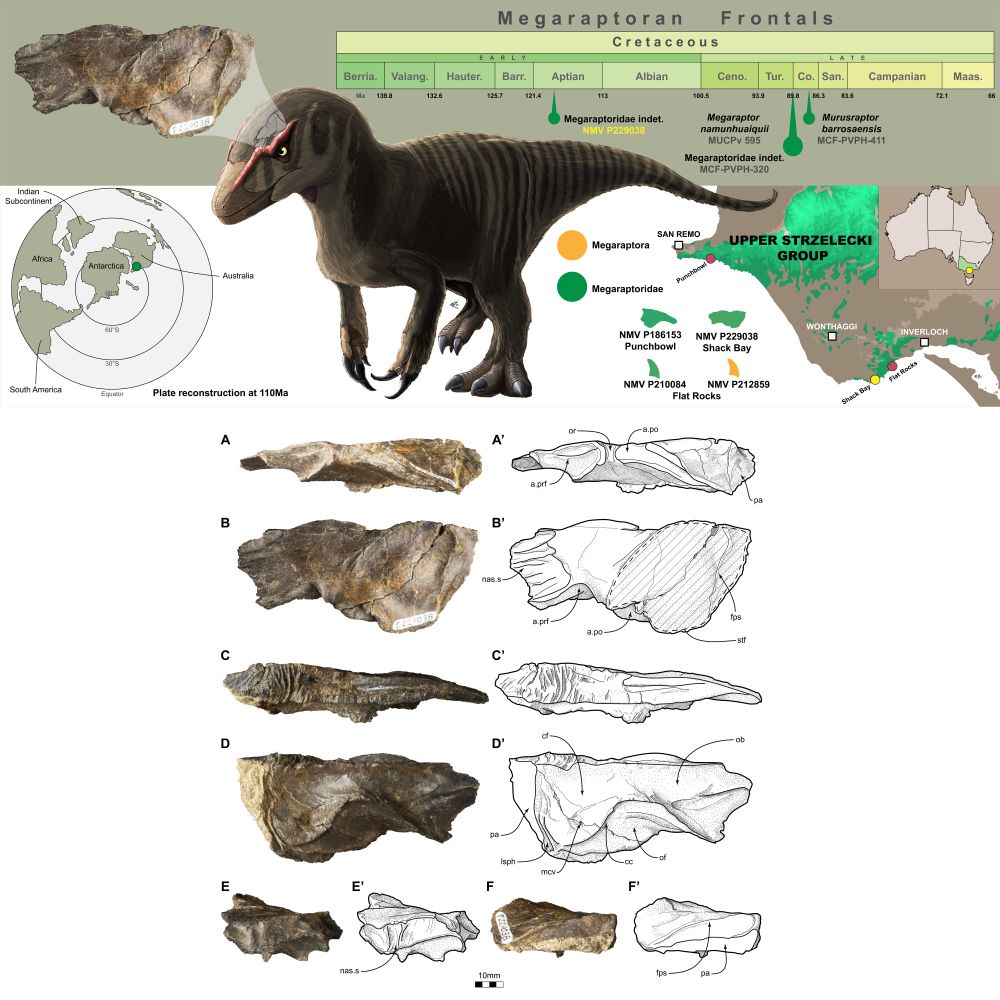
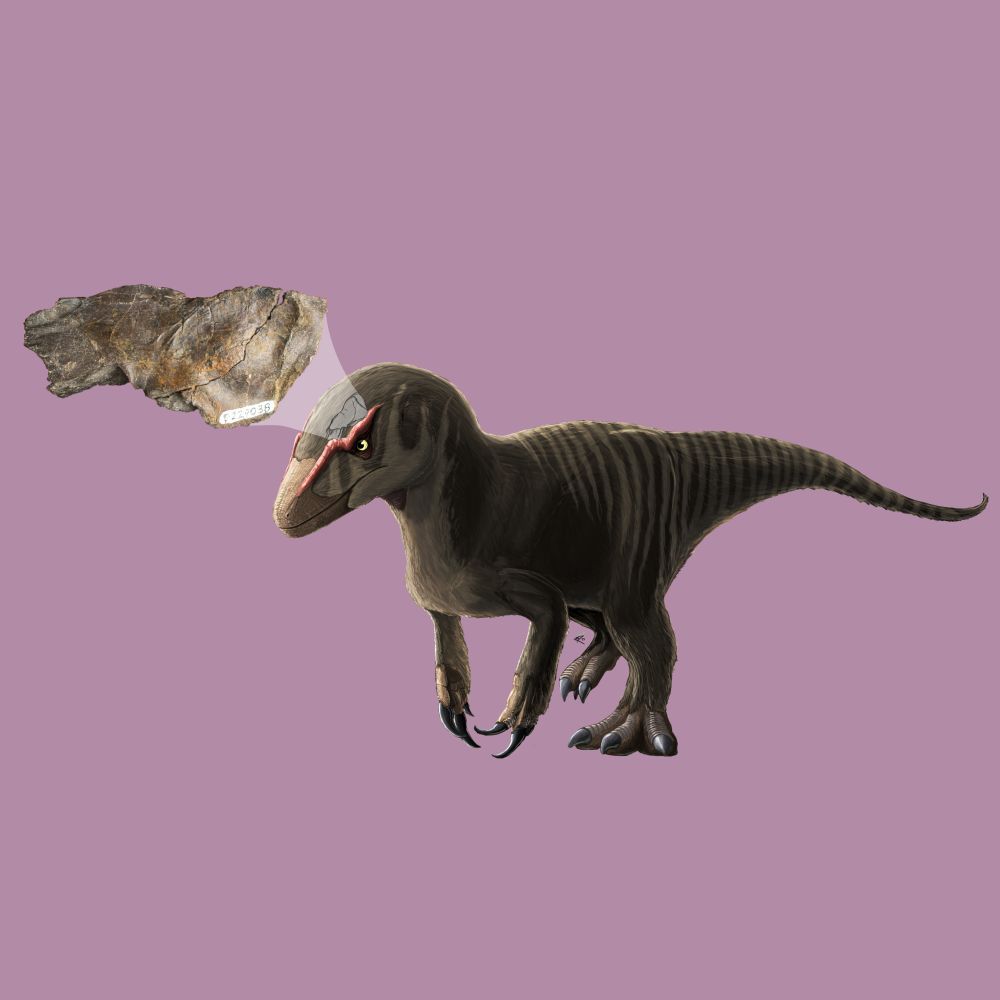
Thrilled to have been a co-author and palaeoartist on my good friend Jake Kotevski's first PhD chapter (who does not use Bluesky). Always nice to have a reason to draw some theropod dinosaurs 🦖
doi.org/10.1016/j.cr...
All cetaceans are classified as "even-toed ungulates" (Order: Artiodactyla), while horses are "odd-toed ungulates" (Order: Perissodactyla).
That means a giraffe is more closely related to a narwhal (58 MYA) than to a zebra (76 MYA).
(diagram by K. L. Mariott)
New paper by my colleagues and I on the reproductive anatomy of a leopard seal 🦭
Leopard seal reproduction is mostly unknown. This note from a Monash Uni dissection discusses the importance of morphology in providing some clues.
Open access paper here:
doi.org/10.1111/mms....
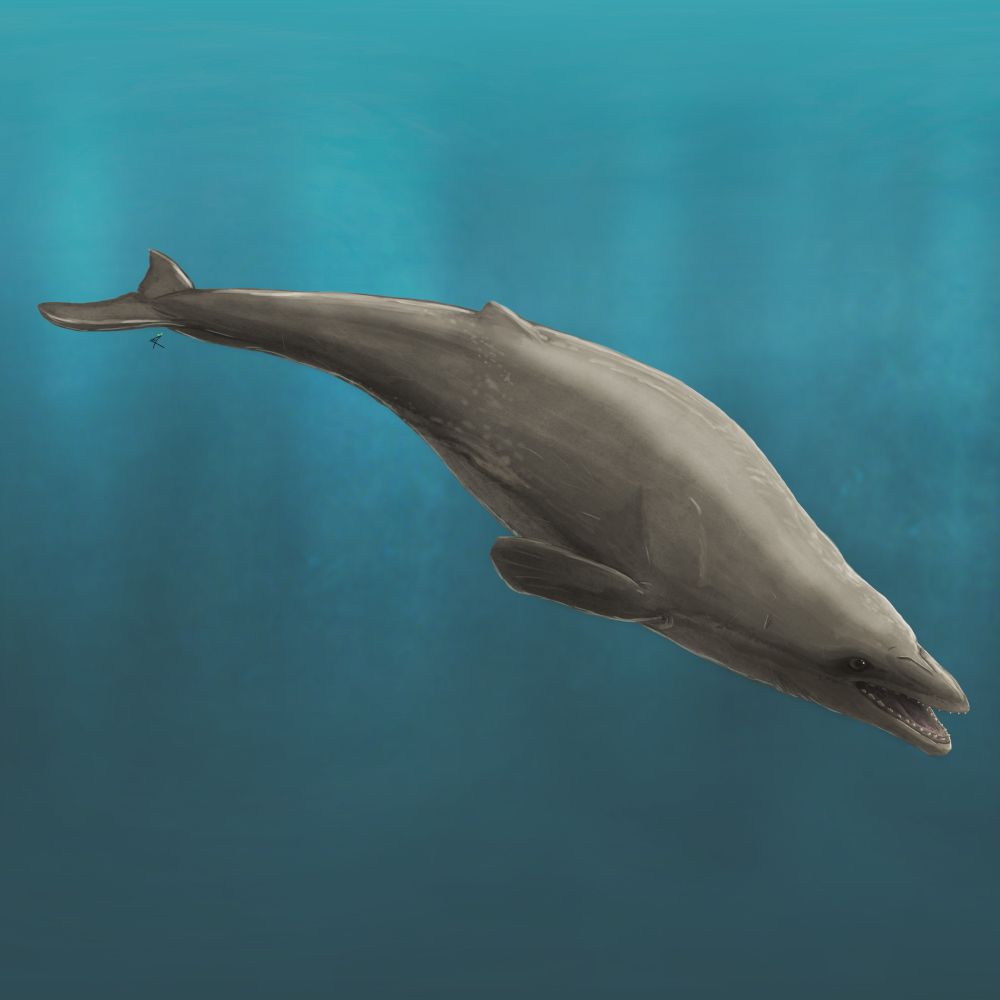
Fucaia goedertorum, a small toothed baleen whale from the Pacific northwest around 30-25 million years ago. Its mouth be agape and it be looking chuffed.
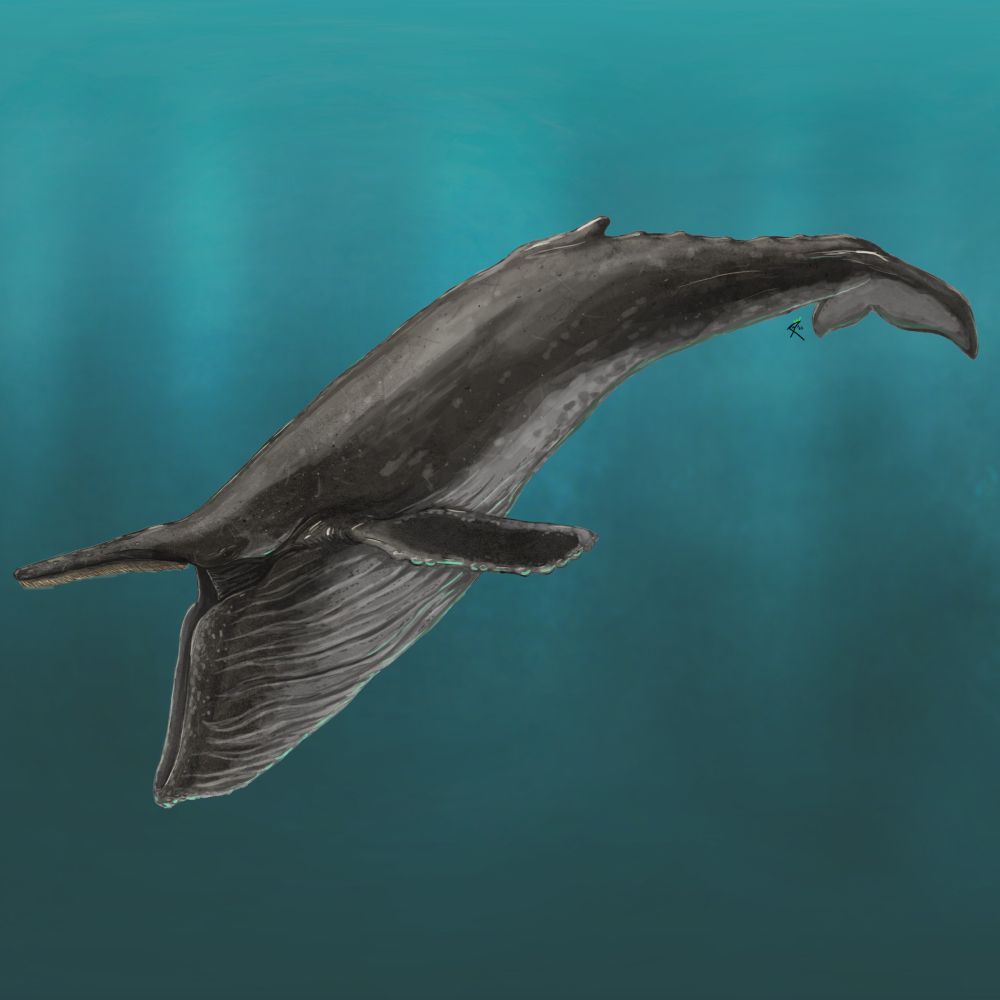
A humpback whale with its mouth open in the act of lunge feeding, with the throat expanding due to incoming water. Best animal, fight me.
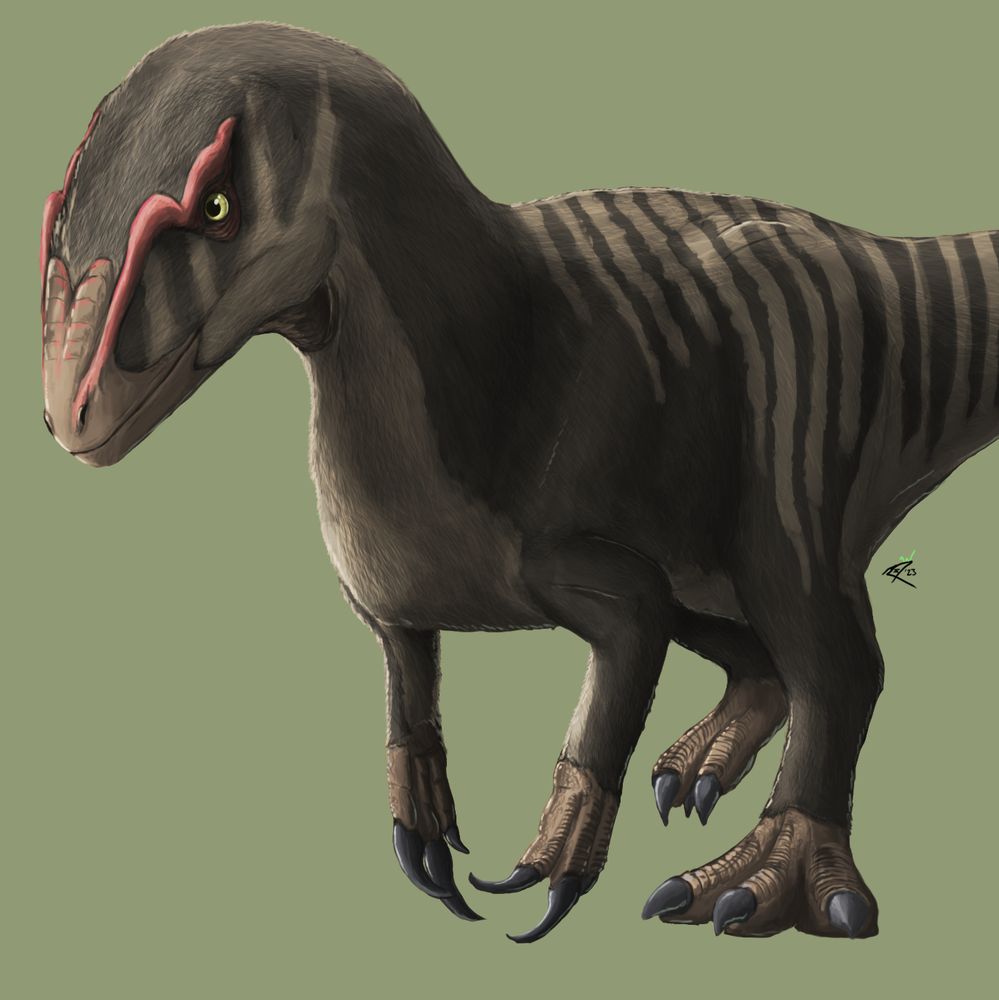
A Victorian polar megaraptor walking towards the viewer. Reconstructed as a dark brown, large clawed meat eating dinosaur with beige stripes increasing in prominence from the torso to the tail and with speculative red head crests.
A porgerbear chimeara, a combination of: puffin, polar bear, tyrannosaur, beluga, and porg (those feathered, gremlin-looking jellybeans from the sequel trilogy)
Hello new social media hellscape! I'm Ruairidh, a palaeontology PhD candidate and palaeoartist (of sorts) at Monash University and Melbourne Museum studying toothed baleen whales. I like DS9 and making weird animals out of other animals. Please share all the cool science and art with me! 🐋🖖🦖
04.09.2023 12:31 — 👍 11 🔁 1 💬 0 📌 0