i just read something about grief from C.S. Lewis and his book, “A Grief Observed”
basically, when someone you love dies, it isn’t just them that you miss, but the parts of yourself that person brought out of you that can never be brought out again.
i feel that with my dad.
16.11.2025 11:51 — 👍 17407 🔁 1860 💬 4 📌 10

New term for corruption dropped: blending.
15.11.2025 22:48 — 👍 163 🔁 60 💬 11 📌 8
We bought into the "post scarcity" narrative because digital tech feels so magic and ethereal but we need to get back to an understanding of the material costs and effects of those systems. They are not very post-scarce in reality.
15.11.2025 18:09 — 👍 2111 🔁 291 💬 58 📌 16

In the global electrification race China is marching ahead.
The US and Europe risk falling behind clinging on to yesterday's technologies.
14.11.2025 13:51 — 👍 2869 🔁 871 💬 136 📌 83

ARC
@arcglobal.bsky.social's mission is quite simple: STOP accelerationist terrorism.
Accelerationism originated prior to radical right-wing uptake but has since become nearly synonymous with far-right terrorism. This is why we use "militant" and "neofascist" in our analysis!
www.accresearch.org
06.12.2024 15:46 — 👍 13 🔁 3 💬 3 📌 1

A green background with pale gold books patterned across it. Header text reads "Letters for Liberation Book Look." Images of seven books are arranged in the foreground: The End of Policing by Alex S. Vitale, Chain-Gang All-Stars by Nana Kwame Adjei-Brenyah, Are Prisons Obsolete? by Angela Y. Davis, The New Jim Crow by Michelle Alexander, Abolition Democracy by Angela Y. Davis, The Hundred Years' War on Palestine by Rashid Khalidi, and Assata: An Autobiography by Assata Shakur.
Whatchya reading? Our latest newsletter (🔗 ⤵️) explores the impact abolition-related books and how crucial they can be to informing our values.
Have you read any of these? What did you think? What would you add to this list?
14.11.2025 19:33 — 👍 552 🔁 118 💬 31 📌 4

Understanding the process that favored the emergence of life is not just about looking backward to 🌎’s first dawn: it’s about learning how complexity itself begins and how it might arise again, elsewhere.
Life as a cascade of transitions?
#ComplexityThoughts
manlius.substack.com/p/when-matte...
14.11.2025 16:21 — 👍 7 🔁 3 💬 1 📌 0
YouTube video by AI In Context
If you remember one AI disaster, make it this one
This video is 40 minutes long, and in this age of generative artificial intelligence accelerationism it might be the most important one you watch.
01.11.2025 16:46 — 👍 2 🔁 1 💬 0 📌 0

Accelerationism is taking over
02.11.2025 16:22 — 👍 2 🔁 1 💬 1 📌 0

The Corpse of Accelerationism
Why kick the corpse of accelerationism?
Benjamin Noys (expertly) jumping up and down on 'the corpse of accelerationism' repeaterzer0.substack.com/p/the-corpse...
11.11.2025 22:00 — 👍 2 🔁 1 💬 0 📌 0
Global warming denial and accelerationism are also at record highs among Western conservatives
https://www.nytimes.com/2025/11/12/climate/greenhouse-gas-emissions-china.html
13.11.2025 02:06 — 👍 1 🔁 1 💬 0 📌 0

User Error: Nick Land November by Adina Glickstein
The right-wing philosopher is back in the spotlight – cue the AI apocalypse?
A good read... Curtis Yarvin very undeservedly gets a lot of press in discussion about tech fascist ideology, but Nick Land is where it really hits.
spikeartmagazine.com/articles/use...
13.11.2025 16:35 — 👍 13 🔁 5 💬 1 📌 0

How to rapidly scale the heat pump market?
“The main hurdle is the price ratio of gas to electricity. [Reforming taxation of energy] would unlock a much more market-driven transition.”
That’s what I told the FT. Excellent piece.
14.11.2025 07:09 — 👍 84 🔁 25 💬 6 📌 0

Between 1850 and 1910 the population of Vienna almost quadrupled, from about half a million, to two million. During this Golden Age of Science and Culture, more than half of the Viennese population came from outside Vienna, and a significant share came from outside what today constitutes Austria.
14.11.2025 06:29 — 👍 1 🔁 1 💬 1 📌 0

A very big cannon, and a very big cannonball, on a detail of a broadside from 1686. More details in the thread.
Dear #skystorians, here is a cool story of a very big cannon experiment of the 1680s in Europe. A 🧵 about the idea of transporting people in cannon balls ...
13.11.2025 09:16 — 👍 144 🔁 52 💬 3 📌 18
For a wild, somewhat more recent version of this, in which the cannonball was full of sangfroid, see Jules Verne's "From the Earth to the Moon"- out soon in a new annotated edition from @mitpress.bsky.social, edited by @anaklimchy.bsky.social and with an essay and annotations from meeeeeee
13.11.2025 10:55 — 👍 17 🔁 5 💬 1 📌 2
Cities are dynamos of demographic change, however our data practices can often hide this fact. In this paper, we explore growth in Chicago, a city purportedly burdened by a stagnating population. Using methods from population ecology, we show that not only is Chicago undergoing rapid, spatially...
12.11.2025 18:56 — 👍 7 🔁 3 💬 1 📌 2
'To take political office as an avowed socialist, in the headquarters of global capital, is to expose conviction to contingency, to put fixed principles to the test of changing conditions, fragile alliances, and determined enemies.'
— this is quite a piece by Colin Vanderburg
#USPolitics #Mamdani
13.11.2025 01:41 — 👍 4 🔁 2 💬 0 📌 0

Truly remarkable: Poland used to be a climate laggard.
Today, wind and solar are increasingly replacing coal in the Polish electricity mix with almost 30% of all electricity generated to date this year from wind and solar.
In 2000 coal provided 95% of Polish electricity.
Today it is at 51%.
13.11.2025 08:46 — 👍 284 🔁 79 💬 5 📌 15
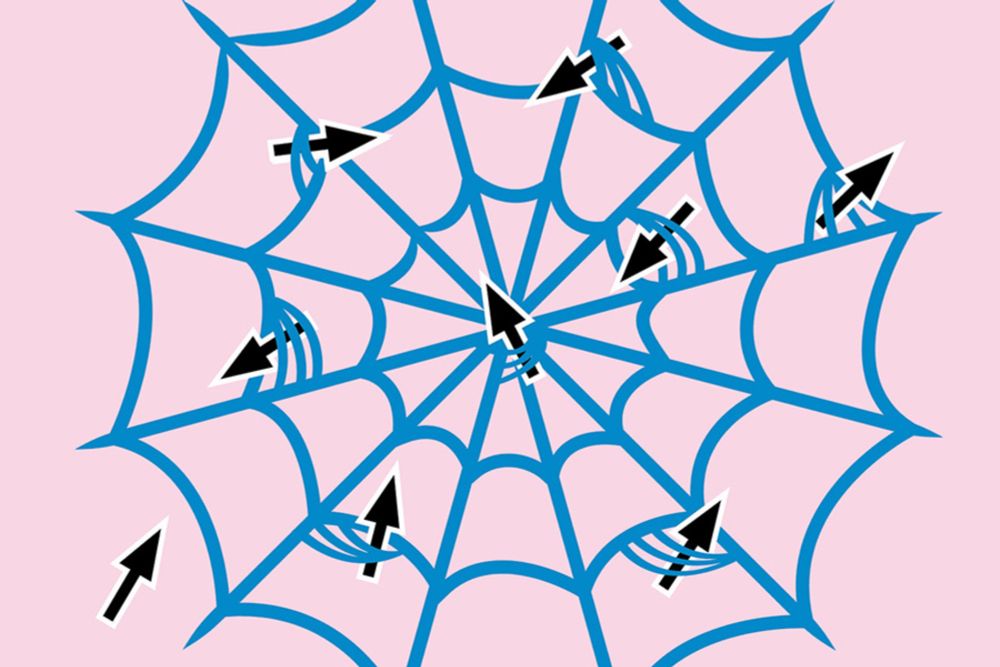
How the Web Was Lost | James Gleick
The Internet was not meant to suck.
How the Web Was Lost (The internet was not meant to suck).
I review some history—thoughtful, philosophical, and enraged—by Tim Berners-Lee, Joanna Walsh, and @pluralistic@mamot.fr.
www.nybooks.com/articles/202...
11.11.2025 13:49 — 👍 27 🔁 9 💬 3 📌 1

A copy of "An Engineered World: The Role of Engineers in Global Modernity" edited by Edward Beatty and Israel G. Solares on a plain background.
Edward Beatty & Israel G. Solares' "An Engineered World" presents eight case studies to examine the dramatic global expansion of modern professional engineering—and why this is critical to our understanding of 20th-century world history. #OpenAccess: mitpress.mit.edu/978026255335...
11.11.2025 14:16 — 👍 6 🔁 3 💬 1 📌 1

A copy of "Archiving Machines: From Punch Cards to Platforms" by Amelia Acker on a plain background. The cover depicts a punch card.
In "Archiving Machines," Amelia Acker tells the story of the rise of networked data through the evolution of archiving and digital storage, providing a critical look at data archives and access to information. Available #OpenAccess: mitpress.mit.edu/978026255324...
11.11.2025 14:16 — 👍 11 🔁 3 💬 2 📌 0
7 days left to back this book's Kickstarter. A project I wish desperately were less timely. You can also use the Kickstarter to support La Cultura del Barrio-antifascist social & sporting club in the heart of Bs. As.
@pmpress.bsky.social
@workingclasshistory.com
11.11.2025 15:39 — 👍 19 🔁 11 💬 1 📌 1

Frederick Douglass, born a slave, died a global icon of resistance to tyranny
“Power concedes nothing without a demand. It never did and it never will.”
This is the unbelievable story of the man who said those famous words, Frederick Douglass.
Born a slave. Died a global resistance leader. 🧵
11.11.2025 17:20 — 👍 38 🔁 23 💬 1 📌 1

Slide title: "network effects in scientific labor"
networks mediate most scientific activities:
1. scientific training, hiring, collaboration, teaching, attention, peer review, etc.
2. networks act like a form of unequally distributed social capital
a productive collaborator --> increases your productivity
a prominent collaborator --> increases your prominence
How much does who you work with impact your productivity and prominence?

Slide title: "model checking". Shows the results of applying our probabilistic generative from Li et al. Nature Communications (2022) for estimating individual productivity and prominence parameters from observed collaboration network data. This "nets out" the network, and estimates individual levels of activity.
Left figure is joint distribution of productivity lambda and prominence theta, showing productivity is tightly concentrated around 0.42 papers/year, while prominence has a long tail, with most mid-career scientists (we studied 200,000 from 6 STEM fields) have very low prominence.
Right figure shows pairwise correlation matrix of measures like number of papers, number of citations, lambda, theta, having a high-lambda coauthor, and having a high-theta coauthor. Strong correlation between your own number of papers and having a high-lambda (very productive) coauthor, etc. Good sanity checks for the model.

Slide title "gender vs. productivity & prominence" Notes decades of past work showing a "productivity gap" between men and women, in which men publish more papers and receive more citations over time. But, after "netting out" their collaboration networks, we find no gender difference at all between individual productivity and individual prominence, implying that it's difference in who men and women work with (the size and composition of their collaboration networks) that drives the observed gap in productivity, not differences at the individual level.

Slide title "how important is who you work with?" This is a wrap-up slide from the end of the talk:
networks act like unequally distributed social capital in science
they mediate our scientific attention, evaluation, and collaboration
differences in collaboration networks can explain
gendered differences in productivity & prominence
early-career productivity & prominence
what else?
can we intervene in these networks to mitigate inequalities?
funds for new collaborations, eg, after parenthood?
early-career fellowships to work with elite senior coauthors?
Slides from my @mit.edu IDSS Distinguished Speaker seminar "Networks untangle gender differences in productivity and prominence among scientists" this week
I argue that collaboration networks act like unequally distributed (and gendered) social capital
aaronclauset.github.io/slides/Claus...
06.11.2025 18:05 — 👍 32 🔁 12 💬 1 📌 1
ARC is dedicated to a collaborative, empirical approach to understanding and addressing the threat of accelerationism to democratic societies.
Working Group for insurgent criminology. Publishers of the open access journal: Radical Criminology (& THOUGHT|CRIMES Press). #AbolishThePolice #DefundThePolice
65 year old Democrat. Retired after 22 years of Government experience on a technical college degree in medical/army supply.
Surg on both thumbs expect typos.
Resist or bust
🚫crypto, chats nor porn
She/Her, It/Its, Chastity/Cage. GIFB. Technoschizic Lesbovampiric Militia Goth. Slave to the Dark Enlightenment of all things Sapphic. Unapologetic Degenerate. Neo-Baeddel g/Acc Priestess. Lycanthropic Neo-Amazonian Post-Nationalist Gender-Guerilla
NO KINGS. NO FASCISTS. FUND SCIENCE.
Professor of Computer Science @ BioFrontiers Institute at University of Colorado, Boulder and External Faculty @ Santa Fe Institute
orcid: https://orcid.org/0000-0002-3529-8746
Taking physics and bringing it to Life. 물리학을 생명으로. Assistant Professor in Physics, Seoul National University (fall of 2026). At BOKU and Complexity Science Hub. Team leader PoETs Lab.
https://eddielee.co
Complexity Economics research group, Institute for New Economic Thinking at the Oxford Martin School, University of Oxford.
Director of Complexity Economics at INET Oxford; Baillie Gifford Professor of Complex Systems Science at the Smith School of Enterprise and the Environment, University of Oxford; external faculty at the Santa Fe Institute; Chief Scientist, Macrocosm
Journalist with bylines in Nature, Quanta, Scientific American, New Scientist, and many more; former deputy news editor at New Scientist Author of 4 popular science books, including WHY MACHINES LEARN: The Elegant Math Behind Modern AI; TED speaker
Official account of the Network Science Society.
To serve and represent the research community on network science.
netscisociety.net
🌐 Think-tank to accelerate our understanding of interspecies communication.
👉 Supported by Google & MIT
https://www.interspecies.io/
A physicist stumbling ergodically through the life sciences. Faculty
@NorthwesternU @NITMB @SFIscience. Complex systems, networks, high-dimensional statistics / ML, with application to omics data analysis in cancer systems biology, circadian rhythms, &c.
SUNY Empire Innovation Professor at Binghamton University https://tendrel.binghamton.edu
President Complex Systems Society @cssociety.bsky.social
Assistant Professor at MITSloan. Understanding human collectives using math & data. Former fellow at Santa Fe Institute.
Always curious, frequently clueless, constantly tinkering. Systems everywhere.
http://mingzhenlu-lab.com
contributing editor, Scientific American, Nautilus; contributing writer, Quanta; author, Putting Ourselves Back in the Equation, Spooky Action at a Distance, Complete Idiot’s Guide to String Theory; planetary scientist, local historian, bassist, salsero
The premier research center for #ComplexSystems #science.
santafe.edu
linktr.ee/sfiscience
Physics, philosophy, complexity. @jhuartssciences.bsky.social & @sfiscience.bsky.social. Host, #MindscapePodcast. Married to @jenlucpiquant.bsky.social.
Latest books: The Biggest Ideas in the Universe.
https://preposterousuniverse.com/
Author. Chaos, The Information, Time Travel.
Other work can be found at https://around.com.
My new history of the telephone will appear in November.
On the open social web I'm gleick@mas.to.
Mathematician, writer, Cornell professor. All cards on the table, face up, all the time. www.stevenstrogatz.com