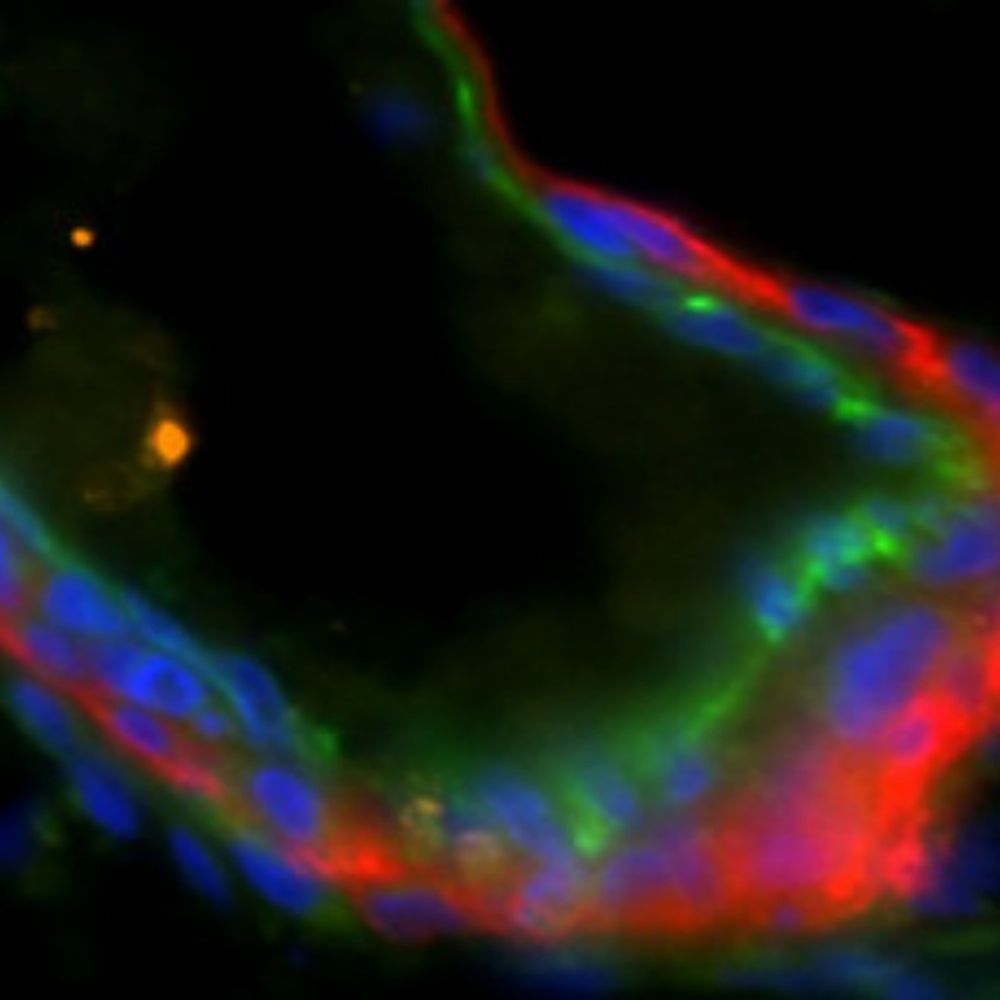
We are looking forward welcoming you on December 9th for Prof. Barry Rockx's @barryrockx.bsky.social presentation: "Experimental models for characterization of emerging vector-borne viruses".
Register: www.zoomgov.com/webinar/regi...
@astmh.bsky.social @utmbnews.bsky.social @sbvirologia.bsky.social
05.12.2025 12:31 —
👍 5
🔁 1
💬 0
📌 0
These factors collectively determine outbreak potential and disease severity, contributing to the broader knowledge framework needed to address emerging arboviral threats.
03.12.2025 19:18 —
👍 1
🔁 0
💬 0
📌 0
💡 Why this matters:
A focus on vector-virus-host interactions is critical because successful WNV transmission depends on complex molecular mechanisms that govern viral replication within mosquito vectors, viral adaptation to different host species, and the efficiency of vector-to-host transmission.
03.12.2025 19:18 —
👍 1
🔁 0
💬 1
📌 0
- The presence of mosquito saliva at the WNV inoculation site in mice, leads to increased permeability of the dermal endothelium at the inoculation site, and increased mortality compared to inoculation of WNV alone.
03.12.2025 19:16 —
👍 1
🔁 0
💬 1
📌 0
- Saliva proteins from anthropophilic mosquito species induce permeability in an in vitro model of the human dermal endothelium, while an ornithophilic mosquito species do not.
03.12.2025 19:16 —
👍 1
🔁 0
💬 1
📌 0
- During probing and feeding, a mosquito injects both saliva and virus particles into the host skin. Mosquito salivary proteins induce permeability of the capillaries while also dampening the immune responses, and recruiting susceptible immune cells for dissemination to distant organs.
03.12.2025 19:16 —
👍 1
🔁 0
💬 1
📌 0
🔬 Key findings:
- The novel WNV strain isolated from a common chiffchaff in the Netherlands in 2020, is neurovirulent in a mouse model.
- Changes in dinucleotide frequency in the genome of WNV impacts the replication, transmission and virulence of WNV.
03.12.2025 19:15 —
👍 2
🔁 0
💬 1
📌 0
🦟What factors impact the clinical outcome of West Nile virus infection?
In her thesis “West Nile virus pathogenesis: exploring the vector-virus-host interface”, Imke employed a multifaceted approach to advance our understanding of WNV pathogenesis, host-virus interactions, and vector influence.
03.12.2025 19:13 —
👍 1
🔁 0
💬 1
📌 0

Xmas came early again this year! Very proud of Imke Visser, last week she handed me a copy of her thesis. She will defend her thesis on Wednesday, January 7th, 2026. It was a pleasure supervising her! #ProudPI
03.12.2025 19:12 —
👍 3
🔁 2
💬 1
📌 0
Thanks for the invitation! Looking forward to sharing some of our exciting work on emerging arboviruses, see you there!
21.11.2025 19:32 —
👍 1
🔁 0
💬 1
📌 0
Great collaboration with the group of Sander Koenraadt, @marionkoopmans.bsky.social from the #OneHealthPact and many others.
16.05.2025 06:11 —
👍 0
🔁 0
💬 0
📌 0
In addition, saliva from Cx. pipiens biotypes enhance WNV-induced morbidity and mortality in vivo, as well as increased dermal vascular permeability at the inoculation site. However, only Cx pipiens molestus saliva enhances WNV viremia.
16.05.2025 06:05 —
👍 0
🔁 0
💬 1
📌 0
🦟 Imke found that saliva from anthropophilic mosquitoes (Aedes and Cx. pipiens molestus) increases permeability of the dermal endothelium, likely due to protease(s) absent in ornithophilic Cx. pipiens pipiens.
16.05.2025 06:00 —
👍 0
🔁 0
💬 1
📌 0
What a start of the year! Email on Jan 1st, paper accepted! Stay tuned!
06.01.2025 18:28 —
👍 0
🔁 0
💬 1
📌 0
It depends on the question I suppose. I particularly like the human lung xenograft model, because it allows (for the first time) for direct comparison of HFRS and HCPS viruses in human lung tissue. The possibilities with combining with a human immune system are especially exciting!
21.12.2024 13:00 —
👍 1
🔁 0
💬 1
📌 0
As if writing a thesis wasn’t hard enough, Eleanor did the design and layout all by herself. Even the individual chapter pages are specifically geared towards each topic.
21.12.2024 12:45 —
👍 1
🔁 0
💬 0
📌 0
3/ Finally, she consolidated the clinicopathological findings obtained from human cases of WNV neuroinvasive disease and compare these with the sparse data available for human cases of USUV-related disease, to speculate on the underlying causes of the clinical differences.
20.12.2024 12:01 —
👍 1
🔁 0
💬 0
📌 0
2/ Next, she investigated the haematogenous routes of neuroinvasion to identify whether USUV and WNV differ in their ability to invade across the blood-brain barrier. She then used motor neurons to investigate their potential for use of transneural routes of neuroinvasion.
20.12.2024 11:59 —
👍 1
🔁 0
💬 1
📌 0
1/ During her PhD, Eleanor started with an overview of the neuroinvasive routes and mechanisms employed by arboviruses. She then identify whether USUV and WNV differ in their ability to infect and replicate within the brain, using a human brain slice model.
20.12.2024 11:57 —
👍 1
🔁 0
💬 1
📌 0
Xmas came early this year! Not 1 but two theses received from 2 highly talented PhD students. Can't wait for their thesis defenses next year, what a way to start 2025!
20.12.2024 11:51 —
👍 0
🔁 0
💬 0
📌 0

Very proud of Eleanor Marshall, today she handed me a copy of her thesis. She will defend her thesis on Thursday February 13th! It was a pleasure supervising her! #ProudPI
20.12.2024 11:50 —
👍 7
🔁 0
💬 3
📌 0
/3 Finally, he used a human lung xenograft mouse model to study the early cell tropism and host response of a range of HFRS and HCPS orthohantaviruses in human lung tissue in vivo.
19.12.2024 08:19 —
👍 0
🔁 0
💬 0
📌 0
/2 He then went on to develop a 3D vessel-on-chip model to investigate the effect of Puumala virus infection on endothelial cell function and response. He also studied the difference in endothelial cell responses to Seoul virus infection in the reservoir (rats) and humans.
19.12.2024 08:18 —
👍 0
🔁 0
💬 1
📌 0
/1 During his PhD, Danny first characterized a Puumala virus patient cohort to identify key immunological, hemostatic and kidney injury markers. Next he summarized current data on cell tropism in humans and animals, identifying key gaps in knowledge.
19.12.2024 08:18 —
👍 0
🔁 0
💬 1
📌 0

Very proud of Danny Noack, today he handed me a copy of his thesis. He will defend on Thursday, January 23rd! It’s been an pleasure supervising him! #ProudPI
18.12.2024 19:44 —
👍 7
🔁 0
💬 2
📌 0
7/ Great collaboration between Wageningen Bioveterinary Research, Laurens Liesenborghs, ISIDORe, VetBioNet, RIVM and many others.
05.12.2024 14:41 —
👍 0
🔁 0
💬 0
📌 0
6/ However, given the ongoing multi-country outbreak of clade I MPXV, here we present a potential new infection and disease model that recapitulates the disease seen in the majority of human cases and can be used for preclinical evaluation of countermeasures against MPXV.
05.12.2024 14:38 —
👍 0
🔁 0
💬 1
📌 0