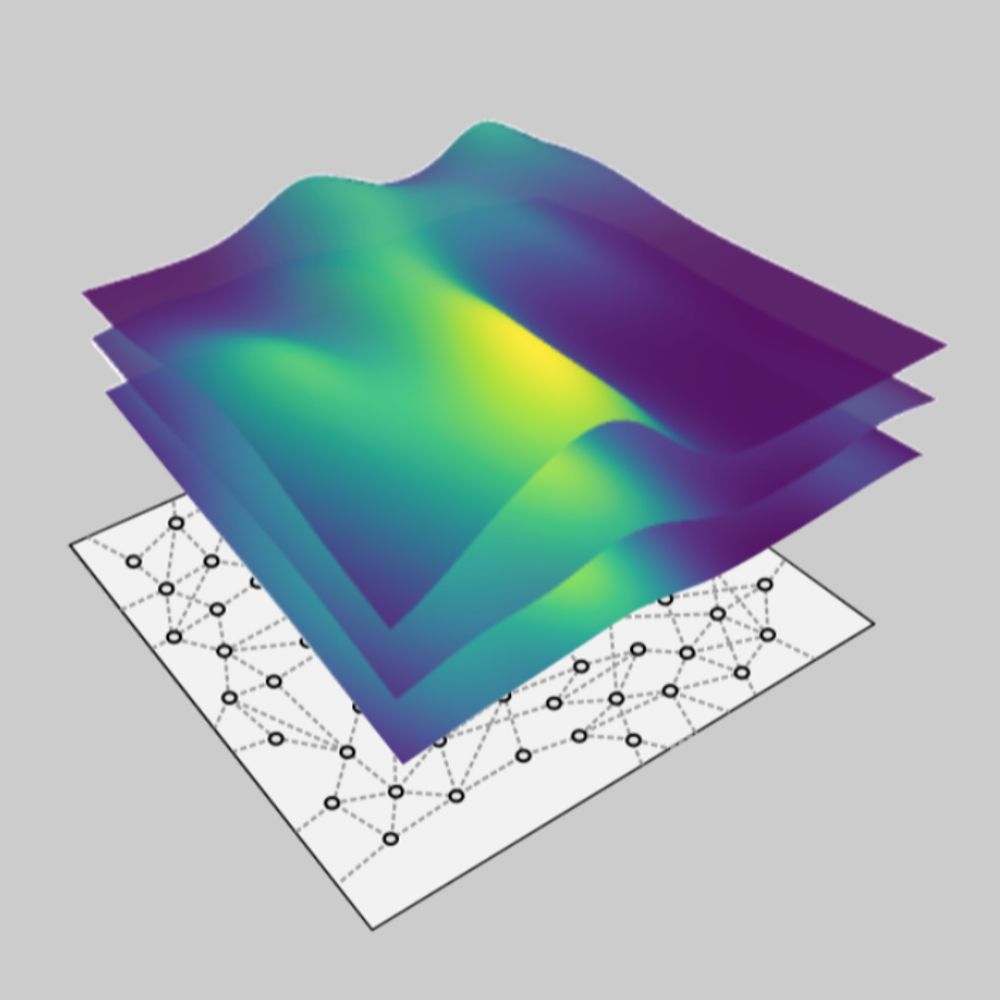
Evolution induced state shifts in a long-term microbial community experiment www.biorxiv.org/content/10.1...
11.10.2025 04:48 — 👍 27 🔁 13 💬 0 📌 1
@nittaym.bsky.social
Studying microbial evolution & ecology. @HUJI
Evolution induced state shifts in a long-term microbial community experiment www.biorxiv.org/content/10.1...
11.10.2025 04:48 — 👍 27 🔁 13 💬 0 📌 1New review article with @mmdesai.bsky.social is out today! Grateful for the opportunity to contribute something we hope will serve the community well
21.07.2025 17:30 — 👍 47 🔁 15 💬 3 📌 0Our paper in @science.org 👉🏽 www.science.org/doi/10.1126/...
is accompanied by an especially thoughtful perspective by Carey Nadell and Chris Marx 👉🏽
www.science.org/doi/10.1126/...
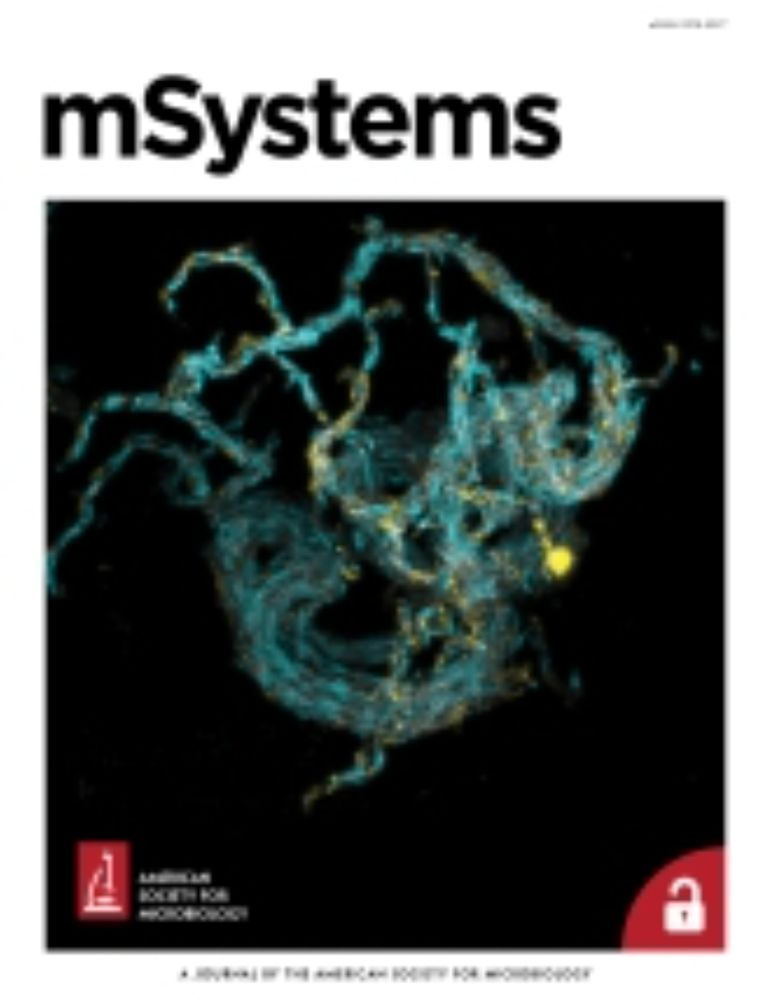
Our work on the facial skin microbiome of non-human primates is out in mSystems!
We show there is no close relative of Cutibacterium on the faces of gorillas and chimps at the Lincoln Park Zoo, furthering the mysterious origin of the dominant human skin colonizer.
journals.asm.org/doi/10.1128/...
How does metabolic dependency evolve at the single cell level? 🔄
In our new preprint, Divvya Ramesh combines microfluidics, microscopy and modelling to show that the benefits of gene loss are highly context dependent.
Check it out here: www.biorxiv.org/content/10.1...
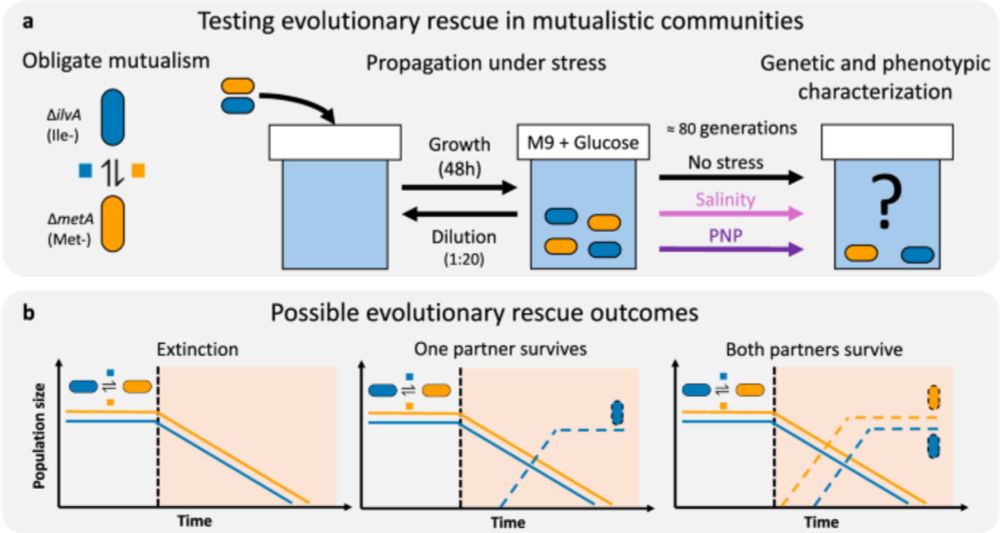
1/ In our new paper, we explored whether obligate mutualisms can survive abrupt stress via evolutionary rescue.
We found that evolutionary rescue is possible—but it comes at the cost of mutualism. @jfriedman.bsky.social
#microsky #evosky #mevosky
A new preprint from the lab. Might be of interest to people who use barcode lineage tracking to catch de novo adaptive mutations. #popgen #evolbiol
05.04.2025 04:24 — 👍 15 🔁 5 💬 0 📌 0
In our new paper we discuss how modern coexistence theory can help microbial ecologists tackle fundamental & applied questions, and how microbial systems can help to push coexistence theory forward! With Andrew Letten and Dave Armitage (@darmitage.bsky.social). doi.org/10.1111/1462...
12.03.2025 05:35 — 👍 33 🔁 23 💬 2 📌 2Community stability is usually assessed by invading single species from rare and measuring relative fitness. However does this hold up when multiple species invade from rare? We test this using our super stable microbial community 👇🏻
03.03.2025 13:05 — 👍 18 🔁 8 💬 1 📌 1
Universal bacterial clade dynamics dominate under predation despite altered phenotypes and mutation targets
www.biorxiv.org/content/10.1...
Hey folks, microbial evolution (and I interpret this super broadly- bacteria, archaea, viruses, theory, Alife, field, lab, biophys, etc) now has a feed thanks to @atinygreencell.bsky.social. I hope this will be my ye olde Science Twitter v2. Come join us! 🧪
#MEvoSky
Link: bsky.app/profile/did:...

New paper from my group and the group of
@kiranrpatil.bsky.social:
Obligate cross-feeding of metabolites is common in soil microbial communities
By Ghada Yousif @metagenomez.bsky.social with @swagatika.bsky.social @isamirgiri.bsky.social Sharvari Harshe et al.
www.biorxiv.org/content/10.1...
🧵👇

Pre-exposure of abundant species to disturbance improves resilience in microbial metacommunities
www.nature.com/articles/s41...

What do bacterial cells do when they run out of nutrients? Although most bacterial studies focus on cells in exponentially growing states, in the wild bacteria likely spend most of their time slowly starving to death. 1/n
www.biorxiv.org/content/10.1...
What does it really mean to be in nutrient colimitation? We demonstrate a distinct growth phenotype and that (co)limitation can (and should!) be quantified. The result of many late afternoon chats with @michaelmanhart.bsky.social. Let us know what you think! www.pnas.org/doi/10.1073/pnas.2400304121
18.12.2024 19:27 — 👍 12 🔁 6 💬 1 📌 2
Excited to share a sparkly new paper from our lab! We show how spatial refuges can facilitate evolutionary rescue using experimental evolution with P. fluorescens doi.org/10.1098/rspb...
11.12.2024 19:28 — 👍 20 🔁 10 💬 1 📌 0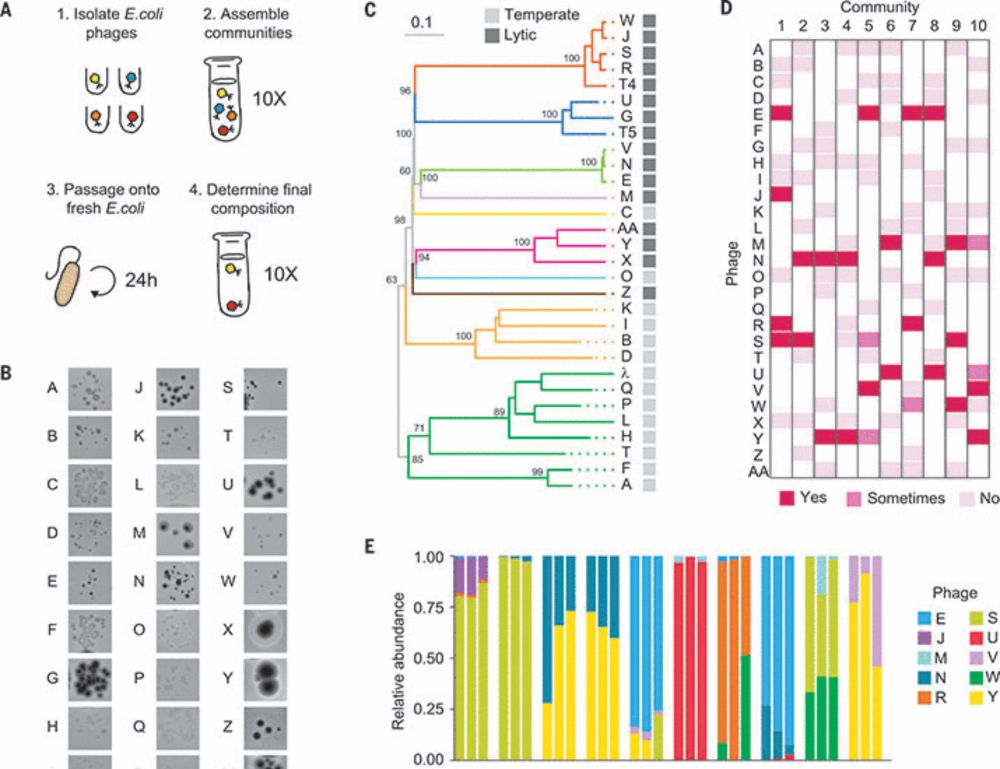
Is it “winner-takes all” when the simplest living things compete? Check out my fresh publication on phage coexistence in Science and a thread below🧵 www.science.org/doi/10.1126/...
12.12.2024 19:22 — 👍 182 🔁 98 💬 5 📌 11
Final version of our article testing previous evolutionary forecasts in two Pseudomonas species is now out in Proceedings B royalsocietypublishing.org/doi/10.1098/... . Work led by @jtpentz.bsky.social, with Aparna Biswas and Bassel Alsaed.
11.12.2024 10:27 — 👍 10 🔁 7 💬 0 📌 1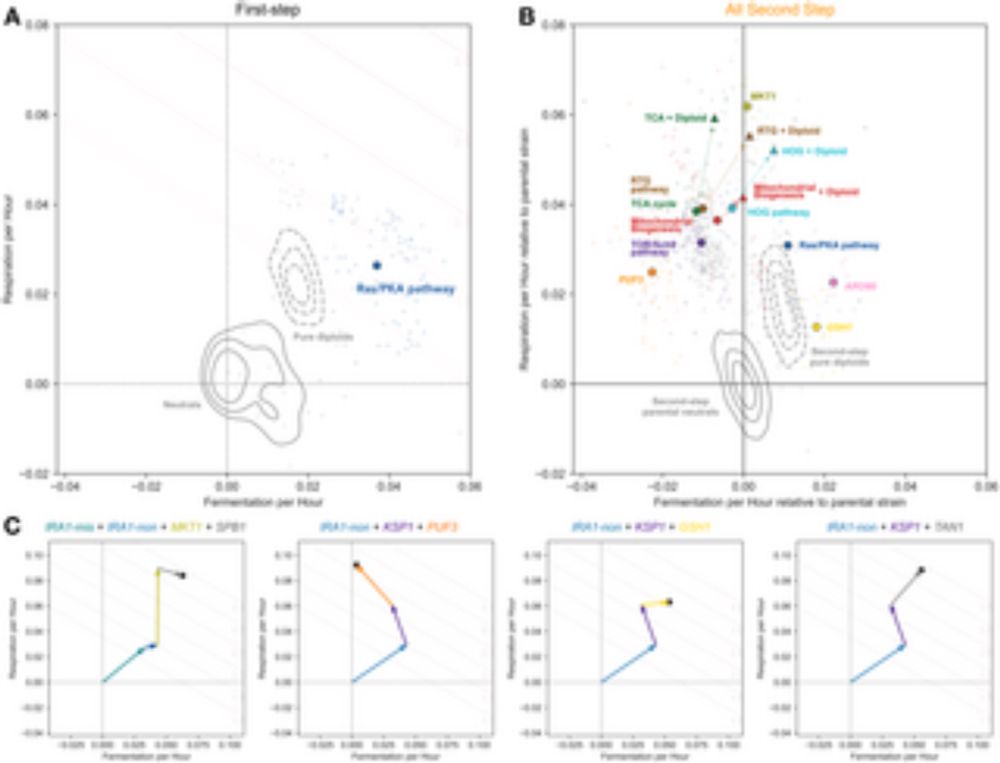
Do mutations that drive evolution improve many traits or few?
Does this change over the course of evolution?
Excited to share our work in PLOS Biology exploring these questions in the first 2 adaptive steps w/ Yuping Li, @gsherloc.bsky.social, @petrovadmitri.bsky.social 🧵
doi.org/10.1371/jour...

Outstanding work on distributed metabolism in microbiomes in @naturemicrobiol.bsky.social by PharmaBiome's great Matthias Hülsmann from his time at @micsysecolab.bsky.social. I'm super excited to work together on our next consortium LBPs.
www.nature.com/articles/s41...
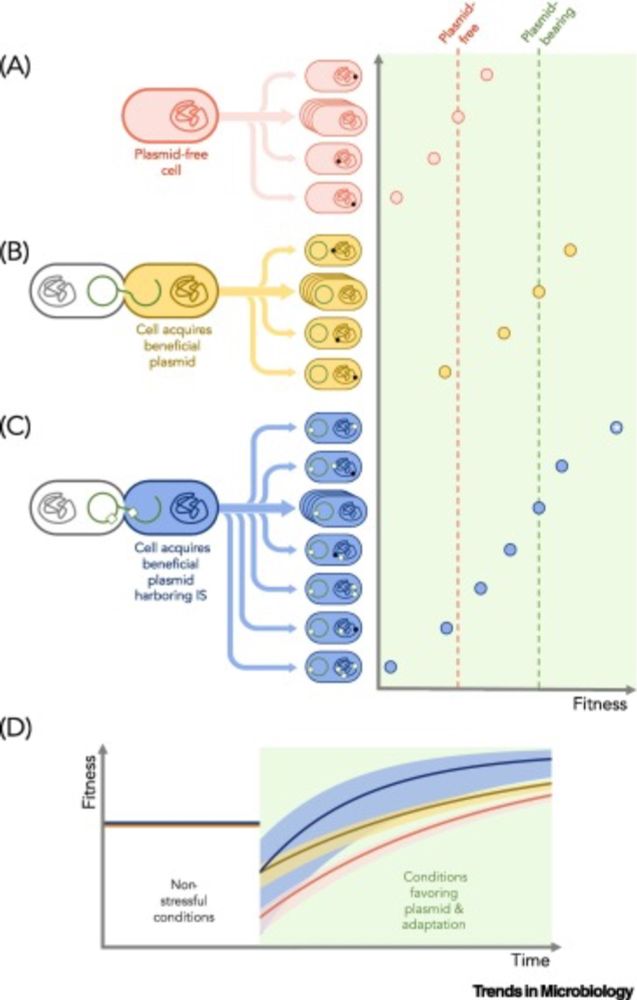
Agents of change: a partnership between mobile genetic elements facilitates rapid bacterial adaptation
#TrendsMicrobiol Spotlight by Elizabeth Duan, @oliviakosterlitz.bsky.social and Benjamin Kerr
on the Nat Eco Evo paper from @sanmillan.bsky.social group
www.cell.com/trends/micro...

This is a really important perspective on microbial ecology/evolution (Balakrishnan & Cremer). Quantitative physiology shows that microbes do not optimize growth, but instead express unutilized proteins that confer distinct dynamics when environments change.
www.sciencedirect.com/science/arti...

📢 New preprint: Mutator strains of E. coli accelerate nitrofurantoin resistance by enabling both faster evolution and "better" resistance mutations. We also find evidence for defects in DNA replication fidelity and repair in clinically-resistant isolates. Read more:
www.biorxiv.org/content/10.1...
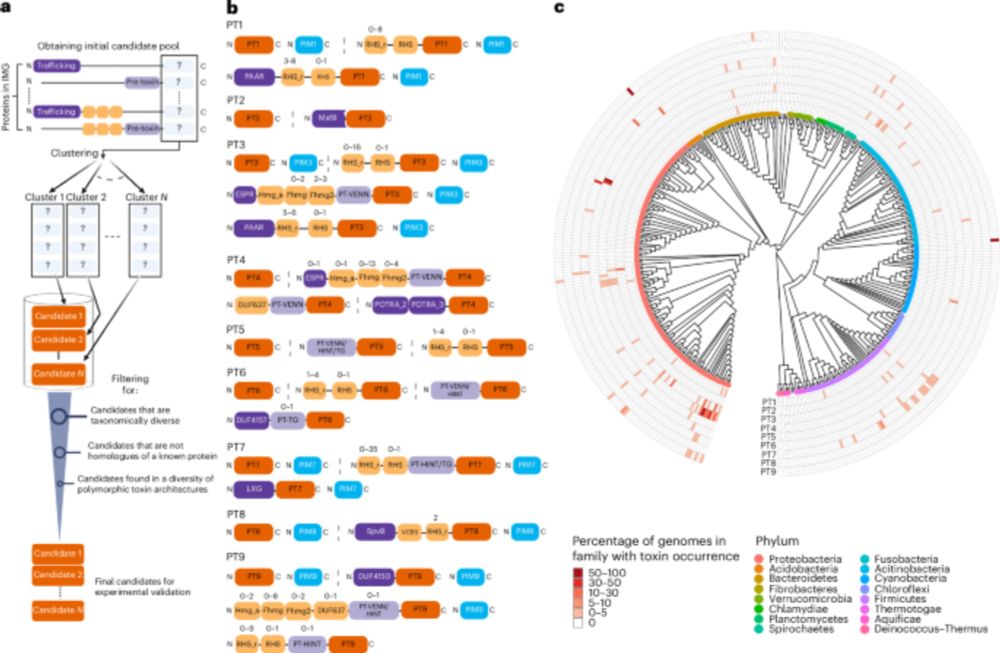
Several years of work with several great collaborators, that combined computational biology, molecular microbiology, biochemistry, structural biology and mycology assay culminated in today's publication on discovery of novel bacterial toxins:
www.nature.com/articles/s41...
Great to see our paper published!
We show that the presence of another species doesn't necessarily influence evolution.
@jfriedman.bsky.social
authors.elsevier.com/c/1jxht8YyDf...
Thanks to the anonymous reviewers for their constructive comments!
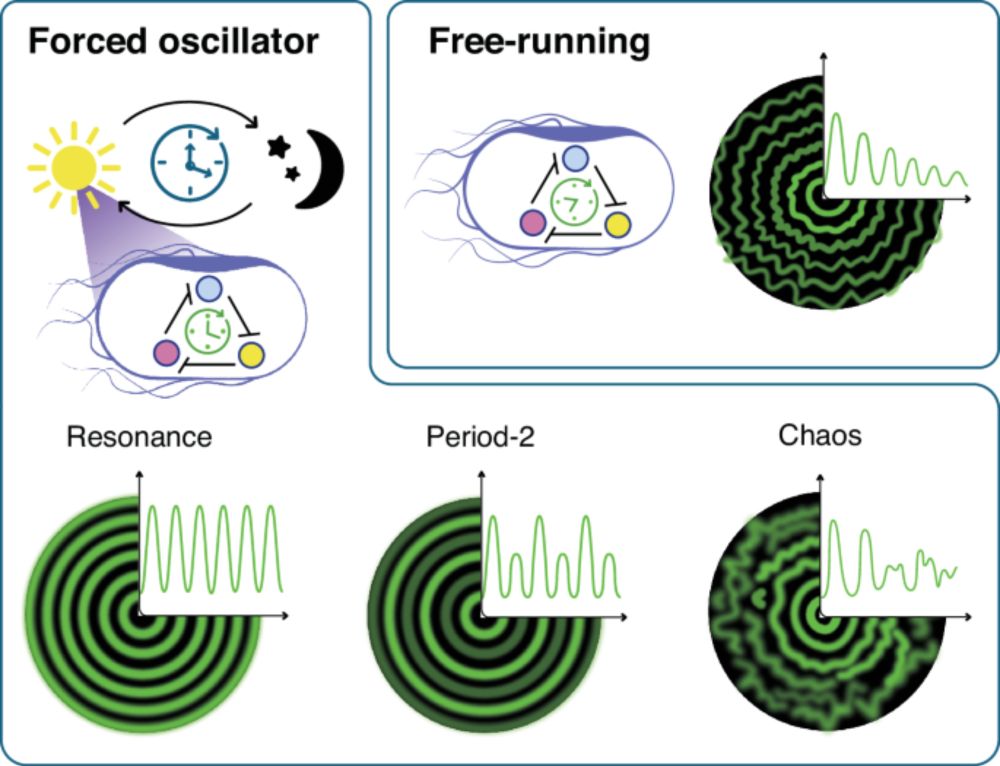
Very happy to see the “optoscillator” - a synthetic optogenetic oscillator - published! By applying light pulses on growing E. coli colonies and analysing the ring patterns, we observed synchronisation, (subharmonic) resonance, period doubling and chaos!
www.nature.com/articles/s41...

Our article on microbial interactions is out!
We discuss what are microbial interactions, what are they useful for, and how to quantify them.
For more, see lead author @nittaym.bsky.social 's 🧵:
x.com/NittayMeroz/...
or read the full article here (free access until Sep 1st):
shorturl.at/ONiNS

Happy to share our latest manuscript we we study evolutionary rescue in a bacterial mutualism:
Reversion to metabolic autonomy underpins evolutionary rescue of a bacterial obligate mutualism
shorturl.at/tFNTw


Brilliant paper. A great example of how principles of quantitative physiology can inform our understanding of microbial evolution.
"Proteome partitioning constraints in long-term laboratory evolution"
www.nature.com/articles/s41...

Sharing the preprint for my first foray into experimental evolution: adaptation of Pseudomonas aeruginosa to repeated invasion into a commensal competitor 🦠🧬
www.biorxiv.org/content/10.1...