What is a good model? - Hescor
What's a (good) model? Dr. Annika Vogel highlights the questions that need to be answered and decisions that need to be made to appropriately model interdisciplinary phenomena - there are always trade...
📢 New Blog Post
What's a (good) model? Dr. Annika Vogel highlights the questions that need to be answered and decisions that need to be made to appropriately #model interdisciplinary phenomena - there are always tradeoffs!
🔗 read on here:
shorturl.at/JklT1
12.11.2025 10:21 — 👍 3 🔁 1 💬 0 📌 0
🐝🐚🐙 Job Opening! 🐙🐚🐝
We are looking for a new collection manager for the macro-invertebarte collection at the Natural History Museum in Basel (CH).
I can only recommend the museum and the curator!
15.09.2025 12:06 — 👍 0 🔁 1 💬 0 📌 0
PALVEG - REVEALS land-cover estimates for the Late Pleistocene
🚨We developed a simple app to facilitate access to pollen-based vegetation 🌿reconstructions from Europe during the Late Pleistocene ☃️to scientists from other fields:
Check out oakern.shinyapps.io/PALVEG/
more will follow!
02.08.2024 12:27 — 👍 6 🔁 3 💬 0 📌 0

View from the Afroalpine Plateau into the lowlands (Bale Mountains, SE Ethiopia).
📢 New Blog Post
Living in high-altitudes is challenging - but humans in the #Ethiopian highlands have done it for tens of thousands of years! Dr. Götz Ossendorf introduces his hypothesis that social connectedness allowed past humans to endure such harsh conditions!
🔗 read on here:
shorturl.at/vH1en
03.09.2025 12:42 — 👍 4 🔁 3 💬 0 📌 0

Politics of more-than-human life and Earth System Science - Hescor
Upcoming @hescor.bsky.social and @mesh-research-hub.bsky.social event at the University of Cologne on the "Politics of More-Than-Human Life and Earth System Science" with an exciting programme: www.hescor-project.com/news/politic...
08.09.2025 08:55 — 👍 7 🔁 3 💬 0 📌 0

The figure contains graphical, iconic (human and animal icons) and textual elements. They are horizontally arranged to form three separate compartments, each of which is populated by a different configuration of humans and animals, accompanied by a symbolic and descriptive qualification of the associated learning mode. On the left, humans learn to think about themselves and their worlds through other animals (for example a raven), exemplified by the question “Who am I in this world?” (learning through). In the middle, humans take inspiration from other animals (for example beavers) in how to manipulate their environments, exemplified by the realization “Ah, this is how it works!” (learning from). On the right, humans make themselves at home in the world in such a way that they can coinhabit their environments with other animals (for example wolves), thereby co-learning how to live effectively in these environments with the respective animals (learning with). The framing arrows on the top and bottom indicate that human cultural frameworks can be expected to shape these modes of learning to various degrees and that their behavioural integration can be expected to differ across spatiotemporal scales.
📢 New Blog Post
What have we learned from animals and they from us? @shumon.bsky.social & Dr. Dominik Ohrem highlight their research to better integrate the ways that humans and animals learn from each other and how that knowledge-sharing impacts the Earth System!
🔗 read on here:
shorturl.at/6zdAa
21.08.2025 11:06 — 👍 6 🔁 3 💬 0 📌 1
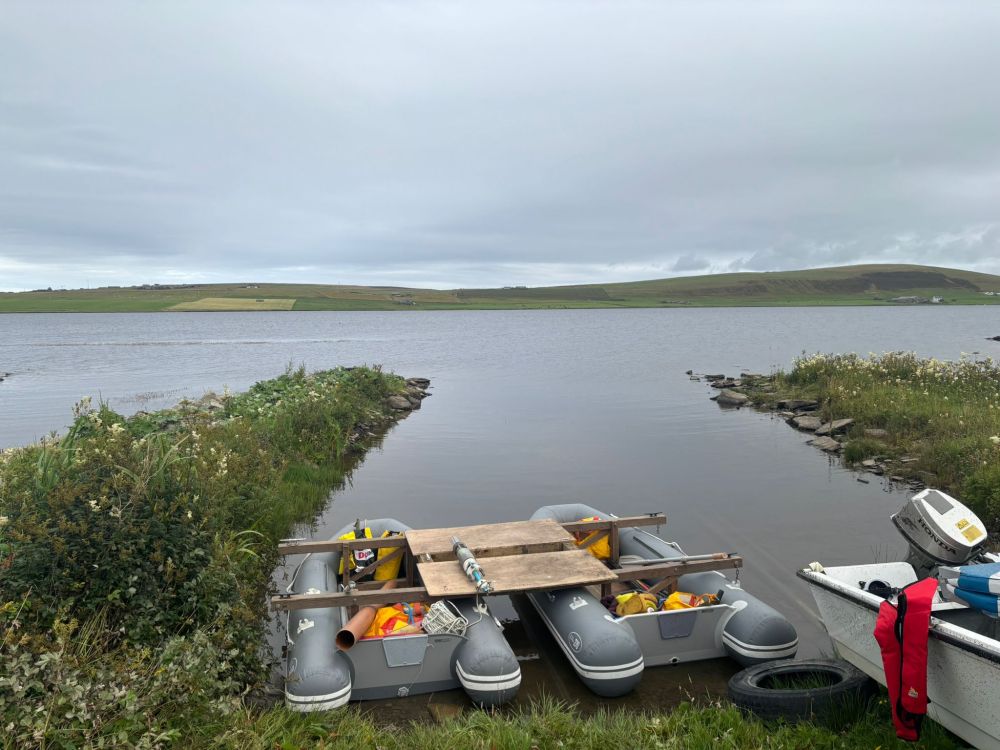
Third day on the Orkney Islands was a great success! Two cores, one >2m long, from the deepest secrion of the lake! Let's see what the sedaDNA will tell us about the history of the area
25.07.2025 17:51 — 👍 2 🔁 0 💬 1 📌 0
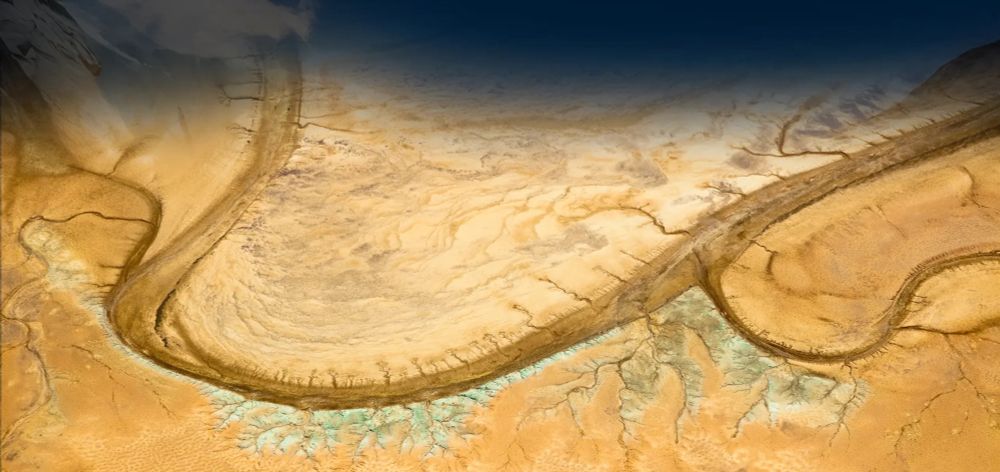
Communicating Interdisciplinary Data - Hescor
Researchers at universities rarely work with researchers in other departments - why? Dr. Elena Robakiewicz highlights the difficulties of understanding #research and #data in other fields and what HESCOR is doing to address data #communication issues!
🔗 read on here:
tinyurl.com/bdffven4
25.06.2025 12:01 — 👍 2 🔁 2 💬 0 📌 0
✍️ HESCOR Comics
We are collaborating with Dr Frederik von Reumont (Institute of Geography Education) to create easily digestible #educational #comics about the #interdisciplinary scientific process for the public, ranging in age from school children to the young at heart!
🔗 tinyurl.com/ed825wmf
20.06.2025 12:28 — 👍 3 🔁 2 💬 0 📌 0
fill the moat with your favourite kind of seawolves
18.06.2025 00:17 — 👍 0 🔁 0 💬 0 📌 0
What is HESCOR? 🤔
Join Andreas Maier and Nikki Vercauteren for insights into HESCOR‘s vision and research goals!
want to learn more?
hescor-project.com
#HESCOR #Interdisciplinary #UniCologne #EarthSystem #HumanSystem #ResearchProject #Culture #Nature
06.06.2025 14:27 — 👍 3 🔁 3 💬 0 📌 0

HESCOR: Human & Earth System Coupled Research
HESCOR unites Earth system science, human modelling & humanities to study how climate and culture have co-evolved across history.
Hello Bluesky! 👋
Welcome to the official Bluesky account of #HESCOR - an interdisciplinary research project based at the #UniCologne!
We explore how the human and earth system co-evolve, bridging natural sciences, system modelling, and the humanities.
🔗 Learn more: www.hescor-project.com
04.06.2025 08:51 — 👍 9 🔁 5 💬 0 📌 0
would be cooler if they didn't all go up 🫥
07.05.2025 12:52 — 👍 1 🔁 0 💬 0 📌 0

There is a job opening (Post-Doctoral Research Associate, 2 years, 100%) in my new VW project on the macro-evolution of Pleistocene technological ecosystems in Europe: ecolithic.uni-koeln.de/opportunitie...
Deadline 25.05.2025
Please distribute widely!
🏺🦣
03.05.2025 13:28 — 👍 24 🔁 26 💬 0 📌 4
PALVEG (Version 2) - Comparing different approaches to reconstruct the paleovegetation of the Last Glacial
Interested in vegetation reconstructions from the Last Glacial in Europe? How do different approaches (pollen/models) compare? And most importantly, how to visualize all these data for a quick overview without spending weeks?
Check out an early version here:
oakern.shinyapps.io/palveg_v2/
02.04.2025 11:53 — 👍 0 🔁 0 💬 0 📌 0
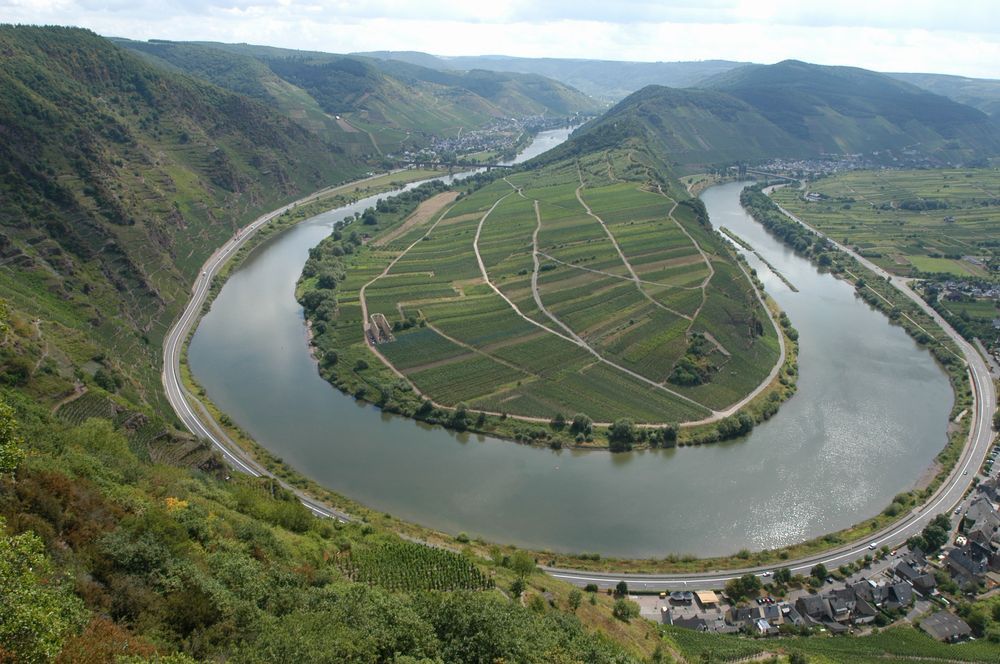
the bend in the southwest is very characteristic (and beautiful!)
22.01.2025 13:19 — 👍 3 🔁 0 💬 1 📌 0
to enjoy some newly-installed bollards
07.12.2024 16:41 — 👍 0 🔁 0 💬 0 📌 0
you took a slight detour to make it a 45-minute bike ride
07.12.2024 16:41 — 👍 4 🔁 0 💬 2 📌 0
but parking on the bike lane just doesn't feel that same if the car does not fully cover it (and some more) and block the view for everyone
02.12.2024 14:57 — 👍 3 🔁 0 💬 0 📌 0
not a botanist, but here is my take
(1) Armeria pungens (2) Silene dioica (3) no idea (4) Setaria
30.11.2024 17:21 — 👍 0 🔁 0 💬 3 📌 0
Thanks to @gebhardtpsych.bsky.social !
30.11.2024 11:07 — 👍 0 🔁 0 💬 0 📌 0
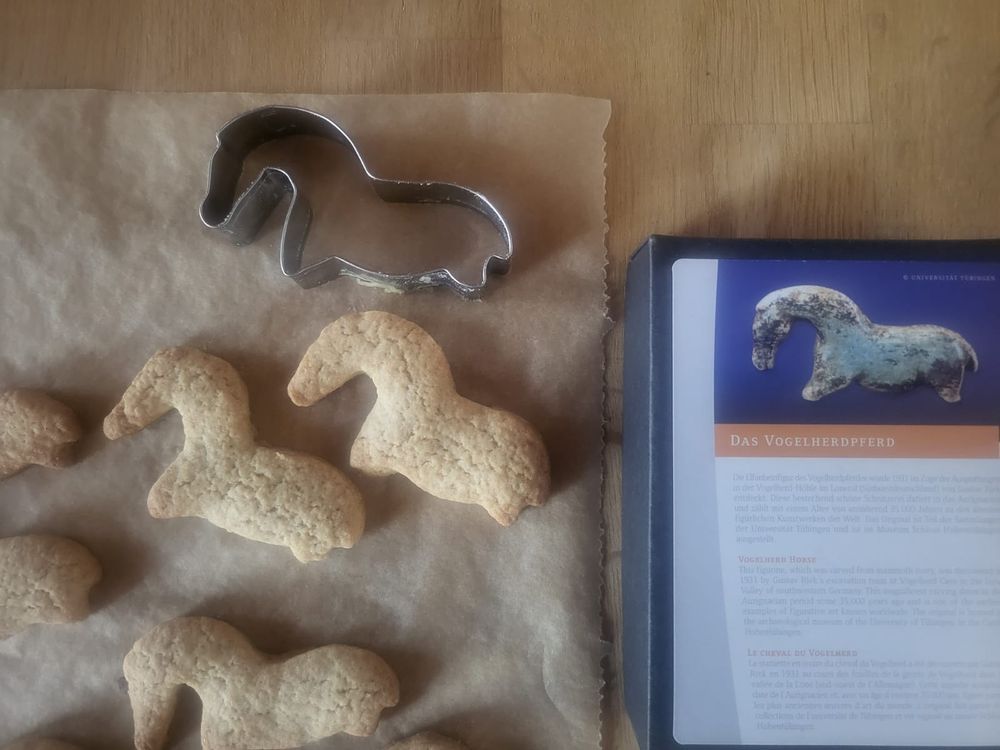
These cookies might be 40,000 years past their "use before" date, but I will eat them anyways, for science
30.11.2024 11:05 — 👍 3 🔁 0 💬 1 📌 0
what can I say...
30.11.2024 11:01 — 👍 1 🔁 0 💬 0 📌 0
UKRI Future Leaders Fellow and Group Leader in Microbial Genomics at UCL Genetics Institute @ugiatucl.bsky.social.
Reconstructing the evolution of us and our pathogens past, present and future using large-scale genomics.
https://www.ucl.ac.uk/~ucbpvan
A bot providing daily snow information from Tromsø, northern Norway
Forecast: https://www.yr.no/en/forecast/daily-table/5-90450/Norway/Troms/Troms%C3%B8/Troms%C3%B8%20(Vervarslinga)
Header: simaron (flickr)
Coded by @rhewlif.xyz
The Nordic Union for Quaternary Research supports networking, cooperation and communication amongst Quaternary scientists in the Nordics.
Free to join @ https://nordqua.org
OA journal providing an author friendly outlet for any aspect of ecology or evolution. Partnering with societies, promoting open everything including minds. www.ecolevol.org
Quaternary ecologist and pollen fan trying to REVEAL(S) the past to understand the future. Associate Professor at @sciencecharles.bsky.social. Editor at www.biogeosciences.net #paleoecology
Evolutionary Anthropologist |
Recent MSc grad @univie.ac.at
Passionate about ancient DNA, paleogenomics, evolution and bioinformatics 🧬🦴💀
Neolithic archaeologist | outdoor fanatic | family person | I co-direct @korcaneolithicproject and @archaeodaubworlds
Archaeology student in Cologne ☀️
Master Student of Digital Archaeology with a Research Focus on Palaeolithic Contexts and Simulations. 🔥🪨
Research Assistant for @hescor.bsky.social and the Institute of Prehistoric Archaeology, UoC
#ComplexSystems scientist. Institute of Evolutionary Biology @csic.es, Barcelona| DySOC-UTennessee, Knoxville | ECLT, Venice. Girl dad. He/him.
Lab: svalver.github.io
#EvoBio #CultEvo #ExtendedBiology #hypergraphs
Assistant Professor at the Department of Botany🌿 , Charles University.
Head of Laboratory of Quantitative Ecology (bit.ly/CUNI_QuantitativeEcology)
with a main focus on #communityecology 🏞️, #palaeoecology 🕰️, and interest in #datascience 💻.
It’s fun to talk science and cyber infrastructure sometimes. Sometimes it’s fun to make puns, and sometimes you just want to be cool like everyone else on here.
PAGES is an international project coordinating and promoting past global change research.
www.pastglobalchanges.org
#Palaeoecologist | 🏞️ #Lake & #PeatSediments | ⛏️ #Geology & #Archaeology | #Human–#EnvironmentChange
Ancient DNA | caves | sedaDNA | archaeology | palaeogenomics | women in STEM
Official account of Tromsø IL.
The Worlds Northernmost Professional Football Club.
Multidisciplinary Environmental Studies in the Humanities @UniversityofCologne
WEB: https://mesh.uni-koeln.de/
#UniKöln #UniCologne // Impressum: http://ukoeln.de/3JGDD
Mastodon ➡ @UniKoeln@Wisskomm.social
Professor at McGill University, Human-Earth System Dynamics