Early life vitamin D and neurocognitive abilities at age 6–8 years: a randomized clinical trial and observational analysis - European Child & Adolescent Psychiatry
Vitamin D is suggested to impact neurodevelopment, yet the current evidence is conflicting. We tested if vitamin D3 supplementation during the first two years of life, maternal 25-hydroxy-vitamin D (25(OH)D) concentration during pregnancy, and child’s 25(OH)D concentrations at 12 and 24 months are associated with neurocognitive abilities in 6.6-8.9-year-old children. Participants were from a Finnish vitamin D double-blind randomized clinical trial and classified themselves white. Children received either vitamin D3 400-IU (n = 189) or 1200-IU (n = 209) daily until 24 months of age. Serum 25(OH)D was analyzed from mothers at mean of 11.2 weeks of gestation, and from children at 12.0 and 23.9 months (25(OH)D, mean (SD) = 83.8 (21.7), 102.3 (30.1), 105.5 (28.6) nmol/L, respectively). Total Intelligence quotient (IQ) score was assessed with Wechsler Intelligence Scale for Children (WISC-IV) and executive functioning with A Developmental Neuropsychological Assessment (NEPSY-II) and parent-rated Behavior Rating Inventory of Executive Function (BRIEF) questionnaire. Neurocognitive abilities at age 6–8 years did not differ between the supplementation groups or according to 25(OH)D concentration at 12 or 24 months (total IQ: β = 1.14, 95% CI -1.69;3.97, p = 0.43, executive functioning, NEPSY-II: β =-0.07, 95% CI -0.14;0.28, p = 0.49, executive functioning, BRIEF: β =-0.42, 95% CI -5.13;4.28, p = 0.86). Maternal 25(OH)D was not associated with executive functioning. However, both lower and higher maternal 25(OH)D concentrations during pregnancy were associated with child’s lower total IQ scores (vertex at 76.6 nmol/L, quadratic estimate p < 0.001) supporting the hypothesis of the role of vitamin D during fetal development. The study is registered with ClinicalTrials.gov (NCT01723852, 2012-11-07 and NCT04302987, 2020-03-06).
Hot off the online press: Early life vitamin D and neurocognitive abilities at age 6–8 years: a randomized clinical trial and observational analysis by Seppälä et al, now available online and #openaccess in our #ECAP journal:
link.springer.com/article/10.1...
10.10.2025 06:39 —
👍 0
🔁 1
💬 0
📌 0
[5/5] Next steps: Future studies are needed to examine potential underlying causes of the observed associations between vitamin D and ASD-related traits, and the sex specificity of the found associations.
#DevPsych #VitaminD #ASD #DOHaD
🧪
08.01.2026 09:09 —
👍 0
🔁 0
💬 0
📌 0
[4/5]
Results: No differences in scores between intervention groups. Lower pregnancy, 1-, and 2-year vitamin D levels were, however, associated with higher ASD trait scores, albeit only in boys.
🧪
08.01.2026 09:09 —
👍 0
🔁 0
💬 1
📌 0
[3/5]
Population: 366 term-born children (176 girls, 190 boys).
Intervention: Randomization 10 µg (n=177) vs 30 µg (n=189) vitamin D3 supplementation from ages 2 weeks to 2 years.
Outcome: Autism spectrum disorder (ASD) trait scores (as assessed by parents using ASSQ) at ages 6-8 years.
🧪
08.01.2026 09:09 —
👍 0
🔁 0
💬 1
📌 0
[2/5] I would like to express my deepest gratitude to all co-authors, as well as to Suomen Lääketieteen Säätiö for supporting my work through a personal grant.
Our findings are summarized in the following posts.
🧪
08.01.2026 09:09 —
👍 1
🔁 0
💬 1
📌 0

[1/5] This week saw the publication of our latest study on the potential impacts of early life vitamin D supplementation on childhood neurodevelopment and mental health. The study was published in the Journal of Child Psychology and Psychiatry (JCPP) and can be found here:
doi.org/10.1111/jcpp...
🧪
08.01.2026 09:09 —
👍 1
🔁 0
💬 1
📌 0

An image of two hands extending from a book, holding the Earth. The image is part of the PlanetaryHealth.now online course.
Human activities are reshaping the Earth by changing the climate, polluting the air, water, and soils, and eroding biodiversity. But what does this mean for our own health and wellbeing?
planetary-health.mooc.fi
Study at your own pace and join almost 300 learners who have already signed up! 🌍🧪
12.12.2025 10:39 —
👍 6
🔁 2
💬 0
📌 1

Kohtalonkysymys
Mitä voimme suojella, jos ei ole enää terveyttä eikä hyvinvointia?
I recently had the pleasure of being interviewed for the Finnish Medical Journal. I talk about how we teach #PlanetaryHealth at the University of Helsinki and about the PlanetaryHealth[.]now MOOC launching this autumn. Read the full article (in Finnish) here:
www.laakarilehti.fi/terveydenhuo...
🧪
15.09.2025 07:04 —
👍 4
🔁 1
💬 0
📌 0
YouTube video by Samuel Sandboge
Becoming an agent of change - a panel discussion from the PlanetaryHealth.now MOOC
How do you become an Agent of Change? As our environment faces mounting pressures from environmental change, we must strive to move beyond apathy/anxiety, towards awareness and transformative action. In this panel discussion we explore these topics
youtu.be/NbKDtqBMZeE
🧪 #Greensky #PlanetaryHealth
18.08.2025 08:17 —
👍 0
🔁 0
💬 0
📌 0
[2/2] "Conversely, among the children born very-to-moderately preterm, ACT exposure was associated with a significantly lower risk of infectious diseases at ages 5-10 compared with nonexposed children of the same gestational age."
🧪
10.08.2025 06:50 —
👍 0
🔁 0
💬 0
📌 0
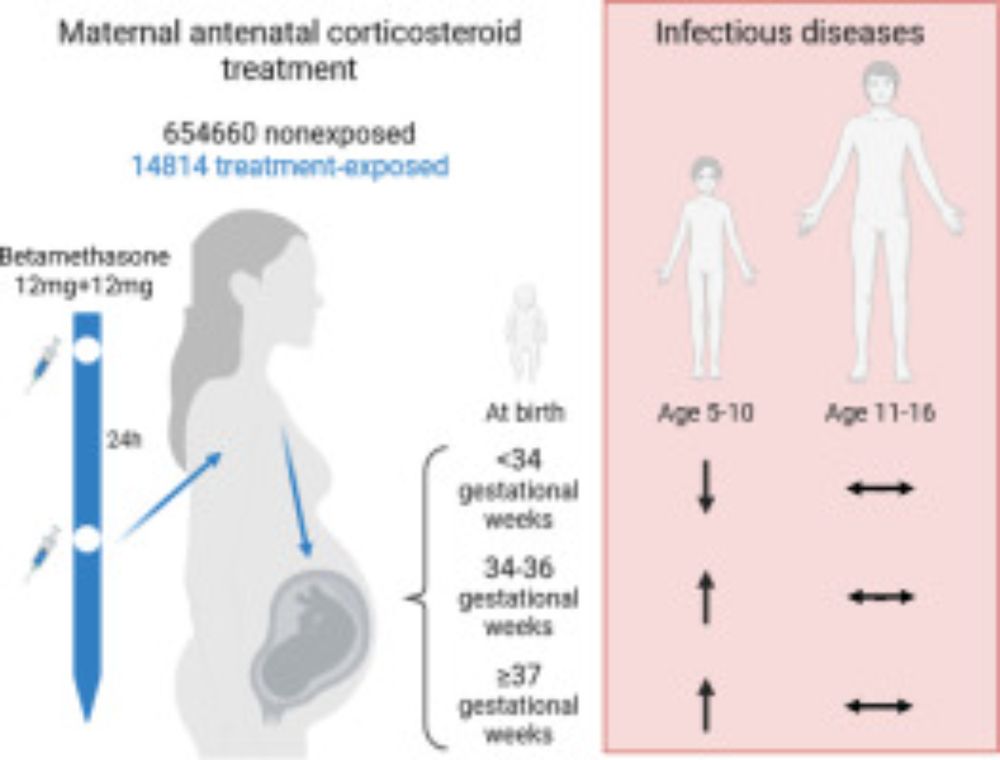
Antenatal corticosteroid treatment and infectious diseases in children and adolescents aged 5-16 years
While maternal antenatal corticosteroid treatment (ACT) improves outcomes of infants born preterm, it is associated with an increased risk of infectio…
[1/2]
Finnish cohort study (n=669474) finds that ACT [antenatal corticosteroid treatment] exposure among those born late preterm or term ➡️ significantly higher risk of infectious diseases at ages 5-10 vs. nonexposed children of the same gestational age.
www.sciencedirect.com/science/arti...
🧪
10.08.2025 06:50 —
👍 1
🔁 0
💬 1
📌 0
[3/3] For optimal immersion, consider listening to the episode while taking a walk in nature. 🌳🌻☀️🌍🌿
#PlanetaryHealth #ClimateUniversity
#NaturebasedHealthPromotion #Sustainability
23.06.2025 13:53 —
👍 0
🔁 0
💬 0
📌 0
[2/3] The episode, which will be included in the upcoming Climate University and University of Helsinki MOOC (Massive Open Online Course) PlanetaryHealth[.]now, explores the health benefits of spending time in nature.
23.06.2025 13:53 —
👍 0
🔁 0
💬 1
📌 0

Today I had the great pleasure of attending the EduFair event at Helsinki University’s Faculty of Medicine. I spoke about some of the pedagogical methods used in the upcoming Planetary Health MOOC and additionally presented a poster on possible future research opportunities related to the course.
19.03.2025 20:35 —
👍 4
🔁 0
💬 0
📌 0

Determination of steroid reference intervals in a pregnancy population
Steroids, including mineralocorticoids, glucocorticoids, and sex hormones play a critical role in pregnancy. Liquid chromatography tandem mass spectro…
📣 New findings from Lahti-Pulkkinen et al.
- New method for defining ranges for 18 steroids in pregnancy
- Progestogens, mineralo- & glucocorticoids & estrogens increase across pregnancy
- Androgens: no consistent change from early to late pregnancy
www.sciencedirect.com/science/arti...
🧪
10.02.2025 07:34 —
👍 4
🔁 1
💬 0
📌 0

…potentially mediating the previously established association between VLBW birth and cardiometabolic risk.
I am very grateful to my coauthors, to grant providers, and of course - most importantly - to the study participants!
onlinelibrary.wiley.com/doi/10.1111/...
#DOHaD #postdoc 🧪
08.01.2025 12:19 —
👍 7
🔁 0
💬 0
📌 0

Body Composition in Adults Born at Very Low Birthweight—A Sibling Study
Background Individuals born preterm at very low birthweight (VLBW, < 1500 g) tend to attain a smaller adult body size compared with term-born peers but less is known regarding specific body composit...
📣 New research:
In this Finnish cohort comprising 77 young adults born #preterm at very low birth weight, #VLBW, <1500g) & 70 term-born siblings, we found that those born at VLBW had more centralized fat distribution & lower appendicular skeletal muscle mass compared with their siblings…
🧪
08.01.2025 12:19 —
👍 8
🔁 1
💬 1
📌 0

Media Release: IPBES Nexus Assessment
Interlinked Global Crises: Biodiversity, Water, Food, Health & Climate Change
>70 response options assessed for maximum co-benefits across cascading or compounding challenges
Unaccounted-for costs of current approaches at least US$10-25 trillion per year
@ipbes.bsky.social #NexusAssessment 🌱
18.12.2024 07:42 —
👍 7
🔁 4
💬 0
📌 0

A picture of the article beside a Moomin coffee cup.
New #ResearchRetrospective re: our 2021 study ”DNAR orders: attitudes, perceptions and practices of Swedish physicians and nurses”.
Survey indicated that patient participation in #DNAR decisions has increased over the years.
bmcmedethics.biomedcentral.com/articles/10....
#dnr #medicalethics 🧪
17.12.2024 07:32 —
👍 2
🔁 1
💬 1
📌 0
The differences in bone mineral density were smaller than those seen in previous studies - i.e., studies using unrelated individuals rather than siblings as controls.
The sibling study design allows control for potential familial confounding, i.e. shared genetic, and/or environmental factors.
🧪
13.12.2024 12:08 —
👍 1
🔁 0
💬 1
📌 0

A barchart showing higher frequencies of low femoral neck bone mineral density Z-scores among those born at very low birth weight and, vice versa, higher frequencies of high femoral neck bone mineral density Z-scores of sibling control born at term.
New #ResearchRetrospective
In this study, published in Paediatric and Perinatal Epidemiology (@wiley.com) in 2022, we found that adults born preterm at very low birth weight (#VLBW, <1.5kg) had lower bone mineral density than their term-born siblings.
onlinelibrary.wiley.com/doi/epdf/10.... 🧪
13.12.2024 12:08 —
👍 5
🔁 0
💬 2
📌 0
I was blown away by all of the exciting, cool #EdTech projects and implementations presented at the event and will write about some of them in upcoming posts. 🧪
12.12.2024 09:49 —
👍 2
🔁 0
💬 0
📌 0

Samuel Sandboge presenting the upcoming Planetary Health MOOC at the Reimagining Online Learning’ event, ThinkCorner, Helsinki, 2024-12-10; Image credit Sasa Tkalcan, Global Campus
Continuing the theme of my previous post, I had the great pleasure of presenting the #PlanetaryHealth #MOOC at the ’Reimagining Online Learning’ seminar at #Tiedekulma, Helsinki earlier this week!
(Photo credit Saša Tkalcan, #GlobalCampus) 🧪
12.12.2024 09:49 —
👍 6
🔁 0
💬 1
📌 0

Today I had the privilege of giving a lecture on #PlanetaryHealth for a small group of #Erasmus exchange students at the University of Helsinki. It was very inspiring to hear how medical students from other parts of Europe relate to the topic. 🧪🌍
11.12.2024 13:03 —
👍 15
🔁 0
💬 0
📌 0
Det var fint att höra! Jag förhåller mig ödmjuk inför att studiens fynd givetvis måste replikeras innan man kan dra alltför starka slutsatser. Samtidigt är jag stolt över att den, såvitt jag vet, är den första randomiserade kliniska prövningen i ämnet. 🌞💊
Kul att också du är på Bluesky, förresten!
09.12.2024 15:04 —
👍 1
🔁 0
💬 0
📌 0

A man (the author of the post) picking an apple from an apple tree.
Thank you everyone for the warm welcome to Bluesky! 🦋 To begin with, my posts will alternate between #ResearchRetrospectives and topics relating to the development of the new @helsinkiuni.bsky.social #PlanetaryHealth 🌍 #MOOC.
09.12.2024 09:44 —
👍 5
🔁 0
💬 0
📌 0

Climate crisis deepens with 2024 ‘certain’ to be hottest year on record
Average global temperature in November was 1.62C above preindustrial levels, bringing average for the year to 1.60C
#ClimateCrisis crisis deepens with 2024 ‘virtually certain’ to be hottest year on record, says @CopernicusECMWF
- It will also be the first to have an average temperature of more than 1.5C above preindustrial levels
Story by me
www.theguardian.com/environment/...
09.12.2024 08:34 —
👍 102
🔁 49
💬 2
📌 9