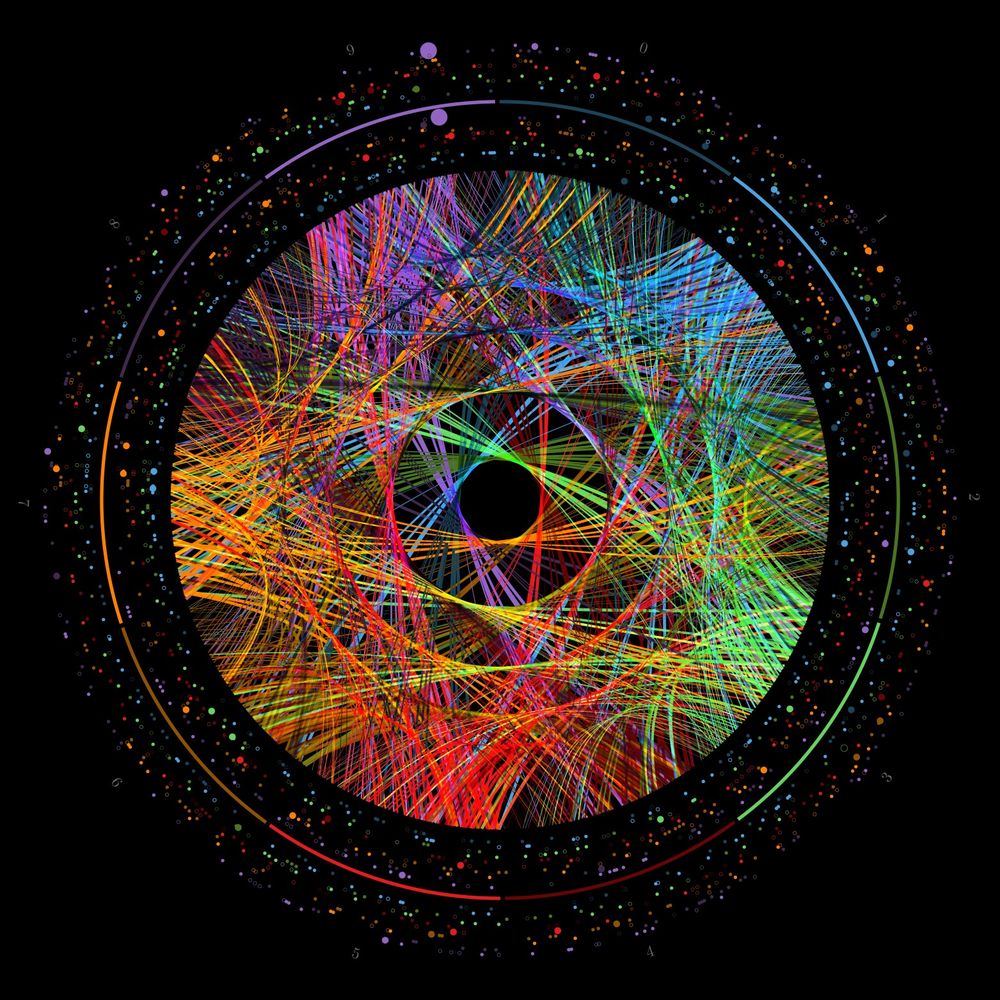
My favourite time of year 🎊🎊
15.02.2026 20:47 — 👍 1 🔁 0 💬 0 📌 0

Counting without end: A cross-linguistic exploration of infinity beliefs in English and Hindi learners
Recent studies (Cheung et al., 2017; Chu et al., 2020; Sullivan et al., 2023) argue that children may infer the existence of infinite magnitudes throu…
Very cool new article by @urvi.bsky.social, Jessica Sullivan and @drbarner.bsky.social comparing English and Hindi speaking kids' ideas about infinity, showing a subtly more complicated view of how numerical morphological opacity relates to infinity beliefs.
www.sciencedirect.com/science/arti...
11.02.2026 21:48 — 👍 13 🔁 2 💬 0 📌 0

Ph.D. Programme in Philosophy - Ashoka University
The PhD in Philosophy programme conforms to all Ashoka PhD programme guidelines. Additional guidelines specific to the Philosophy PhD programme […]
We're starting a PhD programme in Philosophy at Ashoka! Anyone can apply by April 15 for admission this year, and we will ensure that admitted applicants receive enough funding to support them for the 5 year programme. More info here:
www.ashoka.edu.in/programme/ph...
09.02.2026 06:22 — 👍 31 🔁 14 💬 2 📌 0
It never ends (you’ll see): another paper from @urvi.bsky.social this time on how language structure impacts children’s intuition that numbers are infinite (see?)!
06.02.2026 15:57 — 👍 11 🔁 2 💬 0 📌 0
Lots of open questions remain…perhaps infinitely many?! Maybe we’ll get to some of them soon!
Fin.
06.02.2026 15:43 — 👍 1 🔁 0 💬 0 📌 0
I like this design bc compared English and Hindi learners within India, so children had similar socio-cultural, religious and educational backgrounds. The few infinity believers in the sample are somewhat surprising when compared to US studies, that said. 6/n
06.02.2026 15:43 — 👍 3 🔁 0 💬 1 📌 0
That said, children’s ability to count to high numbers was globally predictive of their infinity beliefs, suggesting that experience w/ number words facilitated the belief that numbers are infinite. 5/n
06.02.2026 15:43 — 👍 1 🔁 0 💬 1 📌 0
We found that Hindi learners struggled to count to high numbers, and were delayed in their understanding of successor relations between numbers, relative to English learners. Somewhat surprisingly, overall proportion of infinity believers did not differ but were generally low in the sample. 4/n
06.02.2026 15:43 — 👍 1 🔁 0 💬 1 📌 0
Here compared English to Hindi, a language w/ a relatively opaque counting structure - e.g., it’s hard to see how do (2), paanch (5), & das (10) combine to make pachhis (25) or baavan (52). So, numbers upto 100 must be memorized in Hindi, and it may be harder to see the +1 relations b/w them. 3/n
06.02.2026 15:43 — 👍 1 🔁 0 💬 1 📌 0
In English, the structure base-10 counting is fairly transparent - once you know the numbers upto 20, you can keep adding 1-9. Previous work by @pierinaski.bsky.social & @junyi.bsky.social has found that children’s understanding of the +1 structure of counting predicts their infinity beliefs. 2/n
06.02.2026 15:43 — 👍 1 🔁 0 💬 1 📌 0

Counting without end: A cross-linguistic exploration of infinity beliefs in English and Hindi learners
Recent studies (Cheung et al., 2017; Chu et al., 2020; Sullivan et al., 2023) argue that children may infer the existence of infinite magnitudes throu…
By age 6, many children in the US believe that numbers are infinite, despite initially representing counting as a meaningless & finite chain of words. In a new paper w/ Jess Sullivan & @drbarner.bsky.social, we explored the basis for this conceptual change. 1/n
www.sciencedirect.com/science/arti...
06.02.2026 15:43 — 👍 34 🔁 10 💬 1 📌 2
The Visual Learning Lab is hiring TWO lab coordinators!
Both positions are ideal for someone looking for research experience before applying to graduate school. Application deadline is Feb 10th (approaching fast!)—with flexible summer start dates.
30.01.2026 23:21 — 👍 48 🔁 41 💬 1 📌 0
Really cool new project from @urvi.bsky.social that finds that kids are much better at temporal reasoning than previously reported, if we test them with REAL passing time, rather than hypothetical past or future events and differentiate past and future at 3 years old.
29.01.2026 23:09 — 👍 21 🔁 8 💬 0 📌 0
This little thing really is my fav project from grad school so far (don't tell my other projects), and I'm so excited to share it! And if you are interested in how kids learn 'yesterday' and 'tomorrow', we've got you covered in this companion paper: bsky.app/profile/urvi...
Fin!! 7/n
29.01.2026 20:22 — 👍 3 🔁 0 💬 0 📌 0
We argue that when children complete spatial timelines or hypothetical tasks, they may rely on different cognitive abilities beyond temporal reasoning, which may underestimate their comprehension of temporal language. 6/n
29.01.2026 20:22 — 👍 3 🔁 0 💬 1 📌 0
We found that even 3yos understood that yesterday refers to the past, and tomorrow refers to the future when tested on real events, roughly 1-2 years earlier than previously thought. But even 4yos struggled on the hypothetical reasoning task. 5/n
29.01.2026 20:22 — 👍 3 🔁 0 💬 1 📌 0
(3) children heard a story about a character playing with different toys, and identified toys associated with y/t in the story (hypothetical events). 4/n
29.01.2026 20:22 — 👍 1 🔁 0 💬 1 📌 0
As a case study, we tested children's comprehension of 'yesterday' and 'tomorrow' (y/t) on 3 tasks: (1) Children played with toys on 2 consecutive days, and identified y/t toys (real events), (2) They also marked the words on an L-to-R timeline (spatial timeline). 3/n
29.01.2026 20:22 — 👍 1 🔁 0 💬 1 📌 0
Time is fleeting, ethereal, and inaccessible to perception. To test children's knowledge of the past and future, researchers use proxies like spatial timelines (mapping time to space) and storyboards (hypothetical reasoning). Here, we compared these methods to a task in which real time happens. 2/n
29.01.2026 20:22 — 👍 1 🔁 0 💬 1 📌 0

Back to reality: Children's early temporal reasoning applies to real but not hypothetical events
Abstract. Time words like “yesterday” and “tomorrow” are hard for children to learn, and for researchers to study, because their referents change from day
New w/ @drbarner.bsky.social! We argue that children's struggle to represent the past and future in common tests of knowledge may stem from difficulties in hypothetical reasoning about imaginary timelines, rather than a lack of knowledge about time. 1/n
academic.oup.com/chidev/advan...
29.01.2026 20:22 — 👍 33 🔁 11 💬 3 📌 2
Had an intriguing editorial discussion recently: how did people in the past talk about 'minutes' when they didn't have watches or standardised times? How does that affect your thinking?
Come down an Elizabethan/Jacobean rabbit hole with me.
1/
17.01.2026 10:34 — 👍 1049 🔁 479 💬 11 📌 108
Super cool study led by Haleh Yazdi - a simple demonstration that applying oft-used measures to novel contexts isn’t enough for inclusive & effective cross-cultural research. Measures designed for western populations do not always capture cross-cultural variability, nor within-group patterns.
17.12.2025 01:23 — 👍 4 🔁 1 💬 0 📌 0
CORRECTION: MCLS 2026 Now Accepting Submissions!
Now accepting abstracts for MCLS 2026! Check out the announcement below for more information.
12.12.2025 19:10 — 👍 3 🔁 4 💬 0 📌 0
Postdoctoral Scholar – Brain and Cognitive Development Lab
Re-upping this ad for open postdoctoral position in my lab working with longitudinal fNIRS and EEG data from preschool children--especially interested in applicants with strong longitudinal modeling skills publish.illinois.edu/danielchyde/...
02.12.2025 16:13 — 👍 7 🔁 4 💬 1 📌 0
OSF
New pre-print with @drbarner.bsky.social! We ask how children come to understand age. We find that young children use numerical age and facial morphology to identify who’s older, not just size, and point to acquiring a number system as key to developing an understanding of age.
osf.io/gvb46
01.12.2025 17:04 — 👍 11 🔁 5 💬 0 📌 2

Numerical Cognition
Happy to share this new entry on numerical cognition for the OECS. Thanks to @hbaum.bsky.social and @mcxfrank.bsky.social for making this happen! Apologies if your work isn’t cited! Had to limit cites!!! oecs.mit.edu/pub/rek9756r...
20.11.2025 21:15 — 👍 23 🔁 11 💬 0 📌 0
We’ve argued that there may be an overemphasis on comparing acoustic and structural similarities between language and music. But lots can be gained from studying the constraints on learning in both music and language, and understanding how both modalities are maintained by domain-general mechanisms.
17.11.2025 20:53 — 👍 2 🔁 0 💬 0 📌 0
Cognitive neuroscientist fascinated by human development. Interested in learning, creativity, compositionality, abstract knowledge. Assistant professor @thechbh.bsky.social @bbabylab.bsky.social Uni of Birmingham
Postdoctoral researcher @NeuroSpin | AI 🤖 & neuroscience 🧠 enthusiast
https://linktr.ee/alirezakr
Cog neuroscientist @ University of Trento (IT) 🇮🇹🇪🇺
Interested in: Brains - Cognitive maps - Maths - Structures - Concepts - Learning - Semantics - Navigation
#neuroscience #neuroskyence #psychscisci
Cognitive Scientist. Assistant Professor at UC Berkeley.
Women in Cognitive Science/Les Chercheuses en Science Cognitives - Canada. We are funded by CSBBCS, and provide professional and networking opportunities for the cognitive science community. https://wicsc.ca. Our Trainee Board is @wicsc-trainee.bsky.social
Western Social Science provides strong foundations for a bright future. We have the largest array of inter-disciplinary programs that #WesternU has to offer!
PhD candidate at University of Illinois Urbana-Champaign.
We are an interdisciplinary group studying human development across the lifespan at the Max Planck Institute for Human Development in Berlin. See https://www.mpib-berlin.mpg.de/research/research-centers/lifespan-psychology
Cognitive diversity, development, & dynamics. https://cognitiveconstructionlab.com/
Cognitive neuroscientist (PhD), working on how humans interpret numbers, quantities and graphs.
Postdoc working on human cognition about abstract concepts at the SWC, London. Cog/comp-(neuro)scientist wannabe; adequate climber.
studying social cog dev @ yale
FRS-FNRS Senior Researcher; Prof. UCLouvain.
Study the multisensory nature of brain networks and how sensory deprivation impacts their development.
Does different sensation means different conception?
https://cpplab.be/
Ph.D. student 👶 artist on the side 🖌 she/they 🇵🇸 anti-colonial
rmbarki.com
We are home to a diverse group of students and faculty joined by their common interests in understanding and improving the complex world of education. https://linktr.ee/berkeley_education
PhD candidate at UChicago 🧠 Social cognitive & moral development. NJ bagels are the best bagels. 🌈 She/her https://katievasq.github.io
Cognition | Navigation | Behaviour
I study how the brain maps space - how this map is influenced by the environment & an animals's behaviour. Currently starting my own research group: the Neuroethology and Spatial Cognition lab @ University of Glasgow
Bot that posts content from the Open Encyclopedia of Cognitive Science: http://oecs.mit.edu
[author: @mcxfrank.bsky.social]