The dispersal of domestic cats from North Africa to Europe around 2000 years ago
The domestic cat (Felis catus) descends from the African wildcat Felis lybica lybica. Its global distribution alongside humans testifies to its successful adaptation to anthropogenic environments.…
How and when did domestic cats conquer the world? 🐈 The aDNA study recently published in Science tells a fascinating story about the human-mediated dispersal of our purring furry friends.
doi.org/10.1126/scie...
#MetagenomicsMonday #SPAAM #aDNA #paleogenomics #cats #zooarcheology #domestication
26.01.2026 08:01 — 👍 31 🔁 20 💬 1 📌 1


A lovely Swanscombe flint from the Horniman stores today 🏺❣️
24.01.2026 16:11 — 👍 0 🔁 0 💬 0 📌 0

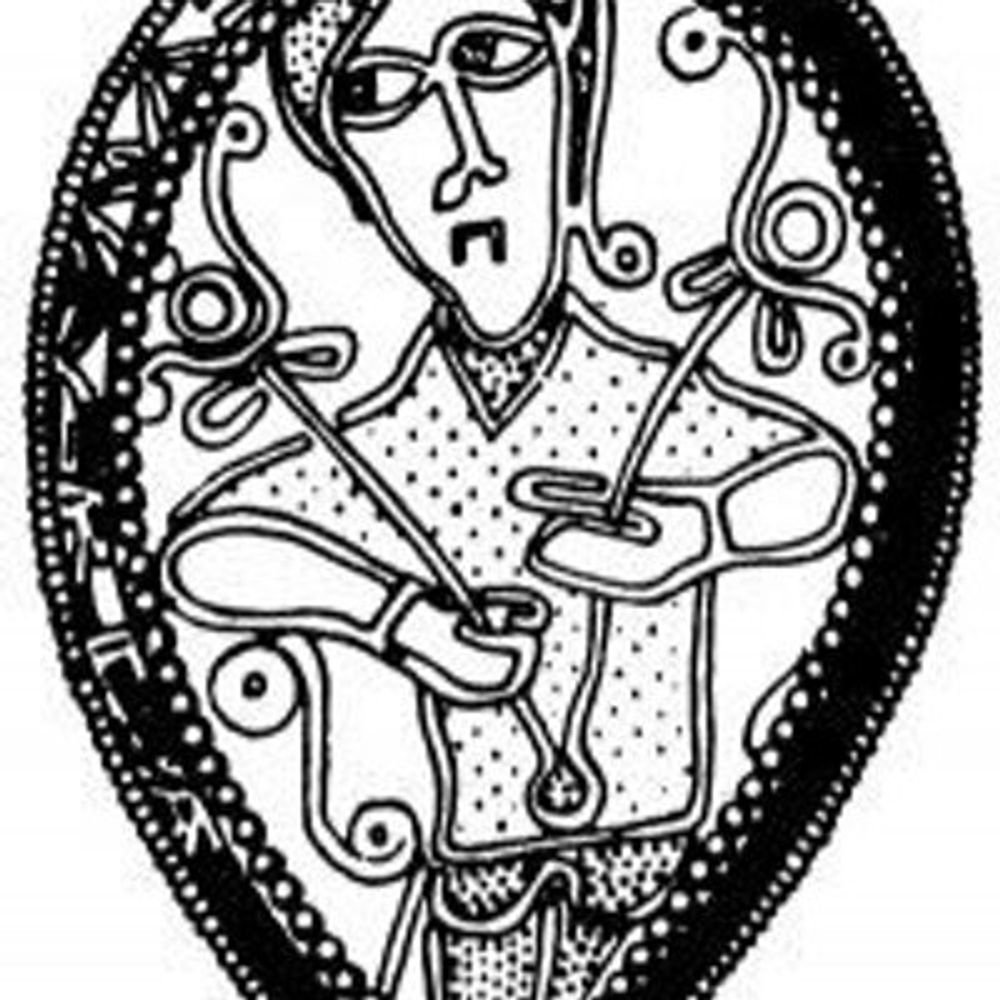
Illustration of a tattoo depicting two deer being attacked by three big cats; two with stripes, one with spots.
Tattoo from the preserved body of a Siberian ice mummy, from the Iron Age Pazyryk culture of the Altai Mountains. Depicting two tigers and a leopard attacking two deer, it shows the sophisticated methods of Pazyryk tattooers #InternationalSnowLeopardDay
🆓 doi.org/10.15184/aqy...
🏺 #Archaeology
23.10.2025 12:25 — 👍 40 🔁 11 💬 0 📌 1
apt closing from my last SAPIENS story “What archaeology asks of everyone is an openness to alternate worlds. An understanding that your society, with its ways of working, worshipping, learning, loving—even knowing a dog—is just one permutation of endless human and beyond human possibilities.”
16.12.2025 13:07 — 👍 18 🔁 6 💬 1 📌 0
🏺 We don't think enough in archaeology about how often things were stored by being hung up
20.01.2026 16:28 — 👍 39 🔁 6 💬 3 📌 0

Eat Like a Neanderthal
Eat Like a Neanderthal: Science-inspired recipes to help you dine like our evolutionary cousins.
Missed this when it came out over Christmas - a nice synthesis of current research on #Neanderthal diet (featuring some thoughts from me) in @nautil.us
nautil.us/eat-like-a-n...
20.01.2026 10:42 — 👍 44 🔁 16 💬 3 📌 2

Excavated area of peatland with a wooden trackway made from branches running through it.
Wooden remains of a later prehistoric trackway at Lisheen, Ireland, damaged during industrial peat extraction #Woodensday
Peatlands preserve organic archaeological remains but face many threats. We need to act now to save this fragile heritage.
🆓 doi.org/10.15184/aqy...
🏺 #Archaeology
21.01.2026 14:25 — 👍 72 🔁 25 💬 0 📌 0

Human and dog prints in the cave floor sediment, they overlap and go in the same direction
Woof!
De Sario et al. 2026 The dog domestication: new ichnological (footprint) evidence from the Upper Palaeolithic of the Bàsura cave (NW Italy)
"Human and canid tracks in Grotta della Bàsura date to ∼14,400 cal yr BP." 🏺🦣🐶https://www.sciencedirect.com/science/article/pii/S0277379125005177
20.01.2026 19:12 — 👍 66 🔁 20 💬 0 📌 1

Reconstruction painting from the air looking down on people gathering within the ramparts of an Iron Age hillfort and in front of a Norman castle and cathedral
It's easy to forget that hillforts had a life after the Iron Age
Here's a fine recreation of significant later activity © Peter Dunn / Historic England
It's Aug 1086 and William I has has brought the landowners of England to Old Sarum #Wiltshire to swear allegiance to him
#HillfortsWednesday
14.01.2026 05:52 — 👍 334 🔁 61 💬 4 📌 1

The ‘Java Man’, the first fossil evidence of Homo erectus, is now home
The iconic Homo erectus fossil was welcomed home with a repatriation ceremony and a new museum exhibit in Jakarta.
“For too long, a significant part of our past held beyond everyday reach of Indonesian society. Scholars discussed it, museums displayed it, global narrative was shaped around it, yet the Indonesian people could not see them at home. That era ends today.” -Fadli Zon 🏺
14.01.2026 15:36 — 👍 129 🔁 35 💬 5 📌 2
![Front Page of nature > news & views > article
NEWS AND VIEWS, 10 December 2025
Oldest known evidence of the controlled ignition of fire A 400,000-year-old site excavated in England reveals signs of deliberate fires made using the mineral iron pyrite to produce sparks.
By Ségoléne Vandevelde
Uncovering convincing evidence for the identification of ancient traces of fire is a real challenge. Writing in Nature, Davis et al. report success on this front. Using diverse techniques and a contextual approach, this multidisciplinary team presents a set of consistent evidence for the oldest known controlled use of fire, including signs of deliberate ignition of flames. The traces of fire are dated to 400000 years aco in Barnham in southern [...]](https://cdn.bsky.app/img/feed_thumbnail/plain/did:plc:ar4cvmhwgehy3aqnjv5fv2kd/bafkreigs324kbsafewvqj5jtraibeg6kucwrp2eaodxhkjgi5bunye6qcq@jpeg)
Front Page of nature > news & views > article
NEWS AND VIEWS, 10 December 2025
Oldest known evidence of the controlled ignition of fire A 400,000-year-old site excavated in England reveals signs of deliberate fires made using the mineral iron pyrite to produce sparks.
By Ségoléne Vandevelde
Uncovering convincing evidence for the identification of ancient traces of fire is a real challenge. Writing in Nature, Davis et al. report success on this front. Using diverse techniques and a contextual approach, this multidisciplinary team presents a set of consistent evidence for the oldest known controlled use of fire, including signs of deliberate ignition of flames. The traces of fire are dated to 400000 years aco in Barnham in southern [...]
My latest piece on #pyroarchaeology has just been published in @springernature.com ! 🎉
🔥 Evidences from England suggest the oldest known controlled ignition of fire 400,000 yrs ago. Davis et al.'s multimethod study confirm human-made fires.
📖 Want to know more? ➡️ Read here: rdcu.be/eX16c
08.01.2026 11:16 — 👍 8 🔁 2 💬 0 📌 1
Great question! The context of Sahelanthropus is disappointingly ambiguous. Different dates would affect whether this can be called the earliest evidence. For now any point in the established date range makes this ‘earliest’, but I wouldn't be totally shocked if the range gets updated at some point.
07.01.2026 15:10 — 👍 7 🔁 2 💬 2 📌 1

Okay my loves. I need your help here with a local thing! I’m currently putting together a series of talks relating to East Sussex.
If you could share with your fellow lovelies it would be incredible! @overslizzie.bsky.social @reblambert.bsky.social @hookland.bsky.social @lazaruscorporation.co.uk
07.01.2026 21:01 — 👍 42 🔁 32 💬 5 📌 3

Pathways at the Iberian crossroads: Dynamic modeling of the middle–upper paleolithic transition
Archaeological and genomic data provide essential yet static insights into human expansion, offering limited understanding of the underlying dynamic processes. As a complementary alternative, we present a high-resolution model of population dynamics and apply it to reconstructing the Middle-to-Upper Paleolithic Transition (MUPT) in Iberia. Through ensemble simulation, we examine Neanderthal (NEA) persistence, modern human (AMH) arrival, and possible interbreeding. The model maps population networks, mobility, and interactions, showing NEAs were confined mainly in coastal refugia and already declining when AMHs arrived. Heinrich Event 5 likely accelerated NEA extinction through climate stress and demographic collapse. AMHs expanded rapidly into Cantabria, overlapping with NEAs and allowing for possibly 2–6% admixture. New dispersal corridors are predicted, showing AMHs moved along the Atlantic coast from southern France into Cantabria, then inland via the Duero Route into Portugal and central Mesetas. By linking climate, demography, and culture, our dynamic model offers a broader explanatory framework that enhances the interpretive power of archaeological and genomic records.
Modeling #Neanderthal and #Hsapiens interactions in #Iberia, Middle/Upper Palaeolithic transition
#archaeology #genetics
https://journals.plos.org/plosone/article?id=10.1371/journal.pone.0339184
23.12.2025 07:33 — 👍 1 🔁 4 💬 1 📌 0

Line drawing of a fossil skull viewed from the left side
Sima de los Huesos, Spain, contains the remains of more than 27 individuals of an early Neanderthal population, estimated to be around 430,000 years old. Cranium 5 is one of the most complete known so far from the site; it is also the smallest of 15 with estimated brain sizes. #inktober
20.10.2025 21:24 — 👍 46 🔁 4 💬 0 📌 1

The ancient Egyptian legacy of anatomical science
The early foundations of human anatomy were built from traditions of medicine, embalming, and animal sacrifice.
The body tells stories. People’s health, their place in the natural scheme of things, their relation to other individuals, all make a difference in our bodies and bones. I’m always fascinated to go back in history to see how the ancients framed these connections.
www.johnhawks.net/p/roots-of-a...
07.10.2025 16:01 — 👍 5 🔁 1 💬 1 📌 0
Documenting the profession: Recording historic access and retention issues for women in UK archaeology | Archaeological Dialogues | Cambridge Core
Documenting the profession: Recording historic access and retention issues for women in UK archaeology
New paper. Recording the female experience of UK archaeology 1990-2010. Anne Teather and I document how an industry EDI agenda evolved in the 1990s and was dismantled, uncovering the ramifications of that for women archaeologists over the next decade.
www.cambridge.org/core/journal...
#openaccess✅
26.09.2025 10:56 — 👍 234 🔁 92 💬 19 📌 13

Orphaned mountain gorilla, Ndakasi, lies in the arms of her caregiver, Andre Bauma, shortly before her death at a gorilla orphanage at Virunga - Africa's oldest national park - in the Democratic Republic of Congo. Mr Bauma rescued Ndakasi as a 2-month-old, after poachers killed her parents. #animals
04.10.2025 21:32 — 👍 64 🔁 10 💬 4 📌 1
Medhist=medieval + medical history (https://hcommons.org/members/mhgreen2/). Daughter #2 of Marlon & Eleanor Green. Focusing on Global Health. One of my latest on plague: https://www.science.org/doi/10.1126/science.adt3880#elettersSection
Assistant Professor in Human Osteoarchaeology and Mediterranean Archaeology, University of Groningen 🥦 Health and diet🍇 Inequality 🦷💀Death and burial🦴⚱️Roman Crete🏛️⛰️
Welcome to our official page. Sharing the latest news, research and highlights of life at UCL (University College London).
London's Global University - ucl.ac.uk
Associate Professor in Bioarchaeology & Forensic Anthropology
UCL Institute of Archaeology
A university museum & gallery that hosts a programme of changing contemporary and historical exhibitions from Africa, Asia and the Middle East. Free Admission.
Illustrator
Cambridge School of Art Graduate 2025
Inspiring the next generation to develop ideas for a fairer world. Follow us for tweets about SOAS life, news and events. #WeAreSOAS
Professor of Archaeology at Birkbeck, University of London. Director of Carena Institute of Sustainable Archaeologies. Excavator of archives. Syria, Romans, photographs, Dura-Europos. Newfoundlander.
Childhood, material culture, the Roman Near East. Researching the archaeology of Roman childhood at Dura-Europos. PhD student at Birkbeck, University of London. Research funded by AHRC
archaeology, art, heritage ecologies, drumadoon, ardeer
Official tweets from the School of Historical Studies at Birkbeck, University of London
Lecturer in Renaissance Art History @Birkbeck
Postdoctoral Research Fellow @HRC York
Colette of Corbie & Margaret of York | Flemish Manuscript Illumination | Visual Exegesis | Valois Burgundian Patronage | The Supernatural
she/her
marisamichaud.carrd.co/
Teller of small stories. Professor of history at Birkbeck. Rider of bikes, grower of vegetables, Brook custodian & friend to five ducks. Townie Cantabrigian. Eternally homesick Newfoundlander; researching the island's history & the legacies of empire.
South of the Thames, south of the Yarra. Rootless cosmopolitan. Historian. Birkbeck Institute for the Study of Antisemitism and University of Melbourne. Racism (against). Arsenal.
Prof.of Classics/Ancient History at Birkbeck. Rome and the ancient Romans, especially Seneca and Cicero.
Dating back to 1830, UCL History sits in the heart of London and welcomes the best researchers and students from around the world 🌎
Urban historian, especially medieval and early modern London. Executive Dean of Humanities and Social Sciences at Birkbeck, University of London. Director of @layersoflondon.bsky.social
MSc Archaeologist specialising in the Palaeolithic
ASE is part of the UCL Institute of Archaeology. We provide expert advice and services to communities and clients in need of heritage protection and archaeological research.