Great week in New York with @lizzieinvancouver.bsky.social! We had inspiring discussions with @betanalpha.bsky.social and @dustybowl.bsky.social on tree growth modeling. Thanks for sharing so many ideas. Excited to move this project forward!
22.10.2025 13:19 — 👍 4 🔁 0 💬 0 📌 0
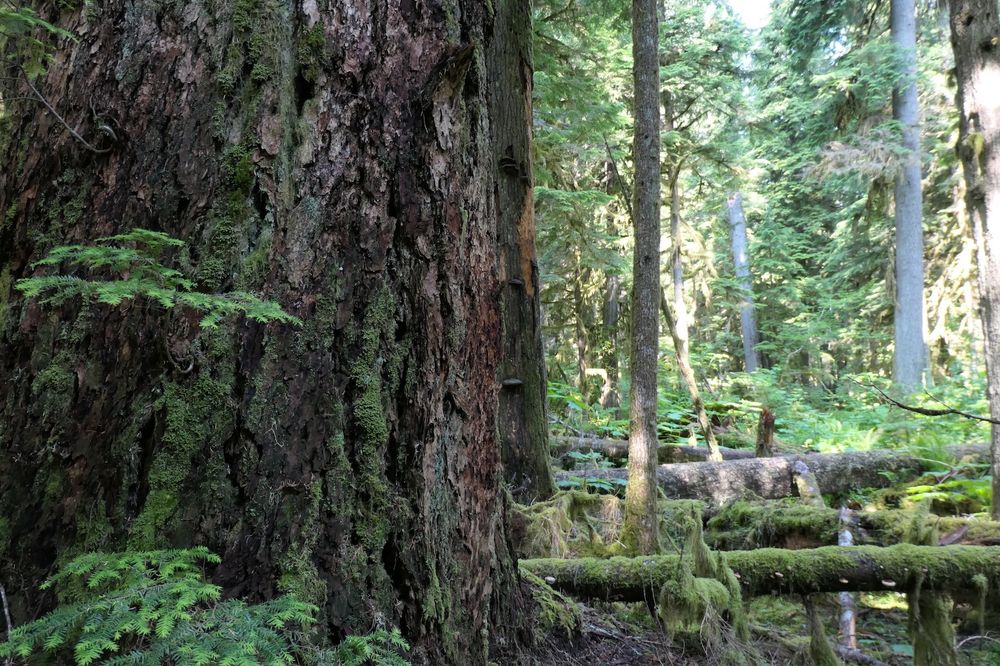

Our department at UBC is hiring for a professor of forest ecophysiology, including "tree ecophysiology; plant abiotic or biotic stress physiology; forest mortality and climate change responses; forest carbon balance; tree water relations; or nutrient use." Learn more at: tinyurl.com/5da56f5c
06.10.2025 22:12 — 👍 62 🔁 69 💬 0 📌 1
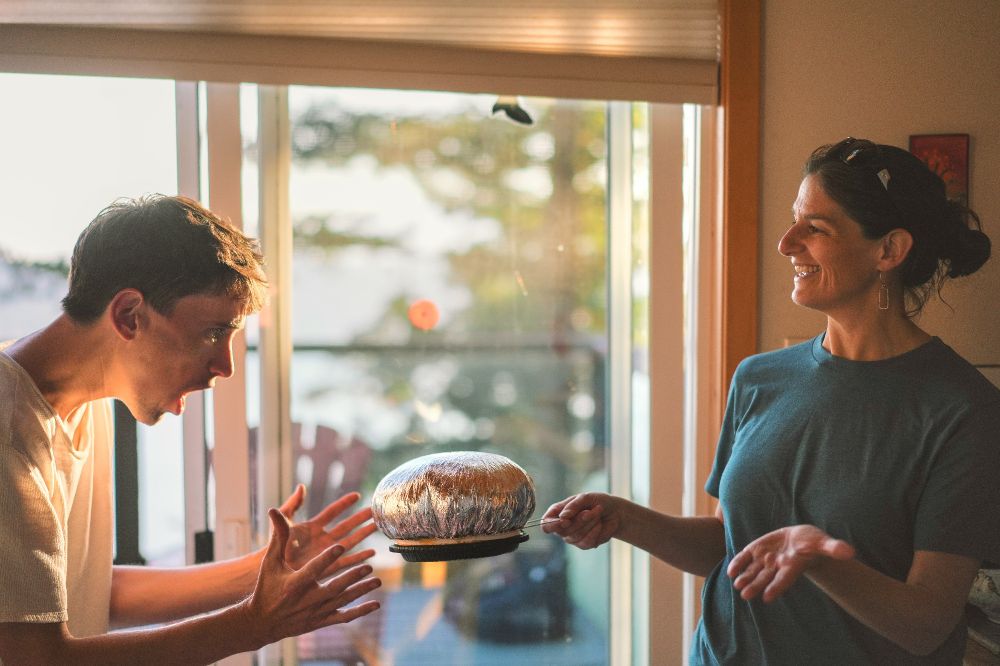
Working with @lizzieinvancouver.bsky.social is not just about doing cool science, it’s also about mind-blowing cultural discoveries like Jiffy Pop (for a European like me)
📷 @christopherd98.bsky.social
@temporalecology.bsky.social
31.07.2025 16:37 — 👍 2 🔁 1 💬 0 📌 0
Advanced Bayesian Modeling In Stan
Despite the promise of big data, inferences are often limited not by the size of data but rather by…
Did you hear that I'll be teaching four brand new remote courses this year covering Bayesian mixture modeling, survival modeling, pairwise comparison modeling, and ordinal modeling, www.eventzilla.net/e/advanced-b...?
Reskeets and sharing with your friends and colleges appreciated!
11.07.2025 15:26 — 👍 8 🔁 5 💬 0 📌 0

Smiley people in car
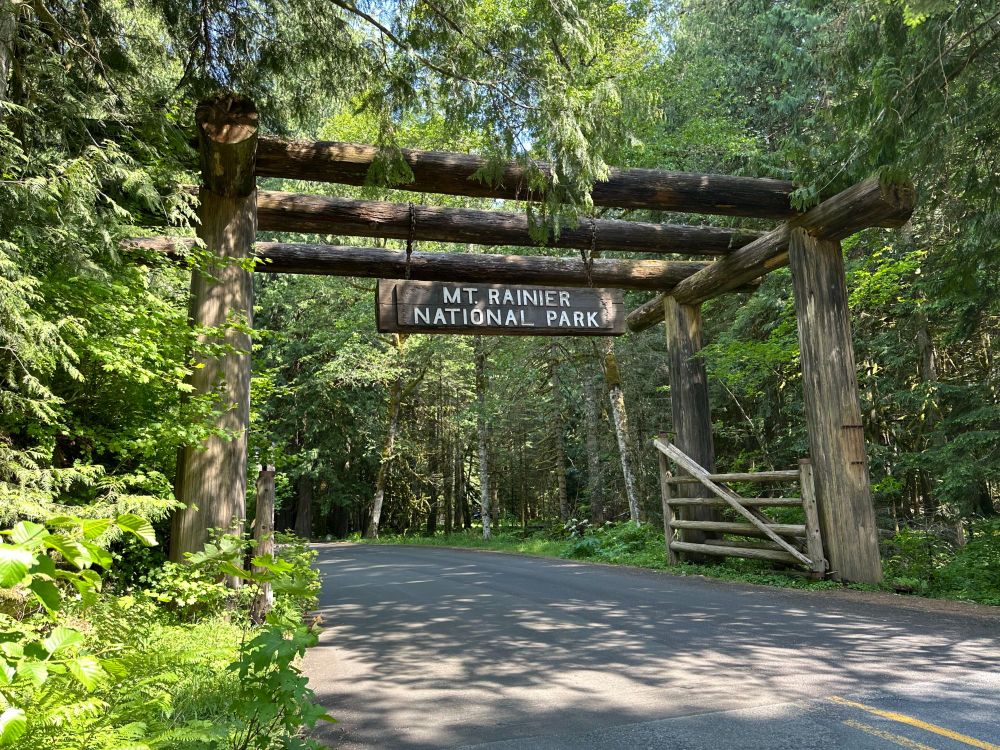
Mount Rainier entrance (Ashford)
Thanks to @betanalpha.bsky.social @vvandermeersch.bsky.social and Janneke Hille Ris Lambers for a fun day discussing how trees grow at Mount Rainier in Mount Rainier NP to round out June! And to all of them plus Mao and Avery for more math at UW (see gcecology.tumblr.com/post/7877335...).
07.07.2025 04:26 — 👍 5 🔁 2 💬 0 📌 0

A blooming field of sunflowers. Stock photo.
The summer solstice may signal peak growth for many plants. On average, the summer solstice coincides with a thermal optimum during the growing season. As the climate warms, this cue could remain stable, but there’s significant local variation. In PNAS: www.pnas.org/doi/10.1073/...
17.06.2025 16:23 — 👍 11 🔁 2 💬 0 📌 1
👉 Our findings highlight how hard it is to separate the effects of photoperiod from those of a thermal optimum cue.
Much remains to be done to unravel the complexity of phenological cues, and understand the implications for forecasting plant responses to climate change!
12.06.2025 16:06 — 👍 0 🔁 0 💬 0 📌 0
💡 As we only used temperature data (and not photoperiod), this could suggest that plants rely on plastic thermal cues rather than a fixed photoperiod switch, such as the solstice.
12.06.2025 16:06 — 👍 0 🔁 0 💬 1 📌 0
🔎 But when we zoomed-in, we found significant local variation. Some sites had an optimum >20 days before sites, while other sites, especially in Scandinavia, had an optimum >20 days after solstice.
12.06.2025 16:06 — 👍 0 🔁 0 💬 1 📌 0
🌍 Using climate data from the past, present, and future, we found that the summer solstice tends to align with a thermal optimum during the growing season.
The period around the solstice represents on average a good trade-off between environmental predictability and growth potential.
12.06.2025 16:06 — 👍 0 🔁 0 💬 1 📌 0
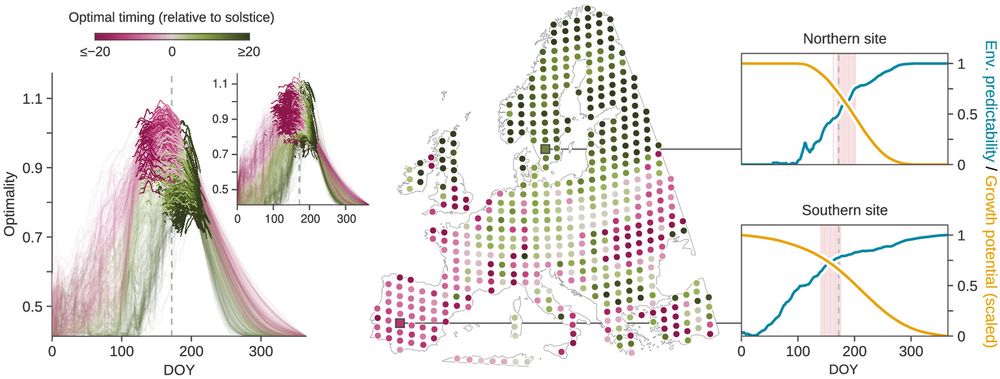
Several recent studies suggest the summer solstice might act as a universal cue for key plant processes.
But why would the longest day of the year be so important? Our new study in @pnas.org sheds some light on this question ⏬
www.pnas.org/doi/10.1073/...
@lizzieinvancouver.bsky.social
12.06.2025 16:06 — 👍 16 🔁 6 💬 1 📌 1
New PhD position in the Temporal Ecology Lab (UBC, Vancouver)! 🌲
The student will investigate how seed and seedling pathogens influence forest regeneration and diversity, in collaboration with the Plant Ecology Group at ETHZ.
Please find more information here: temporalecology.org/wp-content/u...
11.06.2025 08:00 — 👍 0 🔁 0 💬 1 📌 1

New research by Wolkovich and colleagues highlights spatial and temporal complexities in the impacts of climate change on wine grapes around the world
journals.plos.org/climate/arti...
@vvandermeersch.bsky.social @dustybowl.bsky.social
Photo: Marc Benedetti, Pixabay
22.05.2025 09:28 — 👍 3 🔁 2 💬 0 📌 1
💡 Takeaway? Don’t blindly trust good model fit! Always look into the biological processes, and use inverse calibration carefully. This is critical if we want to preserve the value of process-based models over less mechanistic approaches.
08.05.2025 07:05 — 👍 2 🔁 0 💬 0 📌 0
Inverse calibration with distribution data should be applied selectively, to calibrate parameters where we lack other sources of data.
08.05.2025 07:05 — 👍 1 🔁 0 💬 1 📌 0
⚠️ Compensation between processes leads to non-identifiability: different parameter sets can produce similar species distributions, but with different internal dynamics.
08.05.2025 07:05 — 👍 2 🔁 0 💬 1 📌 0
Inverse calibration can yield good predictions of species ranges—even under past climates. But it might do so for the wrong reasons.
08.05.2025 07:05 — 👍 0 🔁 0 💬 1 📌 0

Can inverse calibration help improving process-explicit species distribution models?
Process-explicit models (PEMs) are expected to provide reliable projections of species range shifts because they explicitly model the biological mecha…
How can we spread the use of process-based models in ecology? They are powerful but require a lot of data. Inverse calibration offers a shortcut—adjusting parameters using species distribution data. But do we still get biologically realistic results? ⏬
www.sciencedirect.com/science/arti...
08.05.2025 07:05 — 👍 8 🔁 2 💬 1 📌 0
💡 Takeaway? Don’t blindly trust good model fit! Always look into the biological processes, and use inverse calibration carefully. This is critical if we want to preserve the value of process-based models over less mechanistic approaches.
08.05.2025 07:01 — 👍 0 🔁 0 💬 0 📌 0
⚠️ Compensation between processes leads to non-identifiability: different parameter sets can produce similar species distributions, but with different internal dynamics.
08.05.2025 07:01 — 👍 0 🔁 0 💬 0 📌 0
Inverse calibration can yield good predictions of species ranges—even under past climates. But it might do so for the wrong reasons.
08.05.2025 07:01 — 👍 0 🔁 0 💬 1 📌 0
Analyses de thèse | Académie d'Agriculture de France
📄 For French speakers passing by, or those who want to work on their French, a short analysis of my PhD thesis has been published on the website of the Academy of Agriculture (and forests?).
You can find it here (en français, donc):
www.academie-agriculture.fr/publications...
28.03.2025 23:43 — 👍 1 🔁 0 💬 0 📌 0
(Thanks to all the collaborators, including @fredsaltre.bsky.social !)
07.03.2025 02:08 — 👍 1 🔁 0 💬 0 📌 0
💡 The challenge ahead: finding the right balance between representing complex biological processes, diverse data sources to support them, and robust inference methods!
07.03.2025 02:08 — 👍 1 🔁 0 💬 1 📌 0
⚠️ That said, more complexity isn't always better. More processes involve additional parameters, which are usually harder to calibrate. And we still often rely on a single parameter set per species — neglecting to quantify and propagate uncertainty when making projections
07.03.2025 02:08 — 👍 0 🔁 0 💬 1 📌 0
⚙️ Beyond these findings, process-based models are an important tool to encourage a comprehensive and continuous incorporation of scientific knowledge and experimental data
07.03.2025 02:08 — 👍 0 🔁 0 💬 1 📌 0
👀 Yet, the conditions during the Early Holocene were different from the conditions that are expected in coming decades, and one would need to go back much further in time to find analog conditions to our future climate
07.03.2025 02:08 — 👍 0 🔁 0 💬 1 📌 0
❔ Why does this matter? Given the projected pace of climate change, our results challenge the heavy reliance on SDMs for forest management, conservation planing and biodiversity forecasting
07.03.2025 02:08 — 👍 0 🔁 0 💬 1 📌 0
👉 We found that process-based models — which explicitly translate our knowledge of species functioning into equations — may outperform classical SDMs in novel climates (that is, beyond current climatic conditions)
07.03.2025 02:08 — 👍 0 🔁 0 💬 1 📌 0
🌍 To do this, we used 12,000 years of pollen data from Europe. This period, and especially the Early Holocene, provides a great way to challenge our models with rapidly changing climatic conditions
07.03.2025 02:08 — 👍 0 🔁 0 💬 1 📌 0
Mayor-Elect of New York City
Prof at the University of British Columbia. Research in statistics, ML, and AI for science. Views are my own. https://charlesm93.github.io./
Professor, University of Auckland: urban ecology, conservation, invasive species. Mum to 2 teenagers. Nature fan. She/her. Aotearoa - New Zealand.
UOA profile: https://profiles.auckland.ac.nz/mc-stanley
Associate Professor, Bristol University 🧪
Resilience loss ⚖️ Early warning signals ⚠️ multiple stressors 🏭 biodiversity change 🌍 rewilding 🦫
🔗 experimentalconservation.com
Editor at Biology Letters.
postdoc @ NASA working on hydroclimate and drought 🌬️ previously @ columbia & princeton ❤ she/they
Ikerbasque research fellow at BC3 - Basque Centre for Climate Change | applied forest ecology | evidence synthesis | Associate editor @jappliedecology.bsky.social | foodie | music fiend | twin dad
Ecophysiologist investigating plant responses to heat and drought 🌡️💦🍃🍂
At the IF Goiano (Goiás-Brazil) 🇧🇷
🌳💍 Posts | DendroHub Founder & Tree-Ring Society (TRS) Communications | ❤️ Promoting Safe Spaces, Normalizing Life w/ #MentalIllness, Kindness, Perseverance 💙
Tree-ring scientist, forest ecologist, forest fires, climate and human interactions. Regents Professor Emeritus Univ AZ; home in New Mexico.
Climate, tree rings, water
Professor of Geography @ UNC-Chapel Hill
Head of Weather & Climate Research at WTW, a global insurance advisory firm headquartered in London.
Alexander von Humboldt Fellow | Geological Survey of Canada alum | Formerly Associate Prof at University of Minnesota | Made in 🇨🇦 | Based in MSP
Climate scientist, paleoclimatologist, dendrochronologist, University of Arizona | https://kanchukaitis.github.io/ | Opinions are mine and not that of my employer
Functional Ecology of Forests and Trees, and dendroecology @csic.es @INIA_es Madrid 🇪🇺
dmartinbenito.wordpress.com
@BeetleBark in the X Bird site for now
Tropical forest ecologist | Professor | Wageningen University 🇳🇱 | Climate change impacts on trees & forests | Tropical 🌳 rings | Dendrochronology | Timber tracing | Model-data integration
Correlation is not causation: your daily dose of spurious correlation.
Made with @trotsky.pirhoo.com using Tyler Vigen's charts.
MS Biology #masting | LaMontagne Lab Lab tech @ UMSL | Former professional tree hugger, squirrel milker, bird aggravator, and bag crinkler #techlife
🌳 🌱Forests, Ecology,Biogeography, Ecosystem services, Invasion biology, Biodiversity Monitoring and more🌏
#ICIFOR INIA CSIC
co-editor-in-chief of Ecosistemas @eco-aeet.bsky.social community journal #DiamondOAJ
WEB: http://laurahernandezmateo.wordpress.com
Professor of Environmental Meteorology at University of Freiburg | Observing and modelling airflow, greenhouse gases, climate change in urban & forest systems. https://www.meteo.uni-freiburg.de/en/team/andreas-christen