The Trifid nebula taken from my terrace last summer.
These nights I’m running four projects in parallel that require many hours of acquisition, so I’m piling up gigabytes of data, but for now I haven’t started processing any of it yet. So, to kill time, I’m reprocessing some images from last summer, like the Trifid Nebula (M20). 🔭
#Astrophotography
30.12.2025 16:21 — 👍 1210 🔁 149 💬 12 📌 8

A grainy, black and white image of a large spiral galaxy is seen in the center of the frame. It's tilted at an angle, so that it's disk appears as an oval rather than a circle. The long axis of the oval is nearly vertical. Dramatic dark dust lanes cross in front of the center of the galaxy. To the right of the spiral is a smaller disk galaxy. It appears to be at almost a right angle to the large spiral. It is overexposed and no details are seen in the center of the galaxy. The two galaxies are connected by a bridge of material. A few white dots, which are stars, are seen on the black background.
Image of Arp 282, also known as NGC 169 and NGC 169A, from Halton Arp's Atlas of Peculiar Galaxies (1966).
In the original catalog it was in the category: Double and multiple galaxies - Infall and attraction. Tidal streams visibly link the pair.
Source
29.12.2025 12:31 — 👍 36 🔁 3 💬 1 📌 0

A spiral galaxy from the Galaxy Zoo: Hubble project, classified by 50 volunteers.
A spiral galaxy, observed with the Hubble Space Telescope in the COSMOS survey.
It is at redshift 0.80 (lookback time 7.04 billion years) with coordinates (150.68096, 2.81689).
50 volunteers classified this galaxy in Galaxy Zoo: Hubble.
29.12.2025 08:38 — 👍 98 🔁 9 💬 1 📌 0

A smooth galaxy from the Galaxy Zoo: Hubble project, classified by 43 volunteers.
A smooth galaxy, observed with the Hubble Space Telescope in the COSMOS survey.
It is at redshift 0.90 (lookback time 7.52 billion years) with coordinates (150.17674, 2.58088).
43 volunteers classified this galaxy in Galaxy Zoo: Hubble.
29.12.2025 06:42 — 👍 76 🔁 10 💬 0 📌 0

A irregular galaxy from the Galaxy Zoo: Hubble project, classified by 42 volunteers.
An irregular galaxy, observed with the Hubble Space Telescope in the COSMOS survey.
It is at redshift 0.33 (lookback time 3.82 billion years) with coordinates (150.30358, 2.18741).
42 volunteers classified this galaxy in Galaxy Zoo: Hubble.
29.12.2025 05:33 — 👍 110 🔁 14 💬 1 📌 0
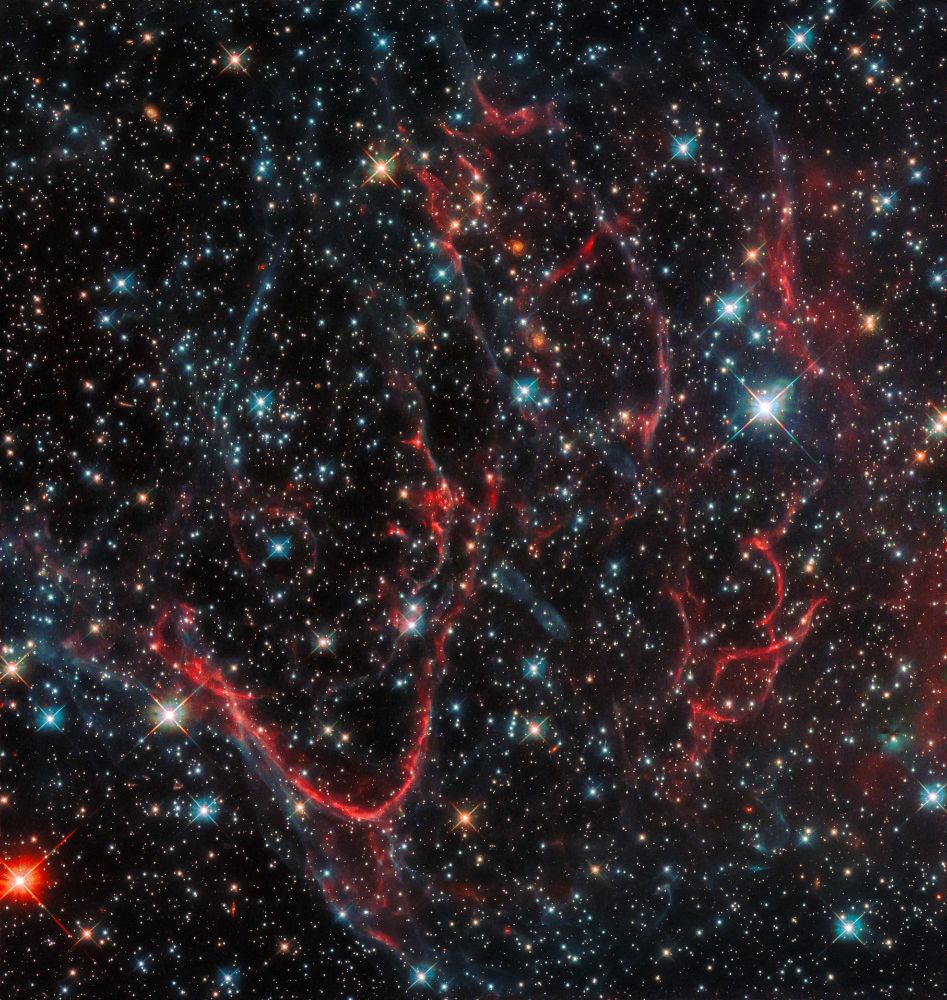
Fascinating: SNR 0454-67.2, a supernova remnant in the LMC. Likely born from a Type Ia explosion, it features red filaments amid dark clouds. Such supernovae shine with consistent brightness, making them vital “standard candles” for gauging cosmic distances.
(Credit: ESA/Hubble, NASA)
10.08.2025 17:03 — 👍 100 🔁 15 💬 1 📌 0

100 Fascinating Facts about Neutron Stars
100 Fascinating Facts about Neutron Stars
Neutron stars spin up to 716 times per second - Start exploring universe with Award Winning Telescopes--> https://www.jameswebbdiscovery.com/top-10-telescopes-telescopeadvisor-awards-2025 or beginners choice--> https://amzn.to/45dxlOF #Astronomy #AmazonAffiliate #NASA #Space
10.08.2025 03:58 — 👍 2 🔁 1 💬 0 📌 0

This is a high-resolution infrared image of NGC 3147, a face-on spiral galaxy. The galaxy has tightly wound spiral arms speckled with star formation regions, radiating from a prominent, bright central bulge. The image, captured by the James Webb Space Telescope's NIRCam instrument, reveals intricate details, including dark dust lanes and bright star clusters within the spiral arms.
Beautiful NGC 3147.
Processed JWST/NIRCam data by @thocarp.bsky.social
www.flickr.com/photos/19746...
24.02.2025 17:43 — 👍 737 🔁 72 💬 6 📌 4

A colourful, glowing nebula that reaches beyond the top and bottom of the image. It is made of translucent clouds of gas: wispy and thin with hard edges in some places, and puffy and opaque in others. Blue, red and yellow colours mix together, showing light emitted by different types of atoms in the hot gas. Bright and pointlike stars are scattered across the nebula. The background is black.
NEW HUBBLE IMAGE OF THE VEIL NEBULA AND IT’S GORGEOUS!!! 🌌✨
24.02.2025 19:24 — 👍 6053 🔁 705 💬 69 📌 30

A stunning image of a planetary nebula with a bright central white dwarf star. The nebula exhibits a glowing, multi-layered structure with an intense inner ring of ionized gas, appearing white and blue, surrounded by an expansive halo of golden-hued filaments. The outer shell is composed of expelled stellar material, illuminated by ultraviolet radiation from the dying star at its core. Numerous distant stars are scattered throughout the background, enhancing the cosmic scenery. The image captures intricate details of the nebula’s expanding shock waves, dust formations, and glowing plasma, indicative of stellar evolution and the final stages of a sun-like star’s life cycle.
Cradle of Creation – A celestial vista of a planetary nebula with a bright white dwarf star at its core. Expanding shock waves, dust formations, and glowing plasma reveal stellar evolution in the final stages of a sun-like star’s life cycle.
20.02.2025 18:10 — 👍 208 🔁 27 💬 0 📌 0
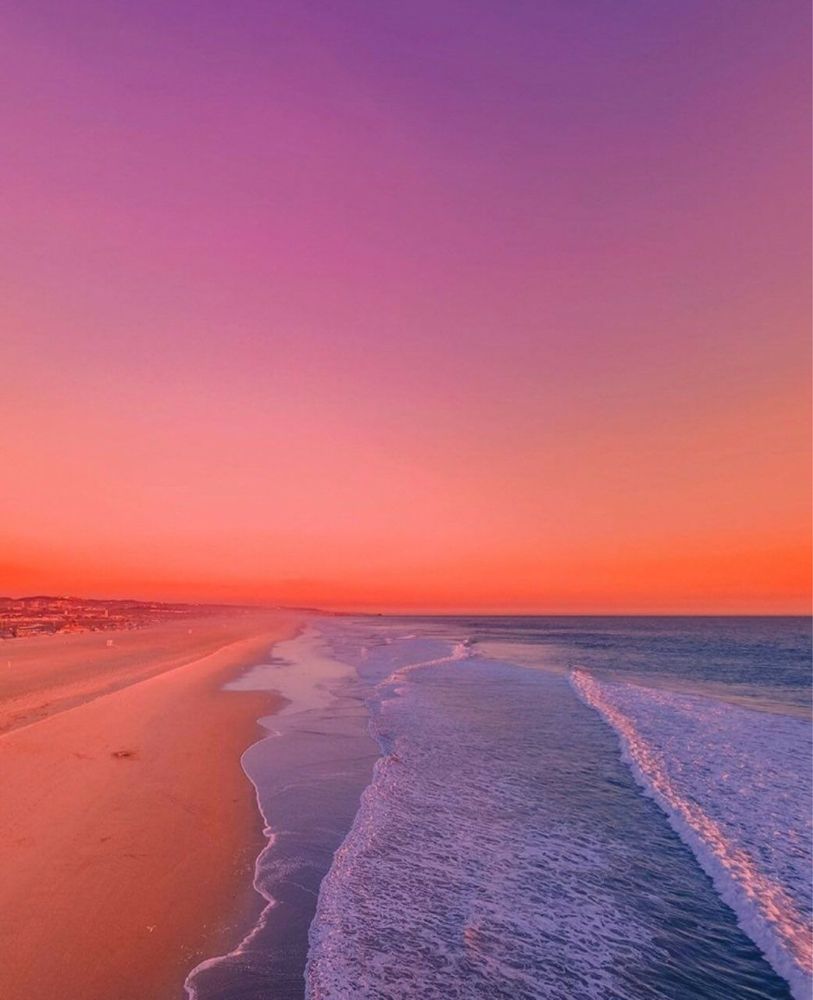
Orange Haze 🧡
18.02.2025 00:56 — 👍 419 🔁 51 💬 8 📌 1

Webb’s MIRI captures Arp 107, revealing a supermassive black hole shaping the spiral galaxy. Young stars shine blue, forming in clouds of dusty silicates creating intricate patterns.
Image Credit: #NASA, #ESA, CSA, STScI
🔭 #Space #Astronomy
17.02.2025 12:21 — 👍 60 🔁 12 💬 0 📌 1

In a galaxy far far away.........
14.02.2025 12:44 — 👍 232 🔁 18 💬 5 📌 0

NGC 247 is a small spiral galaxy about 11.1 million light years away in the constellation Cetus. It belongs to the Sculptor galaxy group.
This image shows plenty of star-forming regions (in red colours) and young star-clusters (in blue-white), as well as a central region with dominant old stars (yellow colours).
Image obtained using the 2.5m Isaac Newton Telescope (Obs. Roque de los Muchachos, La Palma, Spain). We used the Wide Field Camera (WFC) and filters B (blue) R (green) and H-alpha (red). Observations were conducted in October 2006. The data were reprocessed in February 2021.
Credit: Ángel R. López-Sánchez (AAO-MQ), Adal Mesa-Delgado, Sergio Simón-Díaz (IAC) and Bärbel Koribalski (CSIRO).
NGC 247 with the 2.5m INT - From Ángel López-Sánchez - https://flic.kr/p/2kDR8cf
14.02.2025 02:00 — 👍 461 🔁 44 💬 2 📌 2

A spiral galaxy from the Galaxy Zoo 2 project, classified by 45 volunteers.
A spiral galaxy, observed with the Apache Point 2.5m Telescope in the SDSS survey.
It is at redshift 0.028 (lookback time 397.0 million years) with coordinates (167.23819, 26.59614).
45 volunteers classified this galaxy in Galaxy Zoo 2.
13.02.2025 03:15 — 👍 70 🔁 6 💬 1 📌 1

A heart-shaped nebula with a bright rainbow inside of it
A propos of nothing, here's a digital painting from a few years ago - a rainbow version of my nebula inspired by the heart nebula.
🐡
12.02.2025 21:54 — 👍 190 🔁 22 💬 6 📌 1

👀
Don’t forget to look up…
31.01.2025 04:40 — 👍 68 🔁 7 💬 1 📌 0

Sending love and healing to all the families who have lost loved ones in the plane tragedy yesterday.
31.01.2025 03:36 — 👍 31 🔁 4 💬 1 📌 0

Bodes Galaxy was one of the first galaxies that I imaged when I first started my journey into #astrophotography nearly three years ago. This is the first time that I have actually achieved an image that I really like. I hope you like it too! #astronomy @kat-astro-bot.bsky.social
30.01.2025 07:11 — 👍 304 🔁 30 💬 6 📌 0

A spiral galaxy from the Galaxy Zoo 2 project, classified by 33 volunteers.
A spiral galaxy, observed with the Apache Point 2.5m Telescope in the SDSS survey.
It is at redshift 0.039 (lookback time 549.7 million years) with coordinates (236.50760, 5.13703).
33 volunteers classified this galaxy in Galaxy Zoo 2.
31.01.2025 00:54 — 👍 179 🔁 13 💬 2 📌 0

This Hubble Space Telescope image showcases WR 124, a Wolf-Rayet star, enveloped by a luminous nebula. The brilliant central star illuminates the surrounding material, creating a vibrant orange glow punctuated by dark, wispy patches of dust and gas. This nebula, formed by the powerful stellar winds ejected from WR 124, reveals the star's dynamic interaction with its environment. The image captures the complex structure and turbulent nature of the nebula, highlighting the distinct features of this massive, evolved star against the backdrop of a dark cosmos speckled with distant stars.
High quality image of one of the heaviest and most luminous stars in the known universe (Hubble).
Processing: Judy Schimdt.
www.flickr.com/photos/geckz...
🔭 🧪
30.01.2025 17:35 — 👍 4002 🔁 355 💬 43 📌 12

The Pleiades Star Cluster
I spent another 2 nights on the Pleiades over the past couple nights and was able to pull some fainter dust lanes over my previous attempt! The 7 sisters are so majestic 😍
Total time: 14hrs
Scope: AT72edii
Mount: Sky Watcher Eq6-R Pro
Camera: ZWO ASI533mc Pro
#astrophotography #astronomy
29.01.2025 16:45 — 👍 700 🔁 68 💬 16 📌 2

A stunning depiction of a supermassive black hole at the center of a galaxy. The image showcases the black hole's event horizon, a dark circular region, surrounded by an accretion disk of matter spiraling inward, glowing intensely due to extreme gravitational forces and friction heating up the gas and dust. The accretion disk appears as a bright, elliptical ring around the black hole, with intricate structures of gas and dust forming filamentary patterns. The background is filled with countless stars, adding to the cosmic tapestry, while the overall scene is enveloped in a dark, star-studded space, emphasizing the vastness of the universe. This visualization highlights the immense gravitational pull of the black hole, bending light and matter into a mesmerizing vortex.
Supermassive black hole’s event horizon, dark center with bright, glowing accretion disk of spiraling gas and dust. Filamentary patterns, stars fill the cosmic background, highlighting gravity’s light-bending vortex within the galaxy.
Visuals by @venusianchron.bsky.social ✨Space is Art
28.01.2025 19:24 — 👍 339 🔁 29 💬 9 📌 3

A rare cartwheel galaxy
PGC-2248
Photo credit James Webb Space Telescope
Constellation Sculptor
Discovered 1941 by Fritz Zwicky
Distance 500 light years
Once a normal spiral galaxy it collided perfectly (bulls eye) with another galaxy who's shock wave created this unique structure.
29.01.2025 03:49 — 👍 7080 🔁 605 💬 84 📌 30

Goodnight my
28.01.2025 02:21 — 👍 273 🔁 22 💬 3 📌 0

"Pleiades last night, shot as a mosaic for wider field, 150 minutes of integration on Bortle 4 skies. DeNoised in the Seestar app then lightly edited in Lightroom.
I've been using this scope for a week and love it!"
Ralph Ceseña
27.01.2025 02:31 — 👍 57 🔁 2 💬 0 📌 0
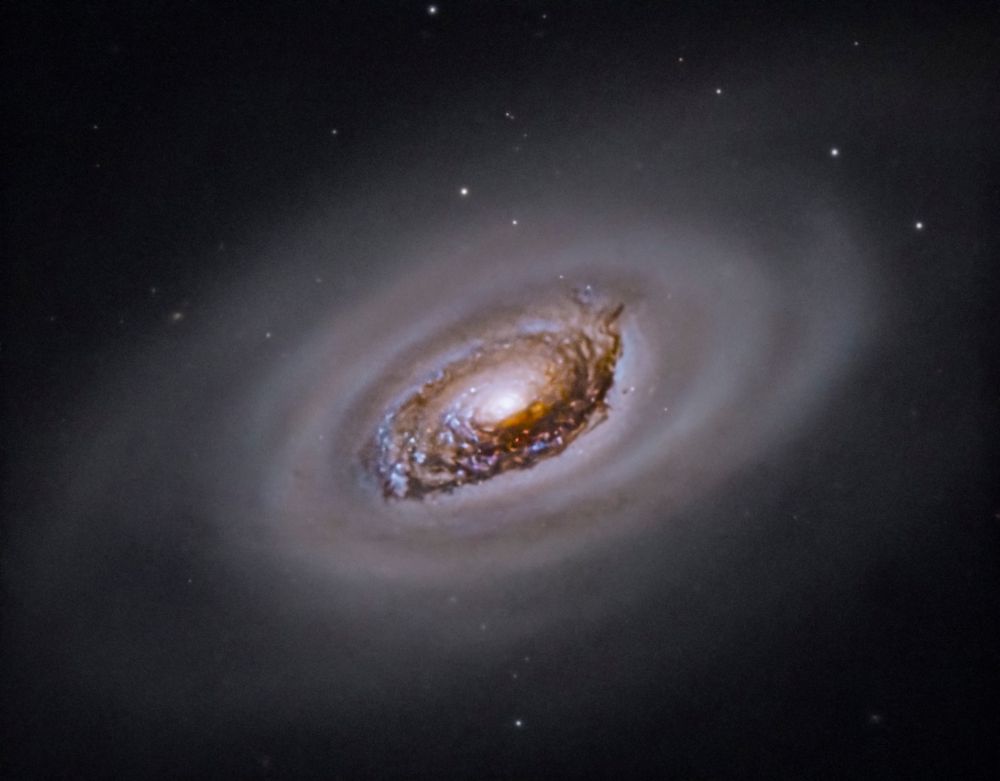
A long ago collision of two galaxies stirred up this far off star system called the Black Eye Galaxy (M64) and resulted in all this dark galactic dust obscuring the active starburst core. I photographed this using a 16 inch vintage telescope and modern ccd camera
#astrophotography #space #galaxies
26.01.2025 03:29 — 👍 355 🔁 24 💬 5 📌 0

The California nebula in Perseus. Just over ten hours of narrow band data shot from Spain in Sept 23, using the Redcat51. The hydrogen gas in the nebula is glowing due to the energy from the nearby star Menkib. #Astronomy #Astrophotography
26.01.2025 15:29 — 👍 469 🔁 42 💬 11 📌 2
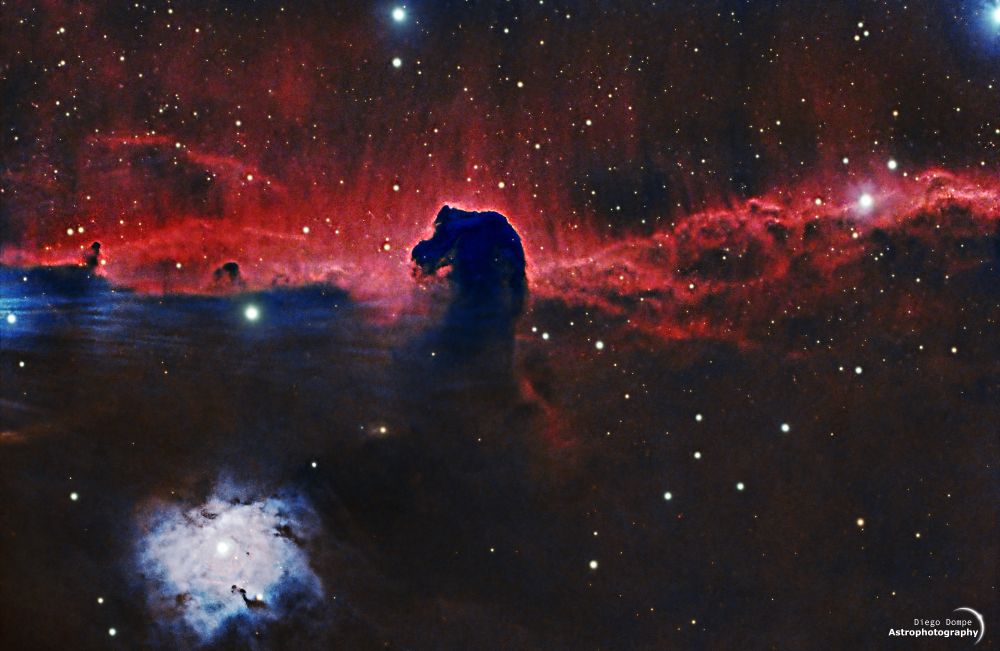
Almost 6h of data on the Horsehead nebula with the C11 w reducer. 🔭 #Astrophotography
26.01.2025 22:19 — 👍 709 🔁 59 💬 11 📌 1

The Flame Nebula, captured by the NIRCam instrument, reveals a celestial tapestry of interstellar gas and dust. A prominent plume of gas, tinged with a deep blue, dominates the image, while surrounding clouds shimmer in shades of pink and purple.
NGC 2024 (Flame Nebula) by NIRCam.
Processed by @thocarp.bsky.social
www.flickr.com/photos/19746...
🔭 🧪
26.01.2025 12:23 — 👍 1985 🔁 160 💬 14 📌 5
DC Studios co-CEO, #Superman, #GuardiansoftheGalaxy, #Peacemaker, dog owner, husband, servant to my cat.
The Official Tool BlueSky Account. Expanding Hearts, Souls and Minds since 1991.
Basic (ˈbeɪ.sɪk’; Adj): lover of all things mainstream, popular, & trending in the world of .
We break Apple news. Leading source for all things iPhone, Mac, iPad, Apple Watch, more
The nonprofit organization behind the Python programming language. For help with Python code: http://python.org/about/help/
On Mastodon: @ThePSF@fosstodon.org
Exoneree, public speaker, host of Hard Knox podcast, author of Free: My Search for Meaning.
www.amandaknox.substack.com
Organizational psychologist @Wharton. #1 NYT bestseller: THINK AGAIN. Podcasts: Re:Thinking & WorkLife. Diver. Arguing like I’m right, listening like I’m wrong.
Subscribe to my tech and online culture newsletter UserMag.co
Listen/watch Power User podcast on all platforms!!
Support my work on Patreon: https://www.patreon.com/cw/taylorlorenz
For the love of Earth and Space.
tierrasociety.com
Welcome,this account is devoted high-quality image of space,sharing quality astrophotography science &Technology
tech reporter for the NYT!
co-author of CHARACTER LIMIT!
signal: kateconger.11
buy our book: https://www.penguinrandomhouse.com/books/737290/character-limit-by-kate-conger-and-ryan-mac/
tour dates & translations: https://linktr.ee/kateconger
wlg fan club 🐈 email for submissions, credit and partnerships: weirdlilguys at gmail • IG: @ catsbeingweirdlittleguys • meme-inspired tees + stickers: weirdlilguys.com 🐱
Guy who makes stuff sometimes
Co-Host of the Waveform Podcast
YouTube.com/davidimel
Davidimel.com
Prints: Davidimel.darkroom.com
Old:
Senior Reporter at Android Authority, Systems Engineer at Intel
I skeet about new stuff but also old stuff
America’s Finest News Source. A @globaltetrahedron.bsky.social subsidiary.
Get the paper delivered to your door: membership.theonion.com
Join The Onion Newsletter: https://theonion.com/newsletters/
CEO of Bluesky, steward of AT Protocol.
dec/acc 🌱 🪴 🌳
Covering life in the future
https://www.theverge.com/subscribe
I specialize in tattooing genitals, buttholes, and all things fetish related!
The DEFINITIVE site for video game literature 📚 🇨🇦
👉 www.thevideogamelibrary.org
Over 10,000 Video Game Books catalogued❗️
New books added daily.
• Join the Discussion: http://discord.gg/4JqJUs2s2n
• Support: https://thevideogamelibrary.substack
Patrick B /🎙️Host & Producer of Retro Blast Podcast /🎙️Voice Actor / 📖 Writer
⭐ Official CAPCOM CREATOR
🎧 Listen Here: https://open.spotify.com/show/2DGtAOMCa2RO7Raj7qtVE1?si=KSDGO9YYQhKWYGGoE2f3-Q
💫 Patreon: http://patreon.com/retroblastpodcast