❗Our dear Olga will defend her Phd thesis this Friday!
You are welcome to join physically or online 🙂
05.01.2026 13:46 — 👍 1 🔁 0 💬 0 📌 0
🚨 Join me for a hands-on #iElectrodes tutorial at #PracticalMEEG!
📍 Online • 🗓 Thursday, Oct 30 • 14:00–17:00 CET
💐 Free but mandatory registration
Learn how to localize intracranial #iEEG #SEEG #ECoG electrodes — and explore many other great toolboxes!
24.10.2025 11:26 — 👍 8 🔁 1 💬 0 📌 0
Excellent work by @dquiroga.bsky.social!
Happy to be part of this great collaboration exploring how the brain manipulates thoughts through music 🎶
#Neuroscience #MusicScience #CognitiveNeuroscience #iEEG
22.10.2025 07:24 — 👍 11 🔁 1 💬 0 📌 0
New position, new social media account. After 5 fantastic years in Tuebingen, I moved to @yale.edu and the @wutsaiyale.bsky.social this summer - which means that I’ll be recruiting PhD students and postdocs. Please help me to spread the word and see current opportunities below 👇
06.10.2025 18:46 — 👍 31 🔁 18 💬 2 📌 1
🚨 Join me for a hands-on #iElectrodes tutorial at #PracticalMEEG!
📍 Online • 🗓 Thursday, Oct 30 • 14:00–17:00 CET
Learn how to localize intracranial electrodes — and explore many other great toolboxes:
cuttingeeg.org/practicalmee...
#iEEG #ECoG #SEEG
12.09.2025 07:40 — 👍 5 🔁 3 💬 0 📌 0
cial.bsky.social
👏 Huge congratulations to Olgerta Asko, who led this work, and to our fantastic collaborators at @unioslo-ritmo.bsky.social, @ucberkeleyofficial.bsky.social cial.bsky.social, and @oushf.bsky.social sky.social.
🙏 Special thanks to the patients who made this research possible.
29.08.2025 08:08 — 👍 2 🔁 0 💬 0 📌 0

Intracranial EEG shows expectancy modulations in the prefrontal cortex:
🧠 OFC earlier
🧠 LPFC later
(This was measured via high-frequency activity, a marker of local brain activity)
Connectivity analyses reveal bidirectional exchange, with the first lead by OFC.
#iEEG #PredictiveProcessing #HFA
29.08.2025 08:08 — 👍 1 🔁 0 💬 1 📌 0

Lesion evidence indicates distinct roles:
🧠 Orbitofrontal cortex (OFC) damage abolishes sensitivity to expectancy.
🧠 Lateral prefrontal cortex (LPFC) damage shows only modest, non-significant effects compared to controls.
(Shown using #CNV #ERP that tracks anticipation)
#BrainLesion #Prediction
29.08.2025 08:08 — 👍 1 🔁 0 💬 1 📌 0

In an auditory local–global deviance detection task, we found that the brain tracks sound regularities to anticipate when a rare deviant sequence will occur.
⚡ Participants detected deviants faster when they were expected.
#PredictiveProcessing
29.08.2025 08:08 — 👍 1 🔁 0 💬 1 📌 0

Predictive encoding of auditory sequences in the human prefrontal cortex
Humans extract regularities from the environment to form expectations that guide perception and optimize behavior. Although the prefrontal cortex (PFC) is central to this process, the relative contrib...
🤔How does the human brain predict unexpected sounds?
Our new study shows that the prefrontal cortex doesn’t work as a single unit. Instead, the orbitofrontal and lateral prefrontal cortex make distinct, time-sensitive contributions. #iEEG #BrainLesion #OFC #LPFC
doi.org/10.1101/2025...
29.08.2025 08:08 — 👍 10 🔁 5 💬 1 📌 0
PhD Candidate: cognitive computational neuroscience of individual differences
PhD Candidate: cognitive computational neuroscience of individual differences
Job alert 🚨 Fully funded PhD position available in our Maastricht lab! Are you interested in predictive processing, individual differences, and computational modelling of behavioural and neural data? Please apply! #NeuroJobs vacancies.maastrichtuniversity.nl/job/Maastric...
28.08.2025 09:11 — 👍 37 🔁 22 💬 0 📌 1

PhD and Postdoc Positions (m/f/d) in Human Cognitive Neuroscience of Dynamic Cognition – M/EEG, brain stimulation
Job Offer from August 11, 2025
We’re hiring! 🥳fully funded PhD and postdoc positions in human cognitive neuroscience @mpicybernetics.bsky.social
M/EEG and brain stimulation methods to study timing/ prediction/ attention/ oscillations
tinyurl.com/5dku4du9
@timingresforum.bsky.social @gtc-tuebingen.bsky.social
please repost 🙏
20.08.2025 09:10 — 👍 59 🔁 48 💬 2 📌 1
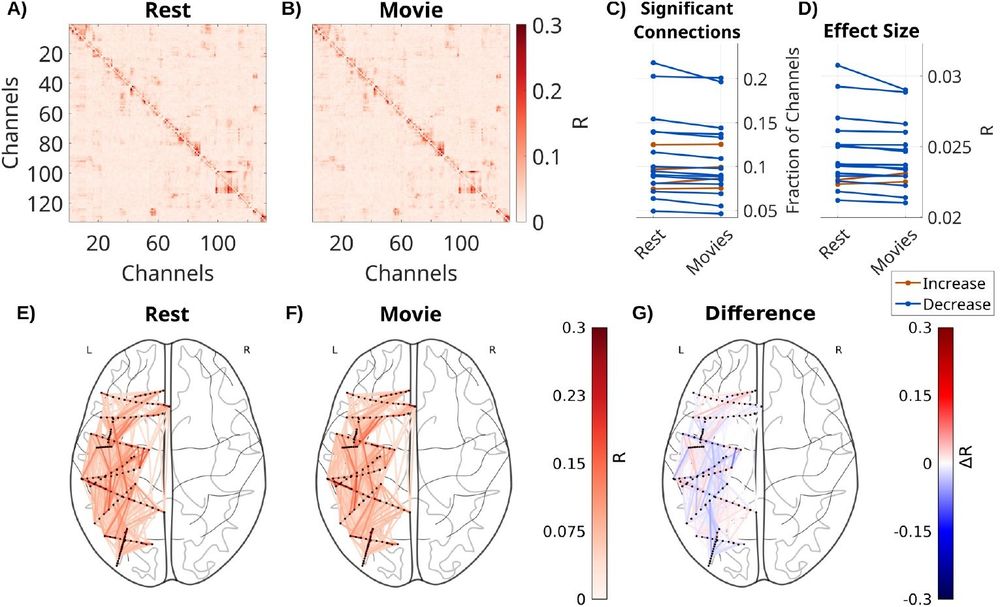
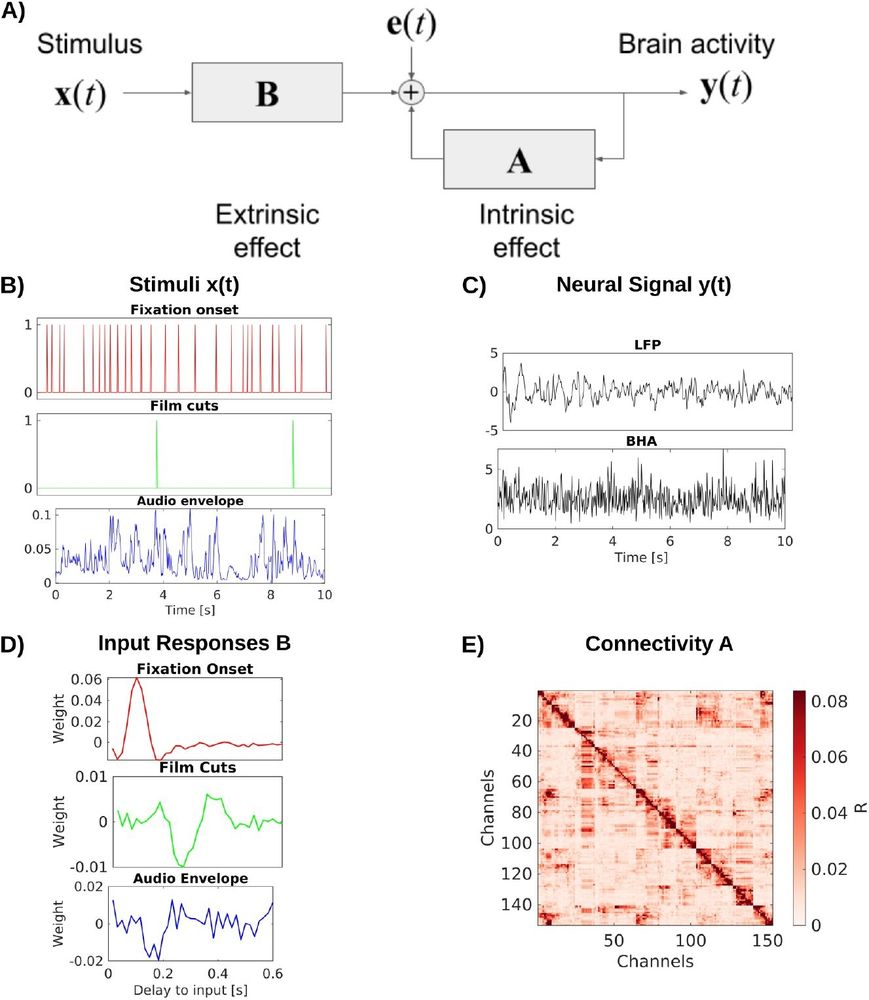
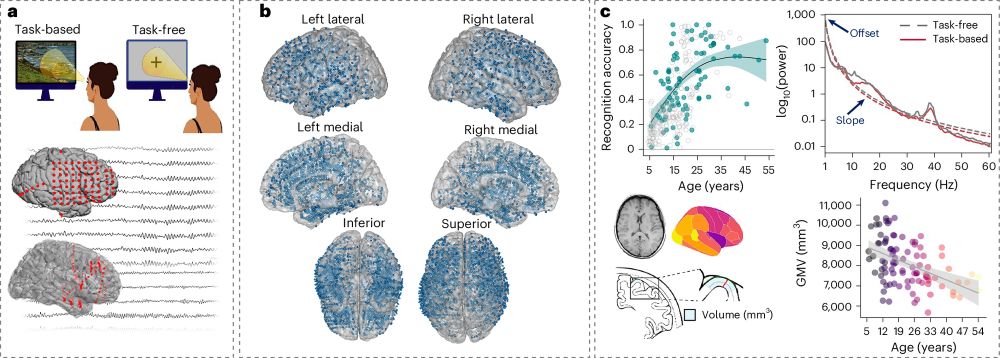
Evidence in support of the "Brain from the inside out":
Response to movies is dominated by intrinsic brain dynamics. The dynamic itself is barely alternatered by the task of watching movies.
Human intracranial recordings from 5000 electrodes, now out in eLife.
elifesciences.org/reviewed-pre...
09.06.2025 22:53 — 👍 70 🔁 24 💬 2 📌 1
PhD position in biological foundations of neural control
PhD position in biological foundations of neural control
PhD position alert!!!
Together with @predictivebrain.bsky.social and Sonja Kotz we are looking for a PhD candidate to join a great project on the biological foundations of perceptual decisions vacancies.maastrichtuniversity.nl/job/Maastric...
Happy to answer any question you may have!
03.06.2025 04:54 — 👍 16 🔁 13 💬 1 📌 0
PhD position in biological foundations of neural control
PhD position in biological foundations of neural control
🚨PhD position alert!🚨
Joint PhD position with @fedemar.bsky.social @predictivebrain.bsky.social and Sonja Kotz, to investigate the neurobiological underpinnings of perceptual decisions
vacancies.maastrichtuniversity.nl/job/Maastric...
Please share and if you have questions, send me a message!
02.06.2025 07:27 — 👍 40 🔁 35 💬 1 📌 2
Don't miss the chance to apply to work with Andres.
He is a great researcher in the field of predictive processing, working with #iEEG across humans and non-human primates
30.05.2025 14:42 — 👍 4 🔁 1 💬 0 📌 0
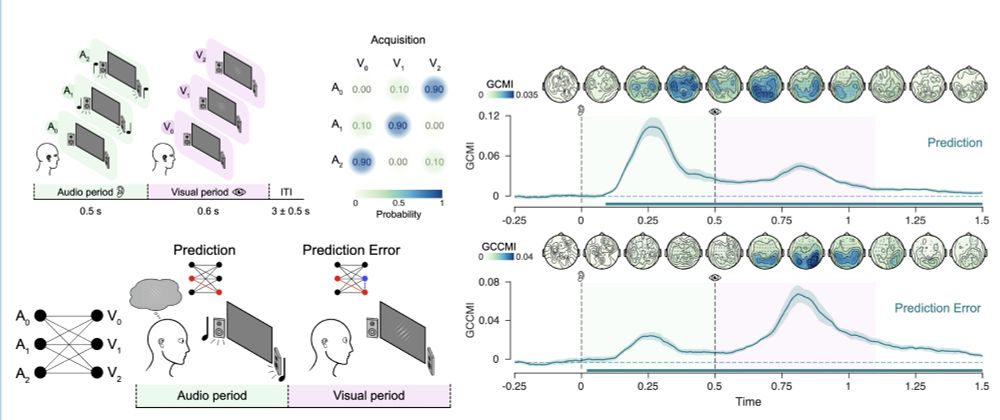
🚨 New preprint! 🚨
Can humans learn sensory regularities that are irrelevant to ongoing behavior? Yes, and we reveal the predictive coding mechanisms behind their acquisition
Our results support uncertainty minimization over environmental state transitions as a core objective of brain function
🧵👇
18.05.2025 12:16 — 👍 27 🔁 8 💬 2 📌 2
8/
Thanks to our fantastic team and collaborators across Oslo, Cambridge, Berkeley, and Buenos Aires!
📄 Read the full paper: doi.org/10.1038/s415...
05.05.2025 10:36 — 👍 1 🔁 0 💬 0 📌 0
7/
🔬 This work has implications for cognitive neuroscience, especially in understanding how structure is extracted from seemingly unstructured input, and bridges predictive coding and statistical learning.
05.05.2025 10:36 — 👍 2 🔁 0 💬 1 📌 0
6/
💥 Our findings reshape how we understand statistical learning: the brain doesn't just react—it constantly builds models of the world.
This study shows, for the first time, that the brain implicitly encodes transitional probabilities in random streams without attention or intention.
05.05.2025 10:36 — 👍 1 🔁 1 💬 1 📌 0

5/
🧠 Key finding: TP encoding wasn’t limited to auditory cortex.
Hippocampus and inferior frontal gyrus showed strongest sensitivity to TPs.
Auditory cortex responded more to deviance per se, but statistical learning was distributed– and hierarchical.
05.05.2025 10:36 — 👍 1 🔁 0 💬 1 📌 0

4/
Using an information-theoretical approach, we quantified how much information each brain response "encoded" relative to expected patterns.
Then, we tested how this encoded information tracked the likelihood of transitions– aka transitional probabilities (TPs).
05.05.2025 10:36 — 👍 1 🔁 0 💬 1 📌 0

3/
👂 Participants listened to streams of random tones while ignoring them (reading a book).
We recorded high-frequency brain activity (75–145 Hz) from over 1000 electrodes in 22 patients.
We then tracked, trial-by-trial, how surprising each deviant sound was based on TP estimates.
05.05.2025 10:36 — 👍 1 🔁 0 💬 1 📌 0
Doctoral researcher at the University Medical Centre Hamburg-Eppendorf (UKE). Interested in memory, audition, semantics, neural coding, spiking networks.
http://mvpy.tools
Timing Research Forum is an open academic society that promotes multidisciplinary research on timing & time perception. www.timingforum.org
@Penn Prof, deep learning, brains, #causality, rigor, http://neuromatch.io, Transdisciplinary optimist, Dad, Loves outdoors, 🦖 , c4r.io
Postdoc working on human cognition about abstract concepts at the SWC, London. Cog/comp-(neuro)scientist wannabe; adequate climber.
Computational neuroscientist || Postdoc with Tim Behrens || Sainsbury Wellcome Centre @ UCL
The Sainsbury Wellcome Centre aims to discover the fundamental principles of how the brain drives behaviour. Based at UCL, funded by Gatsby and Wellcome. https://www.sainsburywellcome.org/web/
Human Intracranial Cognitive Neuroscience & Neurology at Yale University. Wu Tsai Investigator. www.helfrich-lab.com Views are by own.
Cognitive neuroscientist @mrccbu.bsky.social
JRF at Wolfson College, University of Cambridge
❤️ Vancouver Island, music, running
Post-doctoral researcher at Rhythm and Brains Lab, University of Louvain (UCLouvain), Belgium
Interested in cognitive neuroscience, rhythm perception, multisensory perception
MSCA postdoc @ Predictive Brain Lab - Donders Insitute • language acquisition • neurobiology of language • open science • she/her • www.juditfazekas.com
Scottish neuroscientist (Assistant Professor @ University of Pittsburgh). Likes brains, books, maths, and music. Avid endurance runner and cyclist.
Neuroscience laboratory at the University of Iowa Carver College of Medicine Department of Psychiatry / Iowa Neuroscience Institute | Director: @markbowrenjr.bsky.social | Lesion-deficit mapping, neuromodulation, and brain networks
🧠 PhD in cognitive neuroscience | predictive brain | EEG | prefrontal cortex | brain lesions | University of Oslo
ABIM is a neuroscience meeting which takes place every year in the small, picturesque village of Champéry, Switzerland, with scenic views on the Swiss Alps.
🗣👂🏻🧠 PhD candidate at Institut Pasteur - Hearing Institute || NeuroSpeech team || language&neural oscillations. lespl.github.io
PGY4 @uabneurores, PhD'22 @NorthwellHealth, postdoc'19 @StanfordMed, MD'18 Cerrahpaşa, @lindaunobel'18, neurology-neuroscience, epilepsy, iEEG
Neuroscientist. Cognitive psychologist in memory, healthy ageing & dementia. Consultant. FENS-Kavli scholar https://fenskavlinetwork.org/
https://dorothytse.com/
https://ageingbetter.wixsite.com/ageing-better-with-a