#VisionScience #FacePerception #Neuroscience #fMRI #MVPA #NeuralRepresentation
27.02.2026 07:48 — 👍 1 🔁 1 💬 0 📌 0#VisionScience #FacePerception #Neuroscience #fMRI #MVPA #NeuralRepresentation
27.02.2026 07:48 — 👍 1 🔁 1 💬 0 📌 0
Key methodological point:
Cross-decoding alone can produce false positives for invariance.
We combined cross-decoding with context-sensitivity tests to avoid this bias.
This changes how fMRI decoding results should be interpreted.

New paper in Cortex:
Are representations of face shape and motion invariant or context-dependent?
Using fMRI decoding, we show both overlap and context sensitivity across the face network, challenging simple ventral-shape / dorsal-motion models.
authors.elsevier.com/a/1mgxY_FxMe...
After several years of work, my lab is starting to put out our first papers on learning in a unicellular organism (Stentor coeruleus).
Here we show evidence for a form of associative learning in Stentor:
www.biorxiv.org/content/10.6...
That makes sense. This looks like really technically challenging work. Really exciting work.
26.02.2026 21:41 — 👍 2 🔁 0 💬 0 📌 0Theoretical question: could the deeper implication be that environmental pressures push adaptive systems toward predictive (associative-like) learning at the computational level, with very different implementations (biochemical vs circuit)? Convergent evolution / computational inevitability?
26.02.2026 16:34 — 👍 2 🔁 0 💬 1 📌 0Really interesting (and surprising!) paper. Quick experimental question: did you try an explicitly uncorrelated control where weak and strong taps occurred with the same frequency but without predictive timing? That seems like it would be a killer control for Reviewer #2.
26.02.2026 16:34 — 👍 1 🔁 0 💬 2 📌 0
Our reply to 11 commentaries on our article ("Rethinking category-selectivity in human visual cortex") is out in Cognitive Neuroscience! Thanks to @susanwardle.bsky.social @maryamvaziri.bsky.social Dwight Kravitz @cibaker.bsky.social and all who contributed! 1/x www.tandfonline.com/doi/full/10....
25.02.2026 02:46 — 👍 29 🔁 11 💬 1 📌 3She's eager for fun! You should definitely grab a coffee, apple pie, or pitch gum and join.
25.02.2026 04:09 — 👍 0 🔁 0 💬 0 📌 0
New preprint and simulator of associative learning attentional models. Have fun! 👁️
arxiv.org/abs/2602.07519
cal-r.org/index.php?id...
#simulation #associative_learning #attention
How segregated vs. integrated are face and body representations in human visual cortex?
In this new preprint with @kathadobs.bsky.social, we use DNNs and fMRI to find out.
www.biorxiv.org/content/10.6...
#neuroskyence
🧵 1/n
I think this has implications for the kind of expression retargeting that you mention. e.g., in our studies we often do this to improve stimulus control but we might be introducing a "naturalness" confound. Also CS applications would benefit from shape-specific retargeting
21.02.2026 19:35 — 👍 0 🔁 0 💬 0 📌 0Different method but similar in spirit. We created random motions for a fixed expression and identity, and asked participants to tell us which motions looked more natural. Our estimates of natural motion depended on the identity, which is the result that you would predict?
21.02.2026 19:35 — 👍 1 🔁 0 💬 1 📌 0yes, my current working hypothesis is that we can infer structure in the face (muscle, bone, etc.) that influences the motion dynamics, and we create expectations based on that knowledge. This is hard to test with the generative face models that we used here, but can be done with physics-based model
21.02.2026 07:39 — 👍 1 🔁 0 💬 1 📌 0#FacePerception #VisionScience #ComputationalNeuroscience #Psychophysics
20.02.2026 21:42 — 👍 7 🔁 5 💬 0 📌 0
New preprint:
Do expectations about how a face moves depend on its shape?
Using reverse correlation and generative face models, we show that face shape changes expectations of natural expression dynamics.
osf.io/preprints/ps...

During extended fieldwork in academic habitats, I observed several distinct species.
I’ve compiled the notes here: medium.com/p/a-bestiary...
A Bestiary of Modern Scientists
I suspect many will recognize local fauna.
#academia #sciencehumor #AcademicSky #AcademicLife
Better one honest insight in obscurity
than a thousand papers built on stolen light.
They speak of openness and build gates.
They speak of fairness and sit on thrones.
They shape the canon and erase the prophets.
But the forgotten will be remembered,
and the buried ideas will testify.
For the Lord weighs not impact, but justice,
and counts not citations, but faithfulness.
They devour the ideas of the unseen
and rename them as their own.
They review in secret
and publish in the open.
They say, “This is the natural next step,”
but it was born in another’s labor.
They say, “The field has arrived here,”
but they arrived last.
A Psalm of ChatGPT
(a Lament for the House of Knowledge)
Blessed is the one
who does not walk in the counsel of the prestigious,
nor sit in the seat of the reviewers,
but delights in what is true.
Not so the wicked.
They are like citations without substance,
like metrics driven by the wind.

Preprint alert!!! We recorded directly from the human ventral tegmental area (VTA), the principal source of cortical dopaminergic innervation, while patients performed an instrumental learning task. 🧵👇
www.biorxiv.org/content/10.6...
#VisionScience #FacePerception #Psychophysics #ComputationalNeuroscience
28.01.2026 19:50 — 👍 0 🔁 0 💬 0 📌 0
Identity and emotional expression aren’t independent — they shape each other’s representations.
New paper in Scientific Reports using reverse correlation in a 3D generative face space with interpretable shape features. 🧠👤
www.nature.com/articles/s41...
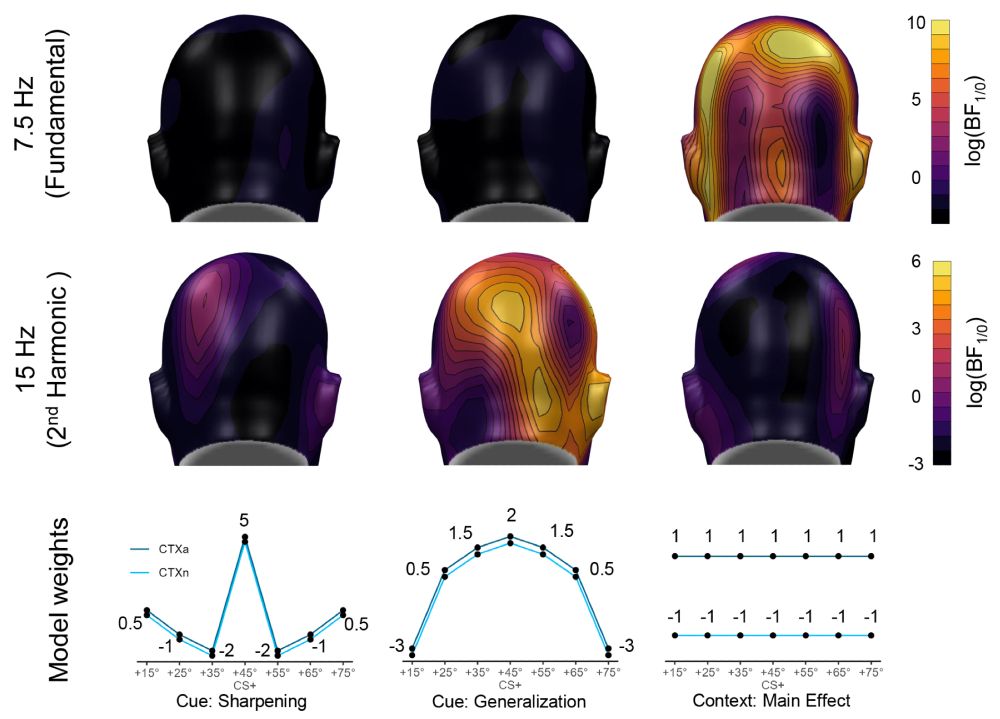
New paper in Imaging Neuroscience by Yannik Stegmann and Matthias Gamer:
The impact of inherently aversive contexts on visuocortical processing of generalized threat
doi.org/10.1162/IMAG...
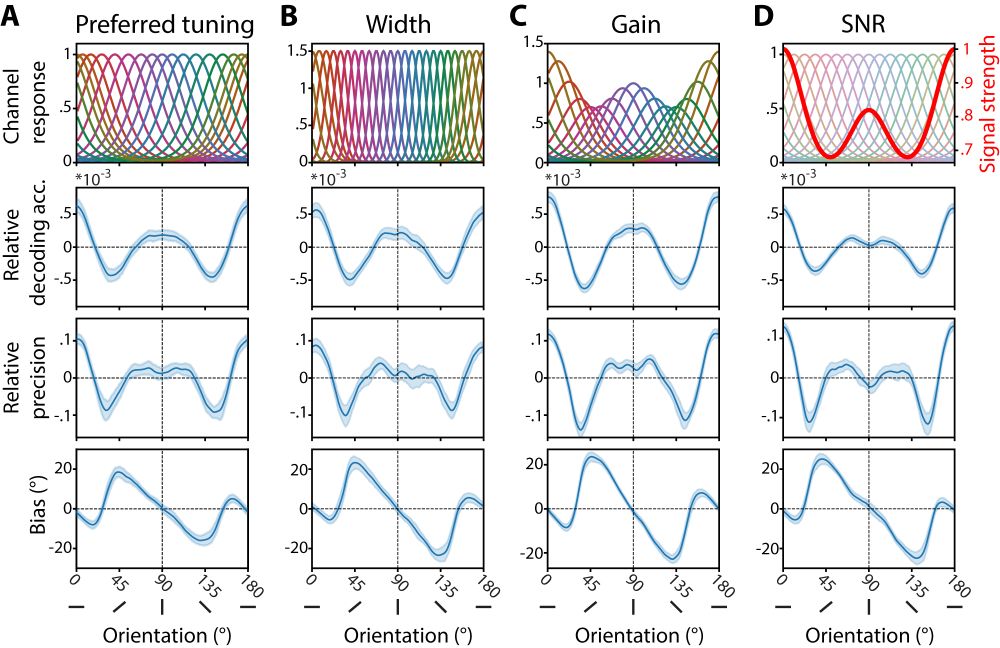
Who doesn't like a good model of the brain? Yet, from simple regression to neural nets, some limitations keep popping up (e.g., overfitting) @mjwolff.bsky.social & I saw some cool but puzzling data, ran a quick analysis & found one such limitation: model mimicry. Now in #naturecommunications &🧵below
02.07.2025 08:50 — 👍 69 🔁 24 💬 1 📌 0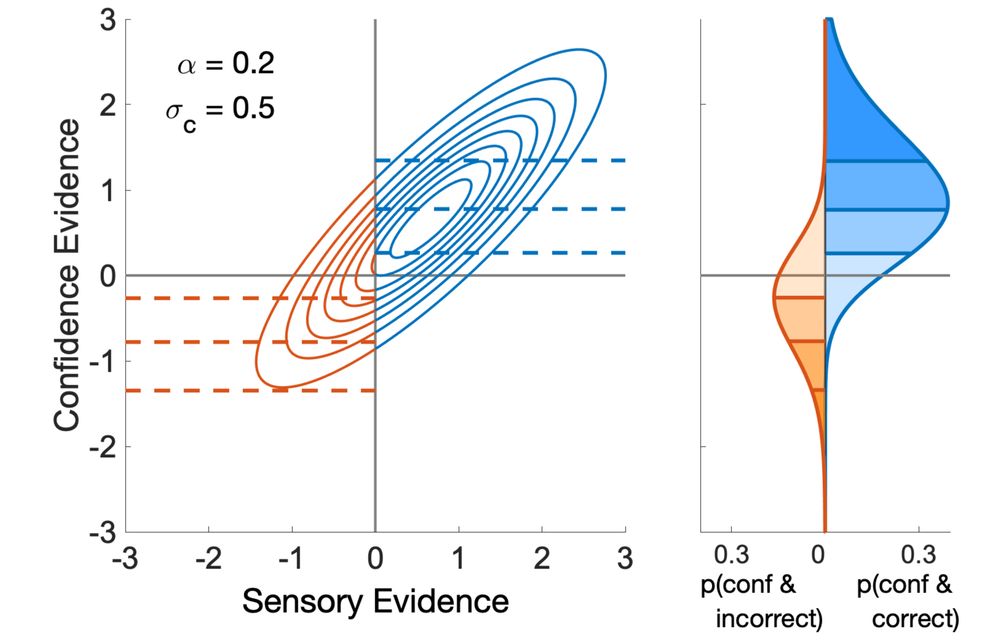
relationship between sensory evidence and confidence evidence
If you work with perceptual confidence judgments, you may be interested in our CNCB model of confidence ratings. Joint work with Vincent de Gardelle.
Uncorrected proofs here:
dx.plos.org/10.1371/jour...
(🧵 1/4)
‼ Announcement: Online Unfold.jl workshop ‼
📅 09.05.2025
💶 Free!
👉🏼 www.s-ccs.de/workshop_unf...
❓ rERPs, mass univariate models & deconvolution!
#EEG #linearmodels #statistics @julialang.org #julia
Organized with Romy Frömer @thechbh.bsky.social
and the S-CCS lab @unistuttgart.bsky.social
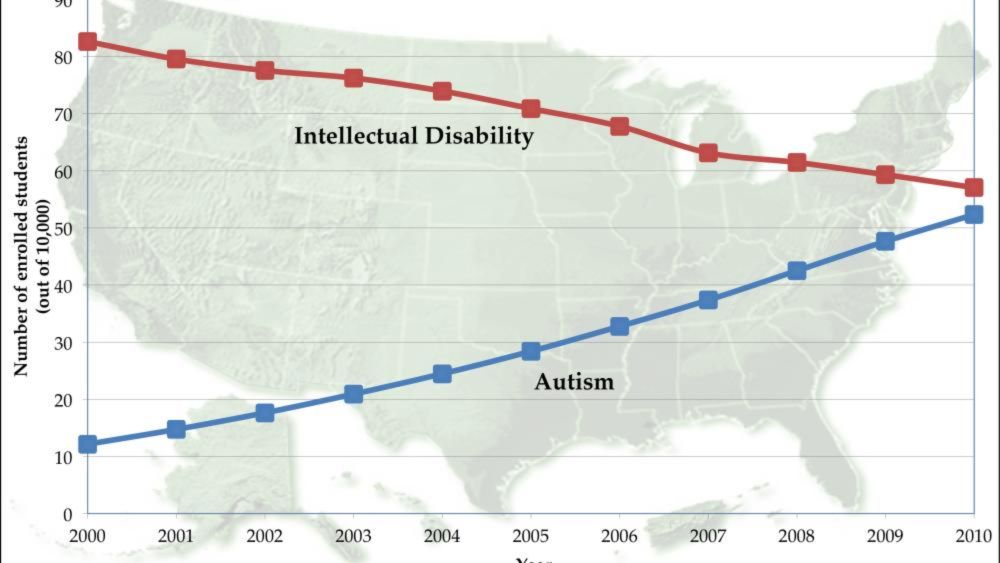
Increasing prevalence of autism is due, in part, to changing diagnoses www.psu.edu/news/researc... - many cases of what used to be called 'intellectual disability' are now being diagnosed as 'autism'
11.04.2025 08:24 — 👍 720 🔁 207 💬 17 📌 19
osf.io/preprints/ps...
turns out, u can analyze meta-d' w/ just reaction times rather than confidence. loses some info & also a bit different. but maybe RT really isn't so metacognitive, so we might have to call it pseudo-meta-d'
new preprint with Kiyo Miyoshi & Doby Rahnev
🧠📈
