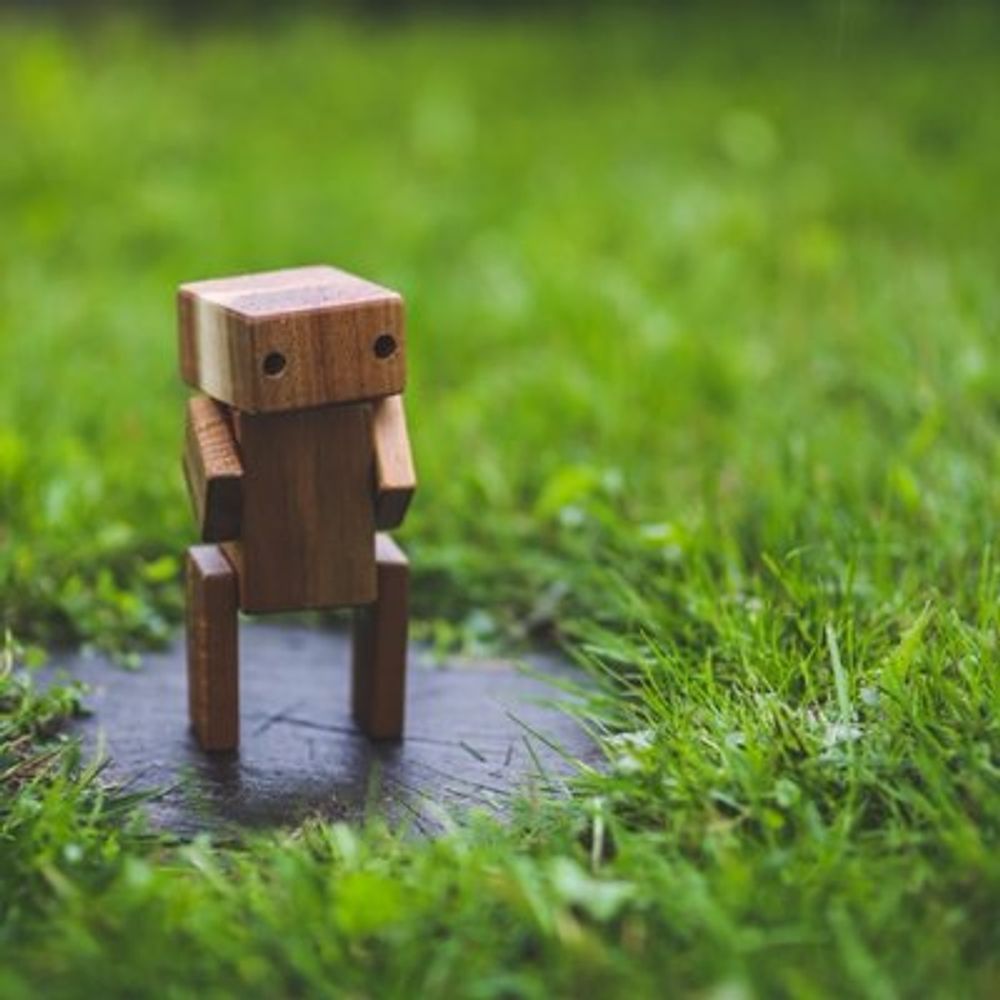
Dear hackers, meet Marvin!! 🐧 Marvin is a South African Penguin who loves eating squid and developing R packages for his friends. Marvin's also here to remind you to register for some #hackica26 fun 🔽
19.02.2026 08:51 — 👍 9 🔁 5 💬 0 📌 1
@patrickparschan.bsky.social
PhD researcher at LMU Munich | natural language processing | computational methods | ideal point estimation | early career representative at ICA computational methods division | co-organizer of @hackingcommsci 🔗https://patparsch.github.io
Dear hackers, meet Marvin!! 🐧 Marvin is a South African Penguin who loves eating squid and developing R packages for his friends. Marvin's also here to remind you to register for some #hackica26 fun 🔽
19.02.2026 08:51 — 👍 9 🔁 5 💬 0 📌 1
Good news! 🎉
The registration issue has been resolved — everything should now work smoothly.
🔗 Direct link: www.icahdq.org/event/Hackat...
🗓 Registration is open until April 5, 2026
Looking forward to seeing you at the ICA Hackathon 2026 @SU School for Data Science and Computational Thinking! 🚀💡
🚀 Save the Date!
If you're considering joining us, now is a great time to block the dates and start planning your #trip.
We can’t wait to see you at the SU School for Data Science and Computational Thinking in Stellenbosch on 3rd and 4th June 2026 for this year's #Hackathon! 🌍✨
📢 Call for Abstracts — Deadline: January 16.
COMPTEXT 2026 will again be a fantastic place to discover the latest computational methods, tools, datasets
&
to connect with scholars using AI across communication science, political science, history, sociology, IR, and more.
🚀 We’re hiring a Postdoc!
Our group is looking for a Postdoc to join the team working on computational comm research. If you’re excited about automated content analysis, large text & social-media data, open science, this might be for you.
💡 Sounds like you or someone you know? Please share/boost!
📍 Location: Munich
📅 Start: 1 Apr 2026
⏳ Apply by: 31 Jan 2026
Details:
German: job-portal.lmu.de/jobposting/6...
English: job-portal.lmu.de/jobposting/7...

Last week, we had the pleasure of hosting the computational communication science team from TU Ilmenau at our lab at LMU Munich. It was a really fun visit. Getting to know other CCS and CCR teams is always great. 🤓
12.12.2025 07:18 — 👍 14 🔁 2 💬 1 📌 0
🚨 Big reveal! New year, new logo, same event! 🚨
Join us for some fun at the 2026 ICA pre-conference hackathon in Stellenbosch, June 3-4. Stay tuned!

We’re excited to share that #hackica26 on June 3 & 4 will be hosted at the SU School for Data Science and Computational Thinking! Huge thanks for welcoming us 🫶🇿🇦
Learn more about them here: www.su.ac.za/en/
Follow us for more updates and announcements regarding the upcoming Hackathon.

A table showing profit margins of major publishers. A snippet of text related to this table is below. 1. The four-fold drain 1.1 Money Currently, academic publishing is dominated by profit-oriented, multinational companies for whom scientific knowledge is a commodity to be sold back to the academic community who created it. The dominant four are Elsevier, Springer Nature, Wiley and Taylor & Francis, which collectively generated over US$7.1 billion in revenue from journal publishing in 2024 alone, and over US$12 billion in profits between 2019 and 2024 (Table 1A). Their profit margins have always been over 30% in the last five years, and for the largest publisher (Elsevier) always over 37%. Against many comparators, across many sectors, scientific publishing is one of the most consistently profitable industries (Table S1). These financial arrangements make a substantial difference to science budgets. In 2024, 46% of Elsevier revenues and 53% of Taylor & Francis revenues were generated in North America, meaning that North American researchers were charged over US$2.27 billion by just two for-profit publishers. The Canadian research councils and the US National Science Foundation were allocated US$9.3 billion in that year.

A figure detailing the drain on researcher time. 1. The four-fold drain 1.2 Time The number of papers published each year is growing faster than the scientific workforce, with the number of papers per researcher almost doubling between 1996 and 2022 (Figure 1A). This reflects the fact that publishers’ commercial desire to publish (sell) more material has aligned well with the competitive prestige culture in which publications help secure jobs, grants, promotions, and awards. To the extent that this growth is driven by a pressure for profit, rather than scholarly imperatives, it distorts the way researchers spend their time. The publishing system depends on unpaid reviewer labour, estimated to be over 130 million unpaid hours annually in 2020 alone (9). Researchers have complained about the demands of peer-review for decades, but the scale of the problem is now worse, with editors reporting widespread difficulties recruiting reviewers. The growth in publications involves not only the authors’ time, but that of academic editors and reviewers who are dealing with so many review demands. Even more seriously, the imperative to produce ever more articles reshapes the nature of scientific inquiry. Evidence across multiple fields shows that more papers result in ‘ossification’, not new ideas (10). It may seem paradoxical that more papers can slow progress until one considers how it affects researchers’ time. While rewards remain tied to volume, prestige, and impact of publications, researchers will be nudged away from riskier, local, interdisciplinary, and long-term work. The result is a treadmill of constant activity with limited progress whereas core scholarly practices – such as reading, reflecting and engaging with others’ contributions – is de-prioritized. What looks like productivity often masks intellectual exhaustion built on a demoralizing, narrowing scientific vision.

A table of profit margins across industries. The section of text related to this table is below: 1. The four-fold drain 1.1 Money Currently, academic publishing is dominated by profit-oriented, multinational companies for whom scientific knowledge is a commodity to be sold back to the academic community who created it. The dominant four are Elsevier, Springer Nature, Wiley and Taylor & Francis, which collectively generated over US$7.1 billion in revenue from journal publishing in 2024 alone, and over US$12 billion in profits between 2019 and 2024 (Table 1A). Their profit margins have always been over 30% in the last five years, and for the largest publisher (Elsevier) always over 37%. Against many comparators, across many sectors, scientific publishing is one of the most consistently profitable industries (Table S1). These financial arrangements make a substantial difference to science budgets. In 2024, 46% of Elsevier revenues and 53% of Taylor & Francis revenues were generated in North America, meaning that North American researchers were charged over US$2.27 billion by just two for-profit publishers. The Canadian research councils and the US National Science Foundation were allocated US$9.3 billion in that year.

The costs of inaction are plain: wasted public funds, lost researcher time, compromised scientific integrity and eroded public trust. Today, the system rewards commercial publishers first, and science second. Without bold action from the funders we risk continuing to pour resources into a system that prioritizes profit over the advancement of scientific knowledge.
We wrote the Strain on scientific publishing to highlight the problems of time & trust. With a fantastic group of co-authors, we present The Drain of Scientific Publishing:
a 🧵 1/n
Drain: arxiv.org/abs/2511.04820
Strain: direct.mit.edu/qss/article/...
Oligopoly: direct.mit.edu/qss/article/...
What is the most profitable industry in the world, this side of the law? Not oil, not IT, not pharma.
It's *scientific publishing*.
We call this the Drain of Scientific Publishing.
Paper: arxiv.org/abs/2511.04820
Background: doi.org/10.1162/qss_...
Thread @markhanson.fediscience.org.ap.brid.gy 👇


This week, we have @lorenzspreen.bsky.social visiting our lab. He presented his work on disinformation classification and toxicity in group discussions on Reddit. He also has a new CSS group, check it out: css-synosys.github.io
30.10.2025 13:53 — 👍 13 🔁 7 💬 0 📌 1📩 Contact our SEC Rep Aditi Dutta at ad882@exeter.ac.uk
to share leads, volunteer, or ask questions.
This hackathon is a fantastic way to meet collaborators, learn by building together, and make #ICA26 even better.
Very happy to see that @overbye.bsky.social’s fantastic work on detecting bias in human-in-the-loop algorithms was awarded a top paper in @icacsab.bsky.social this year. Incredibly interesting, rigorous, and timely research! #ica25
15.06.2025 19:39 — 👍 30 🔁 7 💬 1 📌 0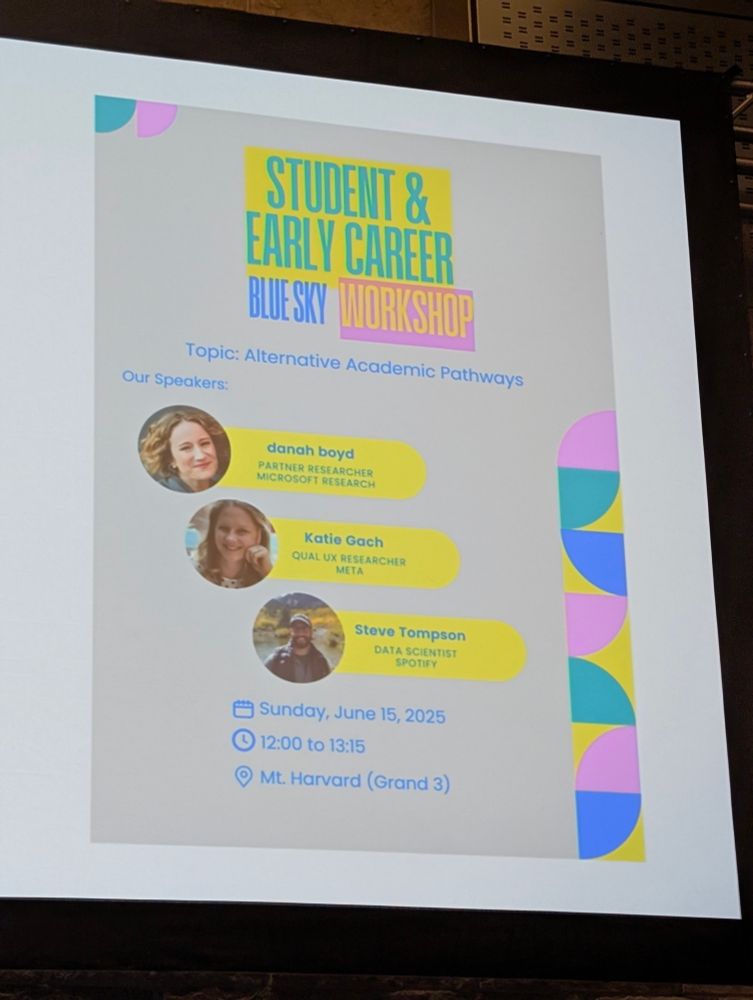
PhD or Postdoc looking at the grim job market?
Join Sunday 12:00 for an alternative career path workshop with the amazing danah boyd @zephoria.bsky.social, Katie Gach and Steven Tompson.
Thank you to @icasecac.bsky.social @ceciliazhou.bsky.social @danijaradent.bsky.social for this event! #ica25
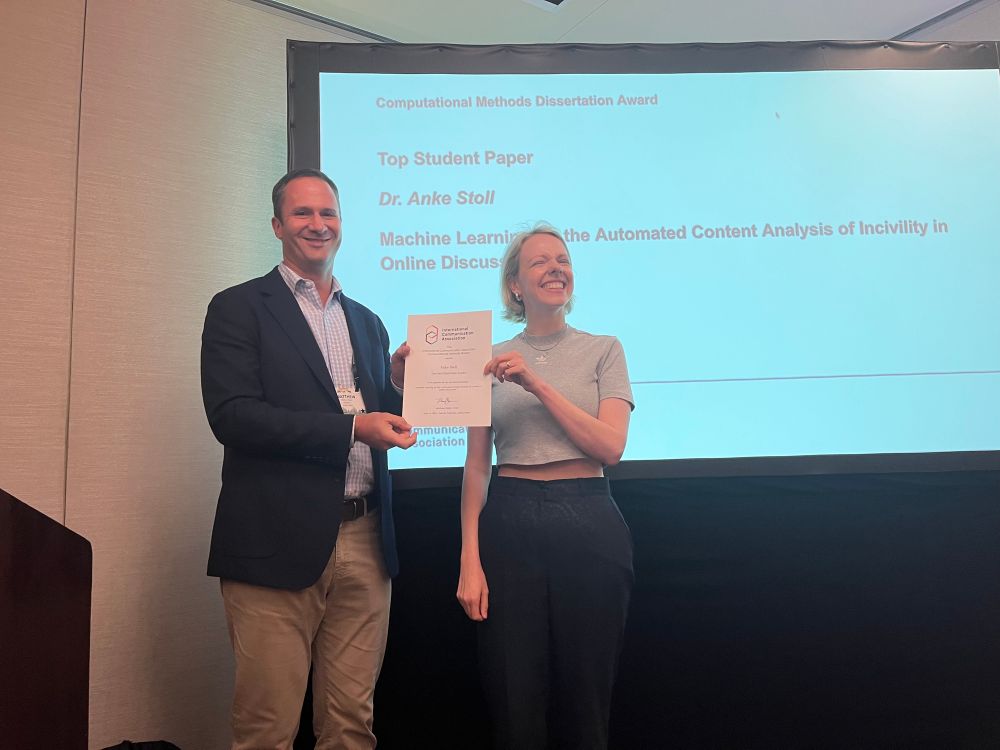
And last, but certainly not least, huge congratulations to Dr. Anke Stoll who received the Best Dissertation Award for her impressive dissertation “Machine learning for automated content analysis of incivility in online discussion” #ICA25
Congratulations!!! 🎉🎉🎉
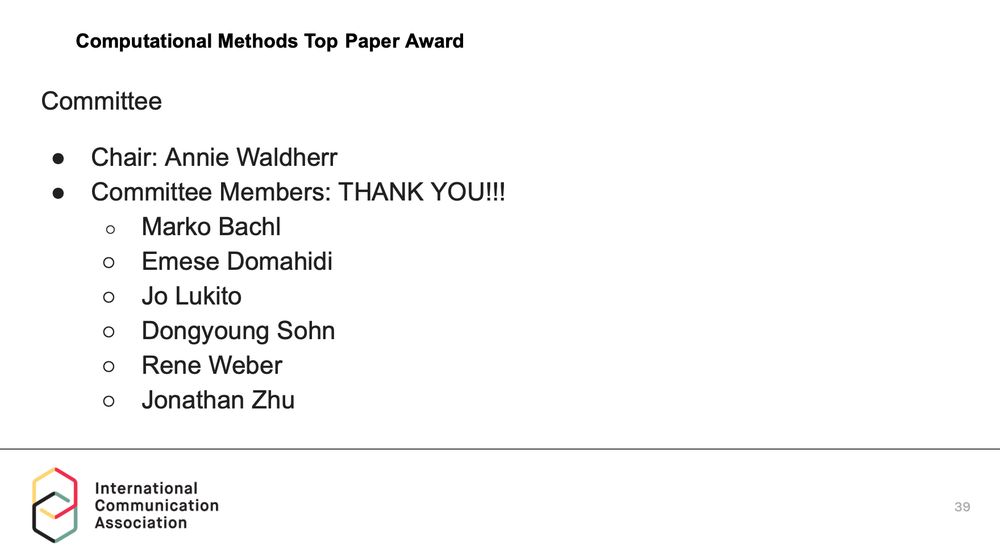
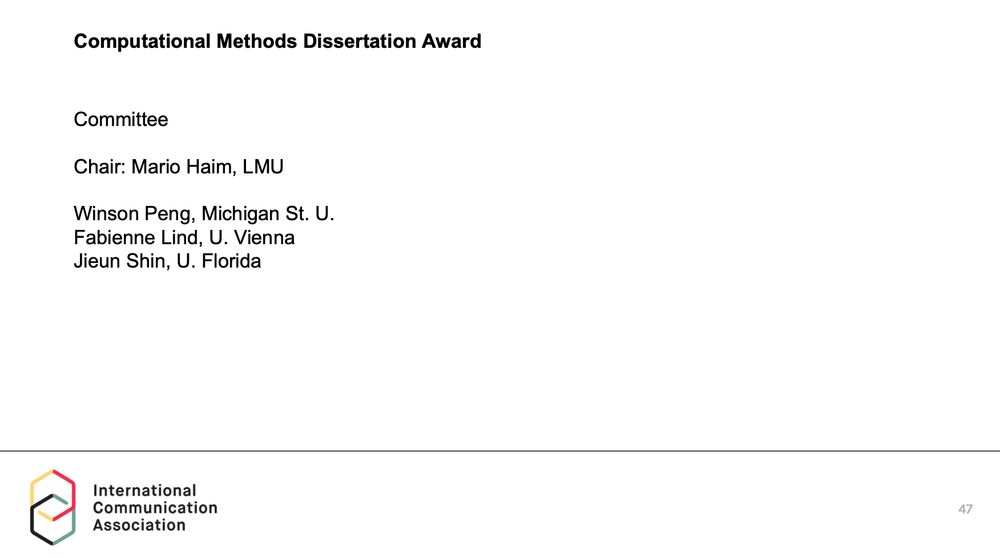
At yesterday's business meeting of the Computational Methods Division, we recognized outstanding scholarship in the discipline at #ICA25
Please join us in thanking the awards committees and celebrating the winners: 🧵
@icacm.bsky.social needs bigger rooms, @icahdq.bsky.social #ica25
13.06.2025 21:24 — 👍 8 🔁 1 💬 0 📌 0Photo credits: @jbgruber.bsky.social 🙌
13.06.2025 18:09 — 👍 2 🔁 1 💬 0 📌 0This year's #ica25 hackathon was a blast! A huge thank you to @hackingcommsci.bsky.social for making it a reality!
With 13 other great participants, we explored +2 million of Telegram messages around the 2024 US election. I can really recommend checking out the data!
dl.acm.org/doi/abs/10.1...
The best start into a conference 😎
13.06.2025 01:50 — 👍 3 🔁 1 💬 0 📌 0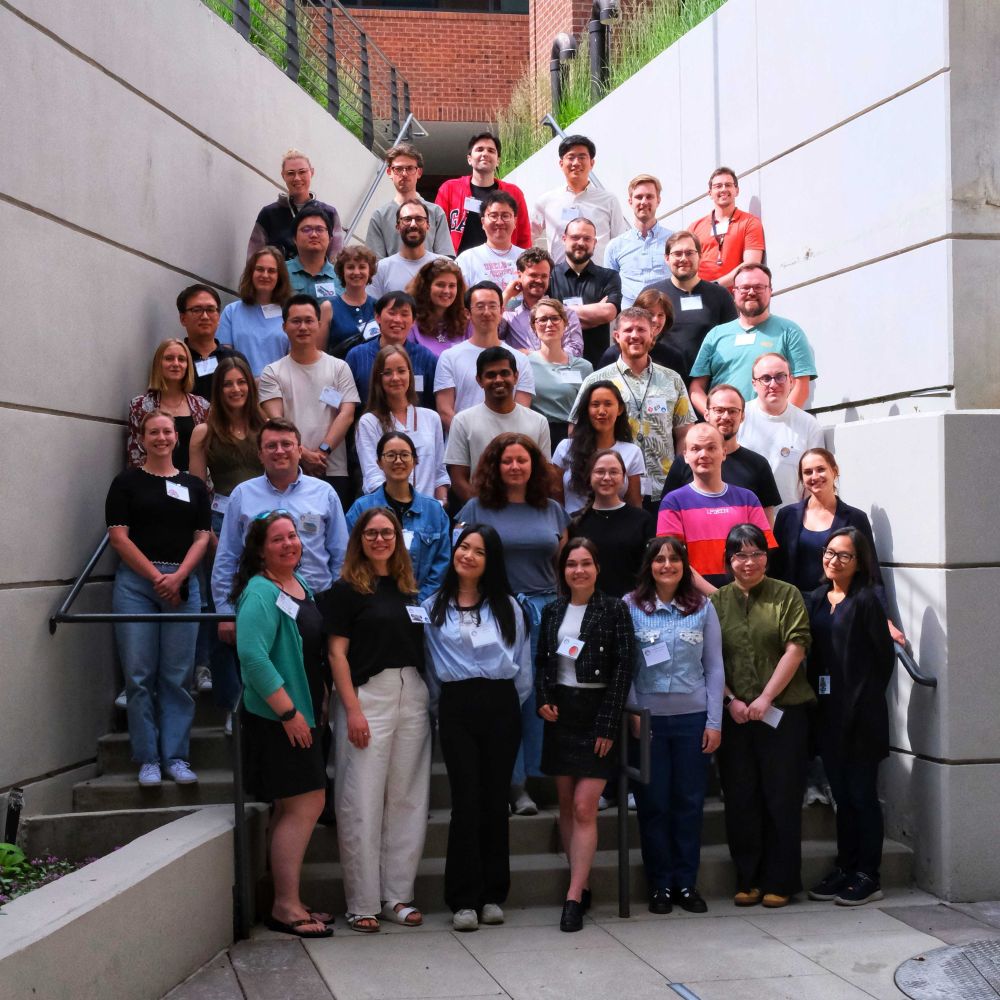
From text-as-data to sleep data collection, this year‘s #hackica25 in Boulder, CO, was a blast and we‘re proud to say that we‘ve (again) successfully hacked communication science. Thanks to all participants and see y‘all at #ica25 ✨
12.06.2025 23:14 — 👍 41 🔁 18 💬 1 📌 3A great photo of @rachaelkee.bsky.social inspiring us with her brilliant ideas for a sleep and media data donation app.
KEEp your eye out for her at #ica25
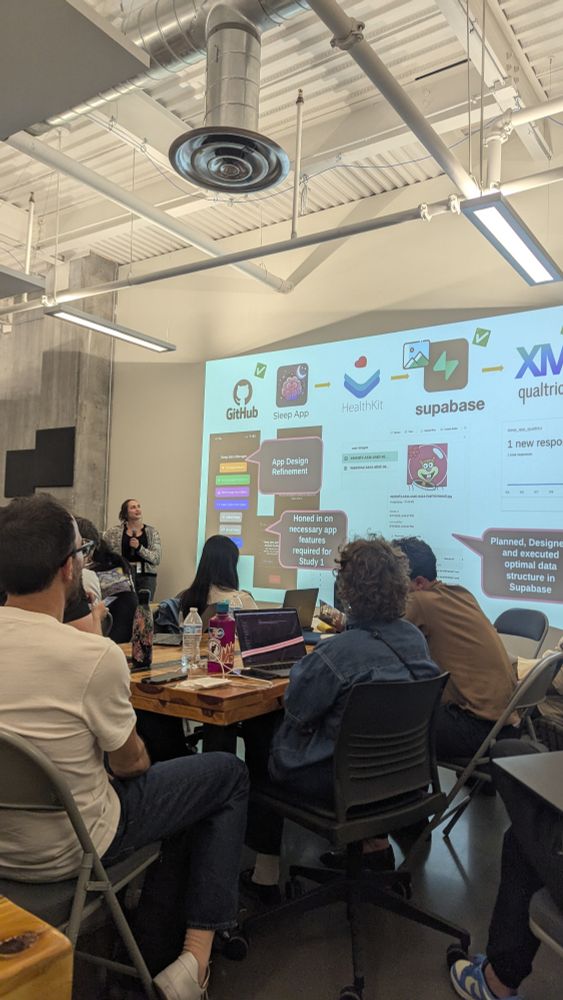
@rachaelkee.bsky.social blowing us all away with her project at @hackingcommsci.bsky.social. Super impressive project with the goal of collecting high-throughput sleep and media data ✨😴📺
#ICA25
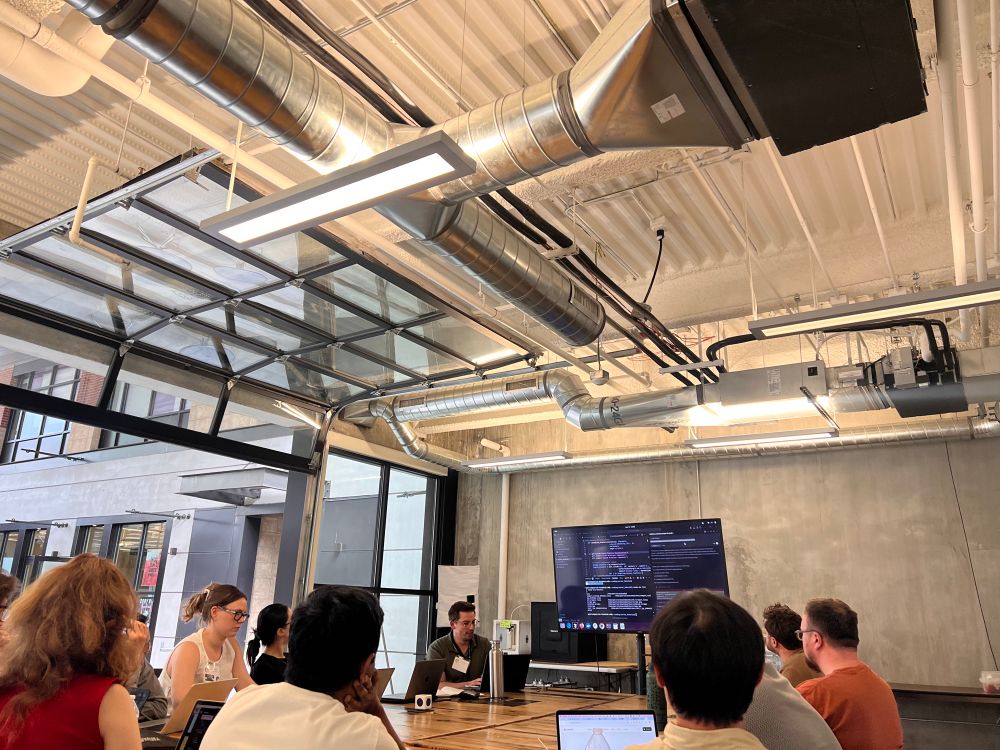
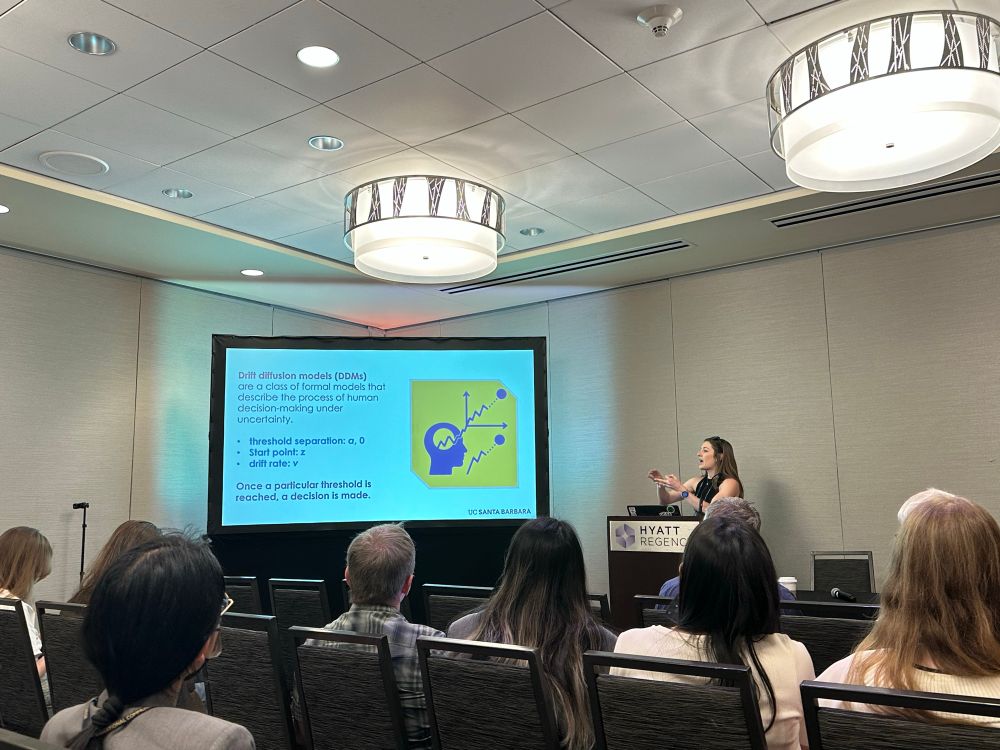
Already using AI tools in coding or thinking about it? Here‘s @patrickparschan.bsky.social giving us an introduction to Cursor 👀
12.06.2025 22:28 — 👍 6 🔁 1 💬 0 📌 0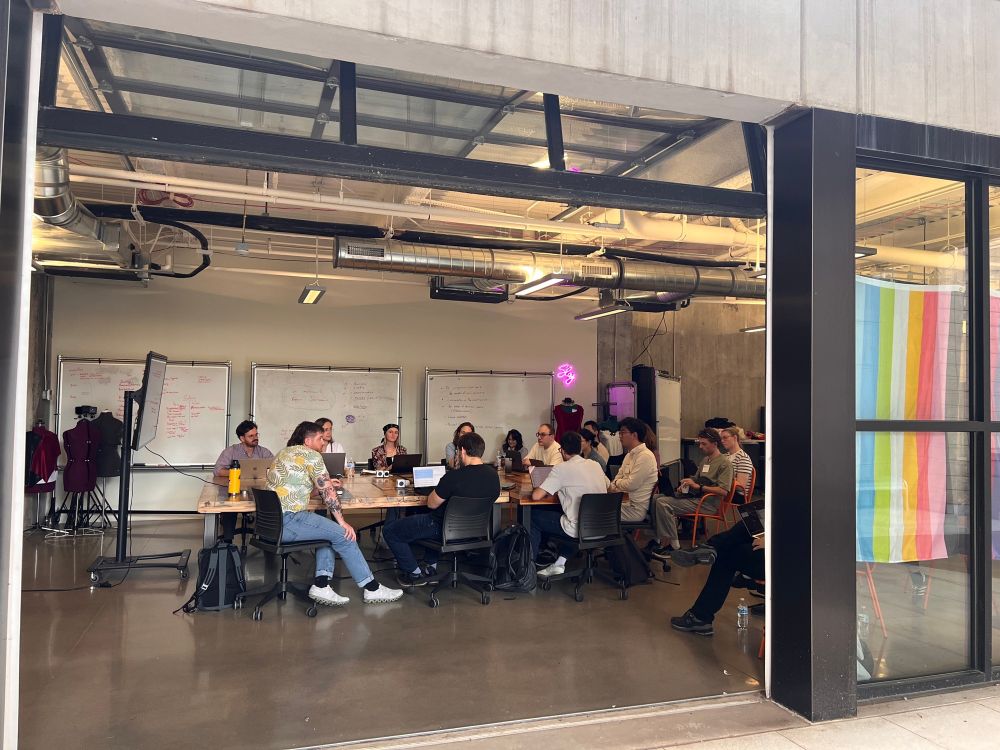
Jacob leading a GitHub breakout session
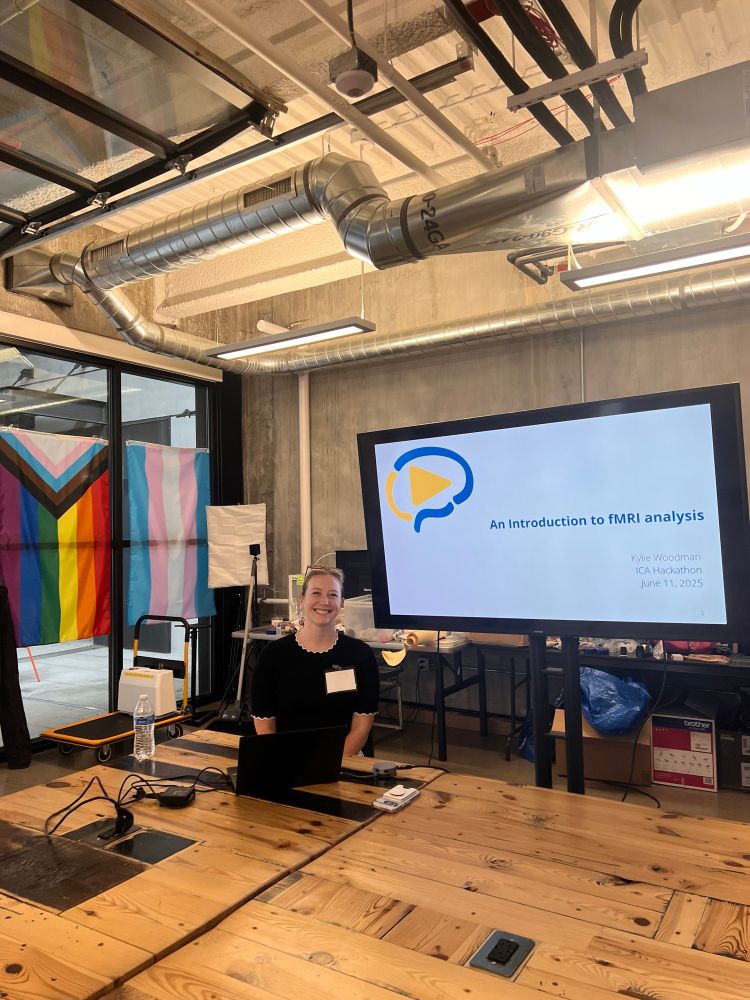
Kylie leading an fMRI analysis breakout session
We’re thrilled to see MNL represented at @hackingcommsci.bsky.social!
Huge thanks to @jacobtfisher.online and @kyliewoodman.bsky.social for organizing another fantastic hackathon and sharing valuable comm sci insights such as using GitHub and running fMRI analyses.
#hackica25 #ica25
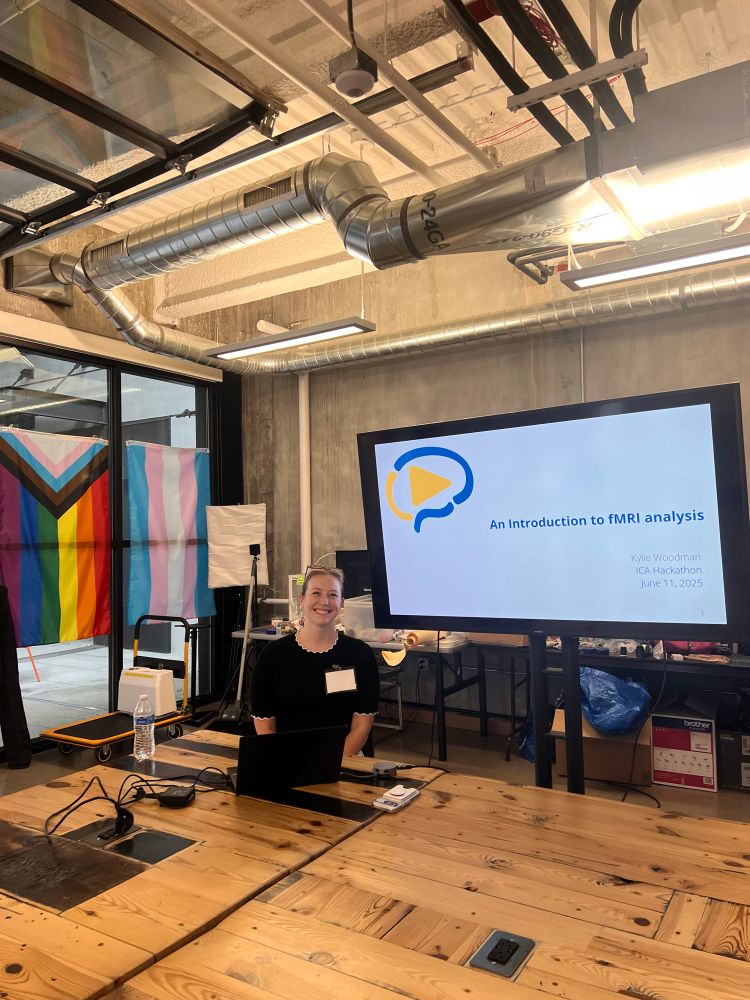
Looking forward to @kyliewoodman.bsky.social explaining how brain imaging fits into comms research at #hackica25 🧠🧠
11.06.2025 21:31 — 👍 7 🔁 2 💬 0 📌 1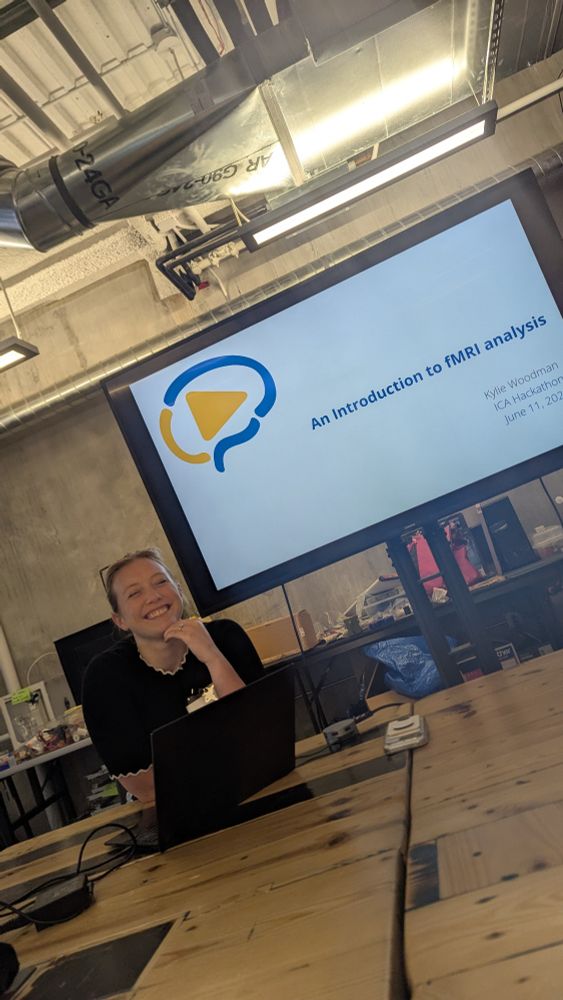
Great presentation by @kyliewoodman.bsky.social on fMRI analysis at @hackingcommsci.bsky.social. I am always blown away by how clearly Kylie is able explain complex topics
#ICA25
Hello world!
11.06.2025 13:00 — 👍 25 🔁 6 💬 0 📌 5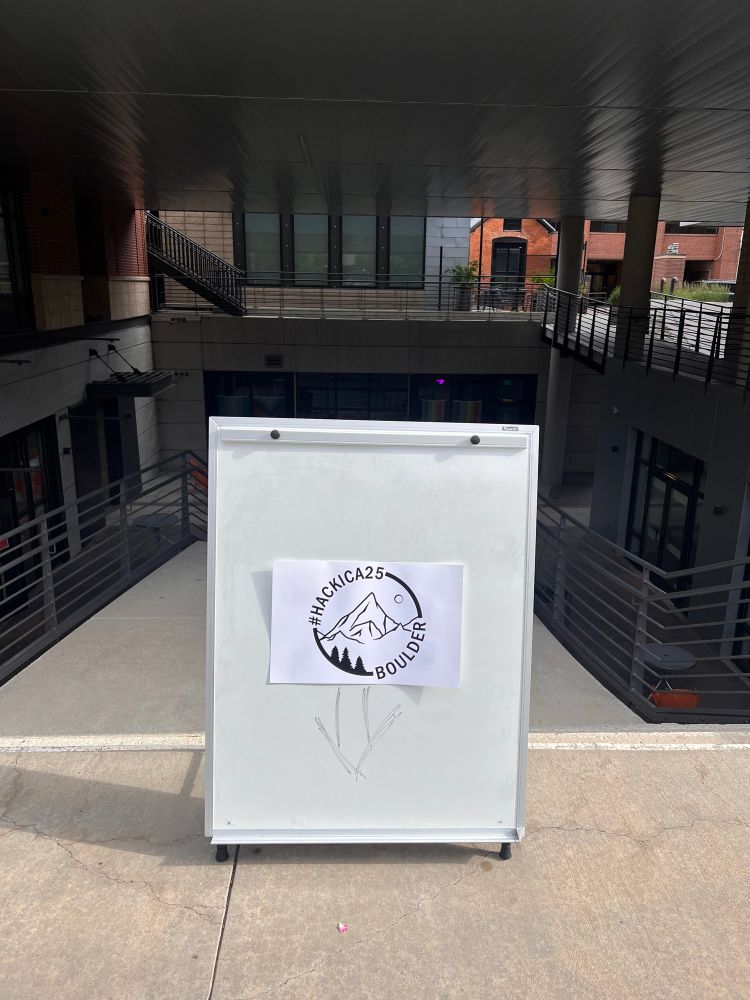
Whoop whoop we’re ready to get started!
11.06.2025 14:39 — 👍 4 🔁 3 💬 0 📌 0