Mainly songs from Different Class, three from His n Hers, one from This is Hardcore (from memory)
27.02.2026 12:17 — 👍 1 🔁 0 💬 0 📌 0

After 27.5 years, I have seen Pulp live again. Such a great show.
27.02.2026 12:11 — 👍 17 🔁 0 💬 2 📌 1
📖 Call for Papers 📖: Our project is hosting a workshop on 8-9 July at the University of Lincoln, UK for scholars working at the colonialism-migration governance intersection.
Read the call here: tinyurl.com/bdhhejam
Submit a paper here: tinyurl.com/43yh85c4
Deadline: 26 March
26.02.2026 11:18 — 👍 2 🔁 3 💬 0 📌 0
Sorry, realised that PNG plantation manager was 57, not 60!
26.02.2026 10:37 — 👍 0 🔁 0 💬 1 📌 0
One thing that we found in our research is that there was one individual who sought to join the National Front of Australia (and donated a sum of money) who was a 60 yo plantation manager in Papua New Guinea. ASIO noted that he had previously been a donor to the Australian Nazi Party.
25.02.2026 10:55 — 👍 21 🔁 11 💬 1 📌 0
Other records suggest that ASIO had access to the PO Box for the NFA in Melbourne, as other mail was also intercepted and copied.
26.02.2026 02:31 — 👍 1 🔁 0 💬 1 📌 0
Looking for Australian historical studies which use submissions to inquiries as their source base
24.02.2026 23:28 — 👍 0 🔁 2 💬 3 📌 0
As we note in the article, plantation managers in PNG were wealthy and resistant to PNG’s independence from Australia in 1975, giving this individual the motive and means to join and donate to Australian far right groups.
25.02.2026 10:58 — 👍 5 🔁 1 💬 2 📌 0
One thing that we found in our research is that there was one individual who sought to join the National Front of Australia (and donated a sum of money) who was a 60 yo plantation manager in Papua New Guinea. ASIO noted that he had previously been a donor to the Australian Nazi Party.
25.02.2026 10:55 — 👍 21 🔁 11 💬 1 📌 0
Very happy with how this book review went. My first publication
25.02.2026 10:33 — 👍 11 🔁 3 💬 0 📌 1
Thanks Michelle, will have a read
25.02.2026 02:00 — 👍 1 🔁 0 💬 0 📌 0
Yes, I think so!
25.02.2026 01:59 — 👍 1 🔁 0 💬 0 📌 0
They made movies like ‘High Fidelity’, ‘Empire Records’ and ‘Clerks’ about video and record stores. Not as many about streaming.
25.02.2026 00:23 — 👍 5 🔁 1 💬 2 📌 0

I have found this, but looking for others.
press-files.anu.edu.au/downloads/pr...
24.02.2026 23:31 — 👍 0 🔁 0 💬 1 📌 0
Looking for Australian historical studies which use submissions to inquiries as their source base
24.02.2026 23:28 — 👍 0 🔁 2 💬 3 📌 0

The real question is:
Which season of original Law and Order had the best cast?
For me, it is probably Season 6 with Rey Curtis, Jack McCoy, Lennie Briscoe and Claire Kincaid.
23.02.2026 06:39 — 👍 5 🔁 0 💬 3 📌 0
Dancer in the Dark. Had it on VHS or DVD (sorry, so long ago that I can’t remember) but never watched it after that first viewing in the cinema.
22.02.2026 21:51 — 👍 5 🔁 0 💬 0 📌 0
Yes. I would read volumes and volumes of Morning Star in there and then go to the only place to eat within walking distance for lunch. £3 meals at McDonald’s!
22.02.2026 11:30 — 👍 1 🔁 0 💬 1 📌 0
It was so cosy!
22.02.2026 11:27 — 👍 1 🔁 0 💬 0 📌 0
Next visit there was no photography of archival papers but I think by my third visit, 15 years later, they were allowing that too!
22.02.2026 11:27 — 👍 1 🔁 0 💬 0 📌 0
Then went to the Labour History Archive and Study Centre, when it was on Princess Street in Manchester, and met the loveliest, most helpful archivists. Got free range of the photocopier in the days before archival photography was common place!
22.02.2026 11:22 — 👍 11 🔁 0 💬 2 📌 0

From my first overseas research trip in my PhD days. With a letter of recommendation, the necessary ID and list of works to be consulted, I could only wrangle a temporary pass at first. Was told ‘this is not a public library’. Luckily I didn’t need the BL that much on that trip!
22.02.2026 11:20 — 👍 18 🔁 0 💬 3 📌 0
The Obscure Muppet of Desire
20.02.2026 12:20 — 👍 5 🔁 0 💬 1 📌 1
The Discreet Muppet of the Bourgeoisie
20.02.2026 12:04 — 👍 4 🔁 1 💬 1 📌 1
Un Muppet Andalou
20.02.2026 04:50 — 👍 9 🔁 1 💬 0 📌 5
The Global Spread of Football from the 1860s to the 1880s
Published in The Journal of Imperial and Commonwealth History (Ahead of Print, 2026)
New book review published advance access by @jich.bsky.social
Matthew L. McDowell reviews "The Global Spread of Football from the 1860s to the 1880s" by Thomas Adam
@anthempress.bsky.social
www.tandfonline.com/doi/full/10....
18.02.2026 22:34 — 👍 10 🔁 5 💬 0 📌 0
The Global Spread of Football from the 1860s to the 1880s
Published in The Journal of Imperial and Commonwealth History (Ahead of Print, 2026)
New book review published advance access by @jich.bsky.social
Matthew L. McDowell reviews "The Global Spread of Football from the 1860s to the 1880s" by Thomas Adam
@anthempress.bsky.social
www.tandfonline.com/doi/full/10....
18.02.2026 22:34 — 👍 10 🔁 5 💬 0 📌 0
Host of #FakeTheNation
Wait Wait Don’t Tell Me Regular
Meredith on @adultswim’s #Birdgirl
Director/Actor 3rd Street Blackout on Peacock
The Journal of Policing, Intelligence and Counter Terrorism is an international forum for new research and analysis of contemporary security issues. https://www.tandfonline.com/journals/rpic20
Historian of science, mostly medieval to early modern astronomy & mathematical arts. Things German, Polish, Egyptian, or hey that looks interesting. Ex public policy + occasional tuba. Copernicus book in progress. Don't get long covid, it sucks.
PhD University Student at Open University researching “How the North-Eastern Boundary Bureau attempted to influence the Boundaru Commission of 1925”
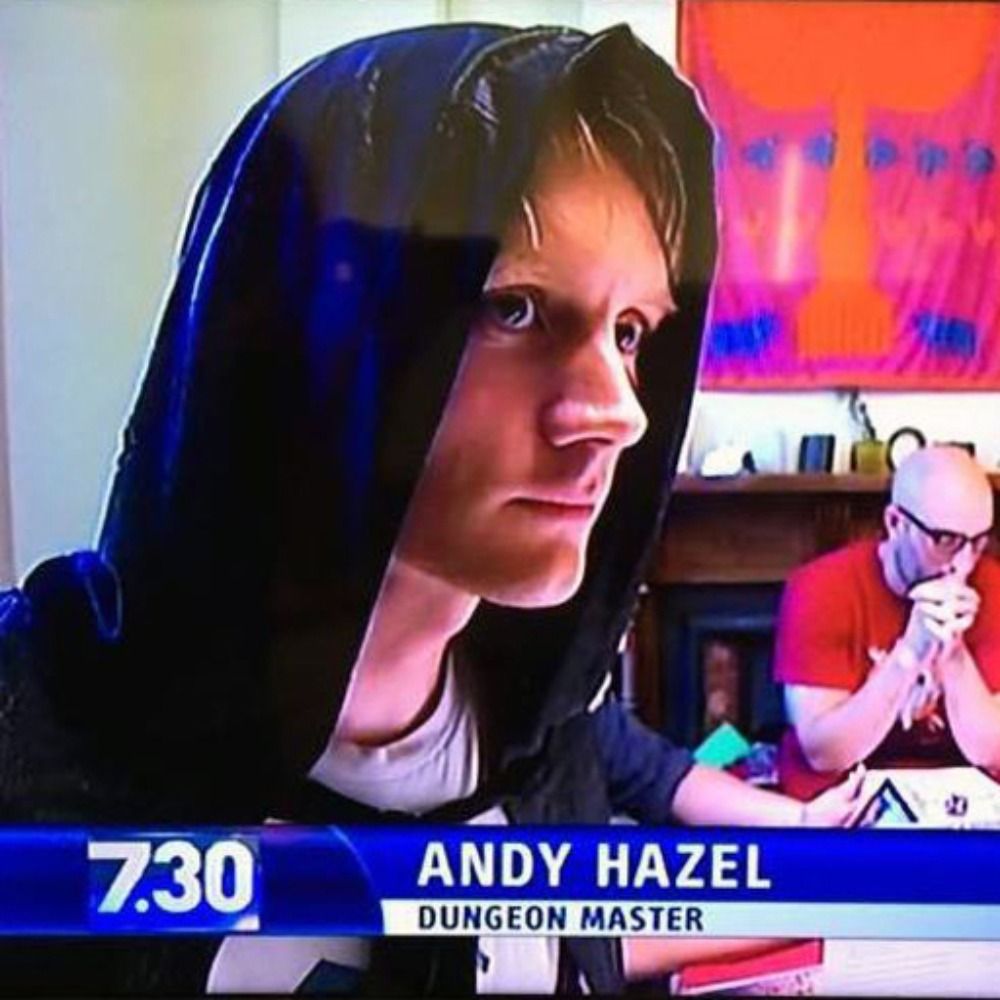
Writes for IndieWire, The Guardian, The Curb and The Saturday Paper – senior editorial producer and photo editor there, too. Golden Globes voter. Twin Peaks nerd. 1/4 of Tacoma Radar. Tasmanian in Naarm/Melbourne.
https://linktr.ee/andyhazel
Historian @york.ac.uk | Editorial collective @historywo.bsky.social | 'The Paris Commune in Britain', OUP https://shorturl.at/662e4 | 'Friends in Common', Pluto Press https://shorturl.at/f2nRs
Professor of Human Geography in Scotland.
Research = mental health/missing people/seasonal affective disorder/geohumanities/climate change.
Human Being🦋
https://www.gla.ac.uk/research/az/livingwithsad/winteringwell/resources/
Assistant Professor. Interested in African cities, socialist Atlantic histories, architecture and urban financialization. Book: The Aesthetics of Belonging: https://uncpress.org/book/9781469682181/the-aesthetics-of-belonging/
Distinguished Professor of English Emerita, University of South Carolina; former co-editor, Modernism/modernity. Modernism and media, especially the BBC; women's writing in war and crisis. Fuck ICE and all its works. Eat the rich. Protect your neighbors. 🍉
History + DH @ Lancaster University. MapReader, computational history, history of infrastructure and information. Writing a book about people & highways in 18th c. France.
Data, Information and their Histories. At UCL.
danielwilson.info
🤖 Computational Humanities #dh | History 🗃️ | STS #histsci
Digital humanist; literary historian; early modernist; collaborator; feminist; parent; FEA. Queen Mary University of London: & The Alan Turing Institute, UK. She/her
Historian of Digital Technology | PhD candidate in the history of public cybernetics, Faculty of Arts and Social Sciences (FASoS), Maastricht University
Intellectual History | Historiography | Hegel | Soviet Intellectual Life | Fanon & Anti-Colonialism
MA Fanon & Hegel, MPhil Young Hegel, PhDing on...
Other half: @marxologist.bsky.social
Professor of Political Theory at Oxford & author of Mere Civility (Harvard 2017). Essays @ NYT, The Atlantic, New Statesman, Boston Review, WaPo, &c.
Writing on equality.
A blog that explores the co-constitution of law and political economy. Part of the @lpeproject.bsky.social. Subscribe to our newsletter: http://lpeproject.org/subscribe/
Understanding who produces, what is made, and how class is represented on television. AHRC-funded project at @leedsunimedia.bsky.social The University of Leeds - 2023-26. shorturl.at/uIkTP
Post-doc @UC Louvain
https://aurelien-goutsmedt.com
History macro, inflation, econ policy & energy since the 70s
#Political_Economy #Central_Banks
#Rstats #nlp #networks #bibliometrics
Managing editor journals.openedition.org/oeconomia
Professor on MENA & political theory. Researcher on conflicts & disinformation. Political Scientist via Columbia University.
Find my writings in The Washington Post, Formiche, Index on Censorship & elsewhere.
Opinions expressed are my own.
Professor of Political Science at Stanford | Exploring money in politics, campaigns and elections, ideology, the courts, and inequality | Author of The Judicial Tug of War cup.org/2LEoMrs | https://data4democracy.substack.com