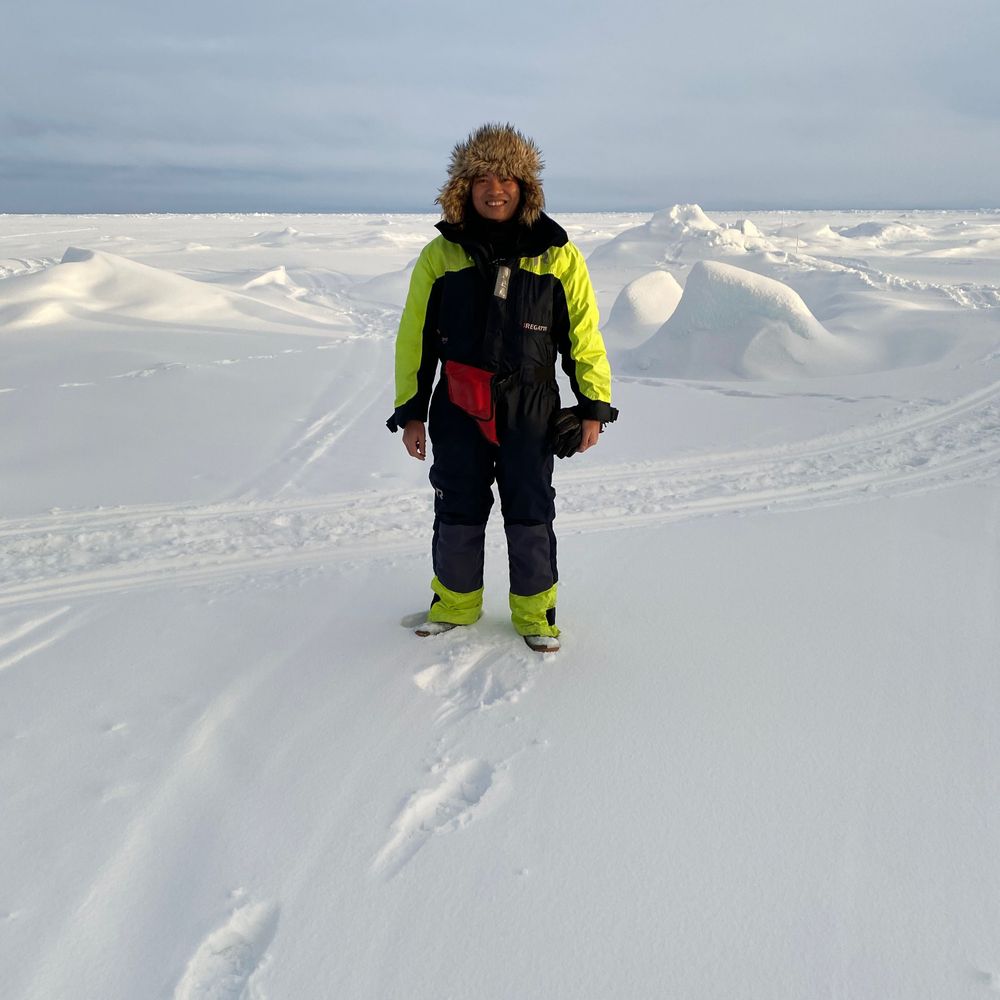
Thanks Daniel! I was a cold, dark, but great experience :)
14.11.2025 07:52 — 👍 0 🔁 0 💬 0 📌 0


 14.11.2025 07:46 — 👍 0 🔁 0 💬 1 📌 0
A mammoth net hauls zooplankton from 4000 m depths in the Nansen Basin—under -20 °C air and howling winds.
14.11.2025 07:35 — 👍 1 🔁 0 💬 0 📌 0

Heading North for the overwintering organisms in the dark of the Arctic (polar) nights!
19.10.2025 08:20 — 👍 5 🔁 0 💬 0 📌 0
Huge thanks to master's student Andrea for conducting the experiments, postdoc Mathieu for leading the writing, and all collaborators for making this possible!
16.10.2025 16:19 — 👍 0 🔁 0 💬 0 📌 0
We provide the first statistical determination of heat accumulation tipping points. We also demonstrate that exposure to a secondary stressor can suppress tipping points to a primary stressor, thereby removing the ability of phenotypic plasticity to buffer negative impacts on fitness.
16.10.2025 16:18 — 👍 0 🔁 0 💬 1 📌 0

2) At 29 PSU, this corresponded to a tipping point of heat accumulation of 28 °C.d above which survival decreased.
3) Reduced salinity below 29 PSU, prevalent year-round in surface waters, suppressed this tipping point, inducing linear decreases in survival when temperature rises above 8 °C.
16.10.2025 16:14 — 👍 0 🔁 0 💬 1 📌 0

Sea surface freshening can suppress the thermal tipping point of marine copepods
Tipping points govern species distributions, which could be impacted by ocean warming (OW) and sea surface freshening (SSF). Interactions between thes…
Happy to share our latest paper: "Sea surface freshening can suppress the thermal tipping point of marine copepods" in Science of the Total Environment! 🌊❄️
We found that:
1) Survival of Calanus copepods tipped and decreased above temperatures of 14–18 °C.
#ClimateChange #MarineEcology #OceanWarming
16.10.2025 16:12 — 👍 2 🔁 0 💬 1 📌 0

Calanus hyperboreus, the largest Calanus copepod in the world. The huge lipid sac inside the body is a key energy source that fuels the lipid-rich Arctic marine food web.
This is a C. hyperboreus female from the Nansen Basin. Photo @Khuong Dinh
13.10.2025 11:28 — 👍 4 🔁 0 💬 0 📌 0

Longyearbyen
01.10.2025 17:35 — 👍 0 🔁 0 💬 0 📌 0

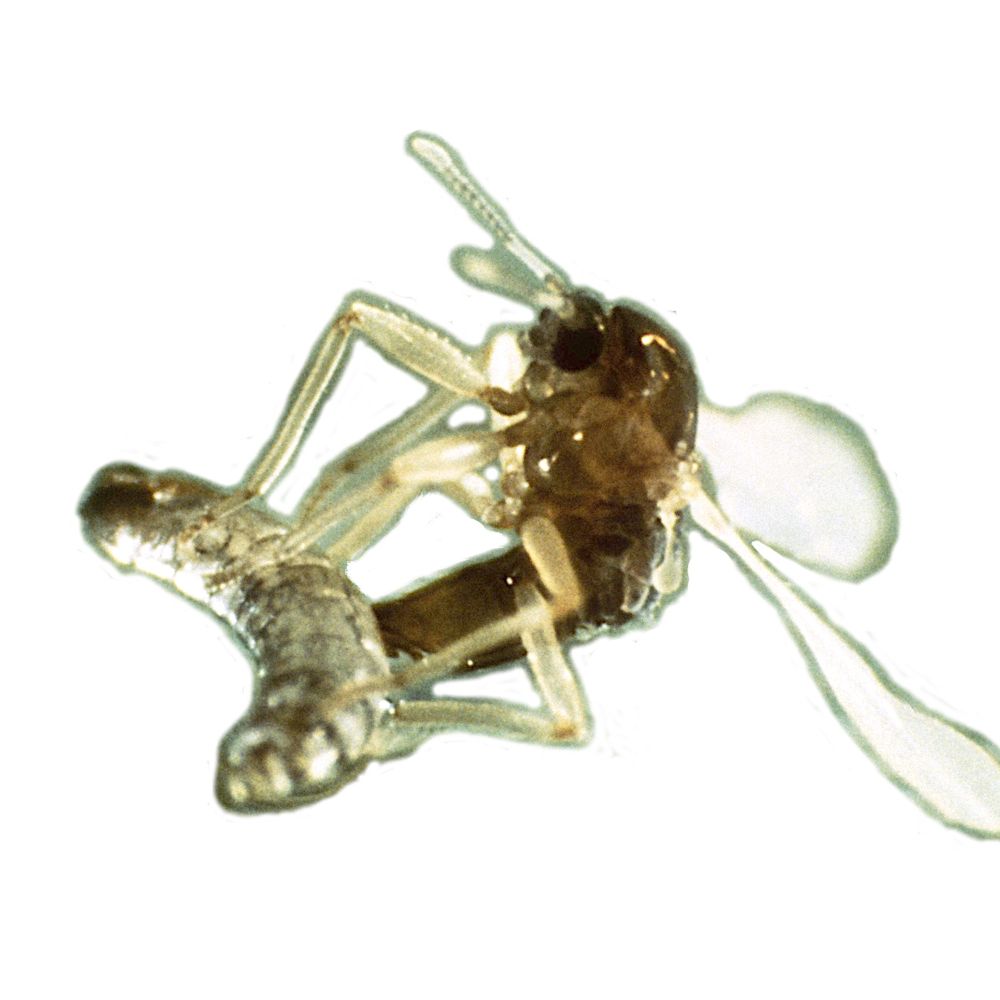
Maybe the same isopod genus parasitising in Calanus hyperboreus. This is a photo I took a few years ago in the central Arctic Ocean.
27.09.2025 14:53 — 👍 1 🔁 0 💬 1 📌 0
A must-read paper
19.09.2025 18:42 — 👍 2 🔁 0 💬 0 📌 0
Great to have this finally out! A whole summer of experiments at @bristolbiosci.bsky.social to look for behavioural and morphological signals of collapse in protists population🔬 Thanks to @duncanobrien.bsky.social @expecocons.bsky.social @dzchilds.bsky.social and John Jackson for the great team work
16.09.2025 08:31 — 👍 6 🔁 2 💬 1 📌 0
very interesting and very inspiring study! Congratulation!!
19.09.2025 18:39 — 👍 0 🔁 0 💬 0 📌 0

Multiple Early Career Faculty Positions in Ecology
The Department of Biological Sciences at the University of Notre Dame invites applications for multiple, tenure-track assistant professor positions that will enhance existing institutional excellence in ecology. We are searching broadly for creative and collaborative individuals (1) working at any spatial scale, from local to global, in any system, (2) studying any level of biological organization, from genes to ecosystems, and (3) using any mode of inference, from empirical to theoretical. Applicants should demonstrate research excellence that crosses traditional disciplinary boundaries; ongoing growth in the department will emphasize new hires that use quantitative and/or integrative approaches to study ecological processes. Postdoctoral experience is desirable in applicants. Successful candidates will engage with and benefit from UNDERC, Notre Dame’s 8000-acre environmental field station and home to NEON’s Great Lakes domain, superb on-campus chemical and genomic analytical facilities, an experimental research facility located close to campus, cross-disciplinary interactions through multiple centers and institutes including the Environmental Change Initiative, and a unique Interdisciplinary Graduate Training Program in Environment and Society. New faculty will benefit from Notre Dame’s recent campus-wide Strategic Framework that included the Just Transformations to Sustainability Initiative. Modern research facilities exist in a new environmental research building, which opened in 2025.
Multiple ecology faculty positions at @notredame.bsky.social. Apply at apply.interfolio.com/171650. (1/2). 🌎🌐🧪
21.08.2025 17:09 — 👍 49 🔁 63 💬 2 📌 0
21.08.2025 18:34 — 👍 0 🔁 0 💬 0 📌 0
" While the legal scholars pulled up the definition of biodiversity in international legal conventions, the anthropologists and historians started talking about how biodiversity is vernacularly understood and how the term itself is linked to some historical relation of power and domination."
10.08.2025 08:28 — 👍 0 🔁 0 💬 0 📌 0
BLOG | Comparative Ecologies of Conflict
From 2 to 6 June, 2025, NIOD researchers, Dat Nguyen, Annika Schmeding, and Lema Salah, in collaboration with Omar Dewachi (Rutgers University) and Duong Vu (Westerdijk Institute), organised a worksho...
"During the workshop, Khuong Dinh (University of Oslo), an ecotoxicologist, raised a simple question to everyone, ‘How do you define biodiversity?’ As it turned out, everyone had a slightly different answer."
10.08.2025 08:28 — 👍 1 🔁 0 💬 1 📌 0
Southeast Asia's biodiversity crisis.
03.08.2025 10:51 — 👍 1 🔁 0 💬 0 📌 0
Thanks for sharing this!
01.08.2025 10:52 — 👍 0 🔁 0 💬 0 📌 0
A jungle makerspace for field biology in Gamboa, Panamá. www.dinalab.net
We also organize the Digital Naturalism Conference: http://2025.dinacon.org
Paediatric Specialty Trainee | Researcher | Academic Visitor University of Oxford Department of Paediatrics & Evelina London Children’s Hospital | MB ChB BMedSc(Hons) DCH |
We explore how evolution, ecology and biological clocks interact,
with a focus on lunar rhythms in development and reproduction
of the marine insect Clunio.
+ Genomics | Biodiversity | Behaviour | NeuroBio | MolBio | SciCom
bit.ly/KaiserLab
🇻🇳🛫 🇭🇺|Ph.D. student in Ecology and Evolution| RA at HUN-REN Centre for Ecological Research (HU)| Aquatic ecologist 🌊| Zooplankton taxonomist| Climate change 🌏🌡️| Ponds
Lover of the oceans, the Arctic, polar cod, and pasta | PhD student in Marine ecotoxicology @uio.no | She/her | 🌊❄️🐟🍝
Chief Editor of Nature Reviews Biodiversity
(@natrevbiodiv.bsky.social). Based in Brooklyn, NY.
ORCID: 0000-0002-4663-7862
Did you say plant nutrients? Count me in! 🌳
Plant ecologist at EPFL and WSL, 🇨🇭
ECS | 🏳️🌈 | Catalan
https://helenavallicrosa.github.io/
she/her
Interested in landscape ecology, genomics 🧬, and aquatic ecology
Neurodiverse
Bisexual 🩷💜💙
🧪👩🏻🔬 Science Stickers and motivational affirmation mugs: https://designedwithhartman.etsy.com
Senior Lecturer @ University of Adelaide; Researcher with the Australian Centre for Ancient DNA, interests in palaeoecology, cave sediments, coprolites, environmental DNA, extinction and evolution
Climate psychologist: support as we face the climate crisis. Co-chair of @climatepsychol.bsky.social. Workshops, consultancy, keynotes, climate café listening circles. Based in Oxford, UK
We work on planetary problems. Currently: counting climate change-related deaths; pandemic risk assessment in a changing biosphere; data, science, and vaccine access during public health emergencies. 👉 carlsonlab.bio
Professor of Marine Ecology at GEOMAR / Kiel University, trained ecoevophysiologist, interested in coastal invertebrates, algae & climate change.
Evolutionary Biologist & Scientific Naturalist | Associate Professor | Director, E4 Initiative | @RiceUniversity #science #biology #evolution #speciation #entomology #biodiversity #genomics #discovery
Lab website: https://scottpegan.com
BirdsPlus Index. American Bird Conservancy. Dad. Natural history. Ecology and evolution, conservation, acoustics, and occasionally politics.
Community Ecology | Phenology | Ponds| Professor of Ecology & Evolution @ Rice University. Editor-In-Chief @ The American Naturalist. Dad, husband, polliwog wrangler, baker of Bavarian pretzels, chicken owner. Typos are my own.
Professor. #Zoology, Theoretical #Ecology & #Evolution, Trinity College Dublin.
Freshwater ecologist ▪︎ Arctic & Alpine ecosystems ▪︎ Field work rocks ▪︎ Long-term monitoring ▪︎ Revitalization of old data ▪︎ Belief: Let´s make a difference ▪︎ https://www1.bio.ku.dk/english/research/fbs/ksc/ ▪︎ @fblucph.bsky.social
Freshwater ecology, global change, nature conservation; env policy; Dep Chair @natreswales.bsky.social; Joint Committee @jncc.bsky.social; VP @rspb.bsky.social; bumbling acoustic guitarist
https://profiles.cardiff.ac.uk/staff/ormerod
Assistant Professor of Oceans at Stanford, Hopkins Marine Station 🌊 (she/her)
Algae, microbes, kelp conservation
https://weigel-lab.stanford.edu/
Evolutionary biologist using ancient and modern DNA to study evolution through time and space.