Grimme Lab's Avatar

Grimme Lab

@grimmelab.bsky.social

Development and application of efficient computational chemistry methods - based @unibonn.bsky.social. This account is managed by group members of Prof. Stefan Grimme.

1,731 Followers  |  265 Following  |  14 Posts  |  Joined: 03.10.2023  |  1.8106

Latest posts by grimmelab.bsky.social on Bluesky

Thanks so much to @bribarbu.bsky.social and @cenmag.bsky.social for highlighting our recent work! 😊

@tkschramm.bsky.social @unibonn.bsky.social

25.09.2025 15:32 β€” πŸ‘ 27    πŸ” 5    πŸ’¬ 0    πŸ“Œ 0

Congrats to everyone involved!

10.09.2025 12:58 β€” πŸ‘ 3    πŸ” 0    πŸ’¬ 0    πŸ“Œ 0
Preview
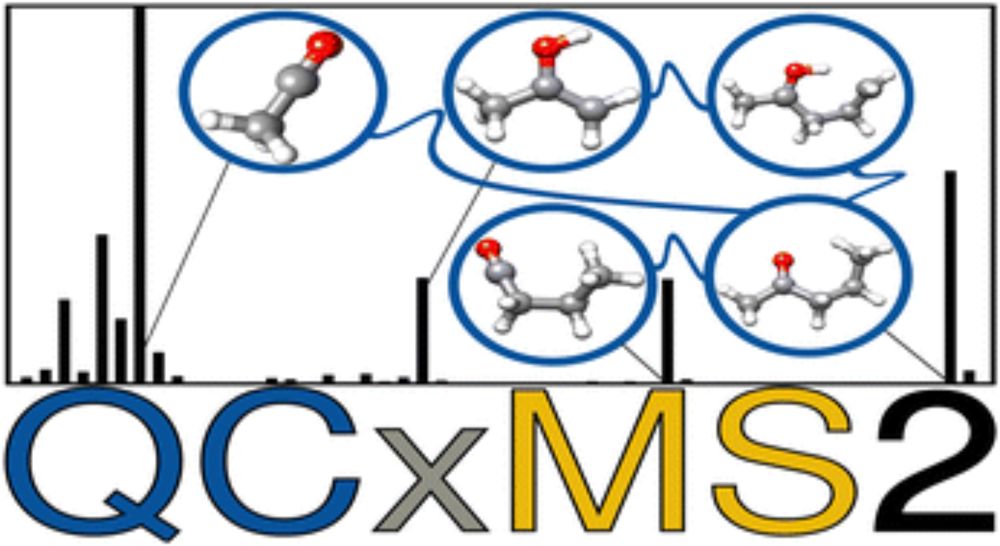
Evaluation of the QCxMS2 Method for the Calculation of Collision-Induced Dissociation Spectra via Automated Reaction Network Exploration Collision-induced dissociation mass spectrometry (CID-MS) is an important tool in analytical chemistry for the structural elucidation of unknown compounds. The theoretical prediction of the CID spectra plays a critical role in supporting and accelerating this process. To this end, we adapt the recently developed QCxMS2 program originally designed for the calculation of electron ionization (EI) spectra to enable the computation of CID-MS. To account for the fragmentation conditions characteristic of CID within the automated reaction network discovery approach of QCxMS2 we adapted the internal energy distribution to match the experimental conditions. This distribution can be adjusted via a single parameter to approximate various activation settings, thereby eliminating the need for explicit simulations of the collisional process. We evaluate our approach on a test set of 13 organic molecules with diverse functional groups, compiled specifically for this study. All reference spectra were recorded consistently under the same measurement conditions, including both CID and higher-energy collisional dissociation (HCD) modes. Overall, QCxMS2 achieves a good average entropy similarity score (ESS) of 0.687 for the HCD spectra and 0.773 for the CID spectra. The direct comparison to experimental data demonstrates that the QCxMS2 approach, even without explicit modeling of collisions, is generally capable of computing both CID and HCD spectra with reasonable accuracy and robustness. This highlights its potential as a valuable tool for integration into structure elucidation workflows in analytical mass spectrometry.

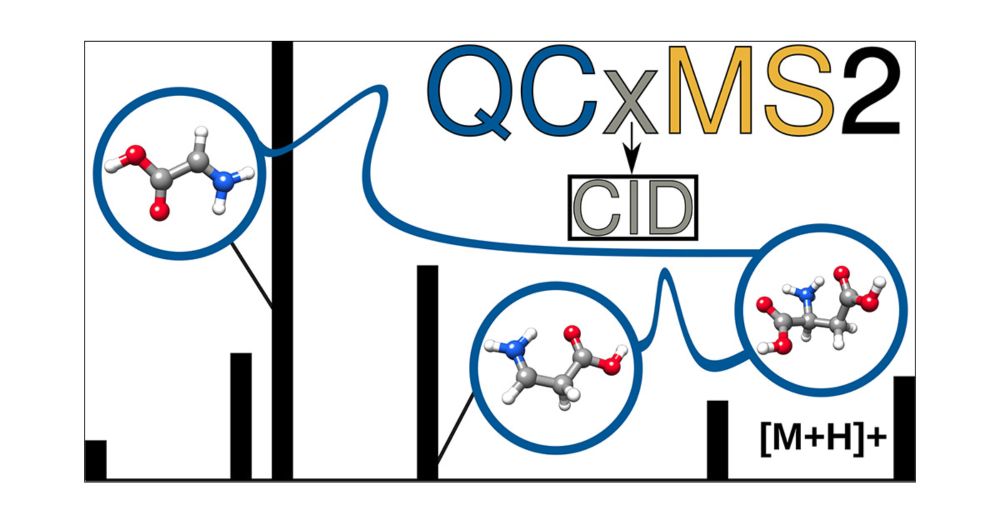
QCxMS2 can now also simulate CID mass spectra.

Just published in #JASMS : doi.org/10.1021/jasms.5c00234

Grateful to my coauthors Stefan Grimme @grimmelab.bsky.social & Marianne Engeser @unibonn.bsky.social - this is the last project of my PhD and completes my work on QCxMS2!

#MassSpec #compchem
08.09.2025 09:10 β€” πŸ‘ 9    πŸ” 4    πŸ’¬ 2    πŸ“Œ 1
Preview
GitHub - grimme-lab/MindlessGen: Mindless molecule generator in a Python package. Mindless molecule generator in a Python package. Contribute to grimme-lab/MindlessGen development by creating an account on GitHub.

🐍 π— π—Άπ—»π—±π—Ήπ—²π˜€π˜€π—šπ—²π—» (GitHub): github.com/grimme-lab/M...

Many thanks to everyone involved!

03.09.2025 11:04 β€” πŸ‘ 7    πŸ” 0    πŸ’¬ 1    πŸ“Œ 0
Preview
Chemical Space Exploration with Artificial β€œMindless” Molecules We introduce MindlessGen, a Python-based generator for creating chemically diverse, β€œmindless” molecules through random atomic placement and subsequent geometry optimization. Using this framework, we ...

πŸš€ JCIM: "Chemical Space Exploration with Artificial Mindless Molecules"

We present MindlessGen, an open-source tool for generating chemically diverse "mindless" molecules, and the MB2061 benchmark set with high-level reference data to test methods on unconventional systems.

doi.org/10.1021/acs....

03.09.2025 11:01 β€” πŸ‘ 23    πŸ” 3    πŸ’¬ 1    πŸ“Œ 0
https://pubs.acs.org/doi/full/10.1021/acs.inorgchem.5c02152

Congrats AndrΓ© and all the authors involved in this new generation of SBDIPY and BIDIPY and their application in photocatalysis.

t.co/0B4FRFBAUy

31.07.2025 13:30 β€” πŸ‘ 14    πŸ” 2    πŸ’¬ 1    πŸ“Œ 0
ORCA as External Optimizer - ORCA 6.1 TUTORIALS

You can now use g-xTB @grimmelab.bsky.social with ORCA via the ExtOpt feature! Check out our new tutorial and learn how to use it in GOAT, NEB-TS and more.

www.faccts.de/docs/orca/6....

#ORCAqc #FACCTs #gxTB #CompChem #QuantumChem

26.06.2025 08:32 β€” πŸ‘ 39    πŸ” 9    πŸ’¬ 2    πŸ“Œ 1

I'm at the WATOC #CompChem conference in Oslo. Machine learning is everywhere, but the hottest news so far is the new g-xTB method by @grimmelab.bsky.social . The results presented today are truly impressive. I'm already running first calculations on our biomolecular systems...

26.06.2025 09:39 β€” πŸ‘ 18    πŸ” 3    πŸ’¬ 0    πŸ“Œ 1
Preview
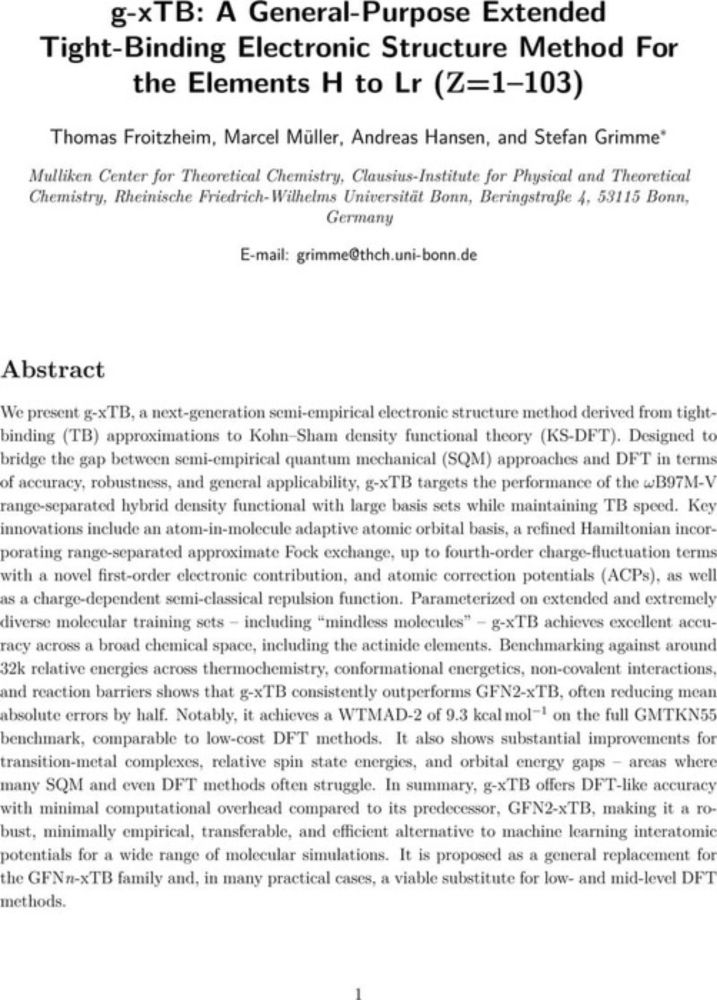
g-xTB: A General-Purpose Extended Tight-Binding Electronic Structure Method For the Elements H to Lr (Z=1–103) We present g-xTB, a next-generation semi-empirical electronic structure method derived from tight-binding (TB) approximations to Kohn–Sham density functional theory (KS-DFT). Designed to bridge the ga...

After years of development and preparatory works which you might have seen on this profile, a major milestone is achieved:
g-xTB marks not just an evolution, but a revolution in the capabilities of semiempirical quantum chemistry. Convince yourself! A thread.
πŸ”— chemrxiv.org/engage/chemr...
#compchem
24.06.2025 07:31 β€” πŸ‘ 46    πŸ” 15    πŸ’¬ 3    πŸ“Œ 4
Preview
g-xTB: A General-Purpose Extended Tight-Binding Electronic Structure Method For the Elements H to Lr (Z=1–103) We present g-xTB, a next-generation semi-empirical electronic structure method derived from tight-binding (TB) approximations to Kohn–Sham density functional theory (KS-DFT). Designed to bridge the ga...

After almost 3 years of development with @grimmelab.bsky.social, a first preliminary version of our next-generation general extended Tight-Binding (g-xTB) is now on ChemRxiv!
Catch the details at #WATOC: my talk (Thu Session B1) and Stefan’s talk (Thu Session A2).
#compchem

doi.org/10.26434/che...
24.06.2025 07:24 β€” πŸ‘ 21    πŸ” 10    πŸ’¬ 1    πŸ“Œ 1
Preview
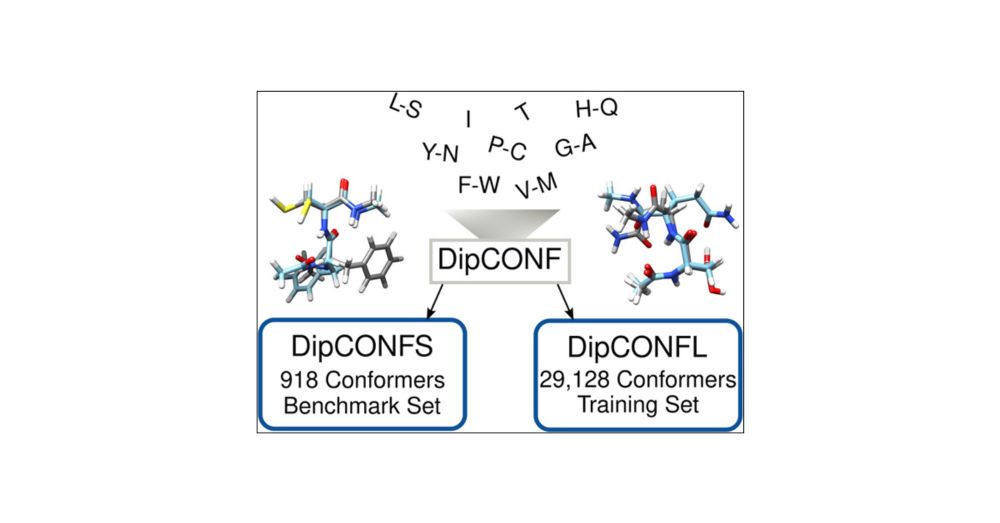
Toward Reliable Conformational Energies of Amino Acids and Dipeptides─The DipCONFS Benchmark and DipCONL Datasets Simulating peptides and proteins is becoming increasingly important, leading to a growing need for efficient computational methods. These are typically semiempirical quantum mechanical (SQM) methods, ...

Have you ever wondered how accurate reference data for training ML models is?
Check out the DipCONFS, a set of highly accurate conformational energies for nearly 1,000 dipeptide conformers, and the DipCONFL with ~30,000 high-quality DFT data points.
pubs.acs.org/doi/full/10....
07.04.2025 15:17 β€” πŸ‘ 12    πŸ” 0    πŸ’¬ 1    πŸ“Œ 0
Preview
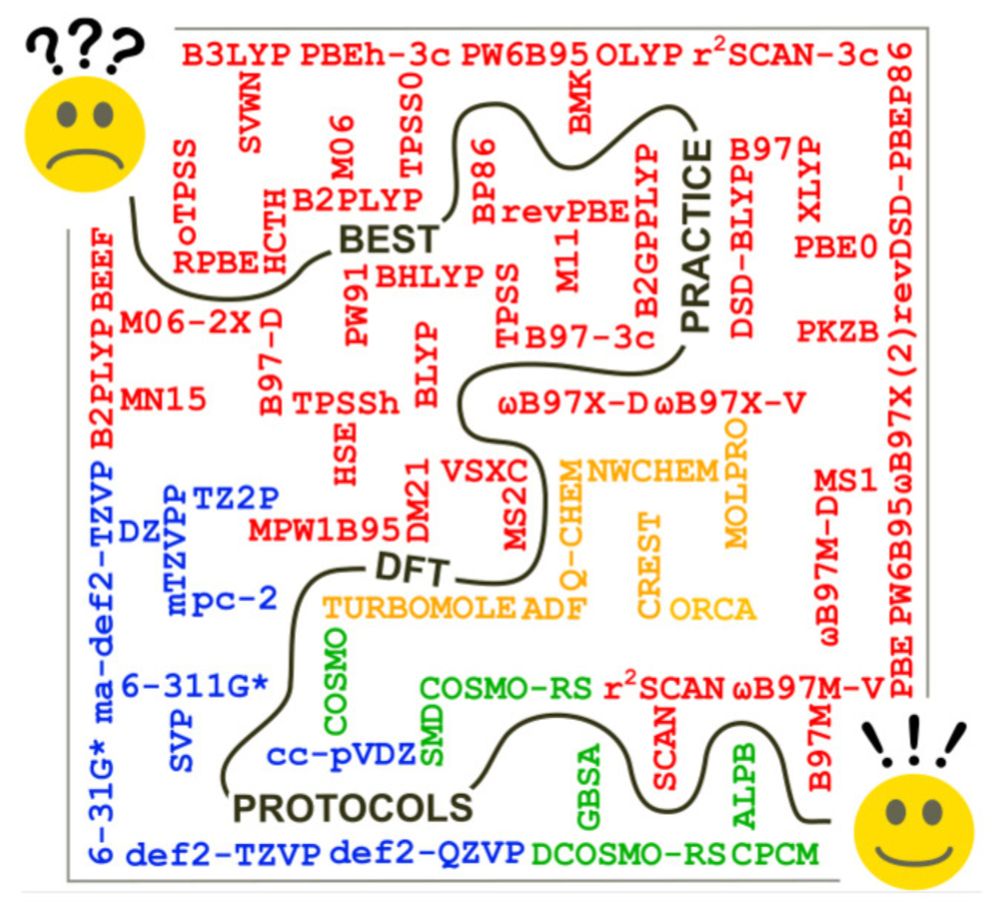
Best‐Practice DFT Protocols for Basic Molecular Computational Chemistry** Many chemical investigations are supported by routine calculations of molecular structures, reaction energies, barrier heights, and spectroscopic properties. Most of these quantum-chemical calculatio...

I realized that a #compchem DFT best-practice article was lacking in the literature, so I invited @grimmelab.bsky.social @dermewes.bsky.social @markusbursch.bsky.social and co-workers to write the article below. It was and remains super popular and well received. Great work! (9/22)

05.04.2025 10:30 β€” πŸ‘ 25    πŸ” 5    πŸ’¬ 2    πŸ“Œ 1
Preview
World's Top 2% Scientists Discover the world's leading researchers in Stanford University's Top 2% Scientists list, based on citation impact and bibliometric indicators.

Congratulations @grimmelab.bsky.social for an impressive 6th place across all disciplines: topresearcherslist.com

With #compchem (DFT-D) taking first place in chemistry, and Georg Kresse (VASP/PAW-PPs/DFT) taking the 2nd place (overall, 1st in physics), I'd say:

DFT is winning science :)

27.03.2025 09:51 β€” πŸ‘ 19    πŸ” 1    πŸ’¬ 2    πŸ“Œ 0

Check out our pre-print on accelerated semi-empirical electronic structure theory calculations on consumer-grade GPUs! ⬇️

07.03.2025 10:04 β€” πŸ‘ 6    πŸ” 2    πŸ’¬ 0    πŸ“Œ 0
Preview
The Bond Capacity Electronegativity Equilibration Charge Model (EEQBC) for the Elements Z=1–103 The accurate and efficient assignment of atomic partial charges is crucial for many applications in theoretical and computational chemistry, including polarizable force fields, dispersion corrections, a...

Check out our new EEQBC model!

It delivers accurate and robust atomic charges for all elements up to Z=103. By incorporating bond capacitors, we eliminate most artificial CT while preserving the simplicity and efficiency of classical charge equilibration:

doi.org/10.26434/che...

#compchem
07.03.2025 12:35 β€” πŸ‘ 16    πŸ” 7    πŸ’¬ 1    πŸ“Œ 0
Preview
QCxMS2 – a program for the calculation of electron ionization mass spectra via automated reaction network discovery We present a new fully-automated computational workflow for the calculation of electron ionization mass spectra by automated reaction network discovery, transition state theory and Monte-Carlo simulat...

Our paper @grimmelab.bsky.social on QCxMS2 for the calculation of EI-MS was just accepted by @pccp.rsc.org Check out the final article: pubs.rsc.org/en/content/a...
#CompChemSky #MassSpecSky

07.03.2025 13:08 β€” πŸ‘ 17    πŸ” 3    πŸ’¬ 3    πŸ“Œ 0

A unique opportunity to collaborate with our group, the Grimme lab, and Prof. Frank Neese’s department at MPI-KOFO!
Join us in integrating our latest semiempirical method, g-xTB, into ORCA – unlocking access to even more molecular properties. πŸ“ˆ

Interested? Apply now! πŸ“§

Please reshare this post πŸš€

01.03.2025 13:36 β€” πŸ‘ 18    πŸ” 7    πŸ’¬ 3    πŸ“Œ 1
Preview
QCxMS2 - a program for the calculation of electron ion- ization mass spectra via automated reaction network dis- covery We present a new fully-automated computational workflow for the calculation of electron ionization mass spectra by automated reaction network discovery, transition state theory and Monte-Carlo simulat...

The quantum chemical prediction of EI-MS spectra is an important challenge. Check out @grimmelab.bsky.social's new preprint on their QCxMS2 program using ORCA's QM portfolio and NEB-TS infrastructure.

doi.org/10.26434/che...

#ORCAqc #ChemSky #CompChemSky #MassSpectrometry

17.02.2025 09:33 β€” πŸ‘ 13    πŸ” 3    πŸ’¬ 0    πŸ“Œ 0

QCxMS2, the successor to QCxMS, is now available for calculating electron ionization mass spectra using quantum mechanical methods!

05.02.2025 13:59 β€” πŸ‘ 16    πŸ” 6    πŸ’¬ 2    πŸ“Œ 0

So that's it! We wrapped up the 11th edition of #VWSCC on a high note after a fantastic workshop led by @grimmelab.bsky.social. The recordings of the talks will be available on our website soon. ;-)

See you all next year!
#CompChem
31.01.2025 16:03 β€” πŸ‘ 8    πŸ” 2    πŸ’¬ 1    πŸ“Œ 0
Post image

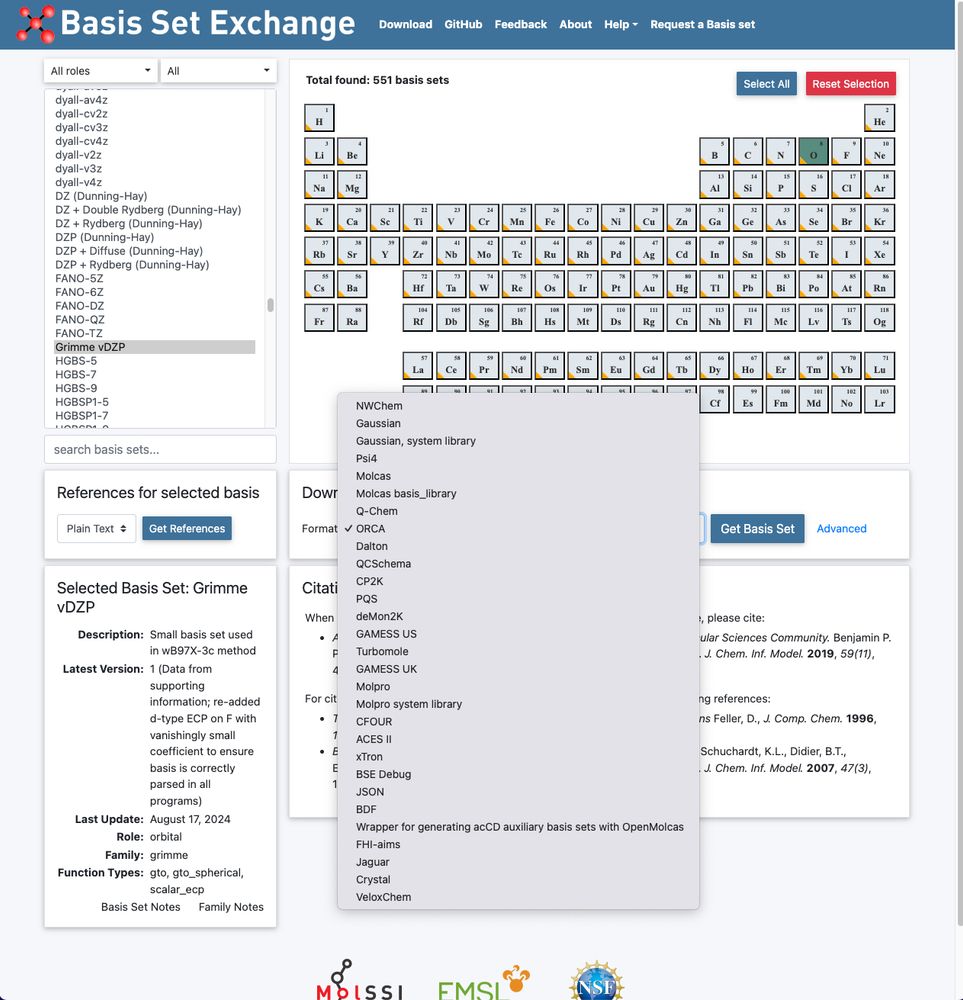
Our vDZP basis set utilized in the ⍡B97X-3c composite DFT method is now also available via www.basissetexchange.org (API-based: github.com/MolSSI-BSE/b...). πŸŽ‰
Many thanks to @Susi Lehtola & coworkers for jointly providing it there!
29.01.2025 16:02 β€” πŸ‘ 29    πŸ” 7    πŸ’¬ 2    πŸ“Œ 0
Post image

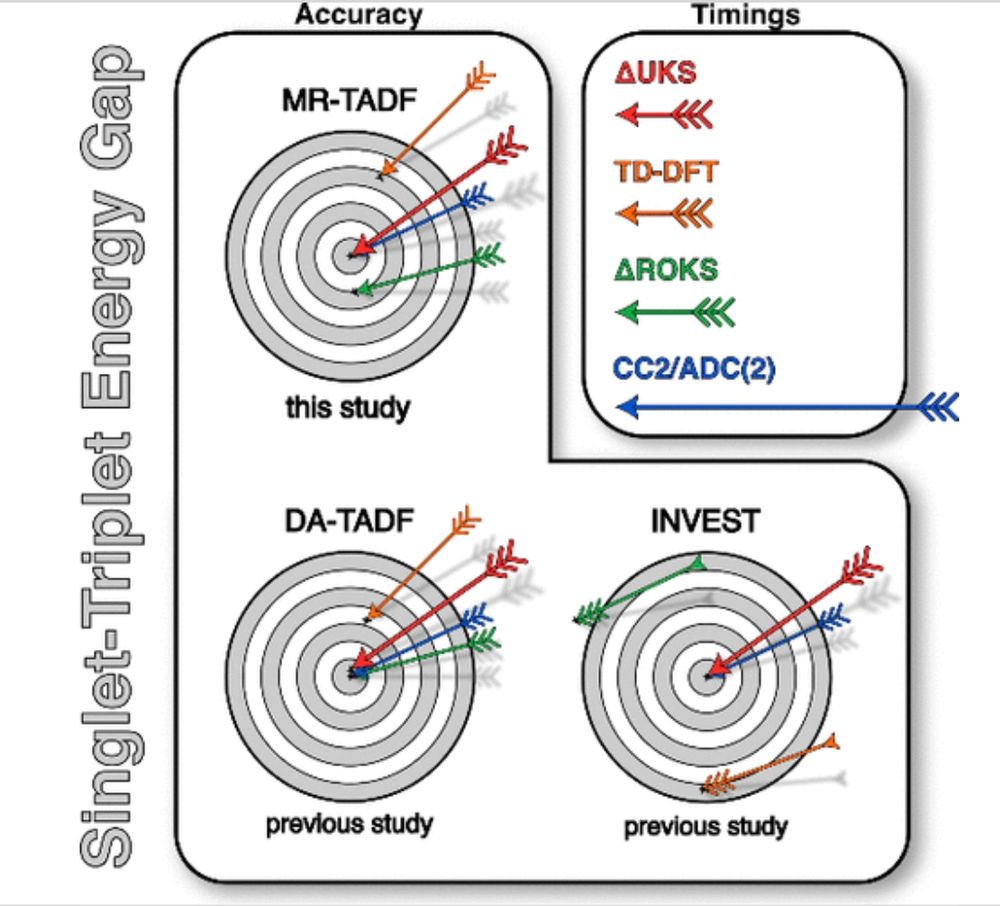
Wave function methods like CC2/ADC(2) are accurate (also some DHDFs), but too slow to cover large search spaces in high throughout screenings.
This is where the state-specific Ξ”DFT/UKS developed in cooperation with @grimmelab.bsky.social really shines
(same for classic DA-TADF and INVEST emitters):
24.01.2025 19:50 β€” πŸ‘ 9    πŸ” 1    πŸ’¬ 1    πŸ“Œ 0
Post image

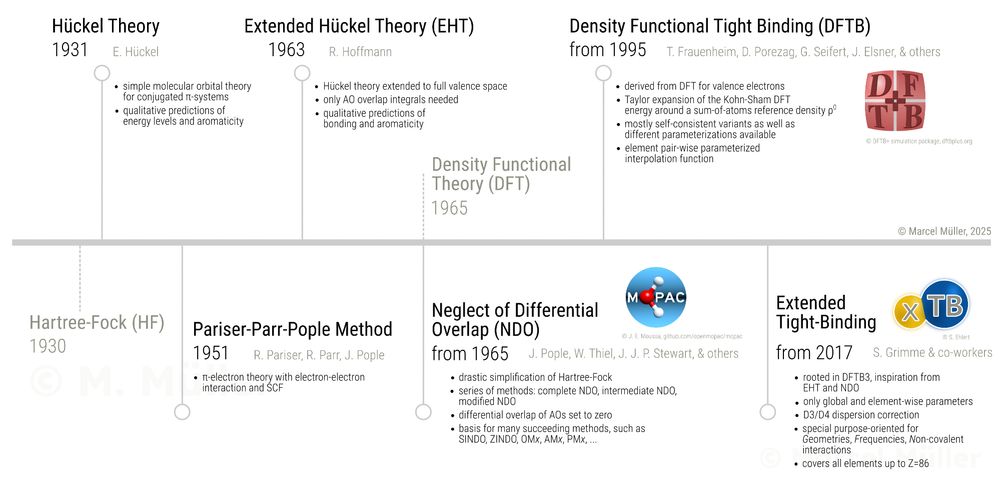
I have created a timeline of semiempirical methods in quantum chemistry. Any thoughts, suggestions, or remarks on it? πŸ’‘ Have we missed anything?

22.01.2025 12:22 β€” πŸ‘ 19    πŸ” 2    πŸ’¬ 4    πŸ“Œ 1
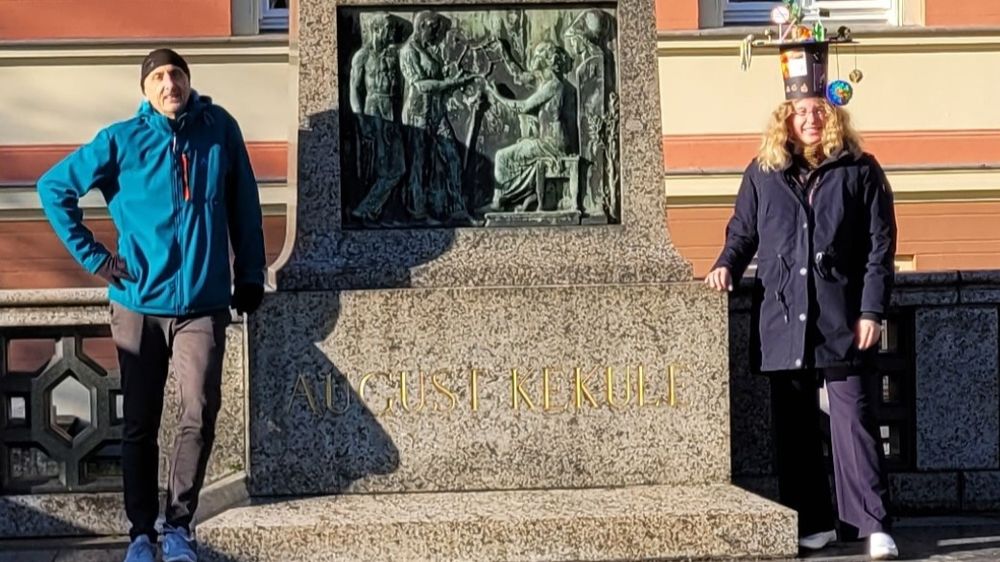
Julia and her PI Stefan Grimme stand on either side of a statue of August KekulΓ©. Julia wears a traditional handcrafted PhD hat.

Julia and her PI Stefan Grimme stand on either side of a statue of August KekulΓ©. Julia wears a traditional handcrafted PhD hat.

Julia from @grimmelab.bsky.social successfully defended her #PhDthesis this week. Congratulations! Julia worked on the "Development of #QuantumChemistry based Workflows for the Theoretical Description of #OrganicElectronics".
#ProudPI #PhDone
17.01.2025 14:18 β€” πŸ‘ 7    πŸ” 1    πŸ’¬ 0    πŸ“Œ 0
Preview
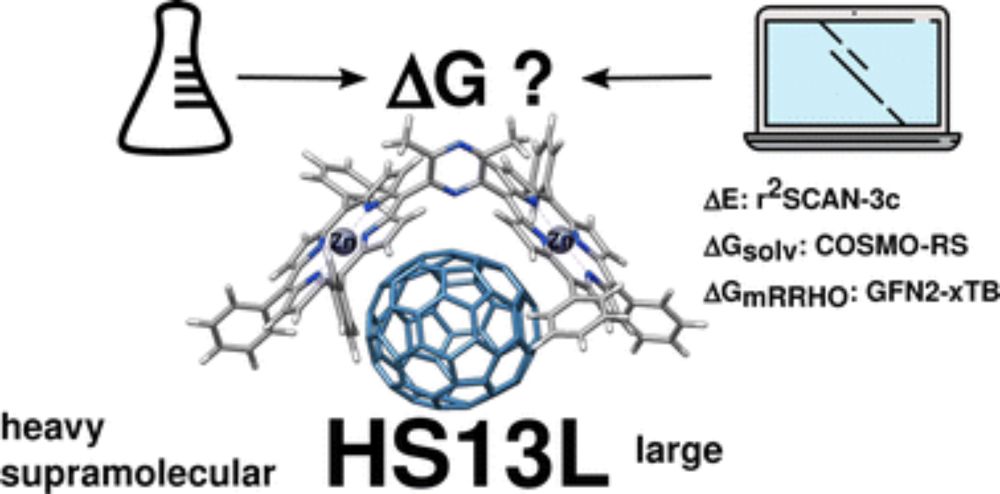
Reliable prediction of association (free) energies of supramolecular complexes with heavy main group elements – the HS13L benchmark set We introduce a set of 13 supramolecular complexes featuring diverse non-covalent interactions with heavy main group elements (Zn, As, Se, Te, Br, I), high charges (βˆ’2 up to +4), and large systems with...

If you are interested in computing supramolecular complexes, take a look at this article in @PCCP
and see how well CREST and CENSO work for this challenging task: doi.org/10.1039/D2CP... @grimmelab.bsky.social

#compchem
17.01.2025 16:08 β€” πŸ‘ 15    πŸ” 3    πŸ’¬ 0    πŸ“Œ 0
Preview
Efficient Computation of the Interaction Energies of Very Large Non-covalently Bound Complexes Thieme E-Books & E-Journals

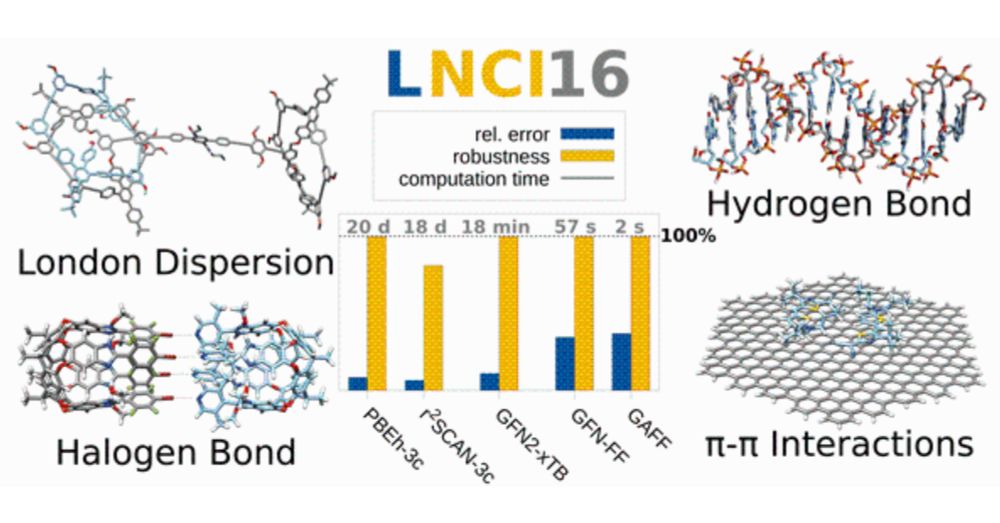
See how well low-cost methods describe non-covalent interactions in very large complexes (up to 2000 atoms!) and test your own methods on the LNCI16 benchmark set presented in our article @synlettjournal.bsky.social doi.org/10.1055/s-00... @grimmelab.bsky.social

17.01.2025 16:11 β€” πŸ‘ 13    πŸ” 4    πŸ’¬ 0    πŸ“Œ 0

Working with Stefan has always been an inspiring pleasure. It's particularly fascinating how naturally he navigates the manifold physics that govern chemistry, always on the look for a more elegant and efficient approximation.
This award is well deserved! Congratulations @grimmelab.bsky.social!

17.01.2025 17:41 β€” πŸ‘ 25    πŸ” 2    πŸ’¬ 0    πŸ“Œ 0
Video thumbnail

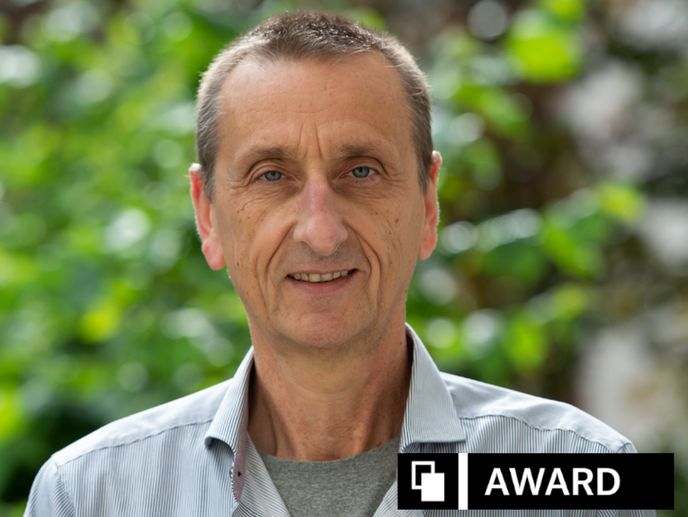
We're delighted to announce Stefan Grimme @grimmelab.bsky.social as the recipient of the 2025 Chemistry Europe Award! He'll be recognized "for his groundbreaking contributions that have had a profound impact on the scientific community” at #IUPAC2025.
www.chemistryviews.org/stefan-grimm...

#Chemsky
16.01.2025 09:18 β€” πŸ‘ 72    πŸ” 11    πŸ’¬ 3    πŸ“Œ 0
Post image

Stefan Grimme receives the 2025 Chemistry Europe Award!
Learn more at https://buff.ly/3BXDVhO.

#ChemistryAward #ChemistryEurope
16.01.2025 07:38 β€” πŸ‘ 68    πŸ” 11    πŸ’¬ 1    πŸ“Œ 2
Preview
Computation of CCSD(T)-Quality NMR Chemical Shifts via Ξ”-Machine Learning from DFT NMR spectroscopy undoubtedly plays a central role in determining molecular structures across different chemical disciplines, and the accurate computational prediction of NMR parameters is highly desir...

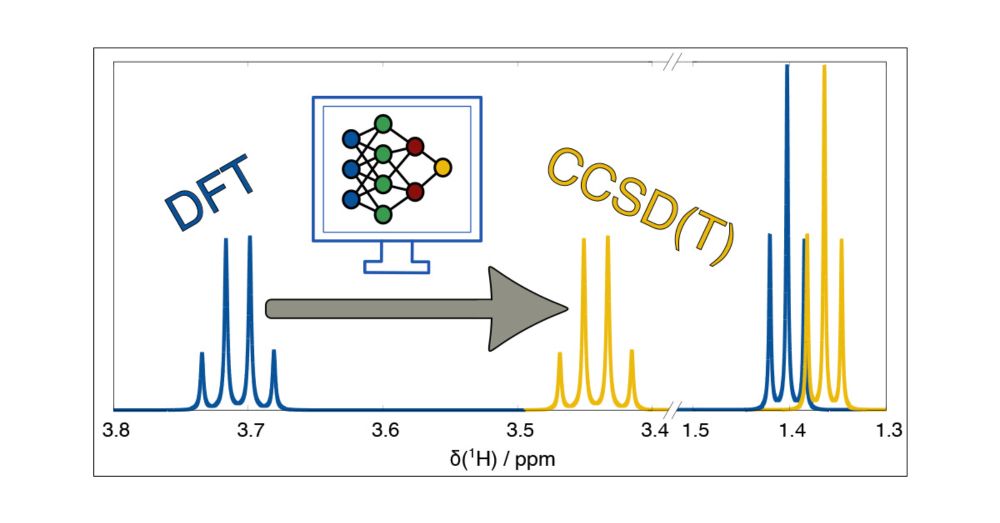
Take a look at Julius Kleine-BΓΌning's work (from @grimmelab.bsky.social) work on ML-based corrections. IIRC, this massively improves the chemical shifts of 1H spectra. The software should be available online. pubs.acs.org/doi/abs/10.1...

08.01.2025 08:16 β€” πŸ‘ 14    πŸ” 5    πŸ’¬ 1    πŸ“Œ 0

@grimmelab is following 20 prominent accounts