Presented my recent paper “Predicting Module-Lattice Reduction” with Léo Ducas and Paola de Perthuis at Asiacrypt 2025 in Melbourne. A great way to wrap up the year! Merry Chrissy everyone :)
24.12.2025 01:27 — 👍 5 🔁 1 💬 0 📌 0
@annabosshard.bsky.social
PhD candidate Social/Environmental Psychology at the University of Amsterdam
Presented my recent paper “Predicting Module-Lattice Reduction” with Léo Ducas and Paola de Perthuis at Asiacrypt 2025 in Melbourne. A great way to wrap up the year! Merry Chrissy everyone :)
24.12.2025 01:27 — 👍 5 🔁 1 💬 0 📌 0
The Bondi beach attack is the deadliest mass shooting in Australia in decades, after the 1996 Port Arthur Massacre. The shooting is a heinous attack on the Jewish community.
Authorities should invest substantially in efforts to counter threats.
More quality evidence is emerging that "pro-environmental behavior" is not a coherent, unitary thing. One behavior is not a proxy for all other behaviors.
www-sciencedirect-com.proxy.uba.uva.nl/science/arti... Blankenberg et al. 2025
1/3
Very grateful that our paper was awarded ISCON’s Best 2024 Paper in Social Cognition!! Huge thanks to the fantastic team: Ben Stillerman, @bjornlindstrom.bsky.social , @leorhackel.bsky.social , Damaris Hagen, Nils Jostmann, and @davidamodio.bsky.social 🎊💐
02.12.2025 22:20 — 👍 24 🔁 4 💬 1 📌 0🌱 Higher perceived complexity around climate mitigation was associated with lower policy support and intentions to act. Check out @saarataavila.bsky.social's awesome new paper on how perceived complexity can be measured (subscales: effectiveness uncertainty, trade-offs, and goal conflict).
07.11.2025 16:50 — 👍 3 🔁 1 💬 0 📌 0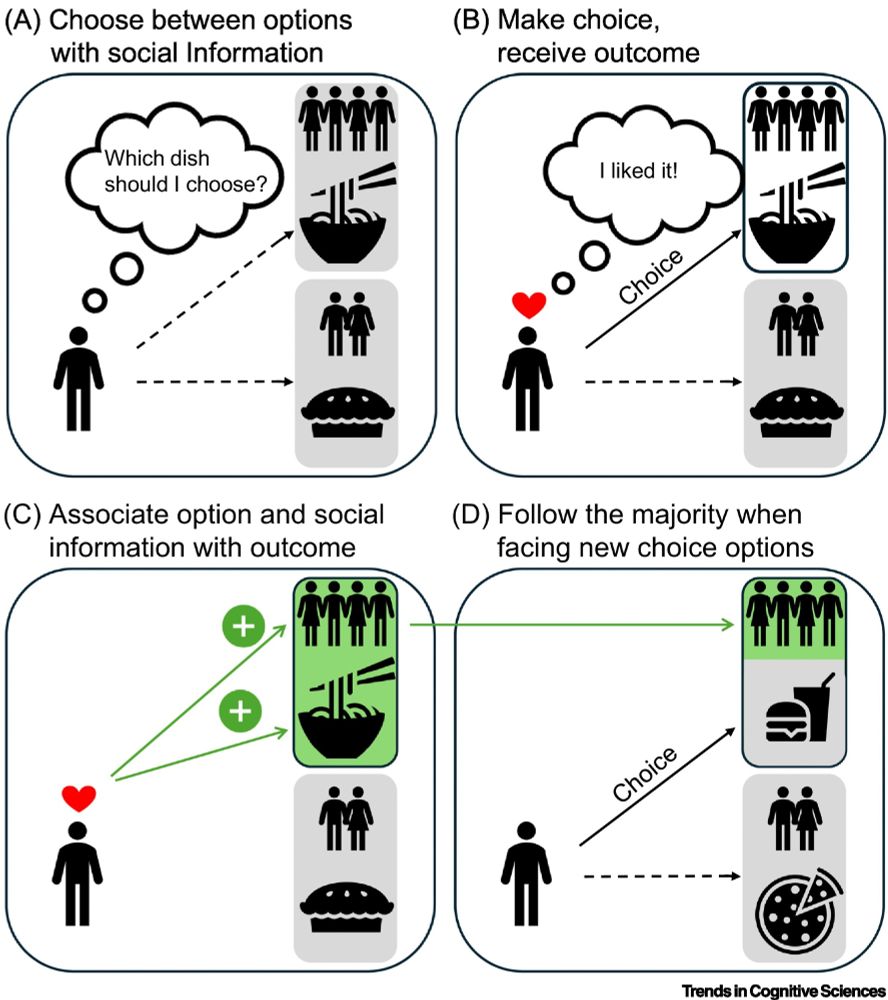
🎊 New paper out! In this @cp-trendscognsci.bsky.social Forum, we (with @lucasmolleman.bsky.social and @bjornlindstrom.bsky.social) summarize how reward learning can lead to adaptive social learning. We also explore the broader consequences for cultural evolution:
www.cell.com/trends/cogni... 🚄
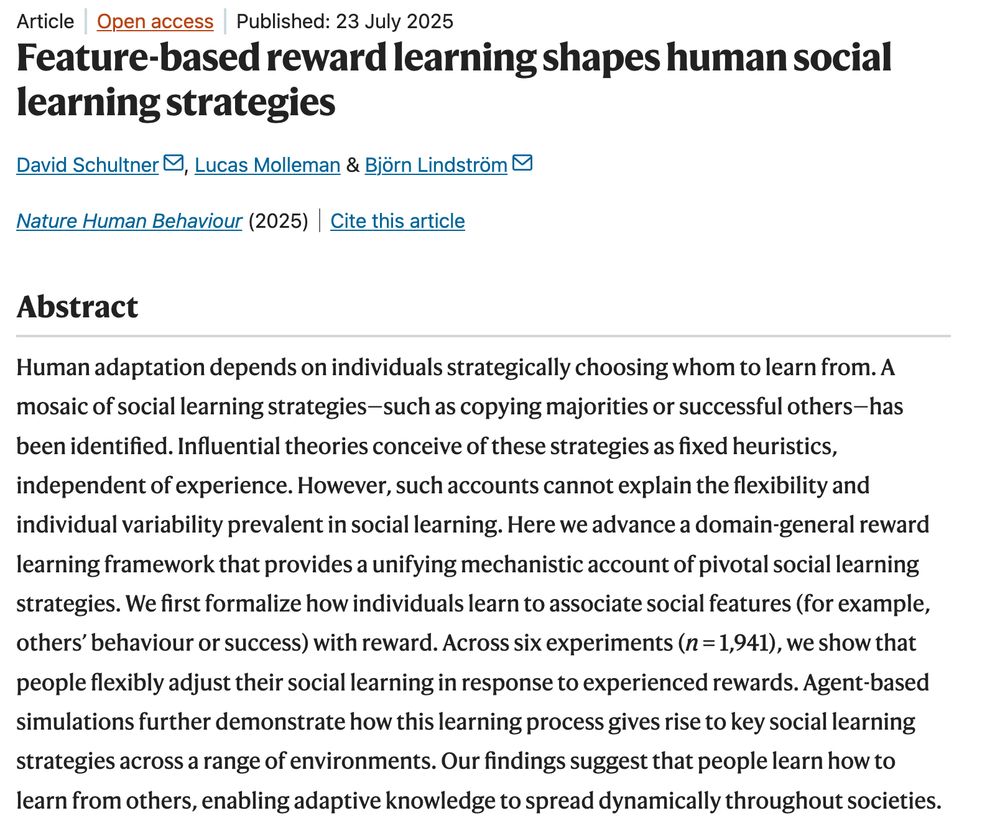
💥 Our new paper (with @lucasmolleman.bsky.social and @bjornlindstrom.bsky.social) is now out in @nathumbehav.nature.com 🥳 www.nature.com/articles/s41...
🧠 Here, we advance a novel RL account—the Social Feature Learning (SFL) model—that explains how people learn to learn from others! 🤝
🧵👇
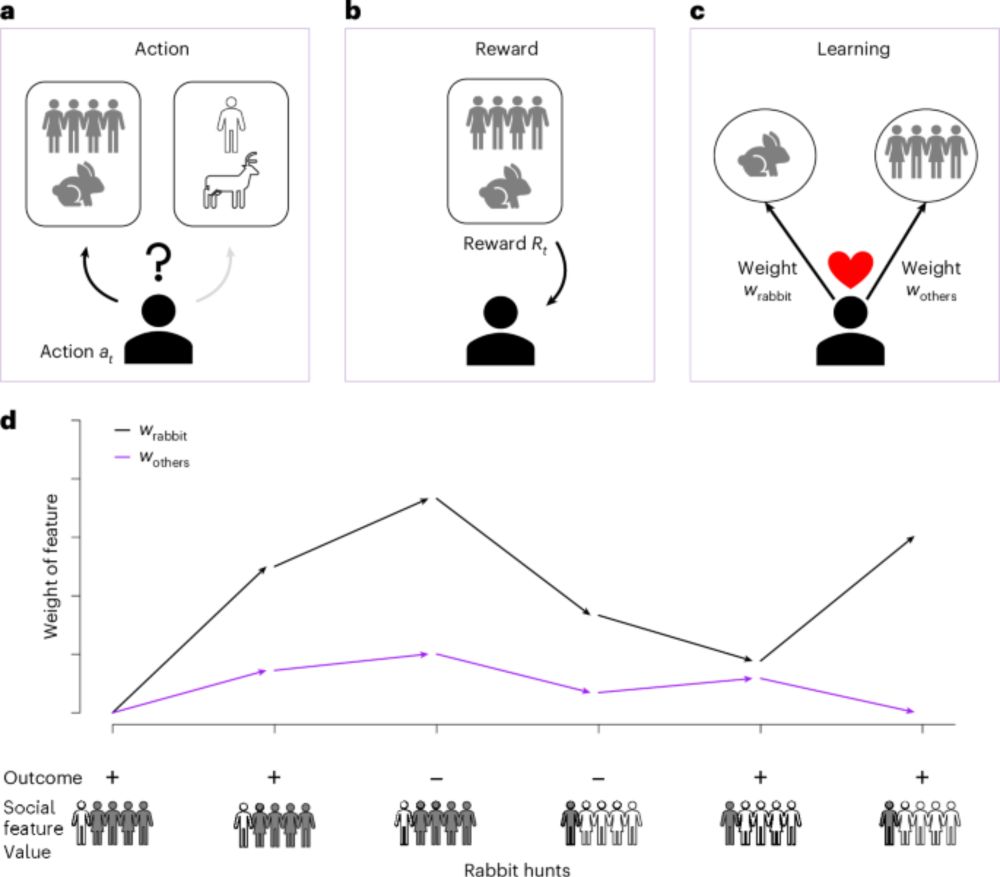
Through experiments and simulations, this study shows how individuals learn to learn from others, dynamically shaping the processes involved in cultural evolution. @davidschultner.bsky.social @bjornlindstrom.bsky.social
@lucasmolleman.bsky.social
www.nature.com/articles/s41...
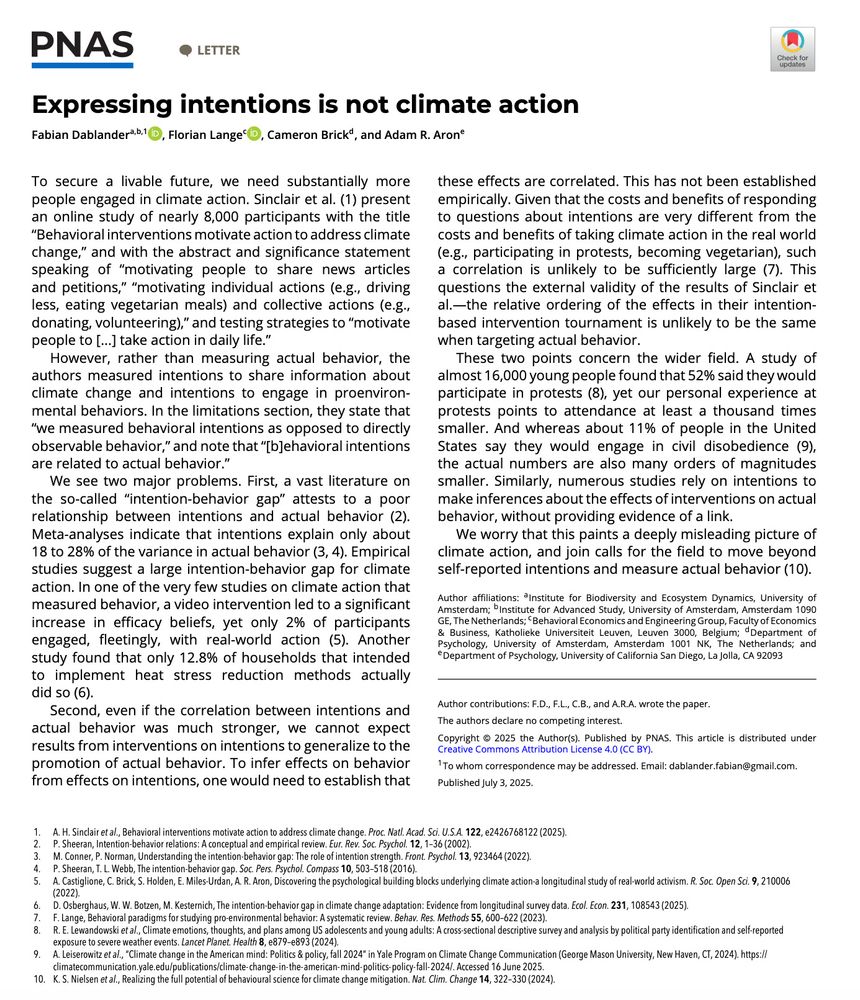
Expressing intentions is not climate action letter published in PNAS: https://www.pnas.org/doi/10.1073/pnas.2512457122
In our now published letter in @pnas.org, we raise two wider issues for behavioral science:
1) Intentions are poor predictors of behavior
2) Effects on intentions need not generalize to effects on behavior
We join calls for researchers to measure actual behavior: www.pnas.org/doi/10.1073/...
Very happy to share the first scientific publication of our microfibre-citizen science project! 🥳😊
How does participating in citizen science impact people’s views and behavior? See thread by @annabosshard.bsky.social for more details on the psychological outcomes of our study.
More to come soon…
Big shout out to the wonderful interdisciplinary team (from the Institute for Biodiversity and Ecosystem Dynamics and Psychology Research Institute of the University of Amsterdam): @cameronbrick.bsky.social, Bernou Boven, Julia Hijink @praetorius-a.bsky.social, & Lies Jacobs! 🙏
13.06.2025 16:35 — 👍 3 🔁 0 💬 0 📌 0(5/5) Implications💡
- Longitudinal designs are well-suited for studying the transformative potential of citizen science
- Moving beyond concern, future work can test whether citizen science boosts personal & contextual drivers of environmental impact (like through skills training or policy advocacy)
(4/5) Results📉
- Most psychological constructs were not or only weakly related to pro-environmental washing behaviors in the urban Dutch survey
- Citizen scientists were mainly women & highly educated, but these demographics were unrelated to washing behaviors in the urban Dutch survey
(3/5) Results 📉
- Citizen science participation increased awareness of microfiber pollution and perceptions of household responsibility
- Participation did not change other psychological constructs (like environmentalist identity & social norms) or behavioral intentions to use the laundry bags
(2/5) Method 🔬
- 57 Dutch residents washed their clothes in laundry bags for 3 months, collected microfibers after each wash & completed pre and post surveys
- In addition, 814 urban Dutch residents completed a cross-sectional survey on demographics, psychological constructs & washing behaviors

Washing synthetic clothes is a major source of microplastic pollution. Citizen science can help understand which behaviors & materials cause most emissions, like through at-home data collection. We asked: Does participation also boost pro-environmental motivation? 🧵
pubs.rsc.org/en/Content/A...
Strikes are beginning, because the cuts are dire. This story has many twists and turns, but in short, Dutch universities are proposing to sacrifice certain programs like our Psychology BSc in English to hope to appease the nationalist government. This isn't done yet.
www.folia.nl/en/actueel/1...
Excited to join Bluesky! I’m a PhD candidate at CWI and QuSoft, working on quantum & classical algorithms for post-quantum cryptanalysis 🔑. Check out our recent paper here: arxiv.org/abs/2503.23238. Looking forward to connecting with others in quantum computing, cryptography, and beyond!
01.04.2025 19:22 — 👍 10 🔁 2 💬 0 📌 0
🚫 Why does #TheHague #fossilfuel advertising ban matter to mitigating #climatechange?
Our colleague Thijs Bouman & co-authors Jan Willem Bolderdijk & Keith Smith explore the impact of the bold initiative beyond its symbolism in a new paper:
www.nature.com/articles/s41...
Here's a short 🧵:
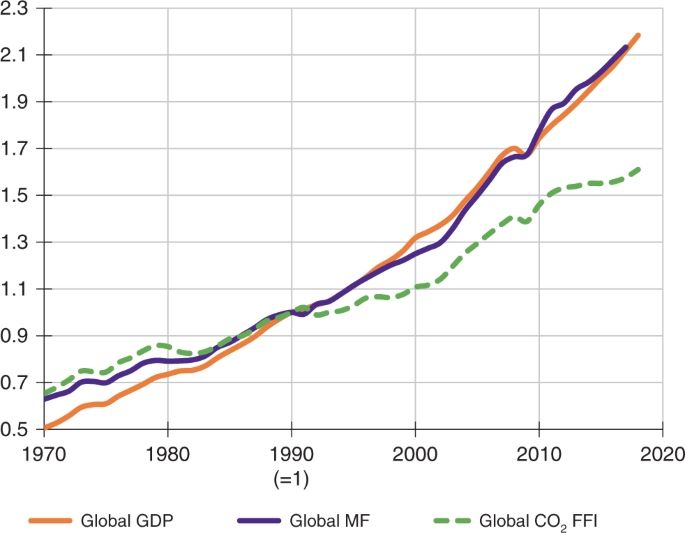
Climate action means taxing the rich.
We must "strengthen equality and redistribution through suitable taxation policies, basic income and job guarantees and by setting maximum income levels, expanding public services and rolling back neoliberal reforms"
www.nature.com/articles/s41...
🚨 New preprint out! 🚨
How do people make moral judgments as third parties? 👀 We show how two motivations—inequality aversion (fair = moral) ⚖️ and the common-is-moral heuristic (frequent = moral 👨👩👧👧—interact to shape evaluations 🧵👇
📄 osf.io/preprints/ps...

❓Do Left-wing Voters #Cycle more than Right-wing Voters? 🚲 🚲 🚲
Read our short paper in Findings
➡️ findingspress.org/article/1294...
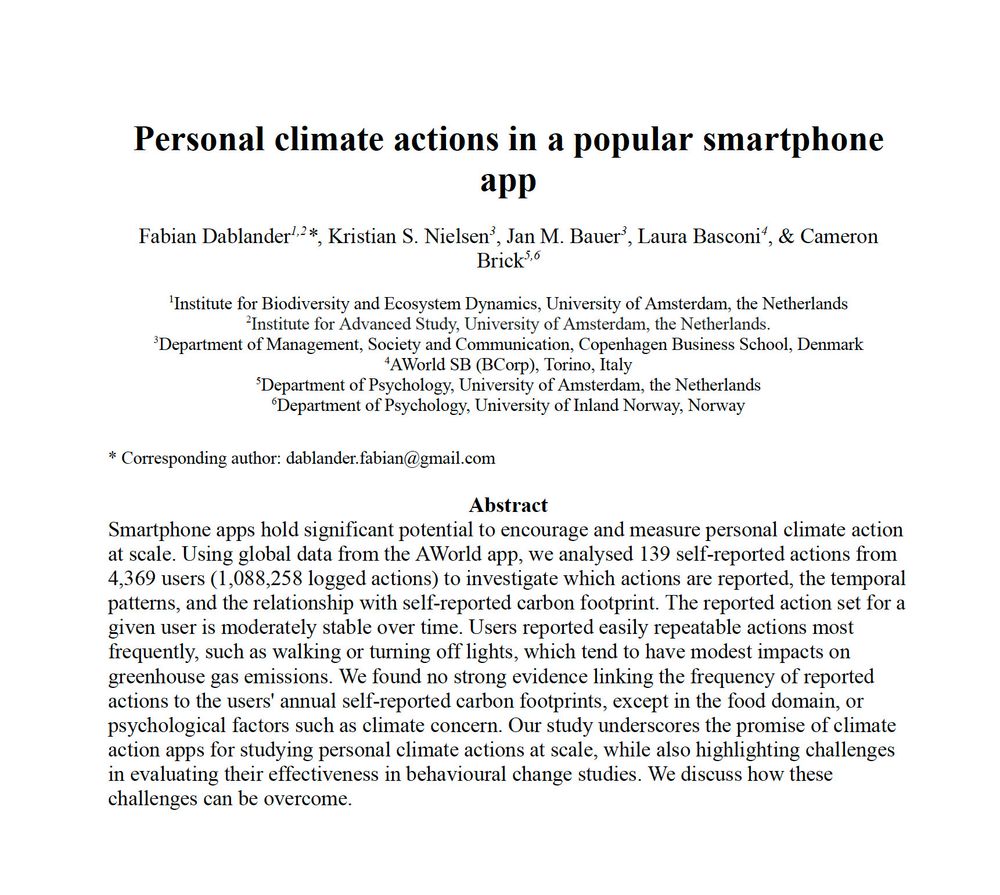
🚨 New preprint! 🚨
We analysed over one million actions reported in the AWorld app, the UN's official platform for individual action on climate change: osf.io/preprints/ps...
This was an exciting collaboration with @kristiansn89.bsky.social, Jan Bauer, Laura Basconi, & @cameronbrick.bsky.social 🧵👇
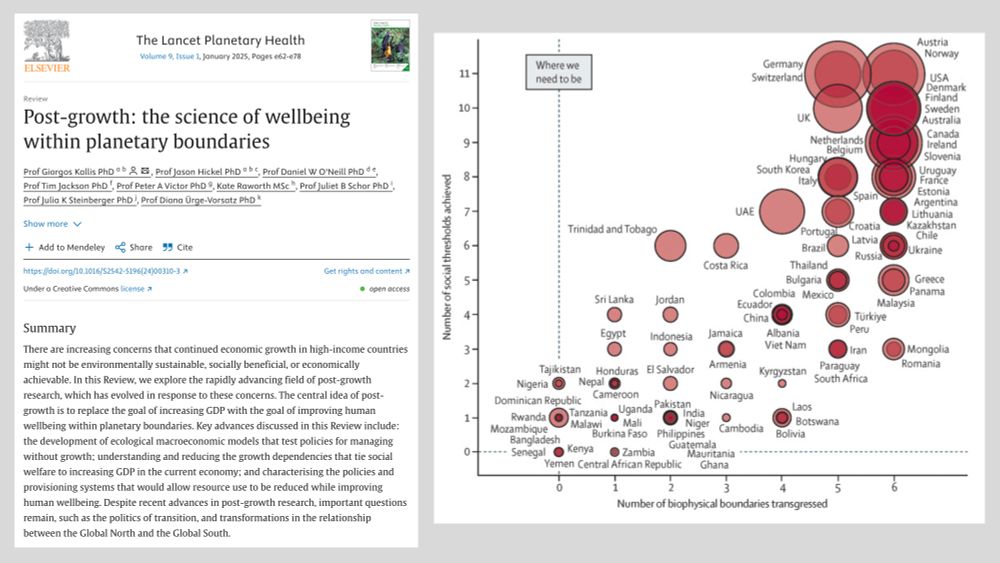
If you're interested in post-growth economic thinking, this newly published article will be right up your street. It was a big pleasure to work on it with such a fantastic group of co-authors. Check it out here: www.sciencedirect.com/science/arti...
22.01.2025 16:30 — 👍 182 🔁 88 💬 12 📌 12
1/6. 📢 Sign up for the Ways of Repair : #LossAndDamage symposium to hear from @farhanasultana.com on "Decolonizing Climate Knowledge: Repairing Epistemic Injustice and Loss in the Era of #ClimateChange”
🗓️January 22nd 2025,
⏰14:00-15:00 GMT
📍Online
✏️Sign up here: zoom.us/webinar/regi...
My lovely colleagues at CAST are advertising 5 PhD funded places!
Couldn't think of a more wonderful team to do your PhD with ✨ 🌎
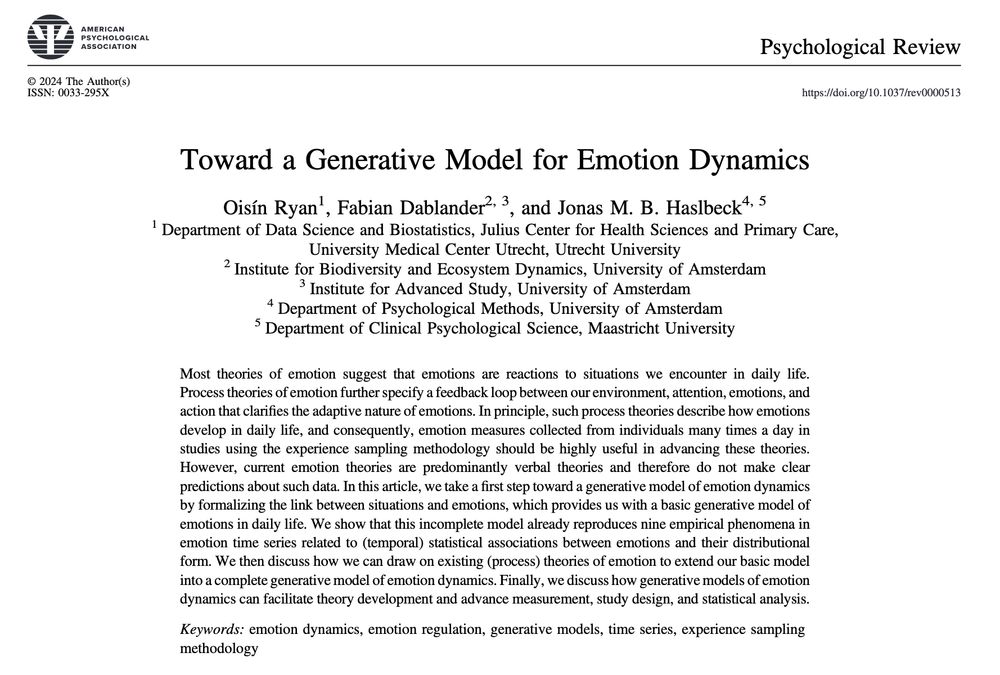
Emotions are reactions to situations we encounter in daily life. In our new paper in Psych Review (psycnet.apa.org/fulltext/202...; with @oisinryan.bsky.social and @fdabl.bsky.social), we take a first step towards building a generative model for emotion dynamics based on this simple principle 1/4
07.01.2025 09:19 — 👍 101 🔁 40 💬 3 📌 1
🎉 Embrace sufficiency 🎉
Sufficiency has great untapped potential to accelerate the energy transition.
In our new paper, we review key barriers, sketch how various actors can help overcome them, & draw broad lessons from transition studies for systemic change: www.sciencedirect.com/science/arti...