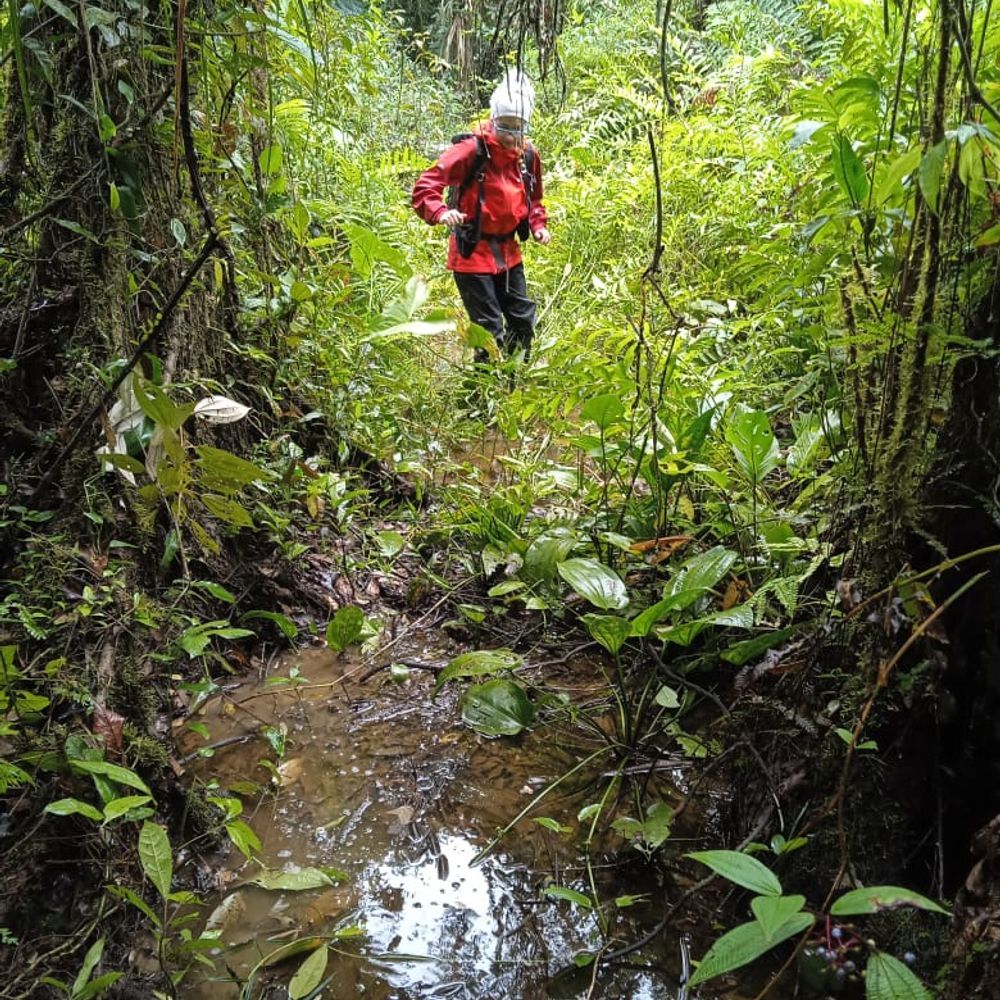
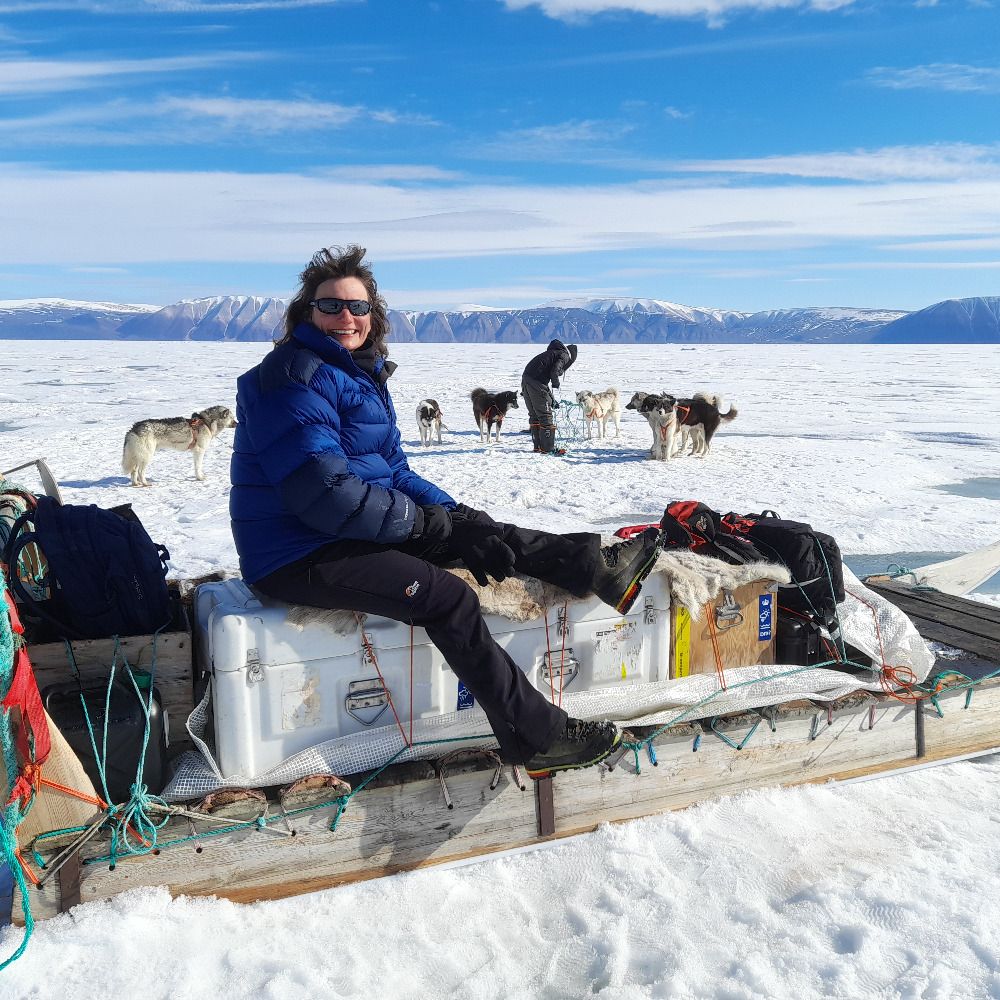
Hoy es el día de ellas, gracias por hacer tanto por nuestro PaleoIPE!!💜🏔️🌿🏞️🌺
Feliz Día Internacional de la Mujer y la Niña en la Ciencia✨
11.02.2026 18:29 — 👍 2 🔁 0 💬 0 📌 0
YouTube video by Made In Zaragoza
Ana Moreno
🎙️ ¿Conoces el álbum sonoro de las #científicas de #Zaragoza?
@amorenocab.bsky.social participa en esta actividad de divulgación en la que cuenta sus investigaciones sobre estudios climáticos del pasado.
👩🔬En la semana del #11F #TodasHacemosCiencia
Escúchala:
www.youtube.com/watch?v=PNZL...
09.02.2026 08:56 — 👍 2 🔁 2 💬 0 📌 0
Nuestra compañera e investigadora @amorenocab.bsky.social ha participado en este proyecto de divulgación del CSIC.
Hoy, en el día de la Educación Ambiental, se lanza este proyecto que fomenta la conciencia ecosocial y la acción climática entre la juventud. 🔥🌡️
26.01.2026 15:04 — 👍 3 🔁 3 💬 0 📌 0

🕵️Un proyecto educativo del @csic.es anima a estudiantes de secundaria a convertirse en detectives de crisis climáticas y medioambientales. La iniciativa propone actividades para fomentar el pensamiento crítico y ofrece herramientas ante los bulos➡️ www.csic.es/es/actualida...
@ipe-csic.bsky.social
26.01.2026 11:42 — 👍 12 🔁 7 💬 0 📌 0
@jorgesevil.bsky.social
23.01.2026 17:48 — 👍 1 🔁 0 💬 0 📌 0
El equipo ha sido obtenido gracias a la financiación por parte de la Fundación Ibercaja (www.fundacionibercaja.es)
23.01.2026 17:45 — 👍 0 🔁 0 💬 1 📌 0
¡Probamos un nuevo equipo!
Ana Moreno (@amorenocab.bsky.social), Jorge Sevil y Reyes Giménez, investigadores en nuestro grupo, prueban un nuevo escáner LIDAR en la famosa cueva de las Güixas (Villanúa, Aragón). Echa un vistazo a la publicación ! ⬇️⬇️
23.01.2026 17:45 — 👍 3 🔁 2 💬 1 📌 0

Pablo Valgañon during his talk

Pablo Valgañon presenting our results
@pvalganon.bsky.social from @paleoipe.bsky.social group at the @ipe-csic.bsky.social presenting our work on causal networks in pleoecology at the CS3 meeting @cs3conference.bsky.social taking place in Sevilla.
22.01.2026 13:33 — 👍 5 🔁 4 💬 0 📌 0
This is a collective effort from many colleagues and friends over the last decade! @fatimafrancopolen.bsky.social @michelle-farrell.bsky.social @vojtechabraham.bsky.social @michela-mariani.bsky.social and many more not in Bluesky!
20.01.2026 10:20 — 👍 3 🔁 1 💬 0 📌 0
Introducing relative pollen productivity estimates for Iberian taxa: methodological insights and implications for landscape modelling in the Western Mediterranean
If you want to know more about the first RPPs in Spain and their ecological implications, check out the preprint of this work in doi.org/10.32942/X2V.... 🎉
#palaeoecology #RPPs #PPEs #fossil
@gilromera.bsky.social
@nottspollen.bsky.social
20.01.2026 10:09 — 👍 4 🔁 2 💬 0 📌 0

Applying RPPs can change our view of plant composition. The figure shows whether applying RPPs improves the interpretation of the current plant landscape. On the left, the relationship between raw pollen percentages (Y-axis) and vegetation percentages (X-axis); on the right, the relationship between the percentage of pollen corrected with RPPs (Y-axis) and current vegetation abundance (X-axis). Figure retrieved from Jungkeit-Milla et al. (submitted).
So, why are RPPs so important? We can use this parameter to acquire a numerically detailed understanding on how vegetation cover have changed through time, as it may influence our previous interpretations of the Iberian plant landscape (see figure and caption).
20.01.2026 10:09 — 👍 2 🔁 0 💬 1 📌 0

Obtaining RPPs require first observing how pollen (axis-Y) correlates with regional vegetation (axis-X). This plot shows how taxa can produce more pollen than the presence of their species in the present landscape, highlighting the lack of linearity between pollen and vegetation. Figure retrieved from the Supplementary Material in Jungkeit-Milla et al. (submitted).
For this reason, we parameterised pollen productivity of each taxon. One of the most common method to do that is by calculating how much one taxon produces in relation to another (RPPs). ⬇️
20.01.2026 10:09 — 👍 2 🔁 0 💬 1 📌 0
🔬We study changes in past vegetation by analysing pollen grains and spores deposited in sediments that can be preserved for thousands of years. However, we are aware of the non-linearity between the amount of pollen found in the sedimentary record and the abundance of the species that produced it. ⬇️
20.01.2026 10:09 — 👍 2 🔁 0 💬 1 📌 0
Some exciting news! Our PhD candidate @kijumil.bsky.social just submitted his paper about the first relative pollen productivity estimates (RPPs) in the Iberian Peninsula. 🥬🌿
But, what exactly are RPPs and why are they important in palaeoecology ?
Follow through the post to find out! ⬇️
20.01.2026 10:09 — 👍 5 🔁 6 💬 1 📌 1

🔬En concreto, en su investigación trabaja con sedimentos lacustres obtenidos del ibón de Plan o Basa de la Mora (1913 msnm)
(3/3)
12.01.2026 14:36 — 👍 0 🔁 0 💬 0 📌 0

🦌🌿Su objetivo es reconstruir la estructura y composición de las comunidades animales y vegetales del Pirineo central durante el Holoceno e inferir cuáles son las perturbaciones que provocan cambios en estas comunidades (clima, fuego, actividad humana, etc.)
(2/3)
12.01.2026 14:36 — 👍 0 🔁 0 💬 1 📌 0


Tras el parón por las Navidades, ¡estamos de vuelta! 🤖Y seguimos con las presentaciones de nuestro personal predoctoral.
⛰️Nuestra doctoranda Cristina Ramos es bióloga y está realizando con nosotros su tesis doctoral utilizando ADN fósil sedimentario (sedaDNA)🧬
(1/3)
12.01.2026 14:36 — 👍 0 🔁 0 💬 1 📌 0


🔨Analiza sedimentos de lagos del noreste de la Península Ibérica, donde busca pistas en las diminutas valvas de unos pequeños crustáceos llamados ostrácodos, haciendo análisis isotópicos, y en restos de moléculas lipídicas sintetizadas por bacterias y arqueas, específicamente los GDGTs (2/2)🔬
15.12.2025 15:27 — 👍 1 🔁 0 💬 0 📌 0


Nueva presentación! Turno de nuestra doctoranda Ángela Ara!💫
Angie es geóloga y estudia cómo cambiaron las temperaturas en momentos de cambio climático rápido durante el Último Ciclo Glacial (1/2) ❄️🌡️
15.12.2025 15:27 — 👍 1 🔁 0 💬 1 📌 0
PalaeOpen
¡La Acción sigue abierta a participantes!
@gilromera.bsky.social coordina el grupo de Comunicación, Transferencia y Divulgación (2/2).
🔗 palaeopen.github.io
#COSTAction #Paleoecology #OpenScience #Networking
04.12.2025 13:08 — 👍 2 🔁 1 💬 0 📌 0

El equipo de Paleo-IPE en Basa de la Mora en mayo de 2024 en una campaña de campo para obtener un sondeo sedimentario que permita estudiar los cambios de fauna y flora durante el Holoceno

Graciela Gil moestrando un sondeo sedimentario a invitados de un congreso
Post 3:
Graciela defiende una ciencia ética, inclusiva y transformadora.
Porque el conocimiento no es neutral: debe ser abierto y capaz de influir en el debate público.
🌱 Más en gilromera.com
#CienciaAbierta #Resiliencia #CambioGlobal
03.12.2025 15:04 — 👍 1 🔁 0 💬 0 📌 0

Graciela Gil trabajando al aire libre manipulando un sondeo sedimentario


🔬 Sus líneas de trabajo:
1️⃣ Reconstrucción paleoambiental en zonas sensibles (África, Pirineos).
2️⃣ Interacciones ecológicas para entender la estabilidad.
3️⃣ Regímenes de incendios pasados con proxies como polen, carbón y sedaDNA.
#Investigación #CambioClimático
03.12.2025 15:04 — 👍 1 🔁 0 💬 1 📌 0

Dr Graciela Gil-Romera
Global Change at Long-Term Scales, bridging the gap between past and present.
El cambio global es uno de los grandes retos de nuestro tiempo.
@gilromera.bsky.social investiga cómo los ecosistemas han respondido históricamente a las perturbaciones y qué nos dice esa historia sobre resiliencia y estabilidad.
➡️ gilromera.com
#Ciencia #CambioGlobal #Paleoecología
03.12.2025 14:58 — 👍 5 🔁 4 💬 1 📌 0

10 de noviembre #díamundialdelacienciaparalapazyeldesarrollo #NACIONESUNIDAS #HumanRights #paz #UN
www.un.org/es/observanc...
PAZ para TOD@S
@paleoipe.bsky.social
11.11.2025 10:07 — 👍 3 🔁 1 💬 0 📌 1
PhD in Geology. Geomorphology, karst and geological hazards researcher. IPE-CSIC postdoc.
https://jorgesevilaguareles.quarto.pub/
Assistant Professor @coventrycawr.bsky.social. Using microfossils to understand long-term environmental change and its impacts on socio-ecological systems. Interested in islands, wetlands, peat, prehistory, heathlands, biodiversity.
researcher in Quaternary palaeoecology, pollen analysis, based @sciencecharles.bsky.social, interested in past landscapes, Iberian & Balkan peninsula
vojtech_abraham@mastodon.social
vojtechabraham.cz
Geóloga, investigo los climas del pasado. Preocupada por la emergencia climática
📰 | Lo mires como lo mires, Heraldo es líder
📲 | Actualidad, historias y mucho más de Aragón
🔗 | www.heraldo.es
I teach Botany at @upm.es 🌱🌿
Quaternary, megafossils, charcoals, fossil woods, urban forestry 🌳
Traveler, japanophile and bonsai enthusiast ⛩️
PhD candidate at the Pyrenean Institute of Ecology (@IPE_CSIC / @paleoipe). Working on pollen-vegetation modelling throughout the Holocene in Spain.
Mum of 2, Associate Professor, photographer, traveller, European in UK. Travelling in time and space to uncover past landscapes and 🔥 using fossil pollen |
News and research updates for pollen lovers from the Nottingham pollen laboratory. Based in England, tweets have a Southern Hemisphere flavour: https://nottspollen.wordpress.com/
Centro mixto del CSIC y la Universidad Complutense de Madrid dedicado a la investigación en las Geociencias.
https://igeo.ucm-csic.es/
Cuenta del Consejo Superior de Investigaciones Científicas, el mayor organismo público de investigación de España.
www.csic.es
Instituto Pirenaico de Ecología - Consejo Superior de Investigaciónes Científicas | Pyrenean Institute of Ecology - Spanish National Research Council.
Centro de investigación del CSIC dedicado al estudio de los #Ecosistemas terrestres y el #CambioGlobal
CSIC Cultura Científica. En el CSIC nos gusta hacer ciencia y también compartirla. Te contamos nuestras iniciativas para acercar la ciencia a todos los públicos.
Palaeoecologist, working at the Paleoecology Lab in @csic. Views are my own. Group’s blog: www.mauritiastories.wordpress.com
Climate scientist at DMI, Greenland, Antarctica, polar regions in general.
Dipping a toe in yet another social media site. Mostly on mastodon though @ruth_mottram@fediscience.org
Blogging at sternaparadisaea.net
Researcher | Scientist
southern African palaeoenvironments
https://drlynnequick.com/
Professor at Aberystwyth University, shedding a little light on the past through the development & application of luminescence dating of Quaternary sediments.
Reader Physical #Geography | #Quaternary #Drylands | #Geoarchaeology | #Luminescence | #USeries | #Hydrogeology | #cyclist | #swimmer |🏳️🌈 | parent | (she/her)
🌐 https://research.manchester.ac.uk/en/persons/abi.stone
PANS & RivER https://shorturl.at/p2iNi
Researches @ipe-csic.bsky.social on past global changes & long-term resilience • Drawing, crocheting, hiking, alto sax, birdwatching & swimming • Music all around • Open data, knowledge, science & community power • www.gilromera.com • Zaragoza, ES