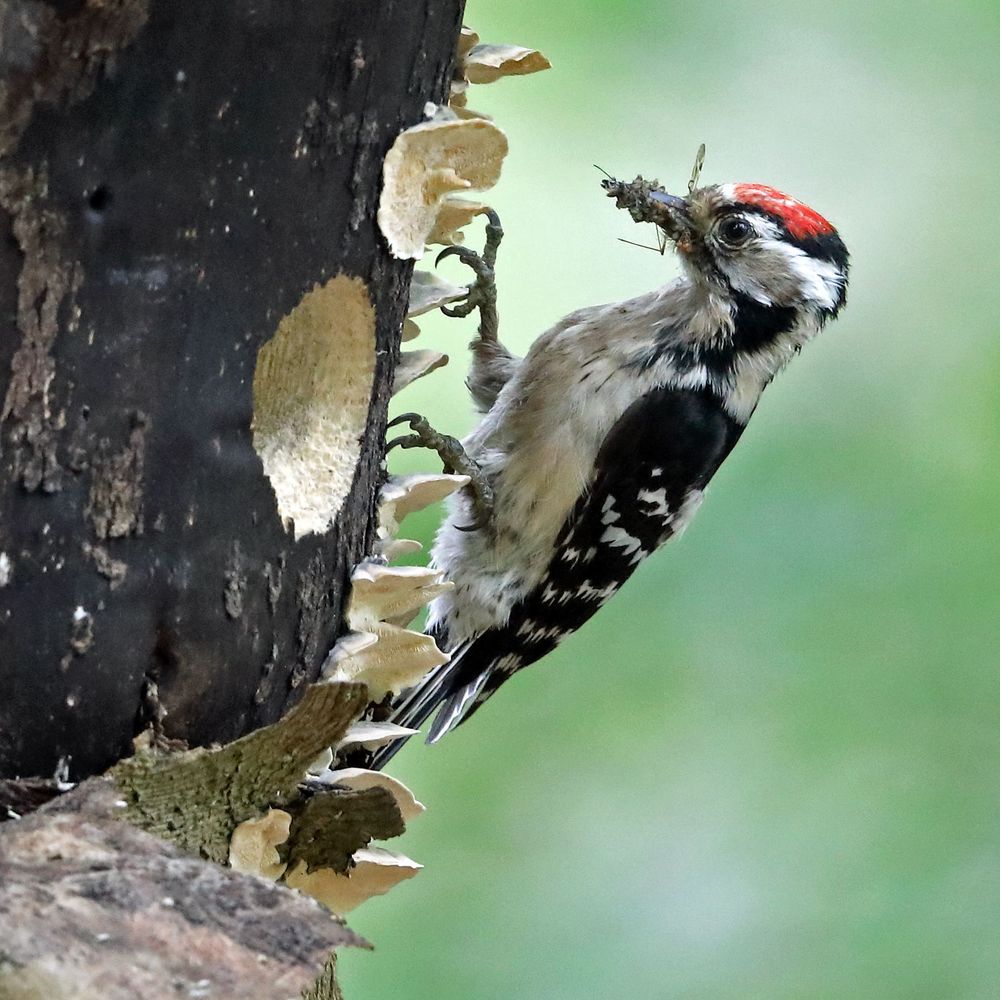
A low carbon lifer! Excellent work 😄
22.01.2026 18:02 — 👍 1 🔁 0 💬 1 📌 0
Nice one John 😄
22.01.2026 18:00 — 👍 1 🔁 0 💬 0 📌 0
Great to see RBBP data being used in work led by @btobirds.bsky.social that improves our knowledge on the status of Little Egrets in the UK… there are more than we thought!
19.01.2026 17:11 — 👍 42 🔁 13 💬 0 📌 0
Hi Joe, the problem with Ferruginous Ducks is there have been several roaming escaped birds from wildfowl collections. So it is now very difficult to know if a bird is genuinely wild or not. Either way it's still a nice bird to have on patch 😄
14.01.2026 23:08 — 👍 1 🔁 0 💬 0 📌 0
Nice! Started well, it will be interesting to see how many you can get
13.01.2026 08:54 — 👍 0 🔁 0 💬 0 📌 0
Thanks Rudy, I've been enjoying all your recent colourful bird photos!
13.01.2026 08:52 — 👍 1 🔁 0 💬 0 📌 0
Glad you saw it Noah. Are you doing a local year list for Cambridge?
12.01.2026 21:52 — 👍 0 🔁 0 💬 1 📌 0

Drake Ferruginous Duck at Milton CP

Drake Scaup at Milton CP

Female Goosander, a patch tick at Cambridge Research Park

White-fronted Geese at Cambridge Research Park
A drake Ferruginous Duck at Milton CP today was a real surprise, whatever its origin, and topped off an excellent few days of local birding @cambsbirdclub.bsky.social #ukbirding
12.01.2026 21:13 — 👍 45 🔁 2 💬 2 📌 0

A drake Scaup asleep

Drake Ferruginous Duck
A four Aythya lunchbreak - as well as Tufted Duck and Pochard, drake Scaup and Ferruginous Duck at Milton Country Park. Top find by @jonheath.bsky.social #UKBirding
12.01.2026 17:34 — 👍 33 🔁 1 💬 0 📌 0
Great find! Sounds like pretty good birding
10.01.2026 13:25 — 👍 1 🔁 0 💬 1 📌 0


An excellent #patch tick with 2 Greater White-fronted Geese showing well at the Cambridge Research Park this morning. Many thanks to @jonheath.bsky.social for finding. An adult female Goosander also present #birds #PWC2026 #photography @cambsbirdclub.bsky.social
10.01.2026 12:33 — 👍 31 🔁 3 💬 2 📌 0
Cheers Matt 😊
07.01.2026 21:48 — 👍 0 🔁 0 💬 0 📌 0

drake Scaup

small ice-free area on Todd's Lake
A drake Scaup late this afternoon on a small ice free area of Todd's Lake at Milton CP. After being well out of finding form recently it was nice to get something good on patch for a change @cambsbirdclub.bsky.social #ukbirding
07.01.2026 20:03 — 👍 30 🔁 2 💬 1 📌 0
Great photo, really nice light 👌
03.01.2026 21:35 — 👍 2 🔁 0 💬 1 📌 0
Indeed it must be the same across the country. Some of the scarce winter visitors and passage migrants are now less than annual. At least we are having the best Goose winter for a long time!
31.12.2025 21:52 — 👍 1 🔁 0 💬 0 📌 0
I think anything above 190/200 and you've done very well. Getting near the 210/220 mark is more difficult than it was 10 or so years ago
31.12.2025 21:42 — 👍 2 🔁 0 💬 1 📌 0

Happy New Year! Some of the best birds seen and favourite pics from locally around Cambs this year. One of my highlights was recording over 100 species in April at my Tev Fen patch, though the habitat there and then interesting birds soon dried up @cambsbirdclub.bsky.social
31.12.2025 21:07 — 👍 27 🔁 1 💬 1 📌 0
Makes a bit of change from local birding!
31.12.2025 17:50 — 👍 1 🔁 0 💬 0 📌 0

Black-winged Kite in flight

Black-winged Kite eating vole

Eastern Black Redstart

Some cold birders optimistically seawatching at Sheringham
Great day out in Norfolk yesterday. After a bit of a wait the Black-winged Kite started hunting at Ludham Bridge and quickly caught a vole. Later on the Eastern Black Redstart showed brilliantly in the winter sunshine at Sheringham @mrm27.bsky.social #ukbirding
31.12.2025 17:40 — 👍 21 🔁 0 💬 1 📌 0
Hopefully it will follow the Swans deeper into the Fens into Cambs 😅
27.12.2025 17:48 — 👍 2 🔁 0 💬 1 📌 0
Climate-driven range contractions in species like Twite and Citril Finch can't be fixed by releases www.birdguides.com/news/citril-... #Ornithology ##UKBirding 🪶
27.12.2025 09:40 — 👍 62 🔁 17 💬 1 📌 3
Absolutely shocking.
We're offering an overall award of £10k for information that leads to a conviction in these cases.
We need to make raptor persecution a thing of the past.
17.12.2025 14:18 — 👍 395 🔁 201 💬 17 📌 8

A flock of Bewick's Swans by Ben Cherry/WWT
📉 Our new paper shows Bewick’s Swan numbers in NW/NE Europe have fallen to ~12,900 birds - a 56.7% decline since 1995, with further losses predicted by 2026 unless survival or breeding success improves. Flyway-wide conservation is urgent. 🦢 Download paper > tidsskrift.dk/Wildfowl/art... #Ornithology
12.12.2025 15:22 — 👍 67 🔁 40 💬 1 📌 1
Thanks Rachel! Really nice to see one so close
03.12.2025 18:59 — 👍 1 🔁 0 💬 0 📌 0

1st-winter Red-necked Grebe still showing really well at Fen Drayton Lakes today, often diving between submerged tree branches on the eastern side of Ferry Lagoon. The last one at this site was over 10 years ago @cambsbirdclub.bsky.social
03.12.2025 18:47 — 👍 31 🔁 1 💬 1 📌 0
Sorry to hear Steve. 16 years, what a great life he must have had and no doubt a decent bird list!
03.12.2025 17:19 — 👍 1 🔁 0 💬 1 📌 0
There must be some particularly good Shoveler food just out of reach at Milton CP as most of the over-wintering birds there have switched to a diving feeding technique @cambsbirdclub.bsky.social
02.12.2025 19:10 — 👍 11 🔁 1 💬 0 📌 0

Photo montage of Tinamus resonans sp. nov., a new species of tinamou from the montane forests of the Serra do Divisor, western Amazonia, Brazil. The species is distinguished by a unique combination of plumage pattern, vocal repertoire, and ecological characteristics, including a conspicuous dark slate facial mask, vivid rufous-cinnamon underparts, and a uniform brownish-gray back. Its vocalizations are remarkable, consisting of long and powerful songs that echo strikingly across the steep montane slopes, producing a characteristic resonant effect. The species was documented exclusively at higher elevations within a transitional zone between submontane and stunted forests, where the understory is densely structured by root mats. A preliminary population estimate, based on field detections and spatial extrapolation, suggests approximately 2,106 individuals restricted to the Serra do Divisor massif. Although no immediate anthropogenic pressures were observed within its range, the species may be highly vulnerable to climate change and to proposed infrastructure projects that threaten the integrity of this federally protected region. The discovery of T. resonans highlights the biological uniqueness of the Serra do Divisor, reinforces its status as a center of montane endemism, and underscores the critical importance of maintaining its long-term conservation.
Huge News from the Western Amazon: it's the year 2025 and we are still describing entirely new, strikingly-distinctive large-bodied bird species! Behold Tinamus resonans sp. nov. the Slaty-masked Tinamou mapress.com/zt/article/v... #Ornithology @tetzoo.bsky.social 🪶
02.12.2025 07:20 — 👍 313 🔁 96 💬 9 📌 15
This time, the washes were ready! 🦢✅
After a 570km U-turn north to Aberdeenshire, likely due to low water at the Ouse Washes, the same swan has migrated south again & arrived to restored, higher levels. A real-world example of landscape-scale habitat assessment by migratory birds.
01.12.2025 20:25 — 👍 89 🔁 13 💬 4 📌 1
Birder from Suffolk who also enjoys a bit of cycling and photography, sometimes at the same time.
I'm Viola P.
Birds, Nature, Wildlife, Butterfly's 📷
from 🇩🇪
SDA
Published Photographer 📷🌿🦢🌝
”I love Nature & how is nourishes our Souls” 🧡🕊️🌿🦢🇸🇪🇬🇧
Love Our Earth 🌍❤️ #Nikon #Nature #Sunrises #Sunset #Moon #AxialSpa www.VeronicaintheFens.com
Writers & writing, wild places, slow food. Stories, art, poetry, nature. UK based international. Constantly curious.
Woods,Wetlands and Wilding …
Birds. Parkrun tourist. County Antrim birding. Northern Ireland.
Increasingly concerned about AI
https://ebird.org/profile/MjMzNDk1NA
Singer, guitarist, Christian, rugby ref, wildlife enthusiast
RSPB Site manager for Ouse and Nene Washes, avid Cambs birder!
16/ Birder and Photographer/ UK 180 (Western Cattle Egret) - Bucks based and occasional twitches. Into mammals, sealife, butterflies and insects too
Bucks - 95
World - 315
Radical Allotment Front.
In favour of a habitable planet for all, eat the rich.
The cult leaders have locked the gates to the compound.
South Cambridgeshire, UK.
@tonyjw on upscrolled
The Buffering Frankentrappers. VC27 - Hickling, Norfolk
https://jamesdeebirdingtrips.blogspot.com/
https://www.instagram.com/james_dee_home/
Artist, writer, naturalist, photographer and wonderer. Enchanted by the natural world but angered by our treatment of it. Always happier outside. Often found gazing at the sky.
Website: www.kerrieanngardner.co.uk
🪸 Search and download biodiversity data.
🌍 Discover co-inhabitants of planet Earth.
editor @bindinghook.bsky.social / freelance editor & writer (oxford analytica, brill yearbook of muslims in europe 2022-present, eater, eurasianet, oc media, saveur, the moscow times, etc)
based in oegstgeest
also: birds, bikes, georgian, snacks, trains
Lesser Spotted Woodpecker conservation project supporting birdwatching volunteers to find & record Lesser Spots, their nests & breeding outcomes. Posts by Ken & Linda Smith, website www.woodpecker-network.org.uk
Avian Artist | Birder | Ecologist & ECoW | Illustrator
https://linktr.ee/ruthsportraits
My Portfolio: https://portfolio.pixelfed.social/JoeGarrity