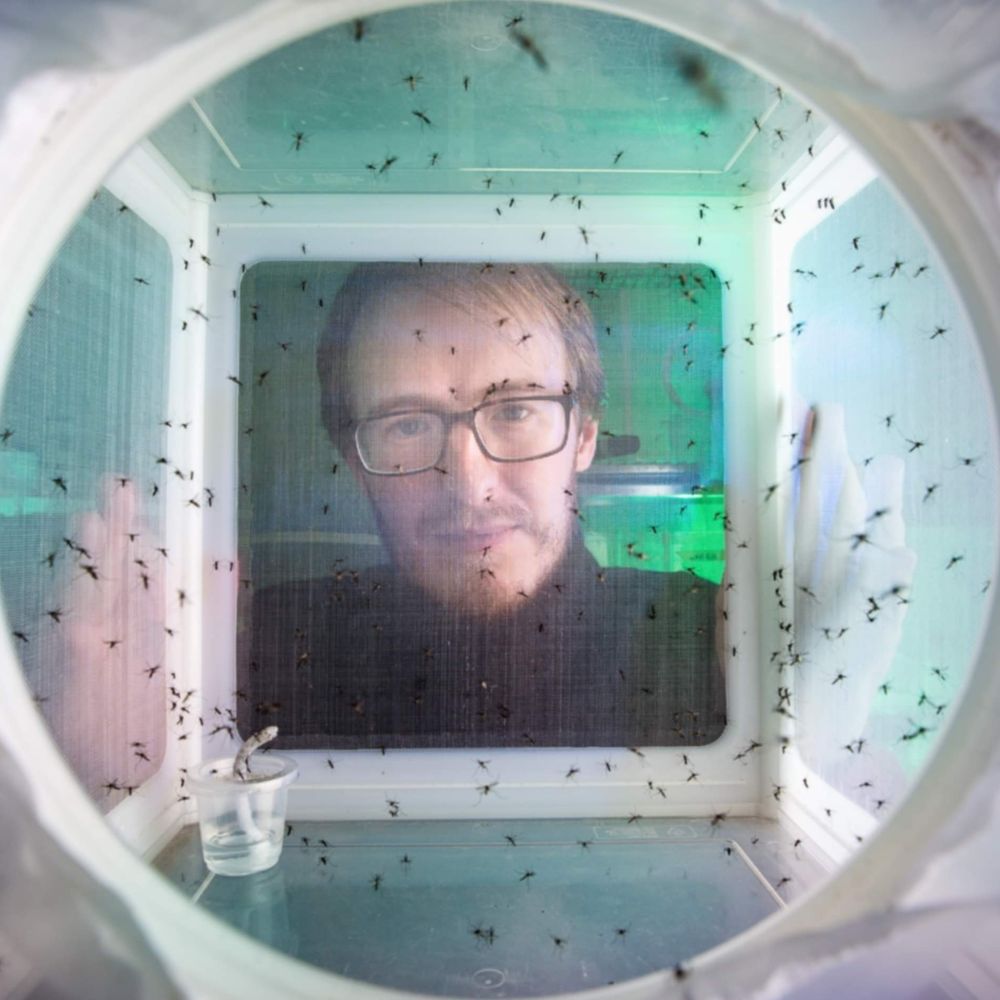
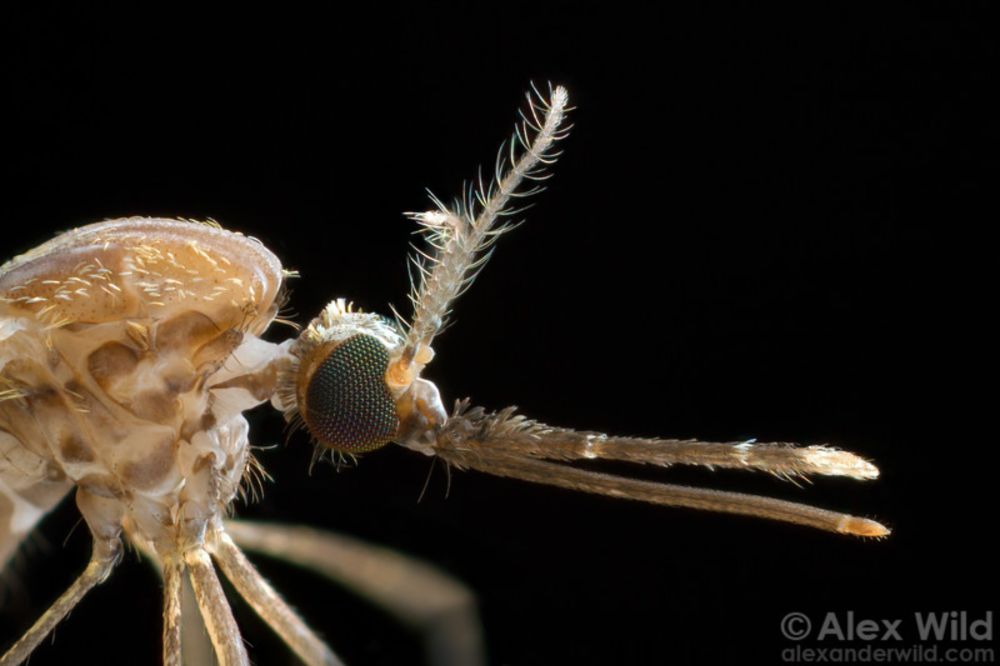
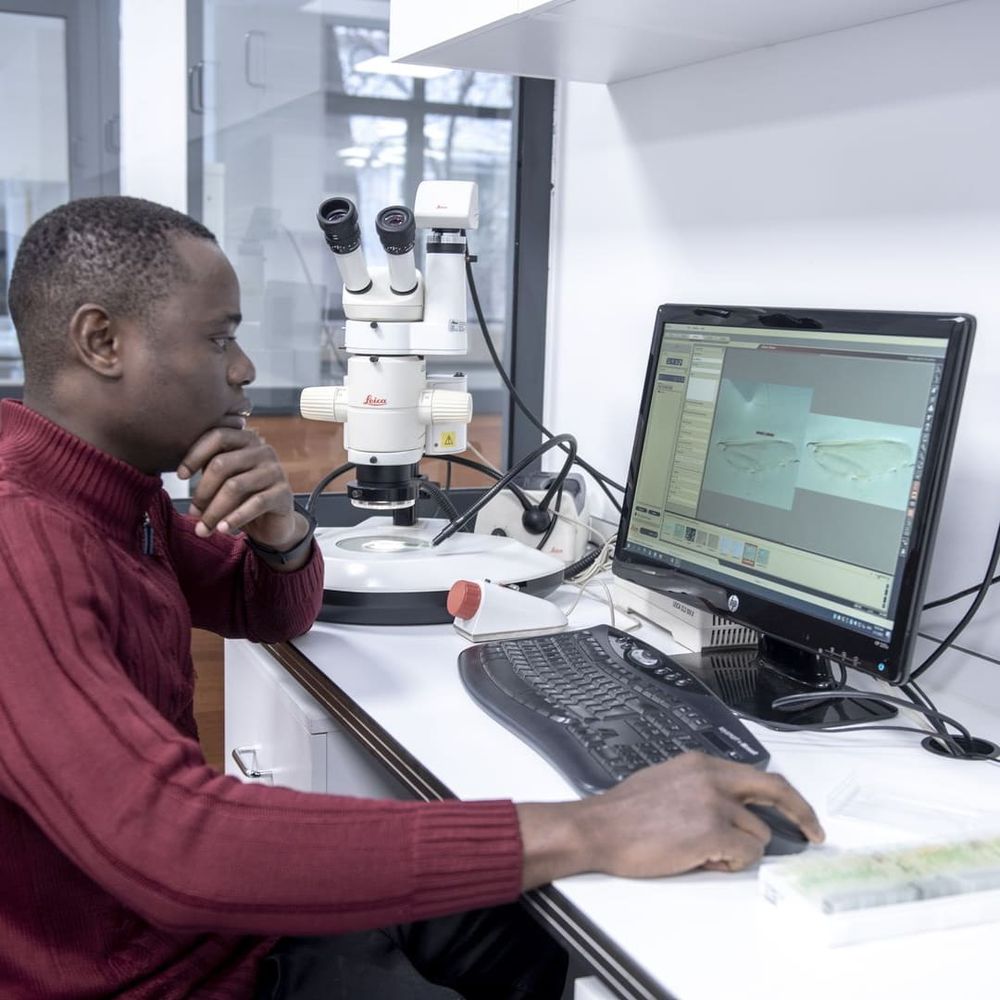
The videos show male mosquitoes trying to bite me. My skin was too thick for them to pierce but they sure did try! You'll see in the paper that they can feed successfully under some conditions.
29.12.2025 11:12 — 👍 4 🔁 2 💬 0 📌 0
The long-held belief that only female mosquitoes bite may not be true after all.
Very excited to have had the opportunity to contribute to this study showing that male mosquitoes can also bite and feed on blood.
www.biorxiv.org/content/10.1...
29.12.2025 11:12 — 👍 31 🔁 14 💬 1 📌 1
I don't doubt it will be a useful tool. The problem is that when people become over-reliant on technology like this it will affect their own judgement.
15.10.2025 21:36 — 👍 0 🔁 0 💬 1 📌 0
I am baffled by the overwhelmingly positive responses to this. When did the idea of using AI to review papers suddenly become acceptable? We must not let AI shape the way we do science.
15.10.2025 19:48 — 👍 6 🔁 0 💬 1 📌 0
This was originally created many years ago to promote a Wolbachia release program our lab was involved in, but it never got used. So here it is now.
05.10.2025 12:33 — 👍 2 🔁 1 💬 0 📌 0
YouTube video by Perran Ross
How Wolbachia mosquitoes can prevent dengue transmission
I made a stop-motion animation to explain how Wolbachia mosquitoes can control dengue transmission
youtu.be/viFCd_ZnPu8?...
05.10.2025 12:33 — 👍 2 🔁 1 💬 1 📌 0
This was originally created many years ago to promote a Wolbachia release program our lab was involved in, but it never got used. So here it is now.
05.10.2025 12:31 — 👍 0 🔁 0 💬 0 📌 0
Imagine being the first scientist to notice that some of the ants being studied had two butts & that one of them was a beetle that had latched on for a free ride.
See the mandibles of the beetle (yellow arrow)? Latched on to the ant's 'waist', blending seamlessly.
Ants with detachable butts.
29.09.2025 18:06 — 👍 119 🔁 36 💬 5 📌 4

Impact of larval diet on fitness outcomes of Aedes aegypti mosquitoes infected with wAlbB and wMelM - Parasites & Vectors
Background Releases of Wolbachia-infected Aedes aegypti are being used to effectively control diseases caused by arboviruses, such as dengue. A well-balanced larval diet is essential for producing Wolbachia-infected mosquitoes with optimal fitness for release. Methods In this study, four diets with varying protein-to-carbohydrate ratios were tested with three Ae. aegypti lines (carrying the wAlbB, wMelM Wolbachia infections or uninfected) to identify optimal diets for larval rearing on the basis of diet allocations ranging from 0.4 to 3.2 mg/larva/day. The diets were selected on the basis of a review of existing literature and are characterized by progressively increasing protein and decreasing carbohydrate content: diet 1 (Pd) was based on plant-based protein (low protein and high carbohydrate), diet 2 (Kd) was based on animal-based protein (moderate protein and high carbohydrate), diet 3 (Fd) involved Hikari fish food (high protein and moderate carbohydrate), and diet 4 (IAEA) followed a widely used very-high-protein and low-carbohydrate diet developed by the International Atomic Energy Agency (IAEA). The optimal concentration for each diet was determined using a fitness index that incorporated pupation success, fecundity, hatch proportion and development time. Results The optimal dietary allocations for diets 1–4 were 1.6, 1.2, 1.2 and 0.8 mg/larva/day, respectively, regardless of Wolbachia status. There was a consistent significant positive relationship between female wing length and fecundity in wAlbB (r2 = 0.881), wMelM (r2 = 0.329), and uninfected (r2 = 0.886) mosquitoes. Diet 3 (Fd) at optimal food allocation reduced a fitness cost commonly associated with the wAlbB line compared with the uninfected line when provided at the optimal concentration. The wMelM line showed a persistently low fecundity regardless of diet and concentration. Conclusions These findings highlight the importance of an appropriate larval diet and dietary allocations in optimizing mosquito fitness for Wolbachia-based vector control programs. Further research into dietary composition, gut microbial interactions and Wolbachia associations could refine larval nutrition strategies, enhancing the effectiveness of mass-rearing for release programs. Graphical abstract
New paper on impacts of different larval diets on the fitness of Wolbachia mosquitoes
parasitesandvectors.biomedcentral.com/articles/10....
26.09.2025 10:27 — 👍 7 🔁 4 💬 0 📌 0
Repeated thermal stress exposure in Aedes aegypti co-infected with Wolbachia and dengue virus | mSphere
Dengue virus (DENV), spread by the mosquito Aedes aegypti, is a major global health threat affecting millions of people. This study examines
how repeated exposures to heat stress affect the thermal to...
📢🦟 New study from Dr. Beth McGraw and colleagues:
Heatwaves make Aedes aegypti co-infected with Wolbachia + dengue virus twice as heat-sensitive.
🌡️ Extended heat lowered dengue loads, while Wolbachia remained stable.
Findings highlight climate change impacts on vector control.
Read more➡️ 🔗
17.09.2025 14:31 — 👍 3 🔁 1 💬 0 📌 0
Mosquito with a bendy proboscis that can't feed. This is a common phenomenon when mosquitoes get older.
03.09.2025 06:45 — 👍 5 🔁 1 💬 0 📌 0
YouTube video by PBS Terra
I Visited a Mosquito Factory
I was featured in this PBS episode of the Human Fooprint, talking about the use of Wolbachia for dengue virus control. I should know better than to read the comments - some of y'all need serious help...
www.youtube.com/watch?v=AI3H...
27.08.2025 21:14 — 👍 7 🔁 1 💬 0 📌 0

Discovery and description of a novel mode of oviposition in the mosquito genus Culex
Scientific Reports - Discovery and description of a novel mode of oviposition in the mosquito genus Culex
I am back with great news. A project by a former undergrad, Liz Wynne, is now out in publication. In it she discovered a mosquito in the genus Culex that lays eggs from the air (like a Toxorhynchites) and exhibits skip oviposition (spreading eggs around). An amazing discovery! 🦟🍾
rdcu.be/eBkFM
19.08.2025 14:54 — 👍 78 🔁 28 💬 2 📌 1

The very first paper from my lab in Krakow is now available here: DOI: 10.3791/68207 Yes, it is a protocol, BUT it is also a GREAT protocol! Congrats to the first author @navinafrancis.bsky.social! Stay tuned, an update on the clones is coming soon!
01.07.2025 14:59 — 👍 5 🔁 4 💬 1 📌 0
Mosquito–virus–symbiont interactions | Wolbachia & microbiome | Arbovirus transmission | Aedes ecology | Africa-focused vector biology
PI: Sheila Agha
Exploring endosymbiosis at Queen Mary University of London. Associate professor. Symbiosis, ecology, evolution, microbiology http://henry-lab.co.uk
All about mosquito research, public health, music, and videogames!
Assistant Professor at @DukeBiology. #NewPI #EvoDevo, gene regulation, adaptive traits, #Wnt signaling 🦋. 🧬🔬🧪. She/her/Ella
Countering the propaganda of the biotech industry.
Research assistant professor PI, Cross Flavi Lab @Pitt | Flavivirus antibody response & cross-flavivirus interactions | Epidemiology & Capacity Building | UC Berkeley affiliate
Cephalopod researcher, loves animals and outdoors and spending time with family.
Postdoctoral Research Associate at the University of Florida Florida Medical Entomology Laboratory
tharakawijerathna.com
Researcher | Vector-Borne Disease | Vector Competence | Sand Flies | Biting Midges | Culicoides | Phlebotomus
Medical entomologist, insect enthusiast
Interested in the genetic mechanisms behind host-endosymbiont interactions in arthropods 🧬🦠🦂 PhD-FWO fellow @WybouwLab @GhentUniversity 🇧🇪
PhD student at Melbourne University. Population Genomics.
PhD at Universitat de València | #VectorControl 🦟 | #SinCienciaNoHayFuturo
Empowering and supporting students and early career researchers in vector ecology, specifically across Europe
We work on planetary problems. Currently: counting climate change-related deaths; pandemic risk assessment in a changing biosphere; data, science, and vaccine access during public health emergencies. 👉 carlsonlab.bio
Professor at UArizona interested in genome rummaging, microbial evolution, and occasional tales about having backyard farm animals.
“I’m something of a scientist myself”
Baltrus(at)Arizona.edu
Head, School of Biological Sciences, Monash University. Physiology | life history | ecology | evolution | higher education
Itching to understand why mosquitos always find and bite me 🦟 | Assistant Professor @fiu.bsky.social 🐆 | PhD @berkeleymcb.bsky.social🧸 | Postdoc @rockefelleruniv.bsky.social🗽 | https://www.moritalaboratory.org
Bug, microbiome, and -omics enthusiast. UTSC Postdoc studying wood-eating wasps and moths. Aspiring academic twitter cool girl. 🐝🧬🪵🔬✨
Vector-borne disease ecology. Malaria | Arbovirus | Symbiosis | Zoonosis | NTD | Climate change and VBD | Biodiversity and Conservation.