PhD at NOC (UK) - OSNAP
Dear all, We are currently advertising an exciting PhD project opportunity on “Heat, Freshwater and Oxygen Budgets in the Eastern Subpolar North Atlantic: Implications for UK continental shelf and Eu...
👩🎓 PhD position at the National Oceanography Centre 👨🎓
🔍 Project: Heat, Freshwater and Oxygen Budgets in the Eastern Subpolar North Atlantic: Implications for UK continental shelf and European Weather.
🤝Team: Tiago, Neil, Lidia, & Bieito @bfcastro.bsky.social
🌊 Info: www.o-snap.org/phd-at-noc-uk/
28.10.2025 16:19 — 👍 4 🔁 4 💬 0 📌 0
Yep you're right! But net zero is compatible (and driven) with a significant release of young physosynthetic oxygen to the atmosphere. Which we are breathing! So I think both things make sense and we should be advocating for the importance that that has
20.06.2025 09:01 — 👍 0 🔁 0 💬 1 📌 0
The ocean is not a net source of oxygen to the atmosphere. But... primary producers at the surface need to release a non-negligible fraction of the oxygen they produce to air in order to compensate for the upwelling of oxygen depleted waters. I think makes our both viewpoints compatible:)
20.06.2025 08:52 — 👍 1 🔁 0 💬 1 📌 0
There is no need to burry organic matter in the sea floor to lock carbon away from the atmosphere. Organic matter remineralised within the water column is locked in as inorganic carbon, until circulation and mixing bring it back to the surface. The same goes for oxygen, the other way round
20.06.2025 08:35 — 👍 0 🔁 0 💬 1 📌 0
Most of respiration happens at the surface, but a non negligible fraction of respiration (10-20%?) occurs in the ocean interior. There, oxygen is depleted from water and can't get back in straight away. Therefore, there is a net release of oxygen to air. Maybe it is 10-20%×50%=5-10%. But not zero!
20.06.2025 06:01 — 👍 4 🔁 0 💬 1 📌 0
I disagree on the net zero claim. The bulk of the ocean is depleted in oxygen (oxygen concentration is below atmospheric equilibrium). This is because photosynthesis happens close to the surface, where oxygen leaves to the atmosphere.
20.06.2025 06:01 — 👍 3 🔁 0 💬 1 📌 0
Thanks @aguadvances.bsky.social and @eos.org for sharing our work on the sources and formation process of sub-Antarctic Mode Waters!
02.06.2025 20:27 — 👍 2 🔁 0 💬 0 📌 0
@aguadvances.bsky.social
28.04.2025 09:36 — 👍 0 🔁 0 💬 0 📌 0
[7/7] Our results shed new light on the intricate nature of SAMWs, helping to predict and understand their role in slowing down future climate change.
19.04.2025 10:28 — 👍 1 🔁 0 💬 0 📌 0
[6/7] Subtropical source waters release heat into the atmosphere, whilst Antarctic waters absorb heat. Because of their different relative contribution to Indian and Pacific SAMWs, these SAMW pools play a different role in the climate system, as sources and sinks of atmospheric heat, respectively.
19.04.2025 10:28 — 👍 1 🔁 0 💬 1 📌 0
[5/7] Subtropical waters are the main precursor of Indian Ocean SAMWs (70%) but contribute a smaller amount (<40%) to Pacific SAMWs, which are mainly sourced from the upwelled CDW.
19.04.2025 10:28 — 👍 2 🔁 0 💬 1 📌 0
[4/7] We found that both subtropical and Antarctic sources contribute to SAMW formation and strong inter‐basin contrasts in their contributions, between the Indian and Pacific SAMW pools.
19.04.2025 10:28 — 👍 1 🔁 0 💬 1 📌 0
[3/7] We performed a flow-tracking experiment with a Southern Ocean model (B-SOSE) to address a long standing question about SAMWs: the extent to which they originate from southward‐flowing subtropical waters vs northward‐flowing Antarctic waters sourced by Circumpolar Deep Water (CDW) upwelling.
19.04.2025 10:28 — 👍 1 🔁 0 💬 1 📌 0
[2/7] Sub-Antarctic Mode Waters (SAMWs) form in the Southern Ocean, north of the Antarctic Circumpolar Current. These water masses are critical for the climate system, absorbing -and holding away from the atmosphere- vast amounts of anthropogenic heat and carbon dioxide.
19.04.2025 10:28 — 👍 1 🔁 0 💬 1 📌 0

[1/7] Check our latest paper investigating the sources, pathways and drivers leading to the formation of Sub-Antarctic Mode Waters!
agupubs.onlinelibrary.wiley.com/doi/epdf/10....
19.04.2025 10:28 — 👍 9 🔁 0 💬 2 📌 0
About ten days left for this job! Don't miss the chance!
27.03.2025 19:55 — 👍 10 🔁 9 💬 0 📌 1

Dramatic Changes in the Greenland Sea
Due to climate change, deep water production has changed fundamentally in the Northern Hemisphere. This has major consequences for ocean circulation and…
The Greenland Sea is undergoing dramatic changes due to climate change, which has altered deep water production in the Northern Hemisphere. This is not just a regional issue—it has global consequences, especially for ocean circulation and carbon absorption.🧪🌊
18.03.2025 13:31 — 👍 63 🔁 29 💬 1 📌 3
WE ARE HIRING. Interested in ocean mixing? Come work with us in the ARIA-funded POLEMIX project to create and deploy a float-based mixing observing system in the subpolar North Atlantic. Applications here: jobs.soton.ac.uk/Vacancy.aspx...
@sotonoceanearth.bsky.social @noc.ac.uk
10.03.2025 13:44 — 👍 18 🔁 18 💬 0 📌 9

Graphical abstract for the study.
Fernández Castro et al. (2024) find that mesoscale eddies play a dominant role in mixing heat and salt in the North Atlantic, helping us to better understand the Atlantic Meridional Overturning Circulation and its future behavior.
🔗 doi.org/10.1029/2023...
#AGUPubs
08.01.2025 21:33 — 👍 8 🔁 2 💬 0 📌 1
Great to have you onboard @gaelforget.net!
18.02.2025 14:59 — 👍 0 🔁 0 💬 0 📌 0
POLEMIX will deploy a mixing observing system in the North Atlantic and feed the observations into ocean models to disentangle the fate of freshwater and its impacts on dense water formation. Hiring soon! @sotonoceanearth.bsky.social @nocmarinephys.bsky.social @imev-mer.fr @mitpress.bsky.social
17.02.2025 10:39 — 👍 3 🔁 1 💬 0 📌 2
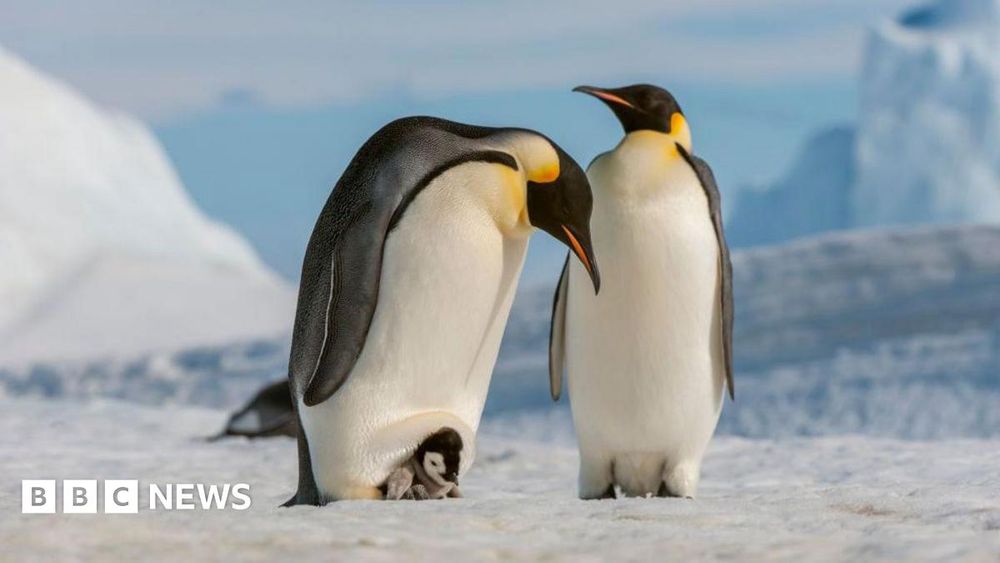
World's sea-ice falls to record low
The world's frozen oceans keep the planet cool, but they currently have less ice than ever recorded before.
Sea ice in the Arctic and around Antarctica cool our climate, drive ocean circulation across the planet, and provide a unique habitat for polar ecosystems.
Sea ice amounts have now fallen to their lowest since we started measuring them. This is not good.
🌊🥼❄️🧪
www.bbc.co.uk/news/article...
15.02.2025 09:28 — 👍 181 🔁 101 💬 2 📌 3


Great views of sea ice in the Greenland Sea
14.02.2025 14:16 — 👍 4 🔁 0 💬 0 📌 0

Soon on our way to the Fram strait thanks to a NERC-funded Seedcorn grant and our colleages at U Bergen. We will investigate organic matter transport and export along the East Greenland margin. @sotonoceanearth.bsky.social
06.02.2025 09:23 — 👍 7 🔁 2 💬 0 📌 1
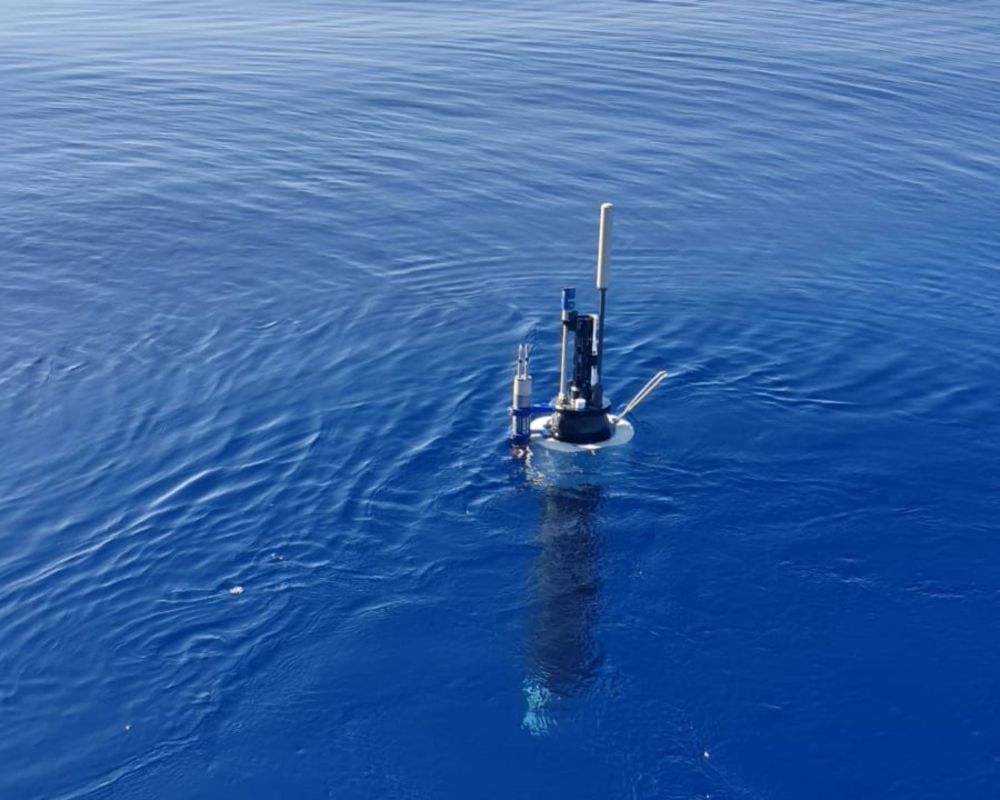
Research set to transform our understanding of how the ocean breathes
Research set to transform our understanding of how the ocean breathes
We are leading a new project which could transform our understanding of how the ocean ‘breathes’ - storing heat and greenhouse gases from the atmosphere 🌊
It will use sensors onboard high-tech floats to provide unprecedented detail on ocean mixing.
Read more 👉 brnw.ch/UoS_News_Oce...
04.12.2024 11:18 — 👍 30 🔁 8 💬 0 📌 1
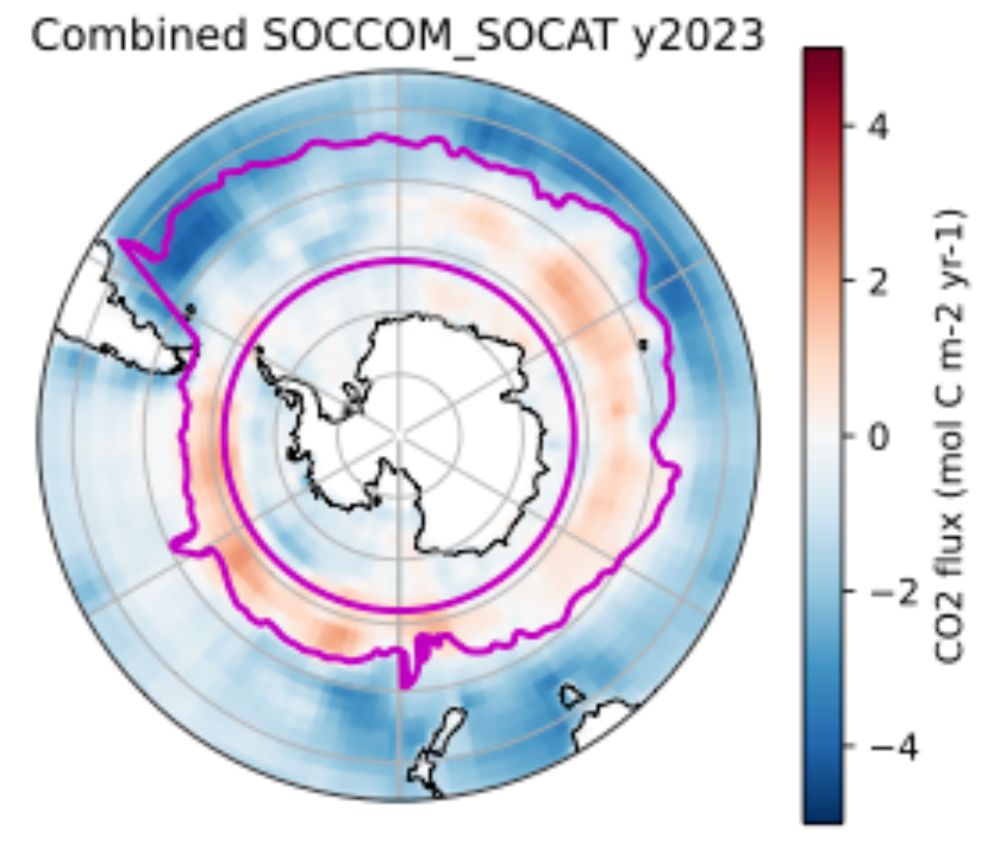
People
Looking for two postdocs (SOCCOM and InMOS), details below. I am not currently planning to take on new students in Fall 2025. HI Cycles group at the 10th annual SOCCOM meeting at Princeton Universi…
Two postdoc positions in my group are opening: First is part of SOCCOM3 (3 years, NSF funded, S. Ocean carbon/oxygen/nutrient budgets), Second is part of InMOS (4.25 yrs, Schmidt Sciences / OBVI funded, long-term oxygen/carbon flux and inventory constraints). More info: bushinskyoceanlab.org/people/
27.11.2024 22:58 — 👍 38 🔁 29 💬 1 📌 3
CLIVAR Climate and Ocean: Variability, Predictability and Change is one of the six core projects of the World Climate Research Programme (WCRP) addressing the role of ocean-atmosphere interactions in climate. Website: www.clivar.org
Postdoc @UniOldenburg | ICBM @icbm-uol.bsky.social
Scientific Coordinator @bassproject.bsky.social (Researching the ocean’s skin)
Aquatic Ecology & Biogeochemistry | Air–Sea Exchange | Phytoplankton Dynamics and Organic Matter | Stable Isotopes
Oceanographer interested in the ocean circulation, mixing and the ocean carbon sink. Also likes hiking, rock climbing, and playing guitar.
https://oceancarbon4climate.org/
The OC4C project aims to initiate preliminary activities towards the long-term generation of ocean carbon Climate Data Records (CDRs) which will provide and use multiple Essential Climate Variables (ECVs).
Science & stories from the sea (& occasionally the other 30% of the planet)
🌊 Marine science, tech, policy, sustainability writer
🤿 Founder of Ocean Oculus, the ocean-focused communications studio
📈 Researcher
☕ Tea drinker
🧀 Cheese eater
🐧 Bird admirer
Marine biogeochemistry 🌊 (phyto)plankton genetics 🧬 climate science 🌎 | PhD student @ Uni of Oxford | New Scientist Video reporter
GEORGE is a Horizon Europe-funded project that develops novel technologies to improve ocean observations. http://george-project.eu
Engineer @cnrs at the Laboratoire d'Oceanographie de Villefranche. Working on BGC-Argo floats
Chemical oceanographer at IEO CSIC, responsible for INOCEN group
Surviving as mother, wife, scientist and kind (but not stupid) person..
I love cats and chocolate,
I love the sea, waves and water masses
Postdoctoral oceanographer studying the ocean carbon sink 🦈🤿🕹️
🏠 @imev-mer.fr (CNRS-Sorbonne Université) as part of the Horizon Europe @tricuso.bsky.social project
💻 https://louisedelaigue.owlstown.net/
🚀 http://bit.ly/3HWFD5I
Juniorprofessor in Meteorology at @unibonn.bsky.social with research focusing on air-sea gas exchange and turbulence
Marine Scientist navigating oceans, libraries and morherhood 😀
Scientist Interested in all things oceans and climate (esp. carbon cycle). Bike rider, hiker and nature lover. Privileged white feminist. Advocate for diversity.
Marine plankton, sulfur, carbon and climate @ICM-CSIC
Mar i muntanya, ciència i música, llibres, política... cul inquiet.
https://icm.csic.es/
https://dms-pro.org/
https://orcid.org/0000-0002-5587-1271
PhD in Physical Oceanography, dad of a girl and amateur rugby player, that tries to balance life between lab, family and rucks. Currently postdoc researcher at #USP, exploring the influence of seamount and eddies on carbon fluxes.