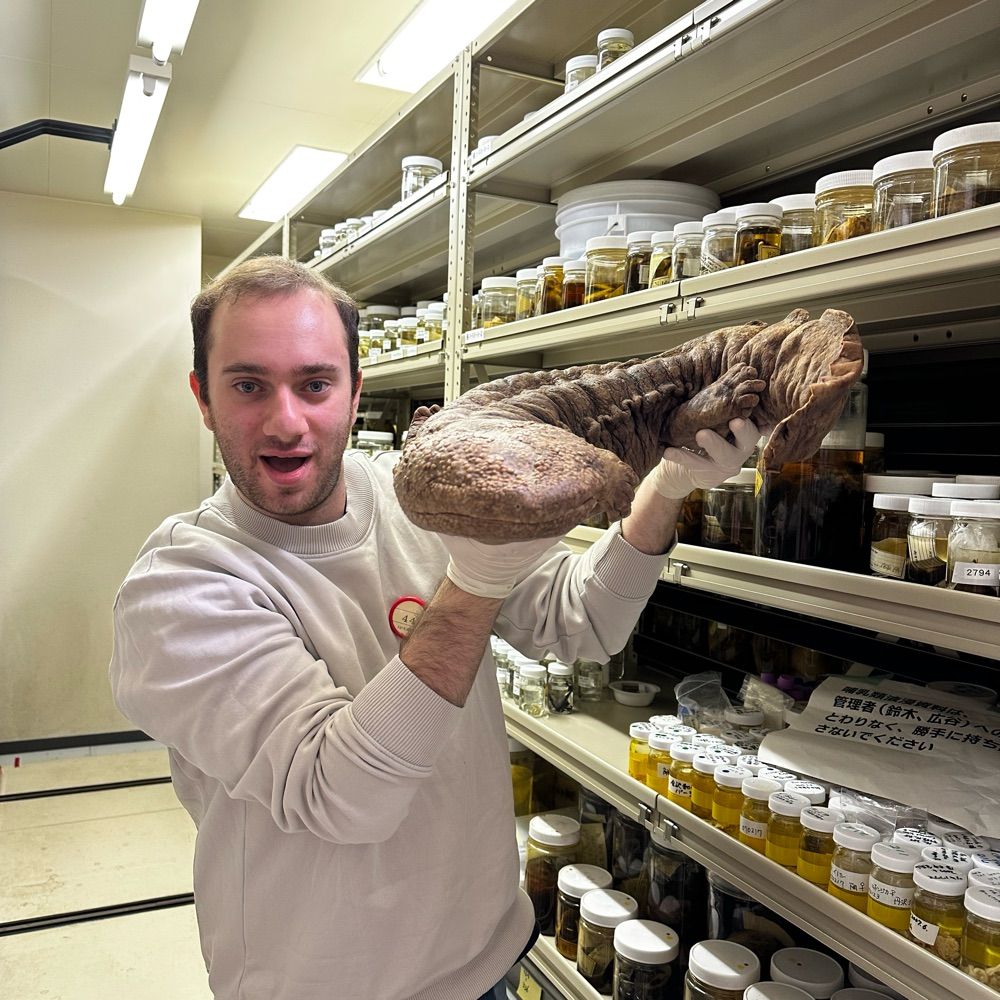
Three field seasons
219 lizards 🦎
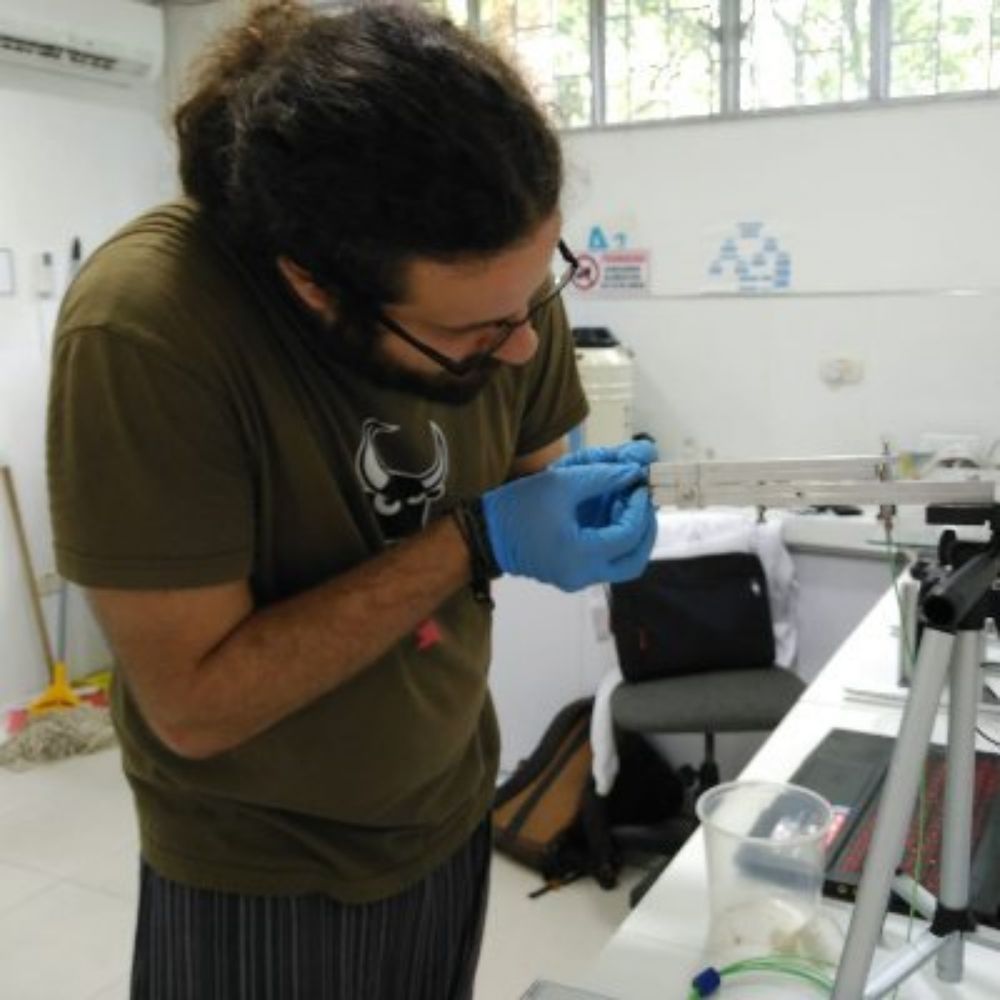
>1,000 hours of behavioural video scoring
Proud of Ioanna Gavriilidi for getting this major chapter of her PhD on insularity and lizard behaviur published.
Serious dedication!

@uafunmorph.bsky.social
Functional Morphology Lab Group of Department of Biology, University of Antwerp. https://www.uantwerpen.be/en/research-groups/funmorph/
Three field seasons
219 lizards 🦎
>1,000 hours of behavioural video scoring
Proud of Ioanna Gavriilidi for getting this major chapter of her PhD on insularity and lizard behaviur published.
Serious dedication!


First PhD paper out for Eleesha Annear—and what a start!
Her work uncovers surprising variation in osteoderm size and shape across populations, sexes, and body regions in a cordylid lizard 🦎 academic.oup.com/zoolinnean/a...

This is vital information moving forward in research on the #biomechanical trade-offs within avian feeding and vocalisation, but also has broad applications for many muscle-driven lever systems. Read more here: 🔗 doi.org/10.1242/jeb....
04.02.2026 08:03 — 👍 1 🔁 0 💬 0 📌 0
Using a model of a Java finch mandible 🐦, the study shows muscle fibre type is key: overdeveloped muscles recruit slow-twitch fibres, boosting torque but reducing frequency (Henneman’s principle).
04.02.2026 08:03 — 👍 2 🔁 0 💬 1 📌 0Alternating contractions of antagonistic #muscle pairs can produce rapid cyclical movements, but systems adapted for high static #torque are expected to move more slowly. Cas tested how fibre type, muscle size, moment arms & inertia shape this trade-off 💪
04.02.2026 08:03 — 👍 1 🔁 0 💬 1 📌 0Paper alert from @uafunmorph.bsky.social! 💥PhD researcher Cas Jorissen just published a chapter of his #PhD in @jexpbiol.bsky.social on torque–frequency trade-offs in muscle-driven lever systems
04.02.2026 08:03 — 👍 5 🔁 4 💬 1 📌 0By integrating evidence from #mammals 🦁, #fish 🐟, #amphibians 🐸, #reptiles 🦎, and #birds 🐦, this paper highlights broader evolutionary patterns and provides a clearer comparative framework that facilitates interpretation of future results. Read more here: onlinelibrary.wiley.com/doi/full/10....
28.01.2026 10:24 — 👍 0 🔁 1 💬 0 📌 0In a new review paper in Biological Reviews, co-authored by @uafunmorph.bsky.social PhD student @maja-mielke.bsky.social, Daniel Schwarz et al. synthesize this diversity across vertebrates and propose a unified terminology and conceptual framework for oropharyngeal food processing.
28.01.2026 10:24 — 👍 0 🔁 0 💬 1 📌 0From mammalian #mastication to specialized #jaw movements in fishes or #tongue driven processing in amphibians, vertebrates have evolved a remarkable diversity of ways to process food!
28.01.2026 10:24 — 👍 2 🔁 0 💬 1 📌 0

🦎Check out this new study by Ioanna Gavriilidi of @uafunmorph.bsky.social. 🦎
Taking personality into account, the team showed how lizards with higher spatial cognition scores exploit the thermal heterogeneity of their environment but with less accurate thermoregulation.
📖 doi.org/10.1016/j.jt...

Read the article published in the Journal of Thermal Biology here: www.sciencedirect.com/science/arti...
We look forward to seeing many more collaborative studies of this integrative nature in the near future from our lab!
#physiology #experimentalbiology #temperature

Using common wall lizards in a set-up mimicking the lizards’ natural, spatiotemporally heterogeneous thermal #environment, higher cognition scores were linked to exploitation of the thermal heterogeneity, but not more accurate thermoregulation.
#Podarcis
Behavioural #thermoregulation is vital for #reptiles and may involve cognitive processes! A new FunMorph study led by Ioanna Gavriilidi tested whether better spatial cognition is correlated with more efficient thermoregulatory behaviour, while accounting for personality. 🦎🔥 #cognition #behaviour
26.01.2026 13:57 — 👍 0 🔁 1 💬 1 📌 0
Now online - Kinematic analyses of Lake Malawi cichlids reveal that algae specialists use head expansions that happen synchronously along the head, hypothesized to increase feeding efficiency in contrast to the wave-like pattern of piscivores.🐟
@uafunmorph.bsky.social
doi.org/10.1038/s420...

In collaboration with cichlid fish experts from the Evolutionary Ecology Lab @SvardalGroup at #UAntwerpen
Read more here: www.nature.com/articles/s42...
Fish suck... but species that feed on algae suck differently! 🐟 A new publication in Communications Biology by #UAFunMorph members Jana De Ridder, Peter Aerts, and Sam Van Wassenbergh, demonstrates how head motion patterns for generating suction are finetuned to the species' main diets.
10.10.2025 14:57 — 👍 19 🔁 9 💬 1 📌 1
Extreme climate events can catalyze rapid evolutionary change! in our new Current Biology (@currentbiology.bsky.social) piece, Colin and I argue it’s time to study their evolutionary consequences systematically — beyond opportunistic observations. www.cell.com/current-biol...
08.09.2025 19:17 — 👍 49 🔁 19 💬 2 📌 2
You can now also follow us on LinkedIn! 👏 Check out the FunMorph Lab LinkedIn page here: www.linkedin.com/feed/update/...
08.09.2025 09:00 — 👍 0 🔁 0 💬 0 📌 0
To help them with a smooth start, we organised an introduction session where they got the opportunity to present themselves and their project.
Keep an eye out for more updates from our lab, including the student projects, throughout the coming year!
#masterinbiology
Let’s kick off the new academic year! 🎉 FunMorph welcomes 12+ @uantwerpen.be master’s students this year, working with a very diverse set of study organisms, just like our lab members: boxfish 🐡, sharks 🦈, cats 🐆, otters 🦦, sealions, hippos 🦛, tapirs 🐱/🐴, snakes 🐍, lizards 🦎, ducks 🦆, canaries 🐤
08.09.2025 08:56 — 👍 0 🔁 0 💬 1 📌 0
While both #island & mainland #lizards may recognize their own #scent and that of others — islanders tongue-flick much less, hinting at reduced reliance on chemical cues in island environments zslpublications.onlinelibrary.wiley.com/doi/10.1111/... @uafunmorph.bsky.social @simon.baeckens.bsky.social
29.07.2025 16:14 — 👍 3 🔁 2 💬 0 📌 0
Lukas Hageneder from @uafunmorph.bsky.social is studying how the tongue and skeleton of ducks interact to successfully filter food
31.07.2025 07:09 — 👍 1 🔁 2 💬 1 📌 0
Today is the day!
#SEBExPalaeo will be live at #SEBCONFERENCE
9h30 in Nightingale 1&2
(follow signs for Bird Rooms)
Looking forward to seeing you for plenty of experimental #palaeontology #palaeobotany #3D #modelling and fun discussions!

A lizard in sight whets the appetite? 🦎 Read how conspecifics influence island and mainland lizards’ foraging decisions in @UAFunMorph's new paper by Ioanna Gavriilidi! Link to the full article: authors.elsevier.com/a/1lPDn1LenM...
10.07.2025 12:30 — 👍 3 🔁 1 💬 0 📌 0
Another PhD chapter published for Ioanna Gavriilidi @uafunmorph.bsky.social, now in @jzoology.bsky.social! She finds that island-dwelling lizards tend to rely less on chemosensory cues compared to their mainland counterparts. zslpublications.onlinelibrary.wiley.com/doi/10.1111/...
08.07.2025 11:21 — 👍 16 🔁 8 💬 0 📌 0New paper alert! 💥Check out the paper of FunMorph's Lisa Van Linden exploring the potential role of interspecific admixture during the colonisation of a small island by Italian wall #lizards using population #genomic analyses 🧬💻 Spoiler alert: they did it all by themselves! 🦎🏝️ See link below:
08.07.2025 10:12 — 👍 2 🔁 1 💬 1 📌 0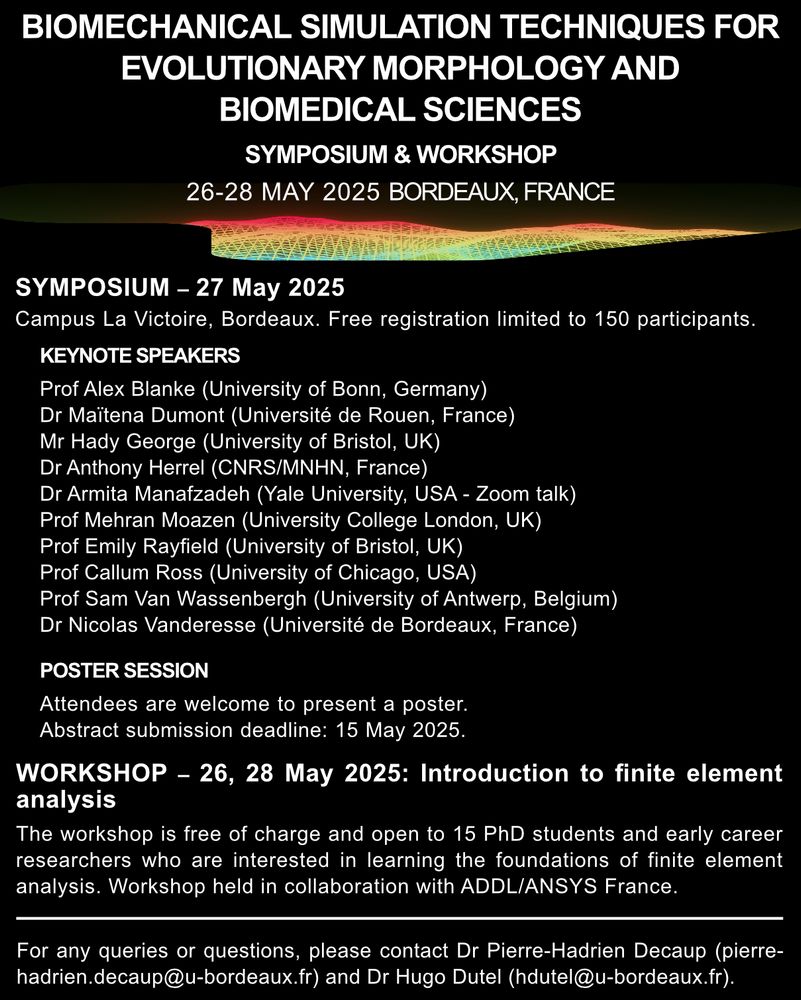
🗓️ Save the date!
26-28 May 2025 | Université de Bordeaux, France.
Symposium and workshop :
Biomechanical simulation techniques in evolutionary morphology and biomedical sciences.
More info and registration: www.eventbrite.fr/e/1263754958...

This suggests beak adaptations for strength don’t necessarily reduce efficiency on easier foods. 🐤 Read the full study by PhD student Tim Andries here: doi.org/10.1242/jeb.... @jexpbiol.bsky.social #canaries #kinematics #morphology
21.03.2025 08:05 — 👍 2 🔁 0 💬 0 📌 0
Larger beaks generate more force for tough seeds, while smaller beaks move faster. We found that birds with larger beak depths dehusked large seeds faster, but smaller or longer beaks didn’t provide a processing advantage for small seeds. 💪⚡
21.03.2025 08:05 — 👍 1 🔁 0 💬 1 📌 0