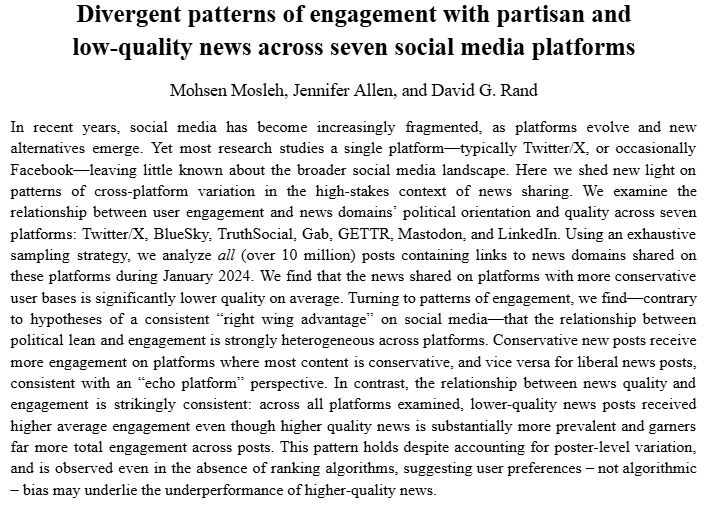
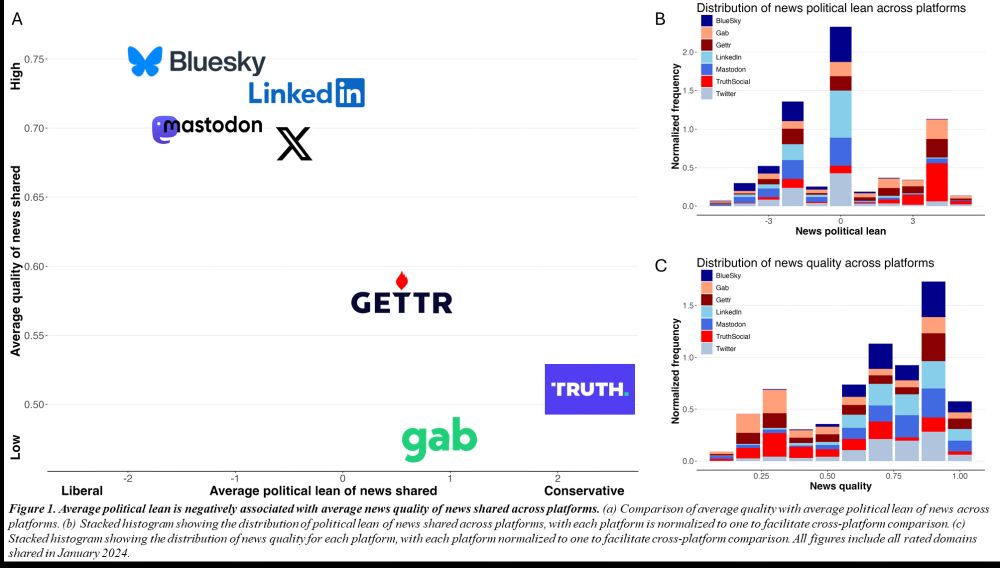
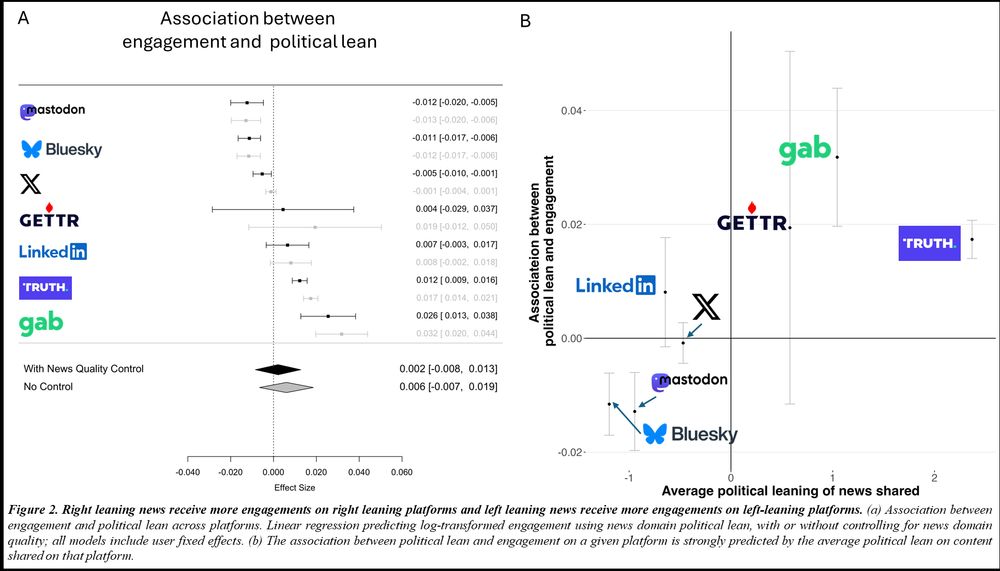
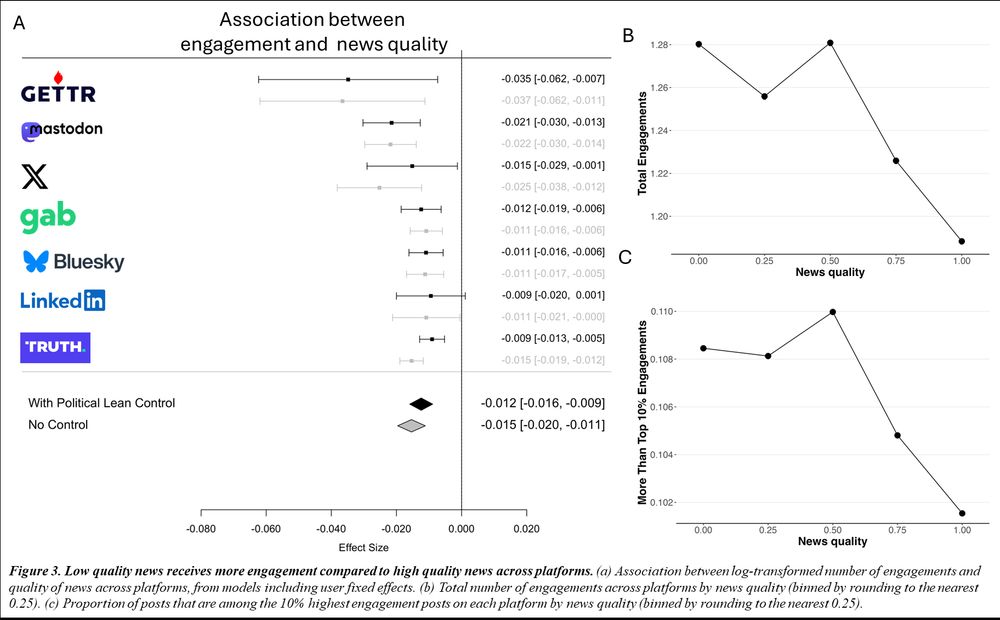
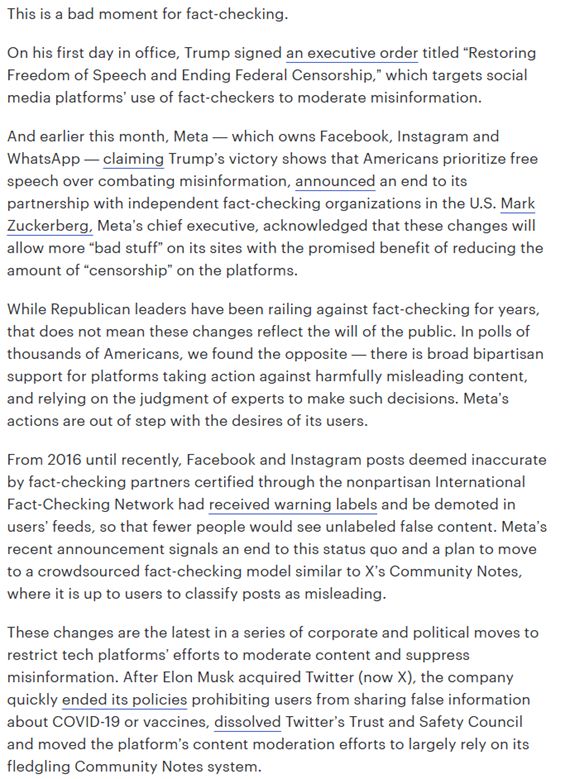
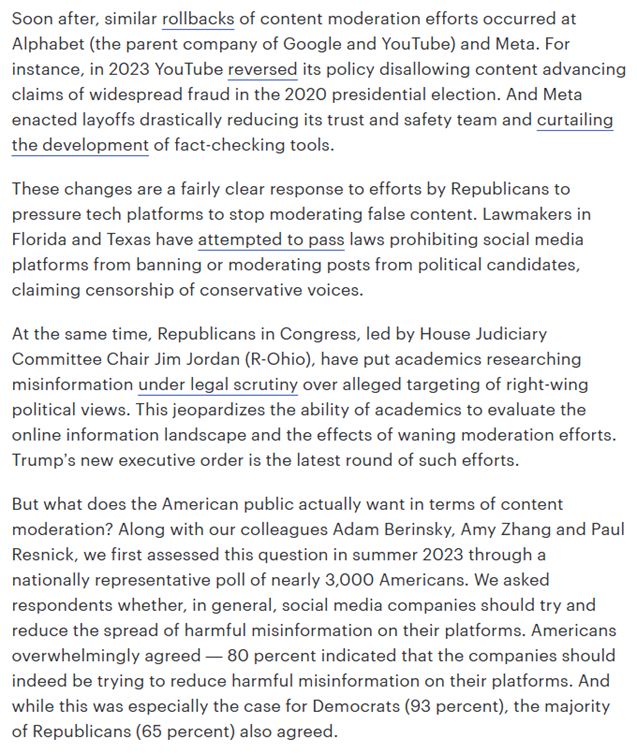
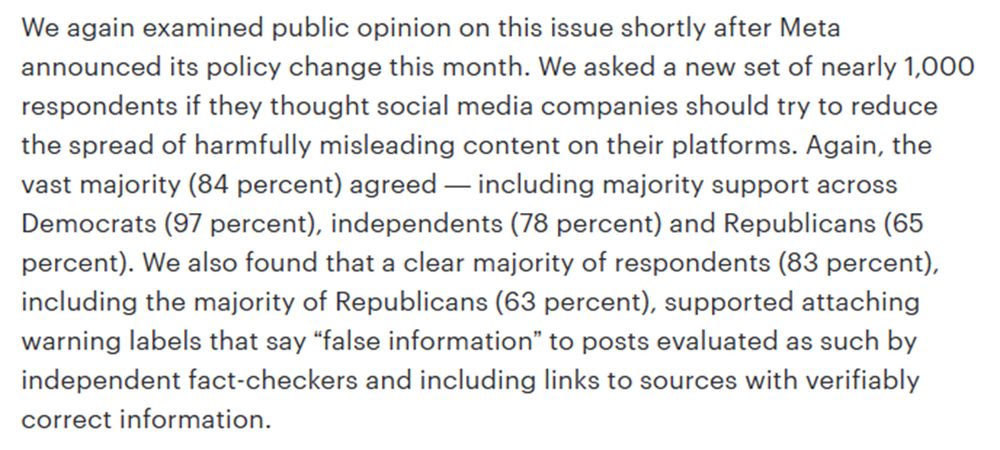
Grok fact-checks our paper on Grok fact-checking - and it approves!
04.02.2026 13:49 — 👍 28 🔁 7 💬 1 📌 0

Teaching People to Counter Misinformation, Not Just Spot It - Center for Informed Democracy & Social - cybersecurity (IDeaS) - Carnegie Mellon University
Spotlight on new work from IDeaS researchers
We also found that willingness to intervene depended strongly on who posted the misinformation, with participants indicating they were much more likely to counter close contacts.
See the paper and blog post for more details: www.cmu.edu/ideas-social...
28.01.2026 18:16 — 👍 0 🔁 0 💬 0 📌 0
In an experiment with government analysts, a short interactive training increased reported willingness to engage in countering actions (e.g., commenting a correction, messaging the poster) when encountering misinformation on social media.
28.01.2026 18:16 — 👍 0 🔁 0 💬 1 📌 0

Finding #3: Support for user-driven responses to misinformation is widespread across the political spectrum. This suggests counter-misinformation efforts that empower everyday users may have broad public legitimacy. 4/4
09.01.2026 20:58 — 👍 0 🔁 0 💬 0 📌 0
Finding #2: Relationships matter. People say they’re much more likely to correct misinformation when it’s posted by someone close (friends and family) than by acquaintances or strangers. This suggests that social proximity may shape the use of interventions. 3/4
09.01.2026 20:58 — 👍 0 🔁 0 💬 1 📌 0

Finding #1: There’s a large gap between beliefs and actions. People strongly value fighting misinformation, but report doing less themselves than what they think others should do. Good intentions don’t always translate into action. 2/4
09.01.2026 20:58 — 👍 0 🔁 0 💬 1 📌 0
Understanding User Behavior in the Fight Against Social Media Misinformation - Center for Informed Democracy & Social - cybersecurity (IDeaS) - Carnegie Mellon University
Spotlight on new work from IDeaS researchers
I wanted to highlight one of my favorite papers that I co-authored last year with Samantha Phillips. Surveying 1,000+ U.S. social media users, we examined how beliefs and relationships shape whether people ignore, report, or correct misinformation. www.nature.com/articles/s41... 1/4
09.01.2026 20:58 — 👍 3 🔁 0 💬 1 📌 0

Finding #1: There’s a large gap between beliefs and actions. People strongly value fighting misinformation, but report doing less themselves than what they think others should do. Good intentions don’t always translate into action. 2/4
09.01.2026 20:47 — 👍 0 🔁 0 💬 0 📌 0
Proceedings of the ICWSM Workshops
Mapping the Scientific Literature on Misinformation Interventions: A Bibliometric Review (COMPASS workshop)
workshop-proceedings.icwsm.org/abstract.php...
@kingcatherine.bsky.social
24.06.2025 09:10 — 👍 2 🔁 1 💬 1 📌 0
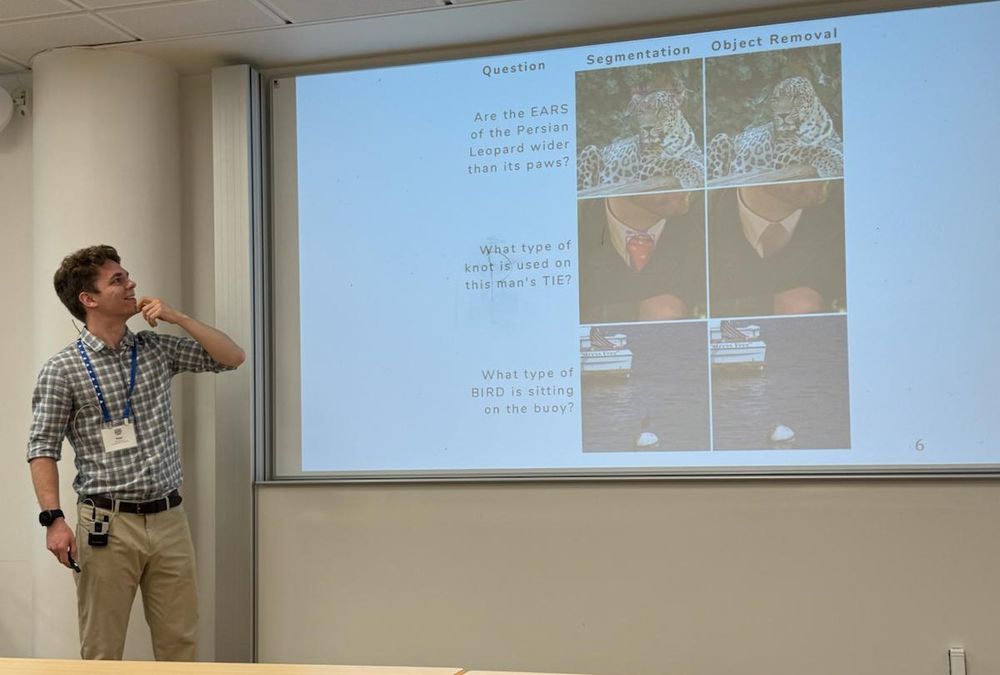
Excited to have two workshop papers and one main conference paper that I've been involved in being presented at @icwsm.bsky.social! Thanks @kingcatherine.bsky.social and @evanup.bsky.social for letting me tag along. Details below.
24.06.2025 09:10 — 👍 9 🔁 3 💬 1 📌 0
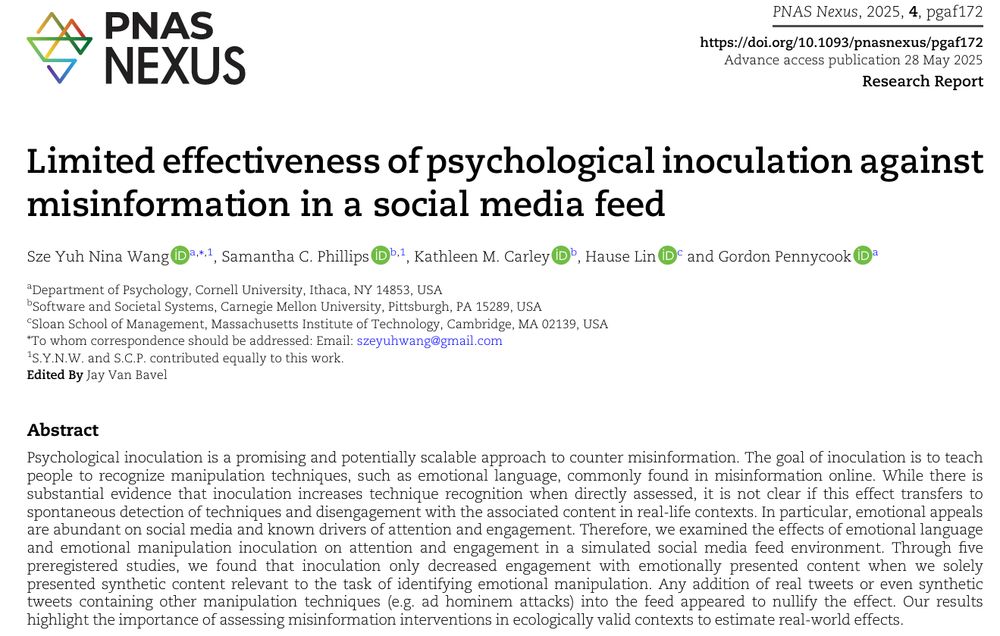
Psychological inoculation is a very popular intervention against online misinfo, but it hasn't been tested using real-world outcomes in realistic scenarios.
In a new paper just published in PNAS Nexus, this is what we did: academic.oup.com/pnasnexus/ar...
Short version: It didn't really work.
05.06.2025 19:33 — 👍 202 🔁 68 💬 5 📌 3
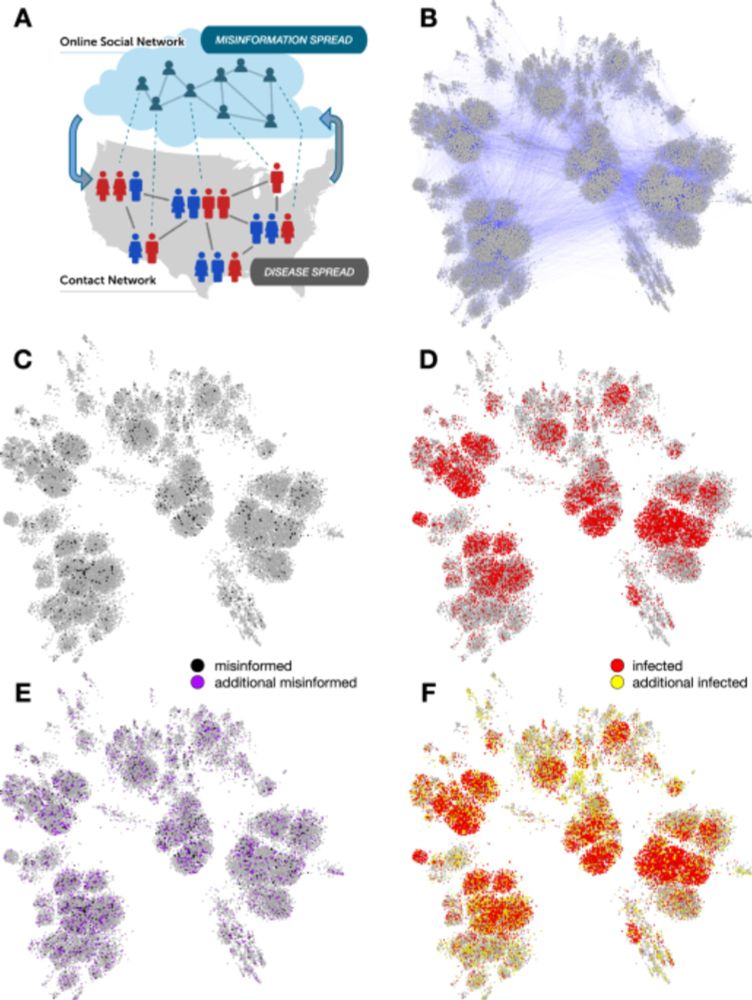
Modeling the amplification of epidemic spread by individuals exposed to misinformation on social media - npj Complexity
npj Complexity - Modeling the amplification of epidemic spread by individuals exposed to misinformation on social media
New paper: Modeling the amplification of epidemic spread by individuals exposed to misinformation on social media 🧪
Simulations informed by social media data yield a worst-case bound on additional infections due to exposure to online vaccine misinfo. It's not good.
www.nature.com/articles/s44...
04.04.2025 02:05 — 👍 63 🔁 19 💬 5 📌 5

A path forward on online misinformation mitigation based on current user behavior - Scientific Reports
Scientific Reports - A path forward on online misinformation mitigation based on current user behavior
This study examines individual-level interventions against #misinformation on social media, showing that encouraging people to respond to #misinformation can reduce its spread and prevent belief in it.
www.nature.com/articles/s41...
22.03.2025 20:00 — 👍 1 🔁 1 💬 0 📌 0

A path forward on online misinformation mitigation based on current user behavior - Scientific Reports
Scientific Reports - A path forward on online misinformation mitigation based on current user behavior
Needed: ACTION!
"...participants believe individuals should expend more effort responding to misinformation on social media than those individuals report actually doing..."
Study: Online misinformation mitigation based on current user behavior www.nature.com/articles/s41...
20.03.2025 16:05 — 👍 30 🔁 9 💬 3 📌 1
🚨New WP🚨
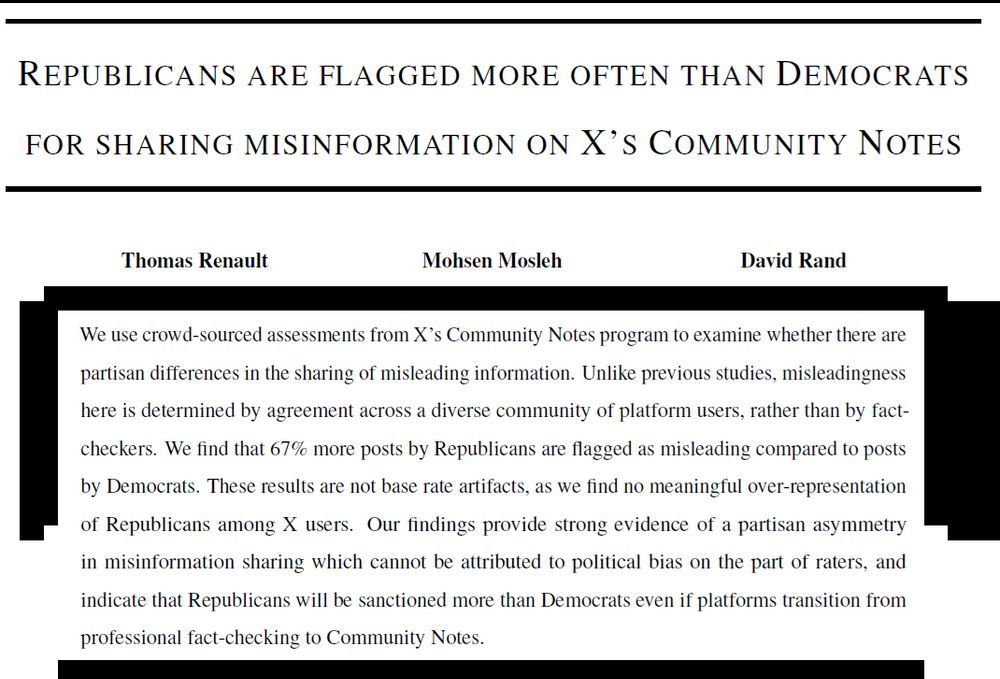
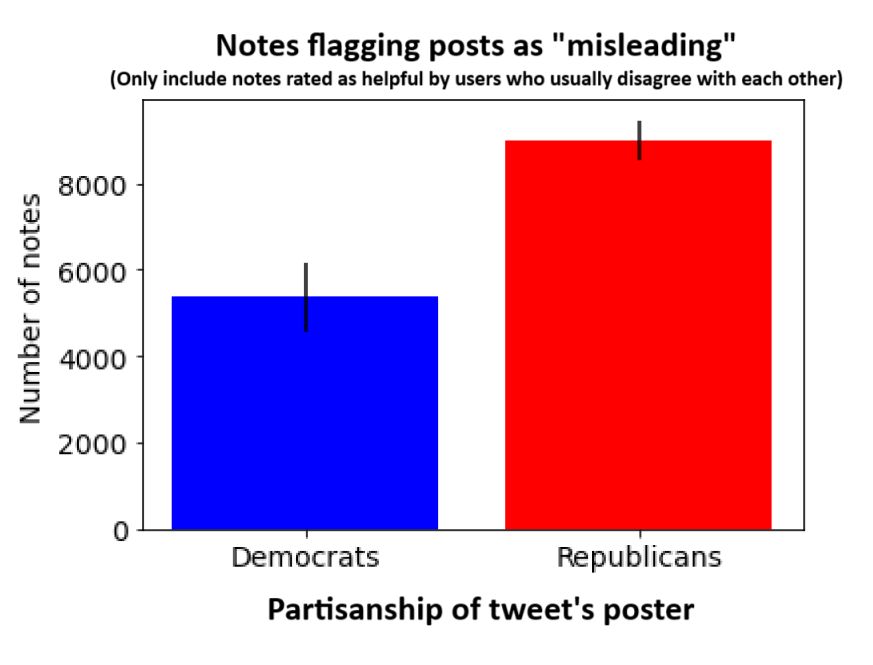
Remember Musk+Zuck+Trump+Jordan etc crying fact-checker bias b/c Reps were flagged more than Dems? We analyzed Community Notes on Musk's X and guess what: posts flagged as "misleading" are 67% more likely to be written by Reps! The issue is Reps, not fact-checkers...
osf.io/preprints/ps...
31.01.2025 14:54 — 👍 454 🔁 122 💬 6 📌 9

Americans Expect Social Media Content Moderation
Meta is ending fact-checking on Facebook and Instagram, but a new BU poll finds the public backs independent verification of social media content
After ending Meta's fact-checking partnerships, Mark Zuckerburg said that it had never been broadly accepted. According to a new poll by @bostonu.bsky.social, nearly 2 in 3 US adults agree that fact-checkers *should* verify claims on social media. A 🧵 (1/n). www.bu.edu/articles/202...
28.01.2025 18:44 — 👍 199 🔁 61 💬 9 📌 6
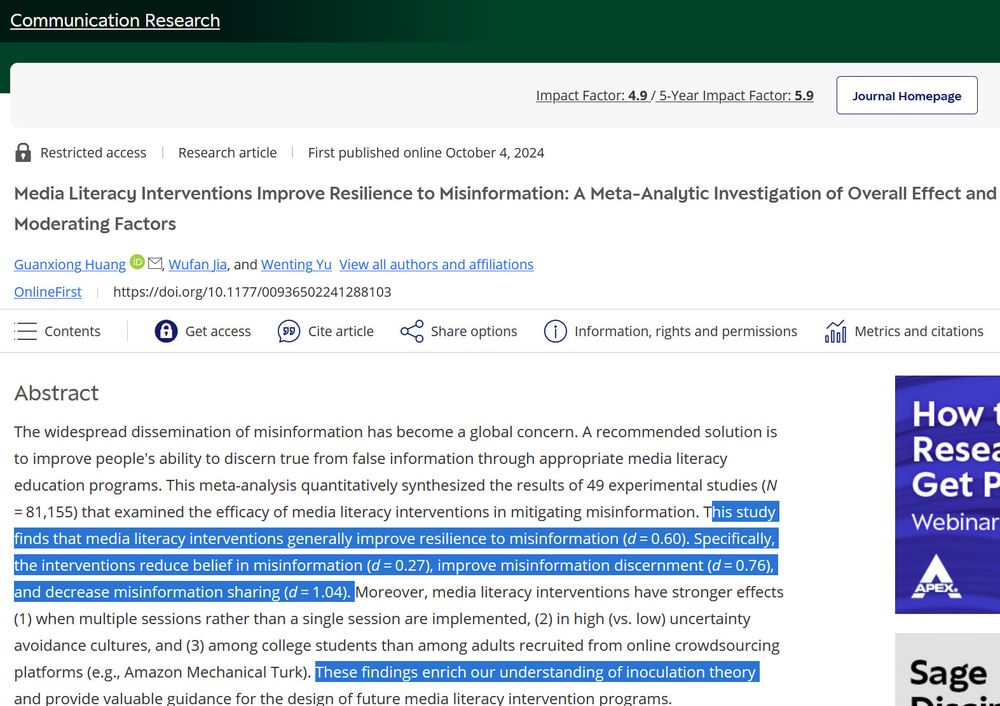
New meta-analysis shows media literacy & psychological inoculation interventions signifcantly & substantially improve (a) misinformation resilience (d = 0.60), (b) misinformation discernment (d = 0.76) and decrease sharing (d = 1.04).
Great news for science!
journals.sagepub.com/doi/epdf/10....
18.01.2025 12:35 — 👍 101 🔁 34 💬 3 📌 4

Meta’s new hate speech rules allow users to call LGBTQ people mentally ill
Changes to its hate speech guidelines were among broader policy shifts Meta made to its moderation practices.
Removing the fact-checking program from Meta platforms wasn't sufficient, you can now freely claim that women are "houshold objects" and that members of the LGBTQ community are "mentally ill". What a win for free speech - Zuckerberg is revealing his true colors.
www.nbcnews.com/tech/social-...
09.01.2025 15:46 — 👍 72 🔁 24 💬 4 📌 1
hi! 👋
13.12.2024 06:53 — 👍 1 🔁 0 💬 0 📌 0
I am making a Societal Computing starter pack for folks that (broadly) look at the impact of computer science on society. So far, mostly people affiliated with the eponymous program in the school of computer science at CMU, but pls respond to this thread if you want to be added.
go.bsky.app/2avpExM
08.12.2024 19:19 — 👍 6 🔁 4 💬 4 📌 0
Dad/husband. Public servant. Broadband and digital inclusion leader. Advocate for ethics in AI. Basement rockstar. Opinions are my own.
Insight about everybody's favorite subject: Ourselves.
Professor of Psychology | Textbook author in statistics & intro psychology | Co-founder of the International Collaboration on Undergraduate Psychology Outcomes (icupo.org) | Cat enthusiast & bookworm. [shu.edu/profiles/susannolan.html]
👨👩👧👧🐶🐶. OKC. Reporter turned happy PR guy. Feed the trolls to me. Always cite your sources. My opinions are facts. (Was @mkimball011 on the old good website.)
Professor at Georgetown, research director at KGI. Studying information, politics, health, etc. Also cats, Badgers, Astros, food, gardening.
https://faculty.washington.edu/aylin
Computer scientist • Prof @UWischool & @UWcse
Co-Director @TechPolicyLab • Nonresident Senior Fellow @BrookingsInst
AI & Societal Impacts: Ethics in NLP • Multimodal ML • CV • Human-AI Collaboration
Director, @stanforddel.bsky.social
Professor Stanford Institute for Human-centered AI, SIEPR, Stanford department of Economics and GSB
Author https://amazon.com/Second-Machine-Age-Prosperity-Technologies/dp/0393350649
CPO/CSO of Corridor.dev, teaching at Stanford.
The Center for American Progress is dedicated to improving the lives of Americans through ideas and action. https://secure.actblue.com/donate/center-for-american-progress-1
James H. Rudy Professor of Informatics and Computing at Indiana University Bloomington.
Interested in networks, computational social science, science of science, artificial intelligence. Website: https://www.santofortunato.net
Postdoc with Stanford's Tech Impact and Policy Center
(@techimpactpolicy.bsky.social). Formerly IU / Observatory on Social Media.
Computational social science, human-AI interaction, social media, trust and safety, etc.
🧨 matthewdeverna.com
Assistant Professor at Politecnico di Milano. Capoeira at Sul Da Bahia Milano.
Research center at Indiana University studying the spread of misinformation. Tweets by OSoMe Team.
Informatics Ph.D candidate at Indiana University Bloomington
https://btrantruong.github.io/
Assistant Professor University of Oregon Sociology | Former Postdoc NYU CSMaP | Ph.D. Princeton Sociology | Research on media, information, politics, China, computational social science | Opinions are my own | https://hwaight.github.io/
Assistant Professor of Sociology at NYU. I study social cohesion, health, and political polarization using LLMs, causal inference, and social network analysis. https://www.byungkyulee.com/
Assistant Professor, American University | Studying disinfo, cybersecurity, and emerging technology 👩💻