I can see how this sometimes might save costs (then again not being able to assess one‘s own knowledge of things also comes with costs), but it has nothing to do with going with the crowds. More infos on the design and metacognitive sensitivity included in the paper.
10.10.2025 11:13 — 👍 1 🔁 0 💬 1 📌 0

Always wise to do ;) Here is the same page in partly English/partly German (glitch on their side?). Blue left button says accept all, right blue reject all, white button = settings. Page should open even if you reject cookies.
09.10.2025 11:37 — 👍 1 🔁 0 💬 1 📌 0
I saw the same page in English (asking for cookies) - maybe differences somehow in browser/location/settings?
09.10.2025 11:21 — 👍 1 🔁 0 💬 1 📌 0
I will not miss the train rides to Bremen, but am thankful for the experiences at the social and work psychology lab there with @nadirafaber.bsky.social and team.
09.10.2025 08:44 — 👍 1 🔁 0 💬 0 📌 0
Further interesting is the fact that this relation is weaker and not always found regarding conspiracy mentality, suggesting different cognitive underpinnings.
09.10.2025 08:30 — 👍 3 🔁 0 💬 0 📌 0
In the studies, we find that belief in conspiracy theories such as Apollo moonlanding or those surrounding vaccinations are related to lower metacognitive sensitivity, thus, a lower ability to assess one's own knowledge - the latter measured with items totally unrelated to conspiracy theories.
09.10.2025 08:30 — 👍 5 🔁 1 💬 1 📌 0
First news is that I just joined the Uni Mannheim, team of Olga Stavrova. Looking forward to the exchange with colleagues (@publavecziga.bsky.social, @janaberkessel.bsky.social) and the nice research environment with @gesis.org (incl @axburg.bsky.social) and the @mzesunimannheim.bsky.social nearby
09.10.2025 08:13 — 👍 5 🔁 1 💬 4 📌 0
After a short social media pause, I’m back — will share a few highlights and reflections from the past months within the next weeks.
09.10.2025 08:13 — 👍 5 🔁 0 💬 1 📌 0
New article out in the Journal of Environmental Psychology led by @kwinter.bsky.social (with @lpummerer.bsky.social Matthew Hornsey & Timo von Oertzen) showing that conspiracy mentality and wind farm opposition mutually predict each other over time.
www.sciencedirect.com/science/arti...
14.05.2025 12:40 — 👍 12 🔁 3 💬 1 📌 0
…and really cool advisors ;)
26.03.2025 19:03 — 👍 1 🔁 0 💬 0 📌 0
Very proud to be supervising Paula Wessel (a very talented researcher) and the project on conspiracy beliefs and violence
26.03.2025 14:05 — 👍 1 🔁 0 💬 1 📌 0
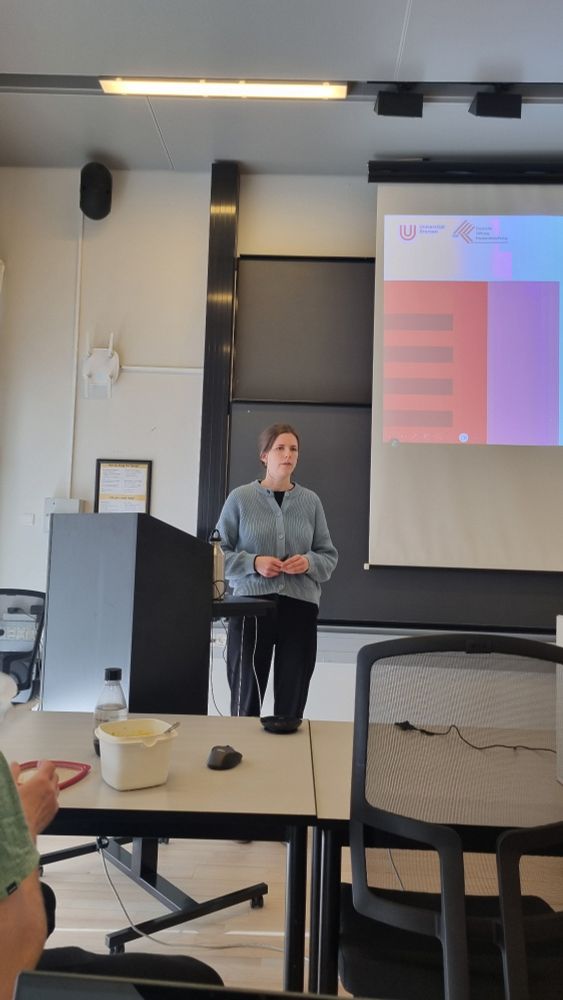
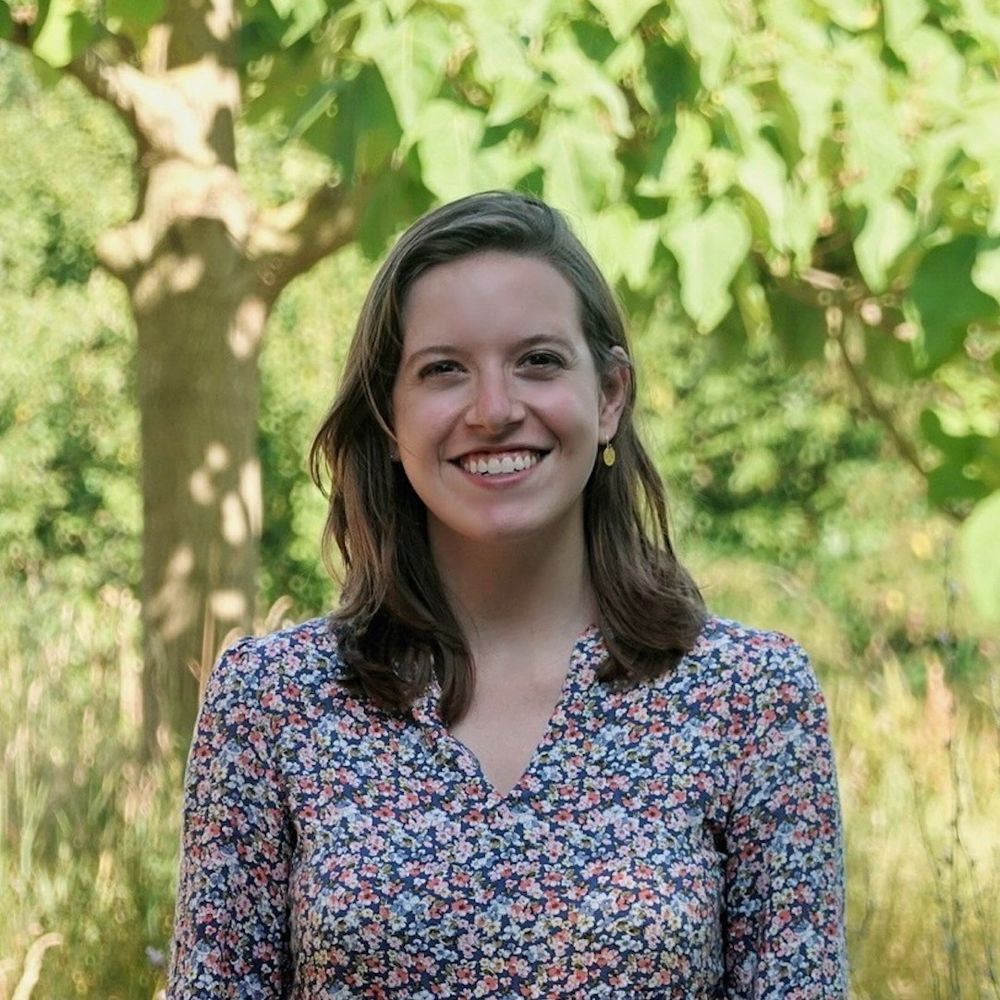
The presenter, a young women with brown hair, stands in front of the presentation screen
Very excited to listen to Paula Wessel presenting the project by @lpummerer.bsky.social, Nadira Faber, Kevin Winter and myself today @ddc-sdu.bsky.social brown bag lunch series!
26.03.2025 11:06 — 👍 5 🔁 1 💬 1 📌 1
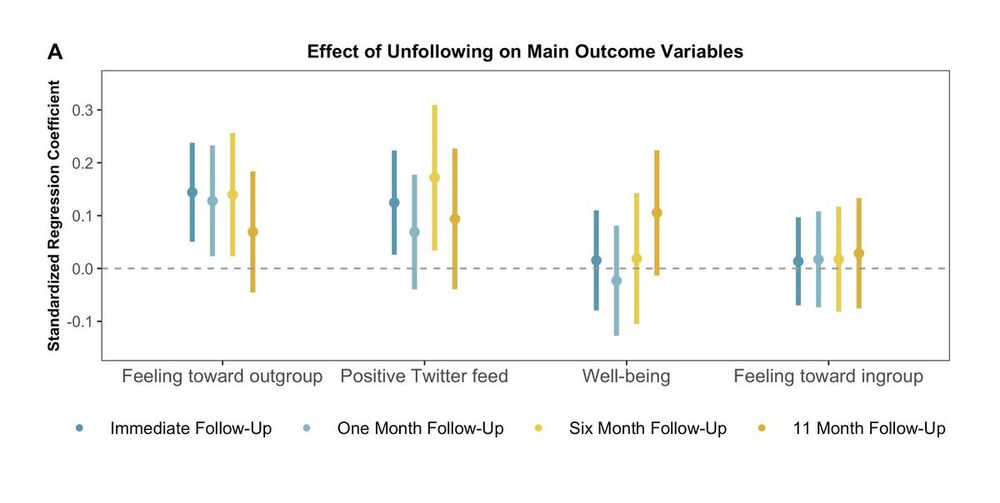
Unfollowing toxic social media influencers makes people less hostile!
In 2 experiments, we found that unfollowing extreme influencers:
-Reduced partisan animosity by 24%
-Increased satisfaction with X
-Led people to share higher-quality news
Effects lasted for 6+ months.
osf.io/preprints/ps...
08.10.2024 13:56 — 👍 131 🔁 55 💬 5 📌 6
6/6 Potential small steps: Get informed & inform others about how science & politics work (don't assume people know or want to polarize!). Resist politicization & the development of mega-identities, cultivate societal dialogue about knowledge structures and norms that bridge (perceived) divides 🌉
25.11.2024 11:44 — 👍 2 🔁 0 💬 0 📌 0
4/6 That means, trust in media can decline due to perceptions ab the environment, e.g. through politicization, social media & "mega-identities" (identities merging different aspects of life - @dannagal.bsky.social), independent from fact-checked work of journalists (@jesperstromback.bsky.social).
25.11.2024 11:43 — 👍 2 🔁 0 💬 1 📌 0
3/6 Whether knowledge resistance is (ir)rational depends on the epistemic environment, and if reliable information is available or perceived as unreliable (@mbaghramian.bsky.social).
25.11.2024 11:42 — 👍 3 🔁 0 💬 1 📌 0
Addressing Covid-19 Vaccination Conspiracy Theories and Vaccination Intentions
| European Journal of Health Communication
2/6 Many misconceptions seem not due to ill intentions but (missing) exposure to information - whether about policies and how politics work (@emilythorson.bsky.social) elections (@brendannyhan.bsky.social), or health/windfarm (see our work here: doi.org/10.47368/ejh...; doi.org/10.1038/s415...)
25.11.2024 11:42 — 👍 3 🔁 0 💬 1 📌 0
1/6 Just coming back from the interdisciplinary conference on "Perspectives on Knowledge Resistance". Cool to see how perspectives from philosophy, pol science, comm science & psychology compliment each other - esp when reaching similar conclusions from different angles 🧵
25.11.2024 11:40 — 👍 3 🔁 1 💬 1 📌 0
New paper out, led by Kevin Winter, with @kaisassenberg.bsky.social and Matthew Hornsey on believing misinformation about wind farms. Biggest predictor is not education and science knowledge, but conspiracy mentality. Over 25% of respondents from US, UK, AUS agree with more than half of statements.
21.10.2024 08:19 — 👍 9 🔁 2 💬 0 📌 0
#DGPS2024 with another conspiracy panel for me - in the first talk Lukasz Stasielowicz presents a meta-analysis (n = 60 samples) on interventions against conspiracy beliefs. He disentangled the average positive effects of interventions on reducing conspiracy beliefs
17.09.2024 12:06 — 👍 0 🔁 1 💬 9 📌 0
Haben Sie Menschen in Ihrem persönlichen Umfeld, die sich als „Reichsbürger*innen“ oder „Selbstverwalter*innen“ bezeichnen?
Die unten aufgeführte Studie (auch in Deutsch möglich) sucht noch Leute mit entsprechenden Erfahrungen, um bessere Hilfs- und Beratungsangebote zu schaffen.
30.07.2024 14:49 — 👍 3 🔁 0 💬 0 📌 0
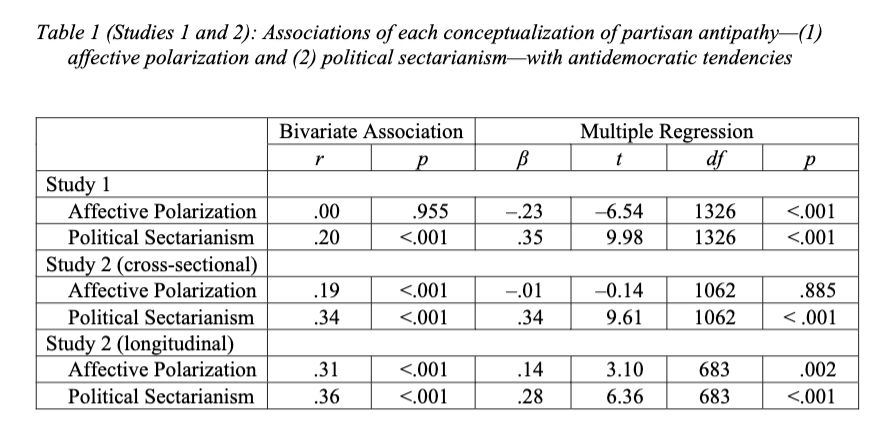
Is partisan animosity a threat to democracy?
We find that political sectarianism (a blend of othering, aversion, and moralization toward opposing partisans), robustly predicts antidemocratic tendencies. In contrast, affective polarization does not! osf.io/preprints/ps...
06.02.2024 15:37 — 👍 27 🔁 16 💬 3 📌 1
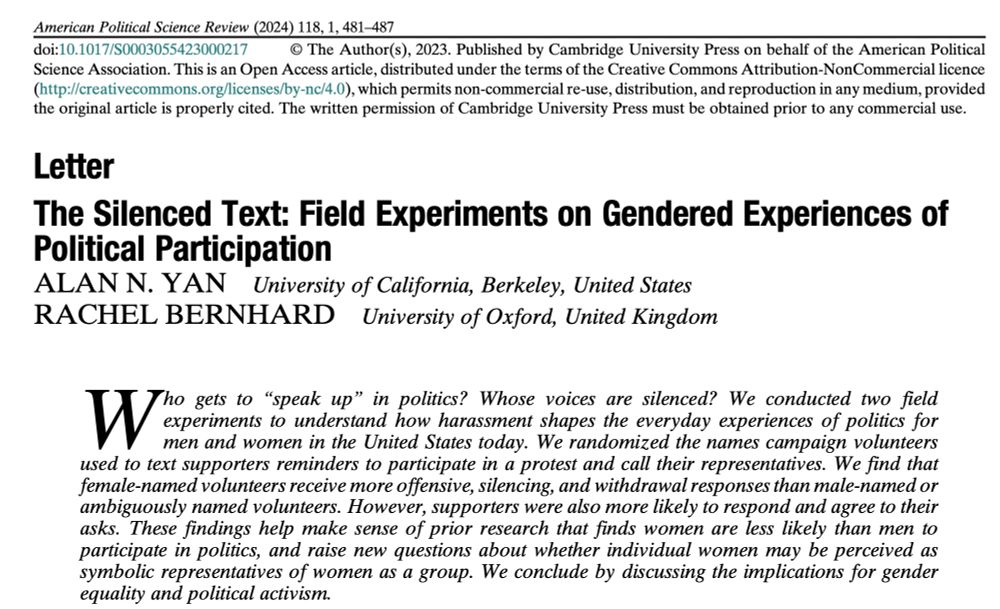
The Silenced Text: Field Experiments on Gendered Experiences of Political Participation

TABLE 1. Sample Responses and Response Rates by Category

FIGURE 1. Mean Offensiveness
Note: The figure shows the average treatment effect by treatment condition with 95% confidence intervals estimated using ordinary least squares. The comparison category is the ambiguous name condition.
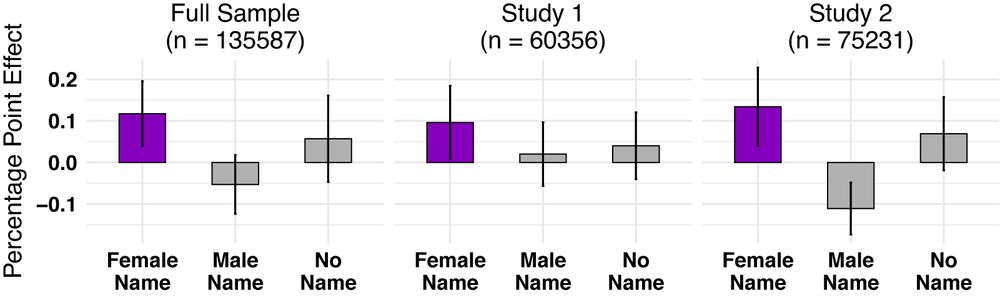
FIGURE 2. Mean Silencing
Note: The figure shows the average treatment effect by treatment condition with 95% confidence intervals estimated using ordinary least squares. The comparison category is the ambiguous name condition.
When people receive political campaign text messages from female-named volunteers, they are more offensive and silencing, but they are more likely to respond and agree to the ask, finds @alanyan.bsky.social @rivb.bsky.social in a great field experiment doi.org/10.1017/S000...
06.02.2024 18:57 — 👍 12 🔁 6 💬 3 📌 0
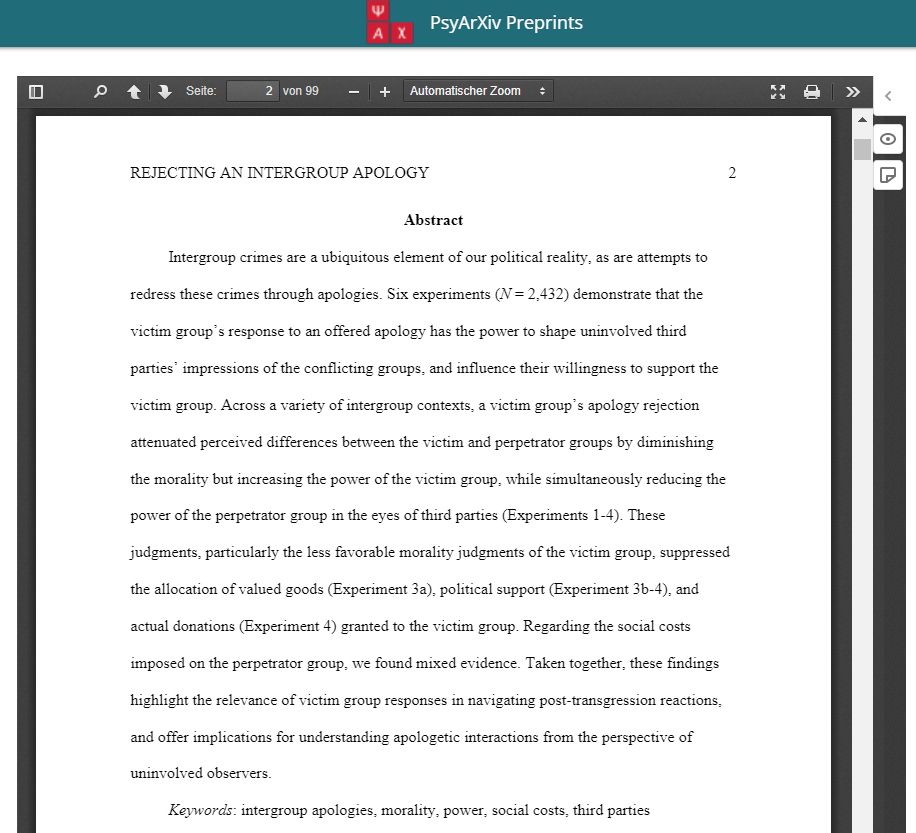
New work with @rolandimhoff.bsky.social! ✨Victim groups have every right to reject an apology. However, if they do, it may impact their morality & power in the eyes of third parties, which is related to the support they receive. Now accepted at JPSP: IRGP. osf.io/preprints/ps...
15.12.2023 17:52 — 👍 28 🔁 8 💬 1 📌 1
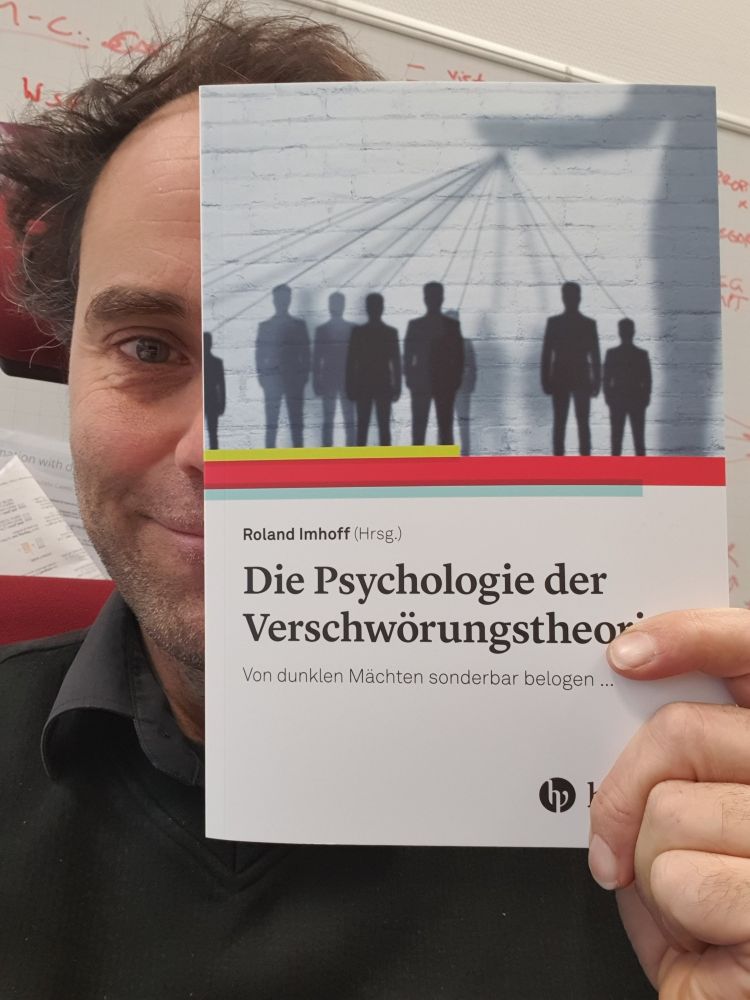
Buchcover "Psychologie der Verschwörungstheorien"
Der Band "Psychologie der Verschwörungstheorien" ist fertig und vor einer Woche erschienen - Hurra! Ich als Herausgeber habe Exemplare, von denen ich drei gerne verschenke. Unter allen Reposts lose ich drei aus (wenn es mehr als drei sind) und schicke Euch das Buch per Post. Nur auf bluesky...
13.11.2023 14:52 — 👍 617 🔁 526 💬 85 📌 25

Postdoctoral Researcher (m/f/d)
Postdoc opportunity:
Are you interested in research on bias reduction? Come to work with me in Trier (Germany)! International applications very welcome!!
leibniz-psychology.onlyfy.jobs/job/ki64gegu
10.11.2023 19:12 — 👍 24 🔁 26 💬 1 📌 2
Post-Doc @ Experimental Psych Oxford studying the role of morality and media in polarization and how to bridge divides.
https://emily-kubin.owlstown.net/
Official Bluesky account of the General Meeting of the European Association of Social Psychology that will take place in Strasbourg in 2026.
Caffeinated linguist researching deception in authorship style and faked (con)texts.
Visiting Research Fellow, AIFL. #Humanism #ForensicLinguistics Practioner
PhD candidate at Tilburg University - Economic Psychology. Studying why people pay taxes.
Societal COmmunication in times of PErmacrisis - a consortium of more than 24 scientists analyzing how profound and long-lasting crises influence the information behaviour of citizens, social coexistence and political decision-making processes
PostDoc | Uni Trier and Leibniz Institute for Psychology @zipd.bsky.social | Research interest: Prefactual thinking, cognitive conflict, and network analysis. All views are my own.
Sharing updates about trust and safety on Bluesky.
This account’s mentions are not actively monitored. To report a post or account, use the in-app reporting feature.
Community Guidelines: https://bsky.social/about/support/community-guidelines
Two former conspiracists debunking conspiracy theories and disinformation.
"It's a great listen! I hope more people check it out." - Travis View (QAA Podcast)
🔥🦉🔥 @brentlee.bsky.social
🔥🦉🔥 @neilsanderssdcic.bsky.social
Père, amoureux, syndicaliste, montréalais et québécois! @ufcwcanada.bsky.social / @laftq.bsky.social
Researcher and teacher @lunduniversity and associate fellow @UISweden International relations, European studies, digital politics and diplomacy
Full stack app dev now, cybersecurity engineer later. I like games.
At BBC Sport, bouncing between Glasgow (nearly) and Salford. Any rare views are very much my opinion alone.
Transition minerals investigator for Global Witness | Formerly InSight Crime | Views my own.
Covers crime, corruption and environment, focus on LatAm and West Africa.
Die Nationale Akademie der Wissenschaften Leopoldina berät Politik und Gesellschaft unabhängig zu wichtigen Zukunftsthemen.
Impressum: http://leopoldina.org/impressum
co-founder @checkfirst.network - information manipulations, influence ops, algos.
Video Journalist and Presenter at The Independent. Covering disinformation/social media.
Assistant Editor, BBC Verify and BBC Monitoring
If you’re a staff journalist here to rewrite my posts, you can at least credit me as a fellow journalist. Ty!
https://www.clippings.me/noturtlesoup17
https://www.turtlediaries.net/
https://linktr.ee/noturtlesoup17
🙅🏻♀️ Author (2 books & The Wayfinder newsletter), disinformation expert, advocate for targets of online abuse.
☀️ CEO, @americansunlight.org
😆 Tucker Carlson once called me a “highly self confident young woman” and meant it as an insult
whowhatwhy.org/author/allison-neitzel/