Other metro Detroit communities are already reaching out with interest in planting their own micro forests, a sign that small spaces can still spark big environmental impact.
Read more: bit.ly/47SZnBA
04.12.2025 15:00 — 👍 0 🔁 0 💬 0 📌 0
Instead of recreating a full forest, the goal is a compact, fast-growing ecosystem that boosts water retention, carbon capture, and local habitat health.
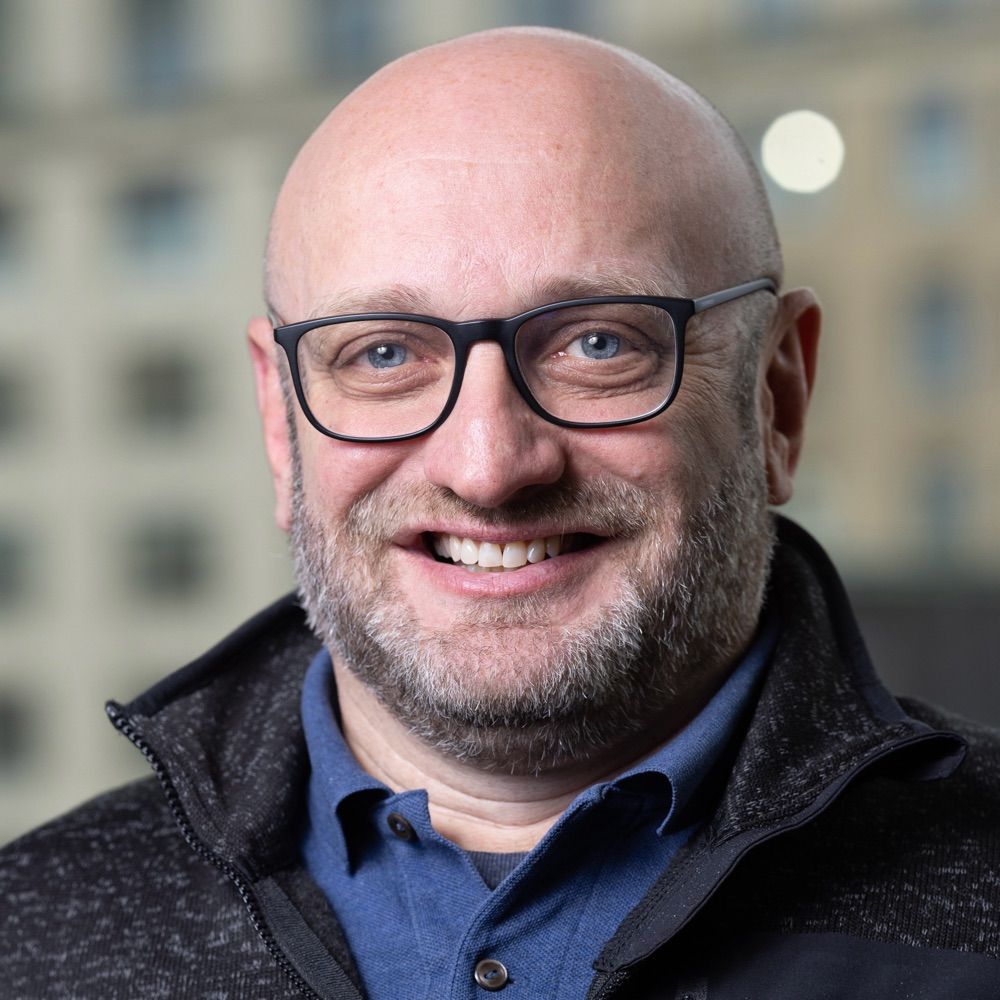
Rochester City Council member Marilyn Trent (pictured) led the project with help from volunteers, arborists, and city staff.
04.12.2025 15:00 — 👍 0 🔁 0 💬 0 📌 0
Rooted in a Japanese method known as the Miyawaki technique, micro forests are designed to bring biodiversity back into highly developed areas. They support birds, insects, and pollinators, while helping remediate soil degraded by human activity.
04.12.2025 15:00 — 👍 0 🔁 0 💬 0 📌 0

This past spring, the City of Rochester took a big step in a small space: planting a micro forest – a densely packed grove of native trees and shrubs grown in an area as small as 1,000 square feet.
Photo credit: Amanda LeClaire, WDET News
04.12.2025 15:00 — 👍 1 🔁 1 💬 3 📌 0
The program is supported by a one-time appropriation under Public Act 121 of 2024.
Learn more: tinyurl.com/55f3fkv6
03.12.2025 15:01 — 👍 0 🔁 0 💬 0 📌 0
Participants receive guidance on design, procurement, permitting, and code compliance. Though Michigan currently lacks a mass timber production facility, a recent MSU study estimates such a facility could contribute over $300 million annually to the state’s GDP.
03.12.2025 15:01 — 👍 0 🔁 0 💬 0 📌 0
Led by the Michigan DNR, MassTimber@MSU, Michigan Green Building Collaborative, and WoodWorks, the program supports goals related to carbon reduction, rural economi hi c development, and sustainable construction.
03.12.2025 15:01 — 👍 0 🔁 0 💬 0 📌 0

Michigan has introduced the Mass Timber Catalyst Program to accelerate the use of engineered wood products in construction. The initiative offers $25,000–$75,000 in funding, along with technical support, to developers and design teams using mass timber as a primary material.
03.12.2025 15:01 — 👍 0 🔁 0 💬 3 📌 0

Building a Circular Future
How PolyFlex is Working to Keep Packaging in Circulation Longer
We spoke with Richard Demko, director of sustainability, PolyFlex Products, about the shift from downcycling to true circularity, the technical and cultural changes required & what this evolution could mean for Michigan’s workforce & manufacturing economy.
sbn-detroit.org/buil...
02.12.2025 15:45 — 👍 1 🔁 1 💬 0 📌 0
Led by the Michigan Department of Education in collaboration with MDARD, Groundwork Center, and MSU Center for Regional Food Systems, this initiative strengthens access to nutritious meals while supporting local farms and food hubs throughout the state.
🍎 Learn more: tinyurl.com/ypv7f8ta
02.12.2025 15:00 — 👍 0 🔁 0 💬 0 📌 0
For the 2023–2024 program year, a total of $9.3 million was awarded to 269 school districts, early care and education centers, and community feeding programs across Michigan.
02.12.2025 15:00 — 👍 0 🔁 0 💬 0 📌 0
Now operating statewide, the program reimburses up to 50% of eligible local produce purchases, helping to stretch food service budgets while prioritizing fresh, healthy options for children.
02.12.2025 15:00 — 👍 0 🔁 0 💬 0 📌 0
The 10 Cents a Meal for Michigan’s Kids and Farms program continues to expand its impact, providing crucial state funding to help child nutrition programs serve Michigan-grown fruits, vegetables, and legumes.
02.12.2025 15:00 — 👍 0 🔁 0 💬 0 📌 0

Pictured: Chris Elliott at the Edison YWCA opens the kitchen doors, inviting children to see where and how their food is prepared. 📸 Photo by Taylor Scamehorn, Model D Media
02.12.2025 15:00 — 👍 0 🔁 0 💬 4 📌 0
🎁 Pro tip: Gift experiences, handmade items, or secondhand treasures, they often carry more meaning and less waste.
Let’s make this season not just festive, but forward-thinking.
28.11.2025 15:00 — 👍 0 🔁 0 💬 0 📌 0
These small shifts can collectively support Southeast Michigan’s long-term goals in waste reduction, energy efficiency, and sustainable infrastructure.
28.11.2025 15:00 — 👍 0 🔁 0 💬 0 📌 0
🟢 Plan your trips strategically – Combine errands into fewer trips to cut down on fuel usage and emissions.
🟢 Be packaging-conscious – Choose products with recyclable or minimal packaging, and avoid overwrapped items when possible.
28.11.2025 15:00 — 👍 0 🔁 0 💬 0 📌 0
🟢 Buy for longevity, not trends – Prioritize well-made products with long lifespans or warranties. Quality over quantity matters.
🟢 Shop local with purpose – Look for businesses offering recycling, repair, or return programs.
28.11.2025 15:00 — 👍 0 🔁 0 💬 0 📌 0
🟢 Bring your own bags and containers – Reusable totes, jars, and containers reduce single-use waste and often hold more than plastic alternatives.
28.11.2025 15:00 — 👍 0 🔁 0 💬 0 📌 0

Black Friday marks the unofficial start of the holiday shopping season, but it can also be a time to make more intentional choices that support both local economies and the environment. As you hit the stores or browse online, consider these impactful ways to reduce waste and conserve energy:
28.11.2025 15:00 — 👍 0 🔁 0 💬 5 📌 0

These efforts reflect a broad and growing commitment to collaboration, innovation, and long-term impact at the local level.
Thank you for continuing to share your work, support others in the network, and engage with stories that move our region forward.
27.11.2025 13:00 — 👍 0 🔁 0 💬 0 📌 0
Throughout the year, we’ve had the opportunity to highlight local businesses, nonprofits, policymakers, and community leaders who are advancing work in clean energy, circular economy, mobility, food access, water equity, and more.
27.11.2025 13:00 — 👍 0 🔁 0 💬 0 📌 0
Happy Thanksgiving from all of us at SBN Detroit! 🦃
As we enter the holiday season, SBN Detroit extends gratitude to the individuals and organizations across #SoutheastMichigan who remain committed to building a stronger, more sustainable region.
27.11.2025 13:00 — 👍 0 🔁 0 💬 2 📌 0
Ongoing monitoring is being used to better understand seasonal shifts and future implications for both ecosystems and communities that rely on the Great Lakes.
Learn more: tinyurl.com/84ahfc8a
26.11.2025 13:00 — 👍 0 🔁 0 💬 0 📌 0
Oceanographers and freshwater researchers attribute the rise in lake temperatures to factors including warmer air temperatures, earlier spring ice melt, and prolonged periods of lake stratification. These conditions can affect underwater ecosystems and water quality.
26.11.2025 13:00 — 👍 0 🔁 0 💬 0 📌 0
Researchers note that surface temperatures on Lake Superior have shown a long-term warming trend. The Great Lakes Integrated Sciences and Assessment program reports that from 1979 to 2006, summer surface temperatures on the lake increased by an average of 2.5°C.
26.11.2025 13:00 — 👍 0 🔁 0 💬 0 📌 0

According to the @noaacomms.noaa.gov data, the surface water temperature of Lake Superior on October 20, 2025, was recorded at 11.6°C, nearly 3°C higher than the historic average of 8.8°C for that date. This marks the second-highest temperature recorded on October 20, following a record set in 2021.
26.11.2025 13:00 — 👍 1 🔁 1 💬 3 📌 0

Building a People-First Economy in Michigan
People First Economy is a statewide organization working to redefine what success in business looks like—where profitability, community wellbeing, and environmental stewardship go hand in hand. Through education, measurement tools, and peer networks, the nonprofit helps Michigan businesses integrate social and environmental values into everyday operations. SBN Detroit interviewed Carlos Martinez, president of People First Economy, about shifting business mindsets, the growing connection between sustainability and profitability, and why Michigan is uniquely positioned to lead the next economy. Q: Tell me about People First Economy and how it came to be. A: At its core, People First Economy is about building tools and support networks that help shape an economy where people and environmental well-being are essential. We never shy away from the idea of the triple bottom line — businesses can absolutely make a healthy profit while supporting the communities they serve and the environment they depend on. We now serve more than 500 businesses statewide, from early-stage entrepreneurs to established companies. Much of our work centers on education and foundational business practices, but always through the lens of sustainability and inclusion. We started as Local First, which focused on supporting locally owned companies. Over time, our mission expanded to include environmental and social impact — because local economies thrive when businesses are sustainable, equitable, and community-driven. Q: As you work with cohorts, what mindset shifts do you see as companies move toward more inclusive, sustainable practices? A: The biggest shift happens when leaders stop viewing sustainability as an add-on and start seeing it as core to their business strategy. Once companies begin measuring their social and environmental impact, they start acting more proactively. Sustainability becomes part of how they innovate, manage costs, and create value. For larger or more mature businesses, this often leads to a broader cultural shift. They begin evaluating suppliers, employees, and even competitors differently — not as transactions, but as part of a shared ecosystem. That mindset unlocks collaboration and innovation. When companies realize that solving sustainability challenges can actually drive profitability, real transformation begins. Q: What tangible benefits do companies see when they measure their social and environmental impacts? A: One of the biggest is employee engagement. When people see that their company is making a positive difference, they feel connected to something larger than their job. We also see efficiency gains, cost savings from smarter resource management, and stronger brand loyalty. But there’s another layer — storytelling. When businesses can measure their impact, they can share those results in powerful ways. It becomes part of their identity. For example, Walker-Miller Energy Services and Cascade Engineering in Michigan both demonstrate how sustainability and inclusion strengthen brand reputation and build employee pride. More companies are now including impact reporting in their marketing or RFP materials because it helps them stand out. When you can prove your values, you open doors to new opportunities. A Harvard study recently found that purpose-driven companies embedding sustainability into their culture outperform the market nearly tenfold over two decades. That connection between purpose and profit is real. The business impact strategies create lasting value when they’re grounded in a deep understanding of a company’s financial metrics. Q: How do you encourage businesses to think about long-term value rather than short-term profit? A: This is always an evolving conversation, especially in challenging economic times. The key is understanding that we’re all interconnected. A diverse, resilient business community helps protect against national downturns and future disruptions. Companies that invest early in sustainable, innovative practices often find themselves better positioned when the market shifts. Patagonia is a good example — years ago, they were experimenting with regenerative agriculture, which at the time seemed niche. Today, it’s a standard for sustainable production. When you build trust, brand loyalty, and local supply chains, it creates stability. Over the long term, that stability translates to profitability. Q: Detroit and Michigan have a rich manufacturing legacy. How is the people-first model reshaping the regional narrative around business and jobs? A: Detroit is unique because it already has a strong foundation of community-based leadership. Other states look to Detroit as a model for what’s possible when innovation and inclusion go hand in hand. We’re still early in the process of embedding this mindset more broadly, but the momentum is there. When we opened applications for our latest sustainability cohort, we had more than 50 applicants for just 20 spots — which tells us there’s real appetite for this work. Our broader goals include connecting early-stage businesses with those further along in their sustainability journey — through tools, mentorship, and experiences like conferences where they can see what’s possible. It’s about building a community of practice. The more we connect those dots, the stronger our local economy becomes. Q: If you were advising a mid-size company in Detroit today, what’s the best first step toward embedding people-first practices? A: Start by understanding where you are. We always recommend beginning with a sustainability or impact assessment. Then pick one or two achievable goals, such as improving employee benefits, reducing waste, or sourcing locally. Progress happens through small, transparent steps, not perfection. I’m an entrepreneur myself, and when I first took an assessment myself, I panicked — but that’s the point. It’s about identifying opportunities for improvement, not judgment. Once you see where you can make a change, momentum builds. It’s a marathon, not a sprint. Q: Where do you see the biggest growth opportunities for Michigan businesses in the next five years? A: Growth lies at the intersection of sustainability, equity, and innovation. The clean energy transition alone represents a multi-trillion-dollar opportunity. There’s also growing potential in circular manufacturing and workforce development and worker-owned cooperatives. We need to make sure those opportunities are equitable. Detroit has a majority Black population, and Michigan has several key regions with strong, diverse, but underserved communities. As major investments flow into green energy and infrastructure, it’s vital that local entrepreneurs and workers share in that growth. This is still a foundational phase. Some of the biggest
"Once companies begin measuring their social and environmental impact, they start acting more proactively. Sustainability becomes part of how they innovate, manage costs, and create value." – Carlos Martinez, President of People First Economy
sbn-detroit.org/buil...
25.11.2025 17:00 — 👍 1 🔁 0 💬 0 📌 0
"Change moves from shared interest to shared ownership. When results are viable and align with comfort, cost, and values, people become champions." – Sharon ...
Making Change Matter: How Detroit’s Civic Buildings Lead in Sustainability
In this video, Sharon Madison shares her vision for sustainability in Detroit’s built environment. She explains how energy savings, equity & community health are interconnected & how reductions in energy & water usage in civic buildings create workforce opportunities.
www.youtube.com/watc...
25.11.2025 14:36 — 👍 2 🔁 1 💬 0 📌 0
The project is part of the city’s broader plan to reduce carbon emissions at the neighborhood level. Similar work is beginning in Pittsfield Village, with a focus on building assessments, energy upgrades, and future infrastructure planning.
Learn more: tinyurl.com/4vzszmuu
20.11.2025 14:00 — 👍 0 🔁 0 💬 0 📌 0
News on weather, climate, oceans, fish, satellites, research & more from NOAA Communications. Official NOAA account.
Award-winning journalism focused on #climatechange, science, energy and policy. Subscribe to our free newsletters: http://bit.ly/CBnewsletters or visit our website: https://www.carbonbrief.org/
Bluesky for Grants Manager, #GreatLakes environment writer, editor, blogger, dad #MrGreatLakes ... Former journalist at a real-life newspaper & int'l government communications leader, now securing funding for community infrastructure / still on the radio
Planet Forward engages college students in search of solutions to challenges facing our planet through storytelling, media & convening 🌱
Visit planetforward.org
Uniting all Americans to ensure wildlife thrive in a rapidly changing world
🌿 I’m here for, and focus on, sustainable solutions to our harmful legacy systems to human health & the environment. There’s no planet B!
(CEO @ Stealth Eco Co.)
🌿 Climate | Ecofriendly ♻️| Nature-lover | 💚Trees | Good Coffee ☕️ | Gardener | CA-based 🌿 |💚🐕
Cofounder and CEO of chloris.earth. Climate, earth observation, tech, NBS in English. Silly stuff in Italian.
Welcome to the world's largest media platform for climate action 💚⚠️ Join us and we'll plant a tree 🌳 #WeDontHaveTime to wait! Join us wedonthavetime.org
Empowering SMEs and startups to lead in sustainability. We provide simple, actionable ESG resources for startups and SMEs. From sustainability consultants, to step-by-step guides, we've got what you need to grow responsibly. Explore at howtoesg.org
Climate scientist, University of Exeter and Met Office. Expert Adviser to the Adaptation Committee of the Climate Change Committee. Lead author IPCC AR4, AR5 & AR6. Live music lover, supporter of grassroots venues. Cycles a lot, rock climbs occasionally.
Climate, water, birds, bluegrass mandolin. Member US National Academy of Sciences, MacArthur Fellow, Carl Sagan Prize, author of The Three Ages of Water (2023). Also on Mastodon. @petergleick@fediscience.org. Email me at pgleick (at) gmail.
Environmental journalism that lifts up local voices & fosters constructive global conversations.
Find us at: https://dialogue.earth
We scrutinise carbon markets and campaign for fair and effective climate action🍃
https://carbonmarketwatch.org/
Friends of the Earth (Action), Inc. defends the environment and champions a healthy and just world.
A new breed of climate NGO on a mission to reverse two centuries of carbon emissions. Subscribe 👉 carbon180.org/newsletters
North America's largest climatetech incubator, supporting 200+ startups developing the innovations to build a sustainable, decarbonized world.
#ESG #PlasticPollution #CEOPay #NetZero #ProxyPreview #SocialJustice #InvestYourValues
asyousow.org
Protecting the rainforest and our climate in solidarity with Indigenous peoples since 1996. #EndAmazonCrude #MiningOutOfTheAmazon #DemarcationNow 🌿🦋🐒
Siding with frontline and Indigenous communities to protect our climate and keep forests standing. We challenge corporate power.