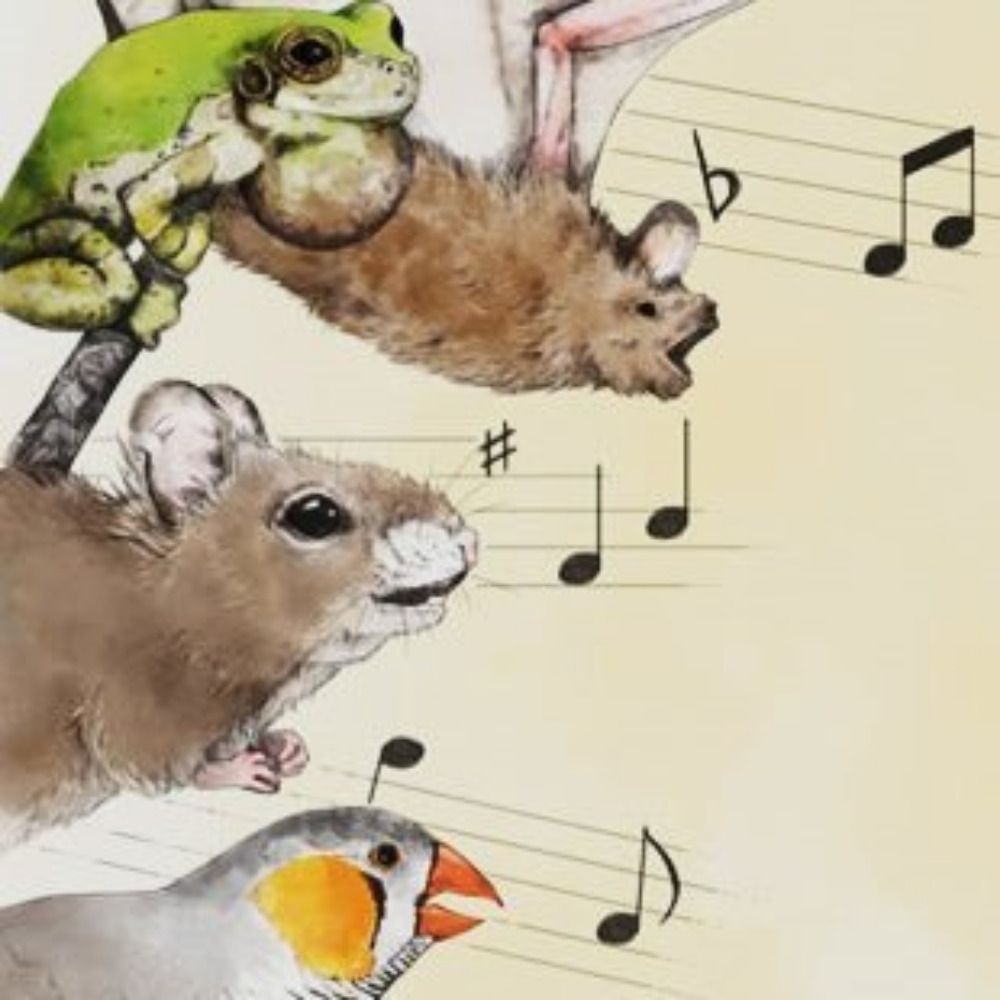
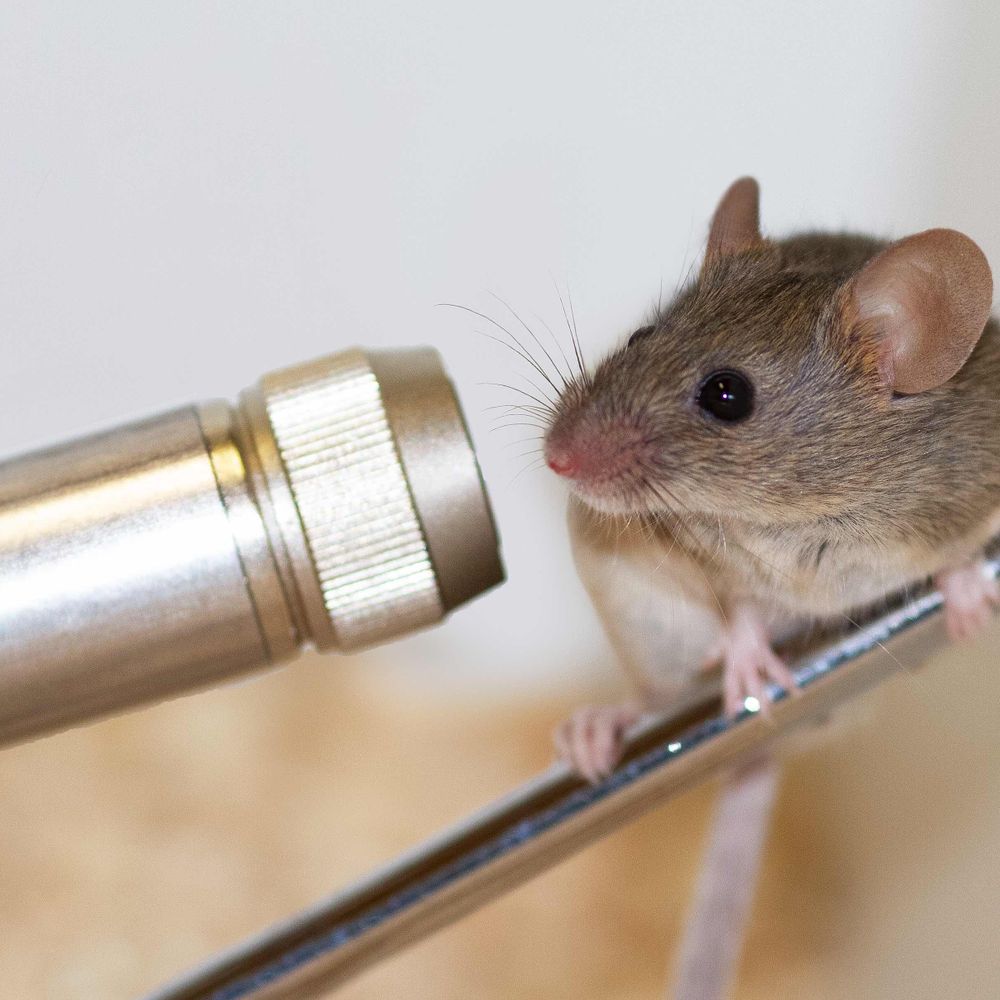
🧪Before the day begins, meerkats share a unique ritual. After emerging from their burrows, they spend up to an hour "sunning" to warm up for the day. During this quiet time, they produce soft, tonal "sunning calls". Just standing, sunbathing, and calling. But why❓ #bioacoustics #meerkats #kalahari
01.02.2026 11:54 — 👍 92 🔁 21 💬 6 📌 4

🚨 PhD offer (please share)
Fascinated by bird migration and movement ecology? 🦜🌍 Join us at @vogelwarte.bsky.social to study annual cycle energetics with multi-sensor loggers in multiple species
Deadline: 20 Feb 2026
Starting: June 2026
Supervision: Martins Briedis & me
Info: tinyurl.com/2dbv9nzh
15.01.2026 13:30 — 👍 74 🔁 95 💬 1 📌 2
Selectus - Home
Job alert! The University of Zurich is hiring a professor for Evolutionary Anthropology and Primatology. Learn more here: www.appointments.mnf.uzh.ch/auth/Apply/0...
27.01.2026 16:25 — 👍 14 🔁 18 💬 0 📌 0

Researchers from #UniKonstanz, @mpi-animalbehav.bsky.social and the University of Zurich have investigated how meerkats use vocal exchanges – rather than physical touch – to maintain social bonds and manage their complex group hierarchies. t1p.de/okuf3
Vlad Demartsev
30.01.2026 15:07 — 👍 16 🔁 5 💬 1 📌 0

"Body size shapes average behaviour, social impact, and social responsiveness in agonistic interactions" doi.org/10.32942/X2H...
29.01.2026 15:02 — 👍 4 🔁 2 💬 0 📌 1

Evolution of sensory systems underlies the emergence of predatory feeding behaviors in nematodes | PNAS
Understanding how animal behavior evolves remains a major challenge, with few studies
linking genetic changes to differences in neural function and...
How does evolution turn a harmless bacterial feeder into an active predator?
Our new study led by @marianneroca.bsky.social and published in @pnas.org explores how sensory systems were rewired to enable prey detection and predatory behaviour in nematodes.
www.pnas.org/doi/10.1073/...
🧵below!
29.01.2026 12:30 — 👍 48 🔁 24 💬 1 📌 1
Elefantenbabys knüpfen früh soziale Bindungen! 🐘💞
Revathe & Vidya zeigen, dass asiatische Elefantenkälber bereits früh differenzierte Beziehungen aufbauen: Sie interagieren eng mit Mutter und „Begleitkühen“, die allomaternale Fürsorge leisten, meiden jedoch meist andere Weibchen. #Sozialverhalten
26.01.2026 14:09 — 👍 1 🔁 1 💬 0 📌 0
Spielt die Hintergrundfarbe eine Rolle für heranwachsende Kaulquappen? 🐸🎨
Amin et al. zeigen, dass Goldmantella-Kaulquappen dunkle Hintergründe bevorzugen – besonders in jungen Entwicklungsstadien. Das Wachstum wurde zwar nicht beeinflusst, doch Kaulquappen in dunkleren Becken waren weniger aktiv.
24.01.2026 10:35 — 👍 0 🔁 0 💬 0 📌 0

📣 Annual Meeting of the Ethologische Gesellschaft 2026
🎤 Keynote: Thomas Bugnyar 🐦⬛
Leading researcher on ravens and cognition, Professor of Behavioral & Cognitive Biology @univie.ac.at
📍 Grünau | 📅 Feb 18–21, 2026
Four days of science and exchange—where ethology made history.
Picture: A. Monteanu
23.01.2026 10:09 — 👍 11 🔁 5 💬 0 📌 0
Erkennen Krabben Individuen wieder? 🦀👀
Robinson liefert Hinweise darauf, dass Geisterkrabben vertraute Artgenossen von unbekannten unterscheiden können. In einem 3-Kammer-Test verbrachten sie mehr Zeit bei bekannten Individuen–ein Zeichen für individuelle Wiedererkennung über visuelle Hinweise!
19.01.2026 20:32 — 👍 1 🔁 1 💬 0 📌 0

@dingemanselab.bsky.social
Recently out in #animalbehaviour: Yuval Zukerman investigated Interindividual variation in tolerance behavior of #NubianIbex inhabiting human settlements and found that the way humans behave shapes the behavior of the ibex, leading to separate social cliques.
www.sciencedirect.com/science/arti...
18.01.2026 21:10 — 👍 5 🔁 3 💬 0 📌 0
Latest issue of Cowrent Biology is up! www.cell.com/current-biol...
19.01.2026 19:38 — 👍 38 🔁 7 💬 0 📌 0

Postdoctoral Researcher in Statistical Ecology and Evolution
Postdoctoral Researcher in Statistical Ecology and Evolution
Postdoc in statistical ecology & evolution! Develop models bridging evolutionary theory with empirical data on sex differences in immunity and life history. Apply now!
#postdoc #statistics #evolution #academicjobs #ecology jobs.helsinki.fi/job/Helsinki...
14.01.2026 09:08 — 👍 31 🔁 46 💬 0 📌 0

Internships are now available with the Cornish Jackdaw Project! 🐦⬛
Duties will include assisting with nest monitoring, bird ringing, data entry, and the potential to help with ongoing research projects.
15.01.2026 08:27 — 👍 42 🔁 44 💬 2 📌 0
If you are organising a symposium related to animal cognition @ecbb2026.bsky.social and would like to develop/guest edit a special collection in the journal Animal Cognition to accompany it, please get in touch #ecbb2026 #AnimalCognition #AcademicPublishing #SpecialCollection
15.01.2026 10:35 — 👍 10 🔁 10 💬 0 📌 0
Wenn Räuber Räubern helfen 🐟🌀
Saltzman et al. beobachteten Cobia wie sie jagenden Stechrochen folgen, und Beute fressen, die die Rochen aufscheuchen. Diese kommensalstische Zusammenarbeit könnte eine wichtige, bisher unterschätzte, Strategie in küstennahen Lebensräumen sein! #OpenAccess
14.01.2026 11:57 — 👍 1 🔁 1 💬 0 📌 0

Behavioral Evidence of Predator–Predator Commensalism: Cobia Track and Feed on Prey Disturbed by Southern Stingrays
We documented a novel predator–predator commensal foraging interaction between cobia (Rachycentron canadum) and a southern stingray (Hypanus americanus) in a shallow coastal habitat of Biscayne Bay, ...
🧪 ETHOLOGY: When predators help predators 🐟🌀
Saltzman et al. observed cobia closely following foraging southern stingrays and feed on prey the rays disturb but don’t eat. This predator–predator commensalism may be an overlooked foraging strategy in nearshore habitats! doi.org/10.1111/eth....
14.01.2026 11:57 — 👍 3 🔁 1 💬 1 📌 0
Last days to register for the Annual meeting in Austria next month!
14.01.2026 10:26 — 👍 1 🔁 1 💬 0 📌 0


New paper out!
Early-life social instability increases aggression in chickens, but does not affect response inhibition 🐤
We discuss what this means for developmental links between social environments, cognition, and social behaviour, highlighting strong context dependence
Full text: rdcu.be/eYOzC
13.01.2026 14:36 — 👍 37 🔁 12 💬 1 📌 0

We are hiring – postdoc position exploring how kinship shapes social ageing in killer whales. Collaboration with @samellisq.bsky.social @drwhale.bsky.social and Prof Rufus Johnstone (Cambridge) starts 1st April 2026 and ends 31st March 2029. Apps close 2nd Feb. www.jobs.ac.uk/job/DPZ788/p...
13.01.2026 14:42 — 👍 54 🔁 58 💬 1 📌 2

We’re looking for:
Postdoctoral Research Associate, Social Fluids Lab (deadline: 9 Feb)
Find out more: www.jobs.cam.ac.uk/job/54112/
Research Assistant (Dynamic Baselines for Carbon Markets) Conservation Science Group (deadline: 18 Jan)
Find out more: www.jobs.cam.ac.uk/job/54010/
14.01.2026 10:01 — 👍 5 🔁 2 💬 0 📌 0

ASAB Spring Video Contest 2026 — ASAB
Attention student attendees of #ASABSpring2026 ! Our annual video contest is NOW OPEN for submissions. Prepare a 1-2 min video on your animal behaviour research, and you could win £100 💰💰💰💰
Due date is Fri March 20 !
Details and submission form here: www.asab.org/asab-spring-...
12.01.2026 15:08 — 👍 9 🔁 8 💬 0 📌 1
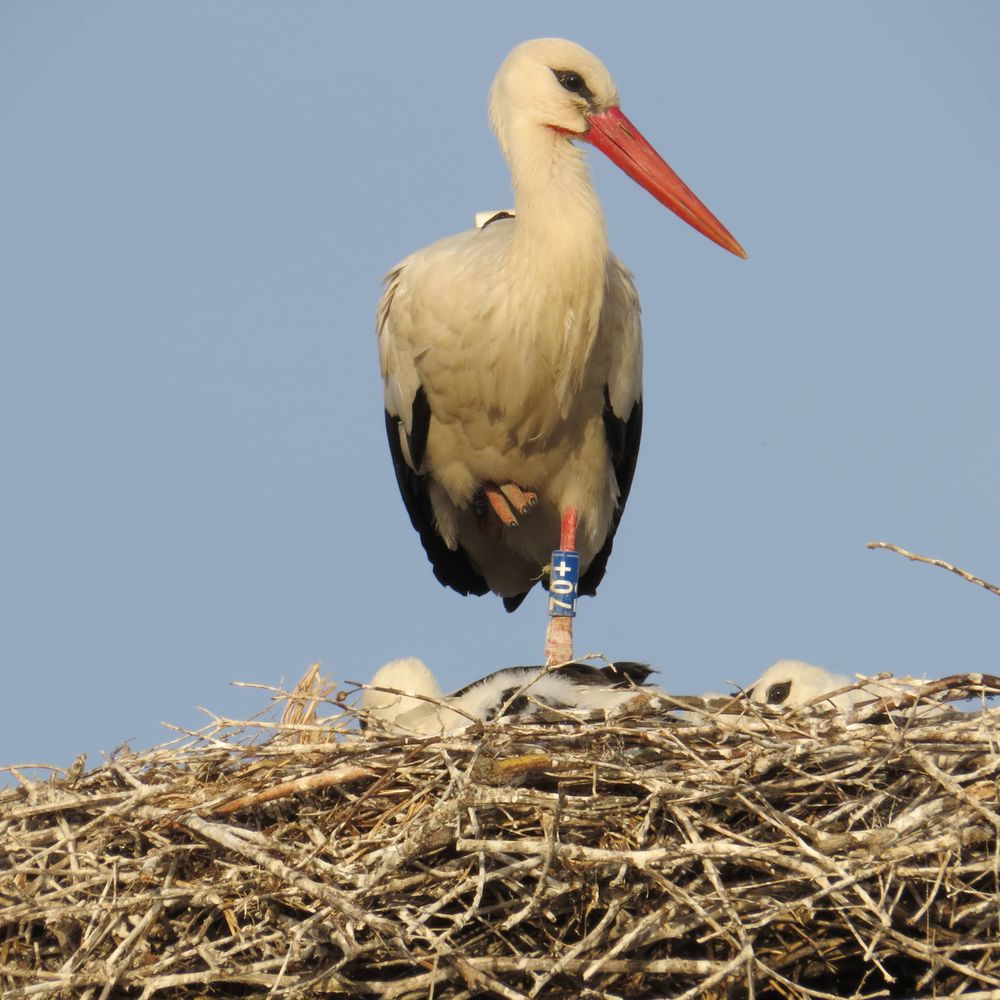
Studying the #MovementEcology of #WhiteStorks in Portugal
We study the cognitive and developmental bases of communication and social life, in animals and human babies 🐥🐦👶
- Université Paris Nanterre
Lab website : https://lecd.parisnanterre.fr/
Babylab website : https://babylab.parisnanterre.fr/
GroupLeader@UniKonstanz, @CASCB, @MPIAnimalBehavior, Postdoc@Harvard, interested in neuroscience, neuromodulation, social modulation, insect behavior, and connectomics. #Maggotmaster #wearyourmodelorganism
True Facts, the Show, Creepy Dave, Sad Cat Diaries…
Research team led by Alex Thornton at the University of Exeter's Centre for Ecology and Conservation, studying cognition in wild jackdaws and other creatures.
wildcognitionresearch.com
Assistant Professor in Sociology at @rug.nl | Interdisciplinary researcher interested in social networks, cooperation, and social and economic inequality | Assistant director of the ENDOW project: endowproject.github.io 🏳️🌈
behavioral ecologist, studying the evolution of social relationships - postdoc @PrimEvo lab @MPI-EVA | team MacaqueNet & @ABCmicrogrants | she/her
linkree: https://linktr.ee/delphinedemoor
A Big-Team Open Science collaborative approach to avian cognition and behaviour research | 🕊🦅🦆🦜🐓🦩🦚🦉| Run by Co-Founder @drrmiller.bsky.social | Website: www.themanybirds.com
Associate Professor, University of Cincinnati, working on animal sociality, cognition, networks, conflict, & hierarchies. (she/her)
#BehavioralEcology #Ethology #HumanBehavior #AnimalBehavior #LifeHistory #AnimalPhysiology papers from #PubMed & journal rss-feeds | -- MF
postdoc at Uni Zurich
studying social learning, social networks and animal culture in birds 🐦 and agent-based models 🤖
https://michaelchimento.github.io
https://soundcloud.com/tek_cashay
Our research group, headed by Henrik Brumm, studies acoustic communication and urban ecology at the Max Planck Institute for Biological Intelligence.
bi.mpg.de/brumm
We study animal behaviour in the field and in the lab, with a focus on chemical communication, urbanisation and host-microbe interactions.
CCS is a community of researchers dedicated to understanding the evolution of cognition and development of behaviour across taxa. Join us at our next conference #CO32026 in Montreal, April 15-18, 2026.
https://www.comparativecognition.org/
PhD student at LuiKotale Bonobo Project and Max Planck Institute of Animal Behavior: networks in wild bonobos and immigrant females' integration
The latest n' greatest research about all things animal communication 🐔🐑🐁🐿🐳🦀🦚🕷🐝🗣🐦 @ me your favorite papers, new results, etc 💬
日本動物行動学会(@ethology.bsky.social)の学会誌Journal of Ethology編集長の公式アカウントです。掲載論文の情報を発信していきます。
The official account of the Editor-in-Chief of Journal of Ethology (Japan Ethological Society). I will provide information on articles published in this journal.
Behavioral biology, sexual selection, sexual conflict, animal communication, mechanisms & functions of courtship signals
Certified bird brain, researching cognitive and social ecology of parrots and parids. Currently holding down a dual position at the Australian National University and the University of Zurich