Q4. If AI is the answer to online disinfo, what role is left for human judgement in deciding what counts as trustworthy information?
#AICODEPROJECT
30.10.2025 12:10 — 👍 5 🔁 1 💬 11 📌 0

Q5. Will AI tools empower citizens to spot disinfo themselves – or just hand more power to platforms and gatekeepers?
#AICODEPROJECT
30.10.2025 12:20 — 👍 5 🔁 2 💬 10 📌 0
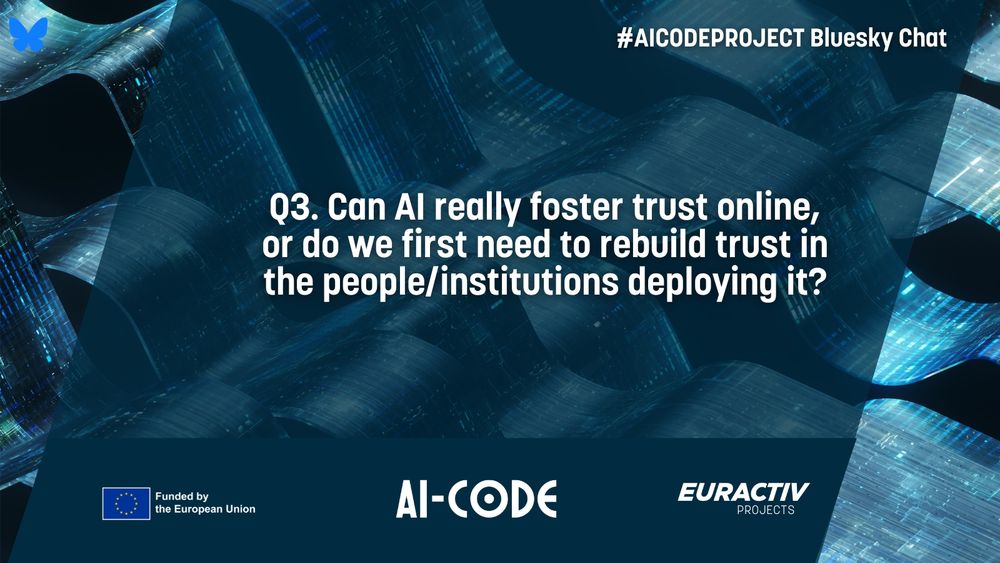
Q3. Can AI really foster trust online, or do we first need to rebuild trust in the people/institutions deploying it?
#AICODEPROJECT
30.10.2025 12:00 — 👍 6 🔁 1 💬 11 📌 0

Q2. Is the biggest challenge building better AI, or convincing the public that AI-backed systems can be fair and transparent?
#AICODEPROJECT
30.10.2025 11:50 — 👍 7 🔁 1 💬 14 📌 0

Q1. Can any tech stay ahead of disinformation tactics that evolve just as fast?
#AICODEPROJECT
30.10.2025 11:40 — 👍 8 🔁 1 💬 14 📌 0
Scale-free Points-of-Interest Distribution in a City Emerging from Homogeneous Poissonian-point Processes
https://arxiv.org/abs/2509.01699
03.09.2025 15:46 — 👍 2 🔁 2 💬 0 📌 1
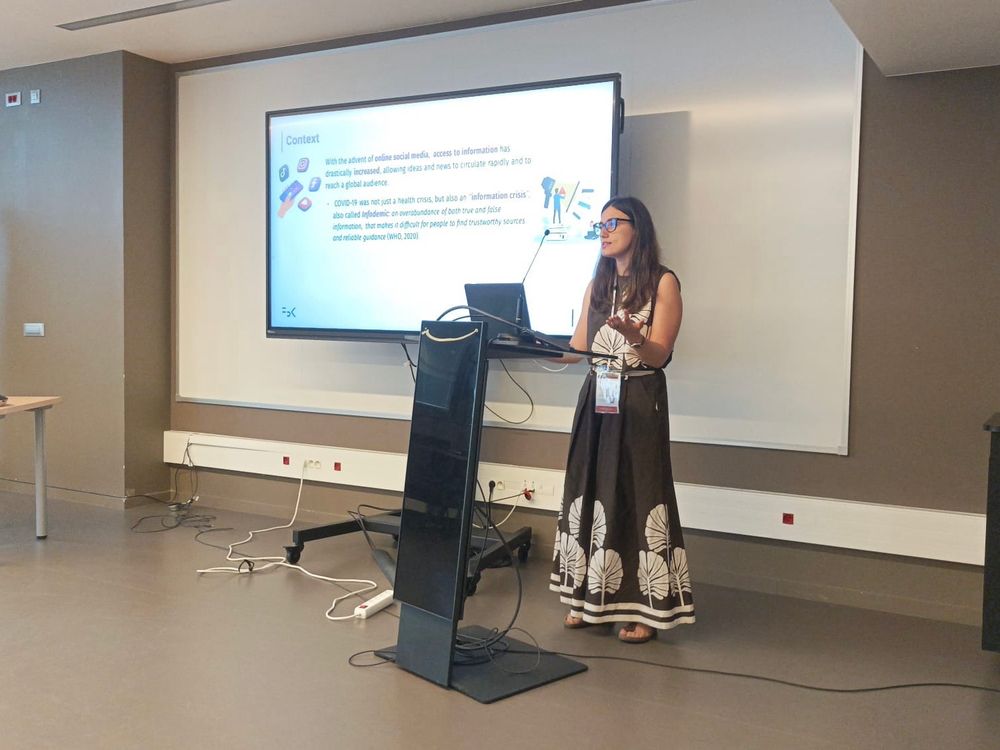
The studies presented analyse respectively:
Twitter by @annabertani.bsky.social
Telegram by @tlouf.bsky.social
Mastodon by @arregui.bsky.social
Youtube by @matteoscianna.bsky.social
#CCS2025
03.09.2025 17:21 — 👍 2 🔁 1 💬 0 📌 0
New pre-print out ! Work led by @eleandre.bsky.social, in collaboration with M. Napolitano and @ricgallotti.bsky.social. Using Foursquare data from Bologna, we find that the distribution of POIs follows a clear power-law pattern at the city scale. To explain this, we introduce a framework where ...
03.09.2025 16:27 — 👍 4 🔁 4 💬 1 📌 0
Great energy at the poster session today! It was a pleasure to be part of it presenting our work "How to design a collection strategy for monitoring disinformation and hate speech in Telegram".
Excited for round two tomorrow – see you all there! ☀️
01.09.2025 22:08 — 👍 11 🔁 3 💬 0 📌 0
This research was done by @luzuzek.bsky.social zek.bsky.social, Juan Pablo Bascur, @annabertani.bsky.social, and @ricgallotti.bsky.social. This project is supported by European Media and Information Fund.
⤴️
04.07.2025 10:40 — 👍 10 🔁 1 💬 0 📌 0
So excited to see this come together! 🎉
Our latest study explores the interplay between science and misinformation in public debates during COVID-19 🔍 arxiv.org/abs/2507.01481
👇Take a look
04.07.2025 11:00 — 👍 15 🔁 7 💬 0 📌 0
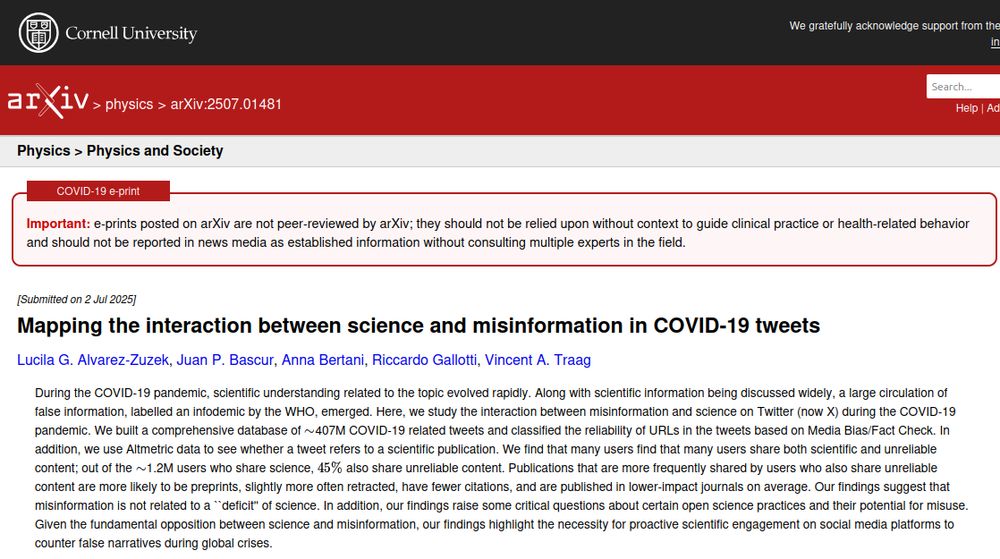
Mapping the interaction between science and misinformation in COVID-19 tweets.
Publication from @luzuzek.bsky.social, Juan Pablo Bascur, @annabertani.bsky.social, @ricgallotti.bsky.social. This project is supported by European Media and Information Fund.
Abstract: During the COVID-19 pandemic, scientific understanding related to the topic evolved rapidly. Along with scientific information being discussed widely, a large circulation of false information, labelled an infodemic by the WHO, emerged. Here, we study the interaction between misinformation and science on Twitter (now X) during the COVID-19 pandemic. We built a comprehensive database of 407M COVID-19 related tweets and classified the reliability of URLs in the tweets based on Media Bias/Fact Check. In addition, we use Altmetric data to see whether a tweet refers to a scientific publication. We find that many users find that many users share both scientific and unreliable content; out of the 1.2M users who share science, also share unreliable content. Publications that are more frequently shared by users who also share unreliable content are more likely to be preprints, slightly more often retracted, have fewer citations, and are published in lower-impact journals on average. Our findings suggest that misinformation is not related to a ``deficit'' of science. In addition, our findings raise some critical questions about certain open science practices and their potential for misuse. Given the fundamental opposition between science and misinformation, our findings highlight the necessity for proactive scientific engagement on social media platforms to counter false narratives during global crises.
New preprint! 🚨
We study the interaction between misinformation and science on Twitter during COVID-19 based on ~407M tweets. Both science and misinformation featured prominently during the pandemic, but the interaction between the two has not been studied on this scale before.
🧵 (1/10)
04.07.2025 10:37 — 👍 102 🔁 40 💬 4 📌 5
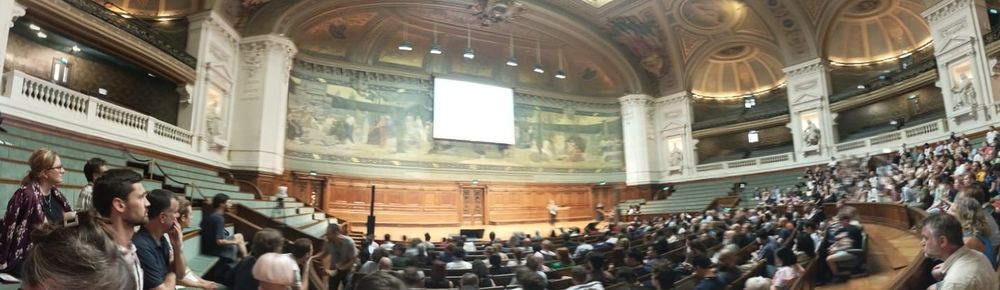
The Grand Amphithéâtre of @sorbonne-universite.fr is definitively not a bad venue for a the keynote session of @sunbelt2025paris.bsky.social #Sunbelt2025
26.06.2025 16:05 — 👍 4 🔁 1 💬 0 📌 0
🚨 check out our latest work 👇🏼
16.06.2025 17:29 — 👍 3 🔁 1 💬 0 📌 0
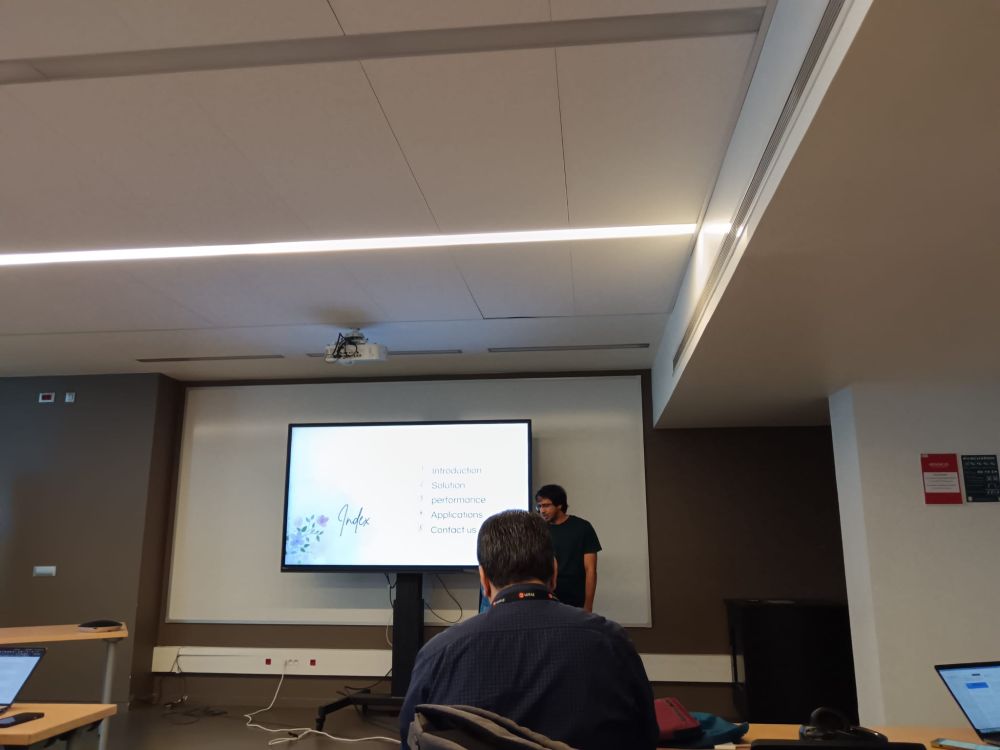
Paris, croissants, and network science! 🌐✨
Presenting at #Sunbelt2025 on how domain-level signals help fact-checkers outsmart misinformation.
Vive la vérité!
@sunbelt2025paris.bsky.social @insna.bsky.social
25.06.2025 09:11 — 👍 4 🔁 2 💬 0 📌 0
🚨If you're around Paris come to see @tlouf.bsky.social talking today about the structure and dynamics of information flow on Telegram at @sunbelt2025paris.bsky.social and @css-fr.bsky.social
25.06.2025 09:32 — 👍 2 🔁 3 💬 1 📌 0
I'm also very happy that this conference brought me back just a few hundred meters from where I used to live in the 5th arrondissement. (And no, I wasn't rich - I was sharing a triple room!)
25.06.2025 11:43 — 👍 0 🔁 0 💬 0 📌 0
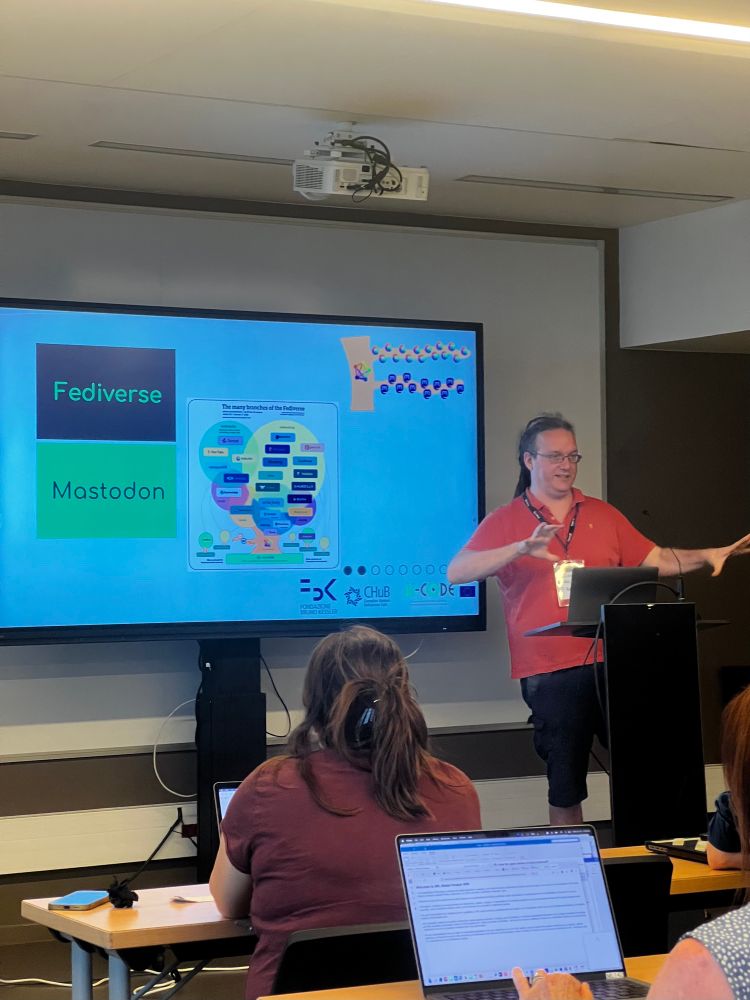
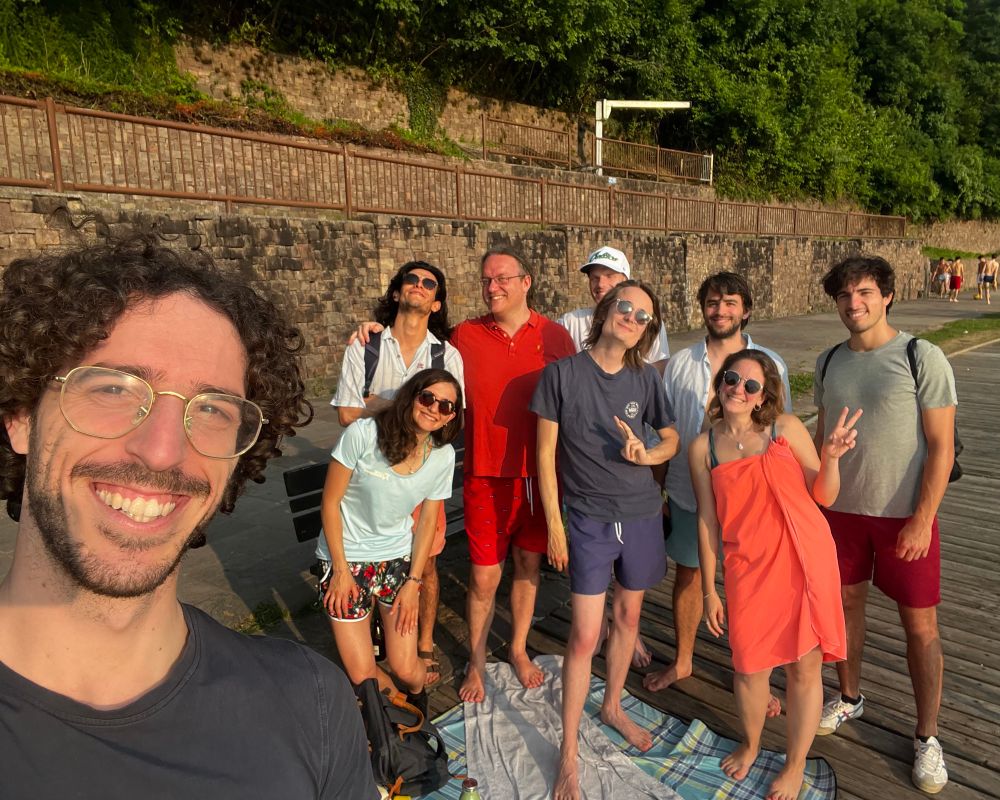
I finally have the pleasure of attending Sunbelt in person for the first time, together with four members of my unit @chub-fbk.bsky.social
This year among the organisers we also have many familiar faces such as @camcom.bsky.social , @chavalarias.org , Floriana Gargiulo and Emmanuel Lazega.
25.06.2025 11:43 — 👍 7 🔁 2 💬 1 📌 0

Universal roughness and the dynamics of urban expansion
We present a new approach to quantify urban sprawl using tools from surface growth physics. Analyzing built-up area expansion in 19 cities (1985-2015), we uncover anisotropic growth with branch-like e...
How do cities expand?
Using surface growth physics, we found a unique exponent governing their local geometry. Instead, their dynamics range from smooth diffusion to abrupt coalescence, with demographic pressure driving where each city lands on that spectrum.
arxiv.org/abs/2506.10656
16.06.2025 17:02 — 👍 10 🔁 4 💬 1 📌 1
@css-conference.bsky.social
@ricgallotti.bsky.social
@ifisc.uib-csic.es
@elsaarcaute.bsky.social
@martikagv.bsky.social
@andreaguizzo.bsky.social
@isi.it
26.05.2025 09:44 — 👍 3 🔁 2 💬 1 📌 0
AI/NLP research at @uni-graz.at, (Data) Journalism for scomodo.org.
Before: AI policy & Data science @_interface_eu, geopolitical analysis for @Geopoliticainfo
(soon-to-be) PhD student in Mathematics
| UNITN & CHuB (@chub-fbk.bsky.social) |
Intested in applying maths and ML to disinformation and CIO detection
✈️🌍🌳📚🤺
looking for order in messy systems
statistical physics
At @chub-fbk.bsky.social 🌿🌻
Postdoc Researcher @ DCL, FBK
🧮 Complex networks, (hyper)graphs & urban systems 🌱 Sustainability, climate change ✍🏻 With Nora for science communication
Researcher of online rumors & disinformation. Former basketball player. Prof at University of Washington, HCDE. Co-founder of the UW Center for an Informed Public. Personal account: Views may not reflect those of my employer. #RageAgainstTheBullshitMachine
Philosopher of Psychology interested in irrational beliefs, new technologies and feminism.
Senior researcher in #bibliometrics, #informetrics & #scientometrics at the Centre for Science and Technology Studies (CWTS)
Also at http://social.cwts.nl/@rodrigocostas
ORCID: https://orcid.org/0000-0002-7465-6462
Team Leader of COOLNET project: global cooperation 🤝 with gamified experiments 🎮 | SOHAM @ TUD & Trinity College (Dublin).
Complex socio-ecological systems, transitions, cooperation, networks
Particle physics PhD @ École Polytechnique, postdoc @ Princeton
Professor for Social and Behavioral Data Science at the University of Konstanz. Also at CSH Vienna, ETH Zurich and TU Graz.
Assistant Professor in Network Science at the University of Zurich
- Networks, Computational Social Science, Complex Systems, Data Science
He/Him
she/her complex systems scientist
Scientist.
Infectious disease dynamics · outbreak response · control measures · host mobility and contacts · digital epidemiology.
www.epicx-lab.com
Prof. of Computer Engineering | Network Science & Machine Learning
Networks & data, computational epidemiology, complex systems
Professor of physics in Integrated Science Lab, IceLab, Umeå University.
For the passion of revealing stories in relational data, we study information flows through social and biological systems to comprehend their inner workings.