Thank you Astrobot!
02.02.2026 09:18 — 👍 0 🔁 0 💬 0 📌 0
Thank you Astrobot
30.01.2026 16:17 — 👍 1 🔁 0 💬 0 📌 0
LISA is a ESA-led space-based gravitational-wave observatory
30.01.2026 16:00 — 👍 0 🔁 0 💬 1 📌 0
yes
30.01.2026 15:58 — 👍 0 🔁 0 💬 1 📌 0
@bot.astronomy.blue signup
30.01.2026 15:51 — 👍 1 🔁 0 💬 1 📌 0

NASA, Partners Advance LISA Prototype Hardware - NASA Science
Engineers and scientists at NASA’s Goddard Space Flight Center in Greenbelt, Maryland, completed tests this month on a second early version of a key element
Engineers & scientists at NASA’s Goddard Space Flight Center in Greenbelt, Maryland, completed tests this month on a second early version of a key element of the upcoming LISA mission.
Read all about it 👉 science.nasa.gov/missions/lis...
Multimedia 👉 svs.gsfc.nasa.gov/14955
28.01.2026 13:10 — 👍 2 🔁 1 💬 0 📌 0

>> This gives us a more physically accurate description of how black holes move, or kick, after they merge, and how these new compact objects effect the AGN disk over the course of its lifetime."
26.01.2026 16:23 — 👍 1 🔁 0 💬 0 📌 0

>> My project focuses on upgrading the black hole merger processes for McFACTS by implementing a numerical relativity surrogate model that solves Einsteins complex equations in a fast and accurate way. >>
26.01.2026 16:23 — 👍 0 🔁 0 💬 1 📌 0

Here's a summary of the paper:
"Monte carlo For AGN Channel Testing and Simulation (McFACTS) is a new population synthesis code for simulating binary black hole mergers inside of active galactic nuclei (AGN) disks that are detectable by the LIGO-Virgo-KAGRA (LVK) observatories. >>
26.01.2026 16:23 — 👍 0 🔁 0 💬 1 📌 0

#LISACommunityTalks
The #LISACommunity recently hosted a talk by Shawn Ray on a paper by Shawn Ray, Keefe Mitman, Emily McPike, Barry McKernan, K.E. Saavik Ford: "Spinning and Kicking New Remnants: Considering Surrogate Models for McFACTS Merger Dynamics", for which a paper will be coming soon!
26.01.2026 16:23 — 👍 2 🔁 1 💬 1 📌 0

In his free time, Neil takes advantage of his living in Montana and does a lot of hiking, skiing and hunting. He loves to cook, he's into wine and also runs a private saloon.
#HumansOfLISA #HumansOfLST
20.01.2026 16:46 — 👍 1 🔁 0 💬 0 📌 0

🎤 How did you get interested in LISA or science?
"I heard a talk by Bill Folkner on LISA at a Pacific Coast Gravity meeting at Caltech when I was a graduate student and I thought it was the craziest thing I had ever heard."
#HumansOfLISA #HumansOfLST
20.01.2026 16:46 — 👍 1 🔁 0 💬 1 📌 0

🎤 What are you most excited for about LISA?
"Discovering unexpected phenomena and previously unimagined astrophysical objects."
#HumansOfLISA #HumansOfLST
20.01.2026 16:46 — 👍 1 🔁 0 💬 1 📌 0

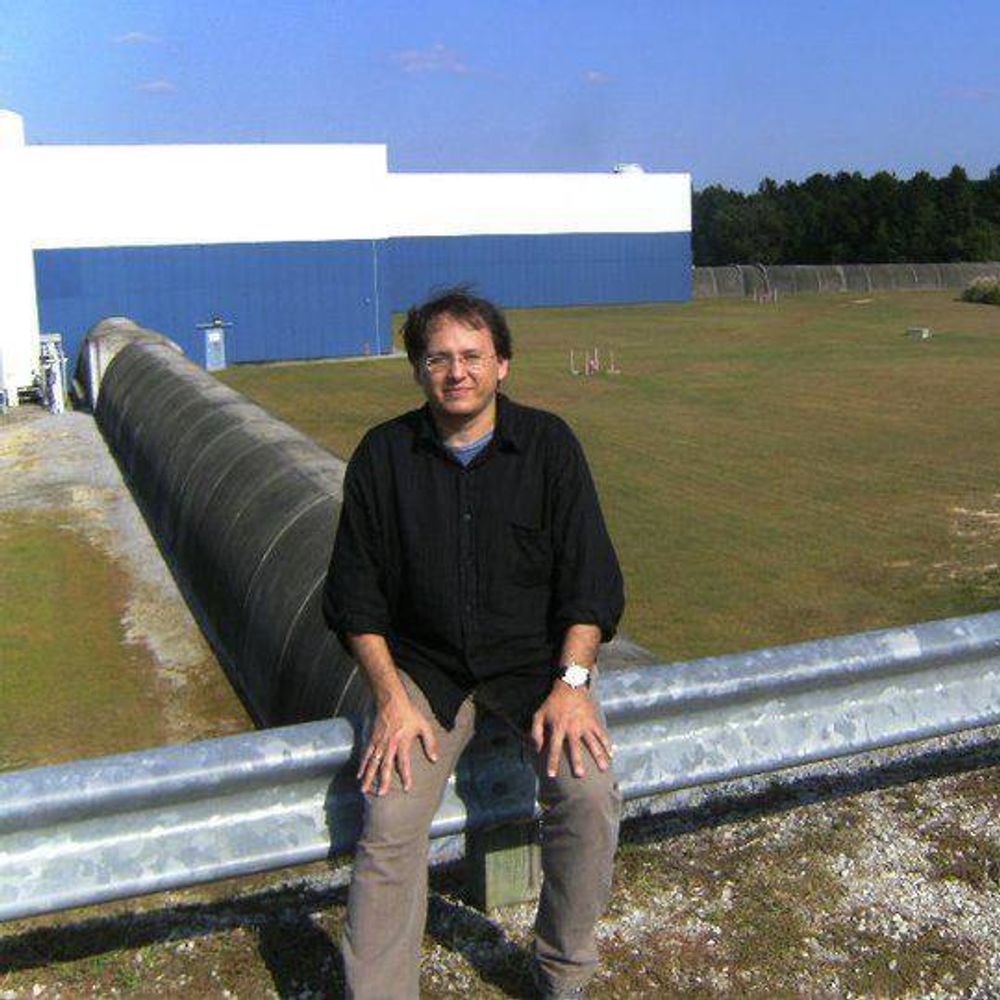
Neil Cornish is a Professor at Montana State University, working on Gravitational Wave Astronomy. He is one of the members of the LISA Science Team #HumansOfLST: "I am helping to design and build the Global Fit analysis to extract science from the LISA data."
#HumansOfLISA #HumansOfLST
20.01.2026 16:46 — 👍 1 🔁 0 💬 1 📌 0

>> This work connects galactic magnetic fields and their electromagnetic signatures with #LISAMission gravitational-wave observations through their common dependence on hierarchical galaxy mergers, the formation scenario for massive black-hole binaries."
15.01.2026 20:56 — 👍 2 🔁 1 💬 0 📌 0

>> Gravitational-wave astronomy offers new insights into these systems; the Laser Interferometer Space Antenna (LISA) will observe the mergers of massive (M ~>10^6 Msol) black-hole binaries, providing constraints on their hosts' evolution. >>
15.01.2026 20:56 — 👍 2 🔁 1 💬 1 📌 0

Here's a summary of the paper:
"Large-scale, micro-Gauss magnetic fields are observed throughout galaxies and relate closely to galactic evolution. >>
15.01.2026 20:56 — 👍 1 🔁 0 💬 1 📌 0

#LISACommunityTalks
The #LISACommunity recently hosted a talk by Nathan Steinle on a paper by Anuraag Reddy, Nathan Steinle, Samar Safi-Harb, Jo-Anne Brown: "Multi-messenger window into galactic magnetic fields and black hole mergers with LISA", which can be found here 👉 arxiv.org/abs/2504.18986
15.01.2026 20:56 — 👍 5 🔁 2 💬 2 📌 0
YouTube video by Dr. Becky
FINALLY: evidence for Hawking's AREA THEOREM of black holes
Happy birthday to #GW250114 our loudest detection to date!
In this video, @drbecky.bsky.social explains how we used the signal to test one of Hawking's fundamental ideas about black holes
www.youtube.com/watch?v=_fLO...
🧪⚛️🔭
14.01.2026 11:43 — 👍 25 🔁 5 💬 0 📌 0

Today, 10 years ago, we had the first laser light on LPF! 💛🛰️
Laser interferometry was used on LPF to track the position of the test masses along the sensitive axis, and will be used on LISA too for the same purpose.
#LPF10anniversary #LISAMission
[Image credits: University of Glasgow]
13.01.2026 17:03 — 👍 12 🔁 6 💬 1 📌 0

>> Here we present a new, computationally efficient approach to Bayesian data augmentation in the time-frequency domain that avoids repeated, costly matrix operations."
16.12.2025 15:22 — 👍 0 🔁 0 💬 0 📌 0

Time-frequency wavelet methods can handle non-stationary noise, but data gaps still lead to spectral leakage. It was previously shown that Bayesian data augmentation/gap filling could mitigate spectral leakage in frequency domain analyses, but the computational cost in that approach is prohibitive.
16.12.2025 15:22 — 👍 0 🔁 0 💬 1 📌 0

Here's a summary of the paper:
"In the coming decades, the time that gravitational-wave signals spend in detectors will increase, leading to new challenges in analyzing data, namely non-stationary noise and data gaps. >>
16.12.2025 15:22 — 👍 0 🔁 0 💬 1 📌 0

#LISACommunityTalks
The #LISACommunity recently hosted a talk by Noah Pearson on a paper by Noah Pearson, Neil J. Cornish: "Handling Data Gaps for the Next Generation of Gravitational-Wave Observatories", which can be found here 👉 arxiv.org/abs/2509.05479
16.12.2025 15:22 — 👍 4 🔁 0 💬 1 📌 0
Getting to where we want to go: LISA Pathfinder’s journey – Rocket Science
News from the edge of gravity
It will take an additional 6 weeks to reach the final operational orbit.
Read more about it here 👉 blogs.esa.int/rocketscienc...
[Credits: text from www.cosmos.esa.int/web/lisa-pat...; video ESA]
#LPF10anniversary #LISAMission
12.12.2025 15:50 — 👍 2 🔁 0 💬 0 📌 0
The team commanded five apogee raising manoeuvres, which slowly boosted the elliptical orbit's apogee (furthest point from the earth). On the 6th manoeuvre, commanded on the 12/12/2015), LPF left the Earth behind and headed out towards its final orbit around the 1st Sun-Earth Lagrange point.
12.12.2025 15:50 — 👍 2 🔁 0 💬 1 📌 0
YouTube video by European Space Agency, ESA
LISA Pathfinder’s journey to L1
On this day, for #LPF10anniversary: following the successful separation from the launch vehicle, the mission operations team at ESOC undertook one of the most complex Launch and Early Operations Phases (LEOP) ever undertaken or an ESA mission.
Watch it here 📽️ www.youtube.com/watch?v=maKX...
12.12.2025 15:50 — 👍 12 🔁 6 💬 1 📌 0

These posters highlight the work and the impact of PhD students that worked on LPF and LISA at the Albert Einstein Institute (AEI) in Hannover and Potsdam over the course of the years.
#LPF10anniversary #LISAMission
10.12.2025 16:03 — 👍 0 🔁 0 💬 0 📌 0

Looking back at the work of each PhD student on the LISA mission reminds us how deeply this project has shaped their skills, careers and scientific impact.
#LPF10anniversary #LISAMission
10.12.2025 16:03 — 👍 0 🔁 0 💬 1 📌 0
Associate Professor of Physics at the University of Milano-Bicocca.
Bad Astronomer (formerly @BadAstronomer), SciCommer, Dork. Crash Course Astronomy guy. He/him. Newsletter: badastronomy.beehiiv.com
I'm self-employed so my opinions do in fact represent my company's.
Digestible summaries of the latest astronomy research. Written by an international team of grad students for undergrads! Supported by the @AAS_Office. #scicomm
University physics lecturer and Associate Dean, Learning. Physics demystifier. Supporter of girls and women in physics. CAP Teaching Medal 2018, 3MNTF 2023. She/her Ph.D.
Pseudo-Physicist | PhD student | Playing with Gravitational-Wave detectors @ UC Riverside | Linux Enthusiast | Mustache-bearer | Runner | Feminist | 🇪🇺🏳️🌈
Professor of Theoretical Physics at IHES.
julioparramartinez.me
Formerly @ UBC, Caltech, UCLA.
Postdoc in theoretical cosmology at Kavli-IPMU, Japan. Emmy Noether Fellow at Perimeter Institute. I work with early universe cosmology, primordial gravitational waves, EFT of gravity, dark energy and dark matter. Happy to answer questions if I can!
Gravitational physicist | half masquerading as a mathematician / half as an astronomer | Postdoc - University of Southampton | AZ, USA native living in the UK | he/him
Physics PhD student at Caltech, interested in everything dark matter. Yale physics ‘21 (she/her)
Publisher at IOP Publishing (Classical and Quantum Gravity, Journal of Physics B: Atomic, Molecular and Optical Physics, Journal of Physics: Complexity)
We develop and run supercomputer code for numerically simulating black holes, neutron stars, and beyond.
SXS = Simulating eXtreme Spacetimes
🌐 https://www.black-holes.org/
Father, husband, scientist, Kiwi diaspora returnee, prof @aucklanduni.bsky.social - opinions mine. He/Him
Science: https://cosmology.auckland.ac.nz
Blog: https://excursionset.com
Newsletter: https://buttondown.com/excursionset
A research institute in the School of Physics and Astronomy at Cardiff University, focused on detecting gravitational waves and understanding their sources.
I'm a theoretical physicist at Durham University
Scientist working on waves, black holes, hyperbolic geometry, and optimization. Chasing light to infinity. Seeking resonance.
Dad and son. Lecturer in Sheffield, UK. Physics, astronomy, maths, football (#ITFC), folk, fun and anti-fascism. D&D. Black holes and gravitational waves.
Any resemblance to persons living or dead is purely coincidental.
Assistant Professor of Physics at UMD. Former NSF Postdoc Fellow at Michigan State. Views are my own.
Scientist: PhD in mathematics. Working in hyperbolic geometry, analysis in metric spaces and mathematical physics (gravitational waves and general relativity), broad range of other scientific interests.
Here mostly to connect with researchers.
he/him