I am ecstatic to share our recently published paper and brilliantly led by Marina Rincón where we analysed the impacts of Grazing🐄 and climate🌀🌡️ on Mediterranean grasslands productivity 🌱🏞️⛰️
besjournals.onlinelibrary.wiley.com/doi/10.1111/...

@morantjon.bsky.social
PhD, Conservation biology, Quantitative ecology, Ecological modeling, Ecosystem processes, Movement Ecology, Scavengers #rstats
I am ecstatic to share our recently published paper and brilliantly led by Marina Rincón where we analysed the impacts of Grazing🐄 and climate🌀🌡️ on Mediterranean grasslands productivity 🌱🏞️⛰️
besjournals.onlinelibrary.wiley.com/doi/10.1111/...
💡 Our recommendations:
Standardize monitoring protocols NOW
Mandate high-frequency surveys during migration
Use trained detection dogs in forested areas
Test mitigation effectiveness experimentally
Create transboundary conservation strategies

🔬 Critical gap we identified: no mitigation measures were tested on Chilean species. What works for European raptors may not work for Andean condors or Variable hawks. We urgently need species-specific, evidence-based solutions.
24.12.2025 14:08 — 👍 0 🔁 0 💬 1 📌 0
🚫 Mitigation measures? 45% of wind farms had NONE. Of those with measures, 90% were passive (painted blades, lights)—which may lose effectiveness as birds habituate. Active measures like on-demand shutdowns were rare due to costs.
24.12.2025 14:07 — 👍 0 🔁 0 💬 1 📌 0
📊 Our models showed mortality increased with distance from coast and turbine height. Chilean Matorral and Valdivian forests showed highest rates. But detection bias in dense vegetation means southern forests may have hidden, uncounted casualties.
24.12.2025 14:07 — 👍 0 🔁 0 💬 1 📌 0
❗ Major problem we found: monitoring is inconsistent and lacks standardization. 62% of facilities didn't report sampling schedules. Only 6.4% conducted carcass persistence trials. Without proper bias correction, true mortality is vastly underestimated.
24.12.2025 14:06 — 👍 1 🔁 0 💬 1 📌 0

🦇 We found clear seasonal mortality peaks in spring and autumn, coinciding with increased bat activity and range expansion. The Brazilian free-tailed bat accounted for 58% of all bat fatalities—a major conservation concern.
24.12.2025 14:03 — 👍 0 🔁 0 💬 1 📌 0
🦅 The most concerning finding: 9 Andean condors (Vulnerable status) killed at 3 wind farms in north-central Chile. Even low mortality rates can devastate populations of these long-lived, slow-breeding species. Every individual counts.
24.12.2025 14:03 — 👍 0 🔁 0 💬 1 📌 0
📍 Chile leads Latin America in wind energy investment, with ~1,360 turbines generating 4.6 GW. But this rapid expansion is happening in biodiversity hotspots—home to threatened species like the Andean condor (Vultur gryphus).
24.12.2025 14:01 — 👍 0 🔁 0 💬 1 📌 0New paper out!! 🚨🥳
We here evaluated for the first time, the impact of wind energy on birds and bats in Chile, which represents, to our knowledge the first assessment of wind energy infrastructures on these two vulnerable groups in South America🌎
sciencedirect.com/science/articl…
Muchísimas gracias Tano! Un abrazote!
22.11.2025 23:08 — 👍 1 🔁 0 💬 0 📌 0Muchas gracias Miguel Ángel! La verdad es que es un trabajo en el cual hemos puesto mucha ilusión y ganas.
03.11.2025 22:19 — 👍 1 🔁 0 💬 0 📌 0Gran iniciativa Carlos!
03.11.2025 20:52 — 👍 1 🔁 0 💬 1 📌 0
🚨New paper out!🚨
We here analysed how different organisms (from #microbes to #mammals🦠🐝🪱🦅🦎🐸🦒🐟) react to #aridity in #drylands #ecoregions🌡️🌄, and how #biodiversity, #humandisturbance, #climatechange and #landusechange modulate richness loss in drylands
onlinelibrary.wiley.com/doi/10.1111/...
The Northern Hemisphere mid-latitude heat keeps blowing my mind.
The North Atlantic was not as extreme as the past two years, but the other oceans were even more extreme than the North Atlantic summers of both 2023 and 2024!
También la plantaron en Bilbao en el paseo donde se ubican una zona de nuevas construcciones. Lo mismo que la Hierba de la pampa, la cual he visto plantada en algunas localidades de CyL como Palencia.
18.08.2025 09:55 — 👍 1 🔁 0 💬 2 📌 0Amazing mega collaborative GPS tracking paper. #ungulates #GPS #telemetry
24.06.2025 14:50 — 👍 3 🔁 0 💬 0 📌 0
It seems that the previous link did not work. Here is one that does.
www.sciencedirect.com/science/arti...
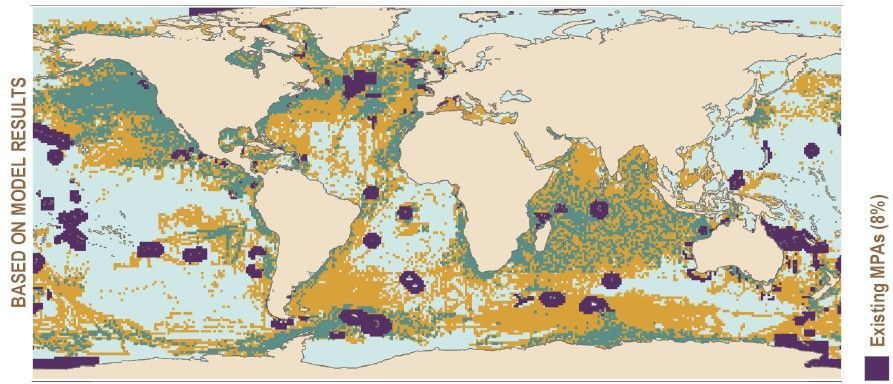
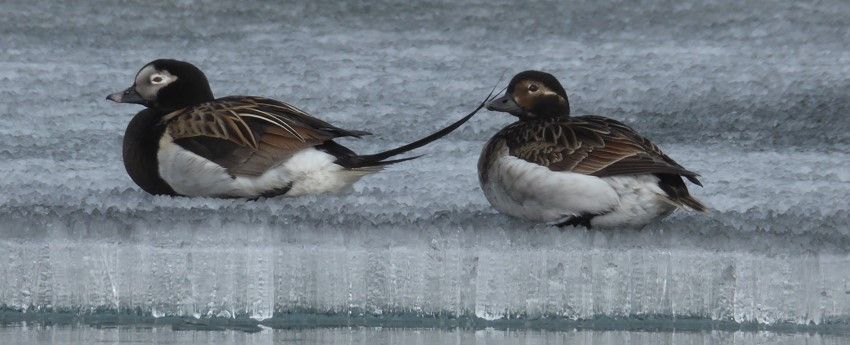
NEW PAPER collates #telemetry data of >100 marine vertebrate species including #seabirds and finds that protecting only 30% of the global ocean is not enough - because marine animals live everywhere: buff.ly/mYrtoAN
06.06.2025 06:37 — 👍 20 🔁 8 💬 0 📌 0🚨New paper altert! 🚨
We here evaluate #humandisturbance impact on #GPS tagged #Jaguars across #SouthAmerica. Spoiler: Even low human disturbance levels alter jaguar #movement, increase #nocturnality
and decrease time invested in #foraging
sciencedirect.com/science/articl…
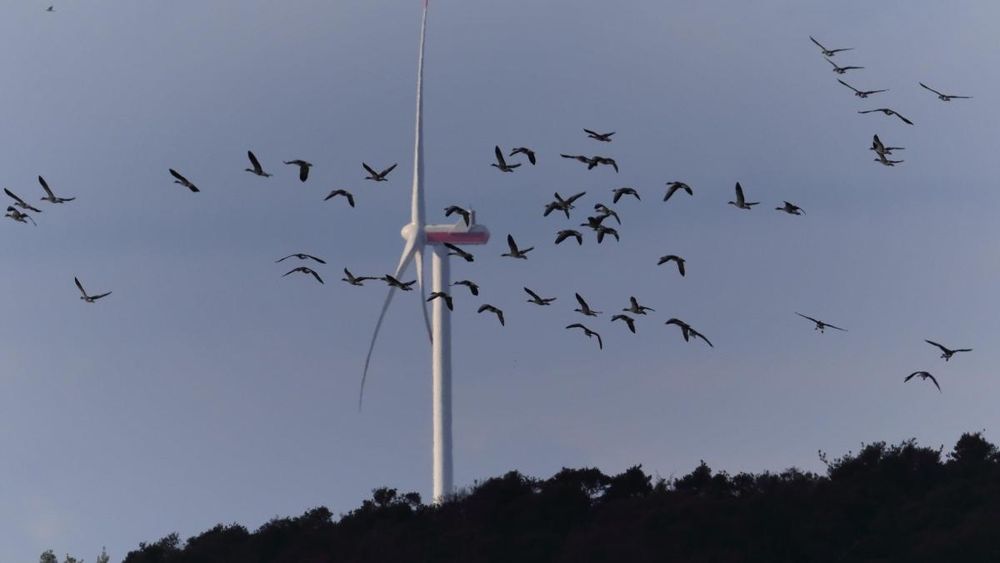
Pequeño resumen de nuestro último artículo sobre el impacto de las eólicas en #aves y #murcielagos en @lavanguardia.com 🦅🦇
Un mapa identifica las zonas donde las aves son más vulnerables a las instalaciones eólicas www.lavanguardia.com/local/valenc...
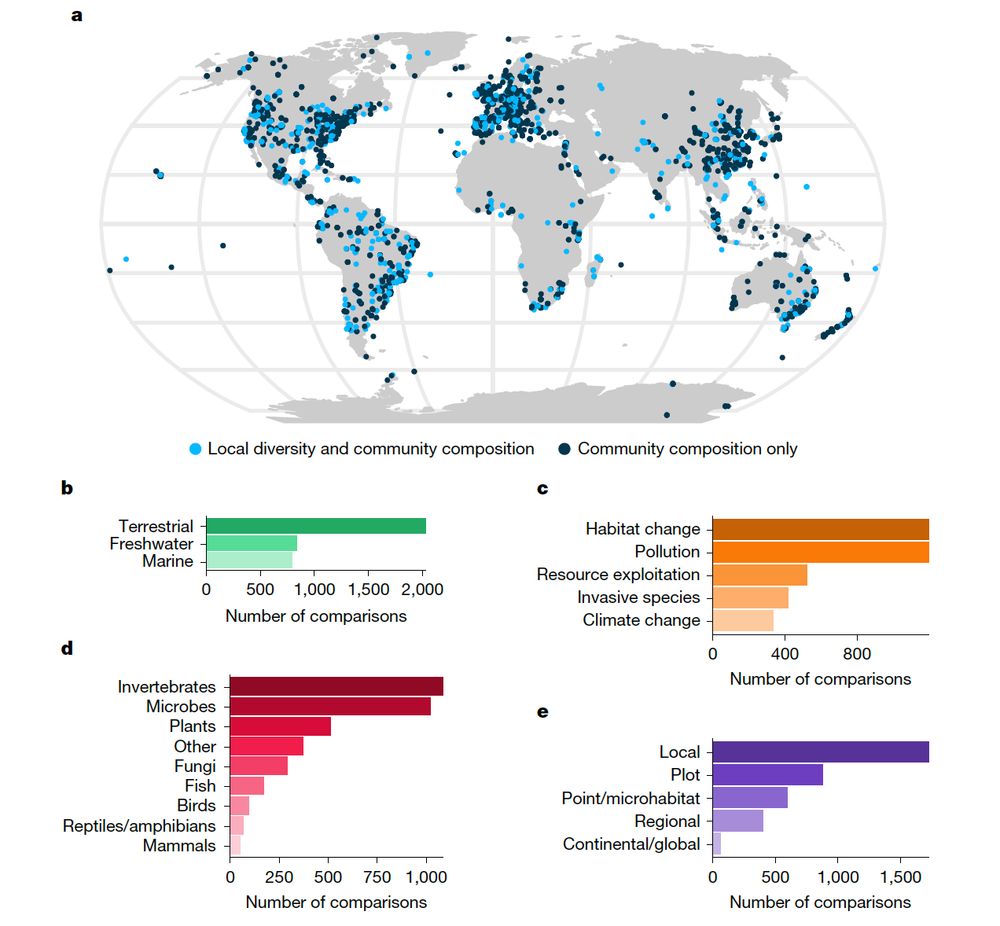
Our study ‘The #global #human impact on #biodiversity’ is out in @nature.com: www.nature.com/articles/s41...
🌍🌐🐟🌿🪲
Unprecedented synthesis of >2000 studies led by @francoiskeck.bsky.social shows humans are not only shrinking species numbers—but reshaping entire communities across the planet.
🧵1/5
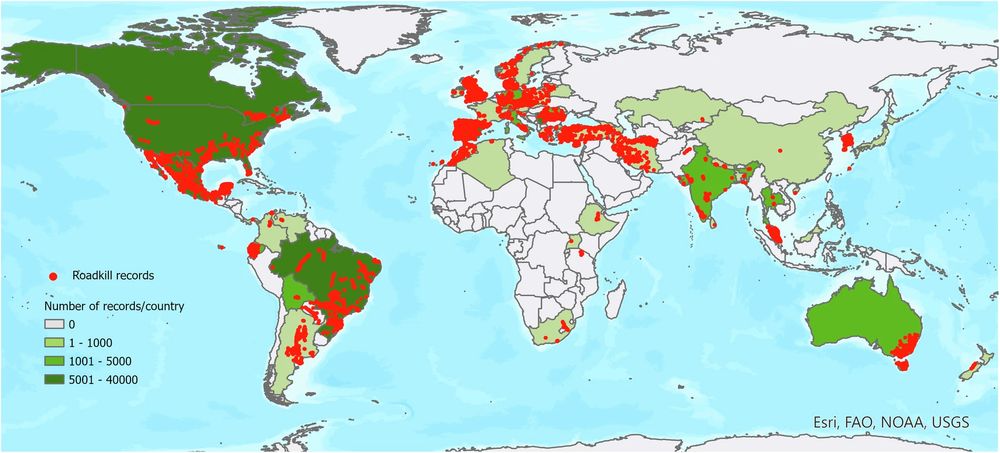
Our datapaper "Global Roadkill Data: a dataset on terrestrial vertebrate mortality caused by collision with vehicles" is now online on #ScientificData: nature.com/articles/s41... #RoadEcology @ebdonana.bsky.social
31.03.2025 21:10 — 👍 58 🔁 28 💬 3 📌 6This might be a bit of a hot take, but can organizations that write press releases for new studies please include a link for the actual paper.
Scientists love to read the original articles and sometimes it can be frustrating in tracking them down.
🌎🧪🦇🐦🦋🐟
Big thanks to my colleagues Esther Sebastian, @juanma-pg.bsky.social , Elena Tena, Sonia Sánchez, Jesús Nogueras and Carlos Ibáñez for this amazing collaboration.
@umh.es @ua.es @ebdonana.bsky.social
🚨New paper alert🚨 I am ecstatic to share our new paper where we gathered data on mortality in wind turbines for birds and bats in Spain and we generated functional trait-driven vulnerability maps in the Iberian peninsula.
www.sciencedirect.com/science/arti...
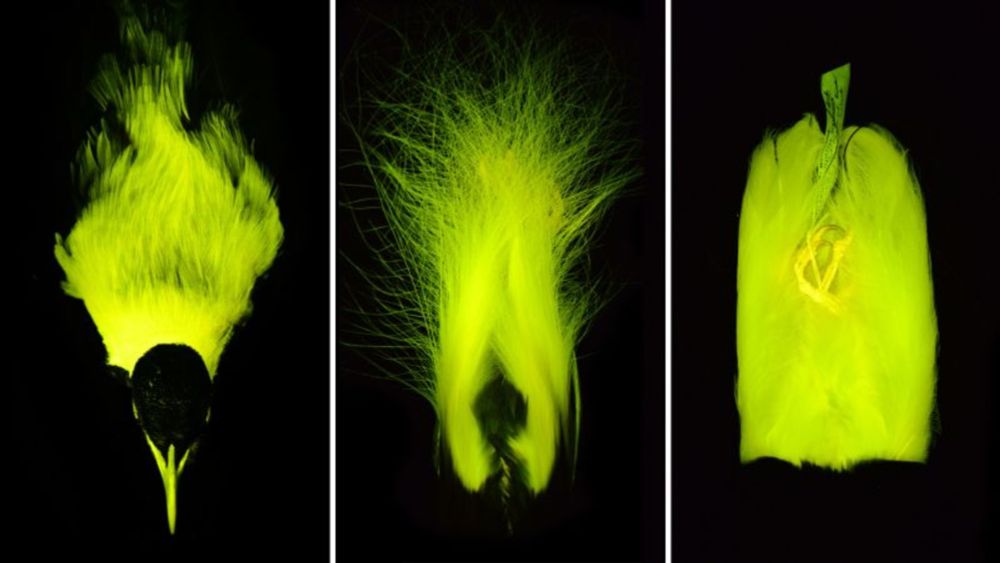
Is it time for a beauty break? I think it's time for a beauty break. Check out the gorgeous glowing plumage of birds-of-paradise, which scientists recently found to be biofluorescent. Most species (37 of 45) have feathers and body parts that glow yellow or yellow-green under UV & bright blue light 🧪
20.02.2025 19:58 — 👍 137 🔁 38 💬 3 📌 2Huge shout-out to my colleagues @laranavesalegre.bsky.social and @juanma-pg.bsky.social for pushing this forward and making this happen.
20.02.2025 14:12 — 👍 2 🔁 0 💬 0 📌 0