Browse all journals
Browse all journals
New Paper by Parry et al., reinterpreting the oldest diverse #jellyfish fauna as sessile polypoid dinomischids 🪼
These findings significantly expand the temporal and geographical range of dinomischids, elucidating their morphological and taphonomic variation.
buff.ly/ERV7P3C
#PaleoSky #Fossils
18.09.2025 09:47 — 👍 10 🔁 6 💬 0 📌 0

🚨Deadline alert🚨 Just a few hours left to submit your abstract for GSA Connects 2025 (23:59 Pacific time TONIGHT!). If you want to present your latest paleontological, geochemical, sedimentological, or geobiological research on the Cambrian, session T155 is here for you!
05.08.2025 09:15 — 👍 0 🔁 0 💬 0 📌 0
Reminder: the abstract submission deadline for GSA Connects is rapidly approaching! If you'd like to contribute to our multidisciplinary session Evolution of Life in the Cambrian Seas, submit your abstract by 🚨Aug 5🚨. We're all super excited to hear about your latest research 🥸🤔🤠🤓!
17.07.2025 10:53 — 👍 0 🔁 0 💬 0 📌 0

🚨Paper alert🚨 Permian bacteria fossilized as rod-shaped pyrite aggregates! A sweet taphonomy-oriented project led by L. Melim. If pyrite aggregates can similarly form in spherical bacteria, how could we distinguish them from extracellularly formed framboids 🤔🤔🤔
doi.org/10.2110/palo...
26.06.2025 12:53 — 👍 4 🔁 0 💬 1 📌 0

#FossilFriday Elrathia kingi is one of the most common trilobites in the Cambrian rocks of Utah’s West Desert. Thousands are found yearly—many geologists have one on their fridge. Yet this specimen - first published in 2008 - is the only one I know of that preserves both limbs and gut remains. 🤩
20.06.2025 23:31 — 👍 32 🔁 10 💬 0 📌 0

A black & white photo of an enrolled isoteline trilobite. The specimen is viewed from beneath, with the cephalon facing downward -- only a narrow band of the ventral cephalic doublure is exposed at the top of the image, with the median connective suture just visible. The dorsal pygidial shield is broken away, leaving an impression of the ventral doublure as a broad arcuate band with curving parallel terrace ridges. Overlapping thoracic pleurae can be seen on either side of the specimen. Underneath the missing pygidium, the hypostome -- detached from the cephalic doublure -- is revealed from the ventral side. It is of classic isoteline form, with a deep posterior embayment giving a broadly "forked" appearance. Anastomosing terrace ridges are well displayed, running more or less parallel to the lateral margins. The scale bar at the bottom of the image is 20 mm in length.
Enrolled Isotelus latus w dorsal pygidium broken away revealing classic isoteline "forked" #hypostome (ventral "mouth plate") disarticulated from cephalic doublure. Beautiful preservation of fingerprint-like #terrace ridges! #Ordovician (~450 MYA), Lindsay Fm, Colborne, #Ontario 🇨🇦 #TrilobiteTuesday
17.06.2025 13:20 — 👍 18 🔁 3 💬 0 📌 0

Another 🚨Paper alert🚨 Everything you ever wanted to know about colony development in graptolithine pterobranchs 🪸 Still much to uncover, but this sums up what we know so far. Enjoy, it is open access 😜
doi.org/10.1111/ede....
17.06.2025 14:35 — 👍 17 🔁 6 💬 0 📌 0
Reminder ⚠️ We are organizing a session at GSA Connects 2025 — T155: Evolution of Life in the Cambrian Seas — which aims to bring together paleontologists, sedimentologists, geochemists, and geobiologists working on this remarkable geological period. Submit your abstract by August 5❗
16.06.2025 17:54 — 👍 3 🔁 0 💬 1 📌 0
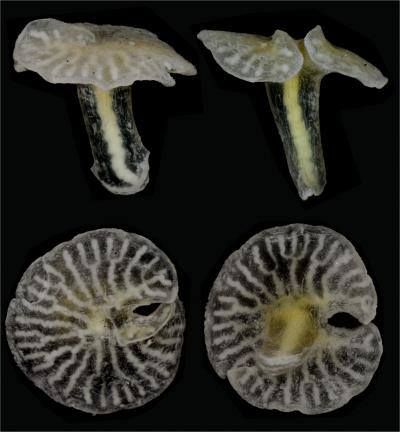
mushroom shaped organism with translucent base
Many may not remember the DENDROGRAMMA mystery! This weird mushroom-shaped thing was described in 2014 as a "new metazoan" of unknown affinities! They were hinting that it might be a new phylum-but THEN 2 years later @drtimohara.bsky.social sequenced it and BOING! BENTHIC
#SIPHONOPHORE!
15.06.2025 15:31 — 👍 54 🔁 13 💬 2 📌 4

🚨Conference alert🚨 L. Tarhan, R. Gaines, @invertebratepal.bsky.social and myself will co-chair session T155 - Evolution of Life in the Cambrian Seas at @geosociety.bsky.social GSA Connects 2025. Contact me if you have any questions about it. Deadline for abstract submission: August 5th.
01.05.2025 19:48 — 👍 2 🔁 3 💬 1 📌 0
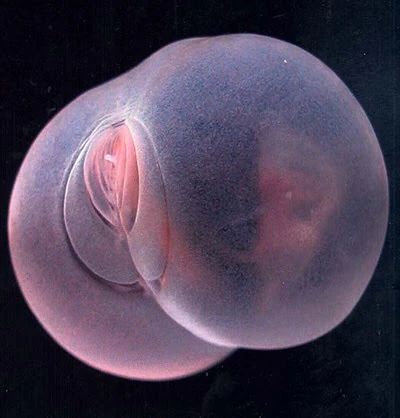
A very pig butt looking round marble like animal that is pink. Photo by MBARI.
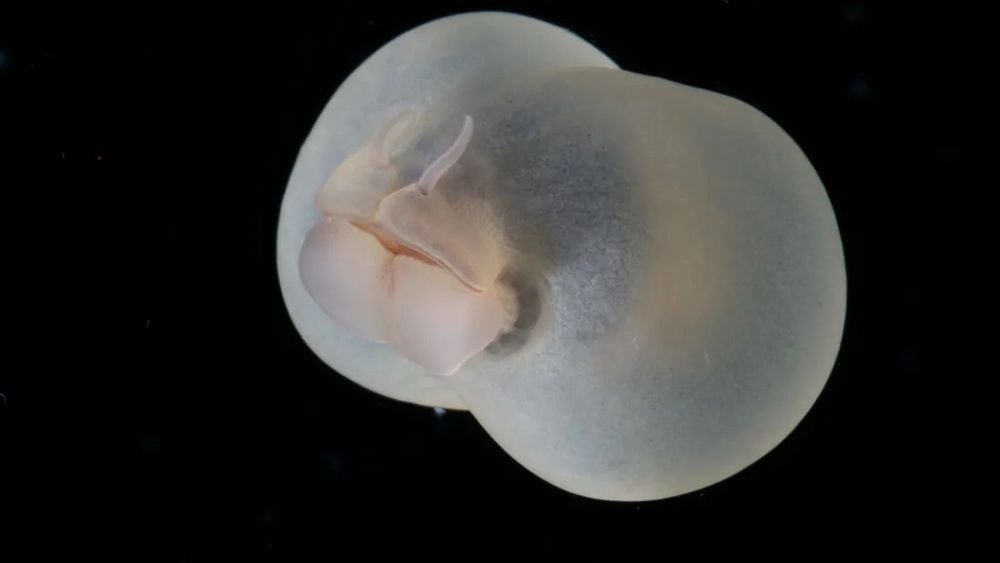
The “front” of a pig butt worm showing tentacles and a round body. Image by MBARI.
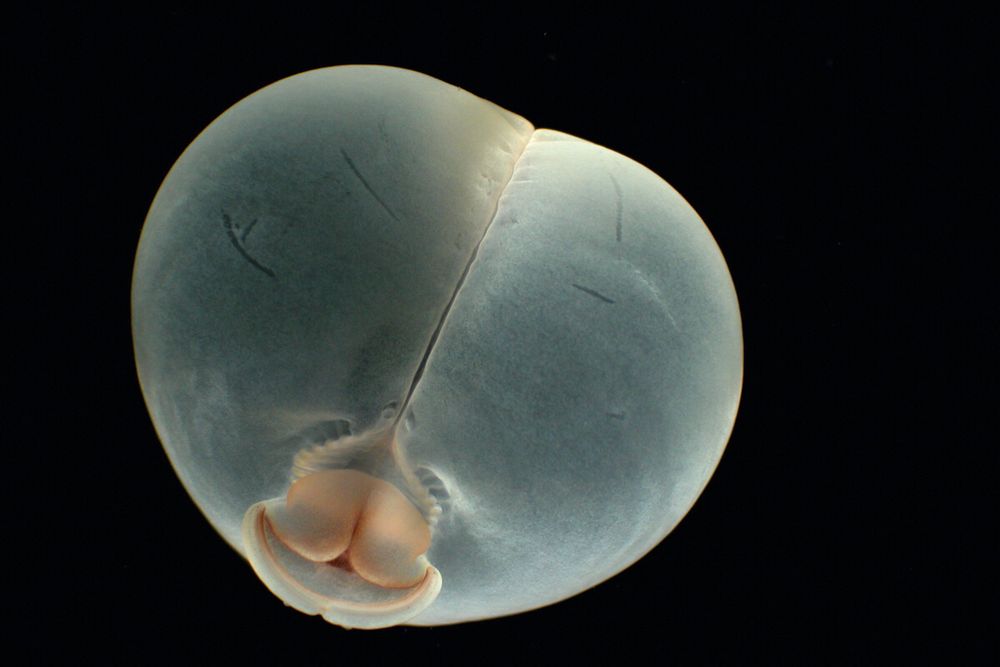
The bottom of a pig butt worm showing it’s odd bilateral butt cheeks. Images by MBARI
Scientists first collected a pig butt worm from the dark ocean depths near Monterey, California. The size of marbles, pigbutts are a near complete mystery. Officially described in 2007, scientists aren’t even sure if the pigbutt form is an adult, or just a very very awkward adolescent stage.
12.02.2025 19:52 — 👍 1155 🔁 321 💬 37 📌 157
That's an amazing harvestman 🤓
17.01.2025 05:02 — 👍 2 🔁 0 💬 0 📌 0

Top Science Stories of 2024
Here is our selection of the top science stories of the year.
As we wind down 2024, we've put together a list of the top #science stories of the year including a few familiar to @nhmu.bsky.social! Follow this link to read more: bit.ly/3DzCo1w
20.12.2024 16:57 — 👍 4 🔁 2 💬 0 📌 0

Using RAMAN to explore the preservation of soft-bodied fossils (here Cambrorhytium) from the mid Cambrian Gray Marjum site in Utah.
18.12.2024 20:46 — 👍 2 🔁 0 💬 0 📌 0
And myself bsky.app/profile/camb...
18.12.2024 20:28 — 👍 1 🔁 0 💬 1 📌 0
bsky.app/profile/beck...
18.12.2024 20:27 — 👍 1 🔁 0 💬 0 📌 0

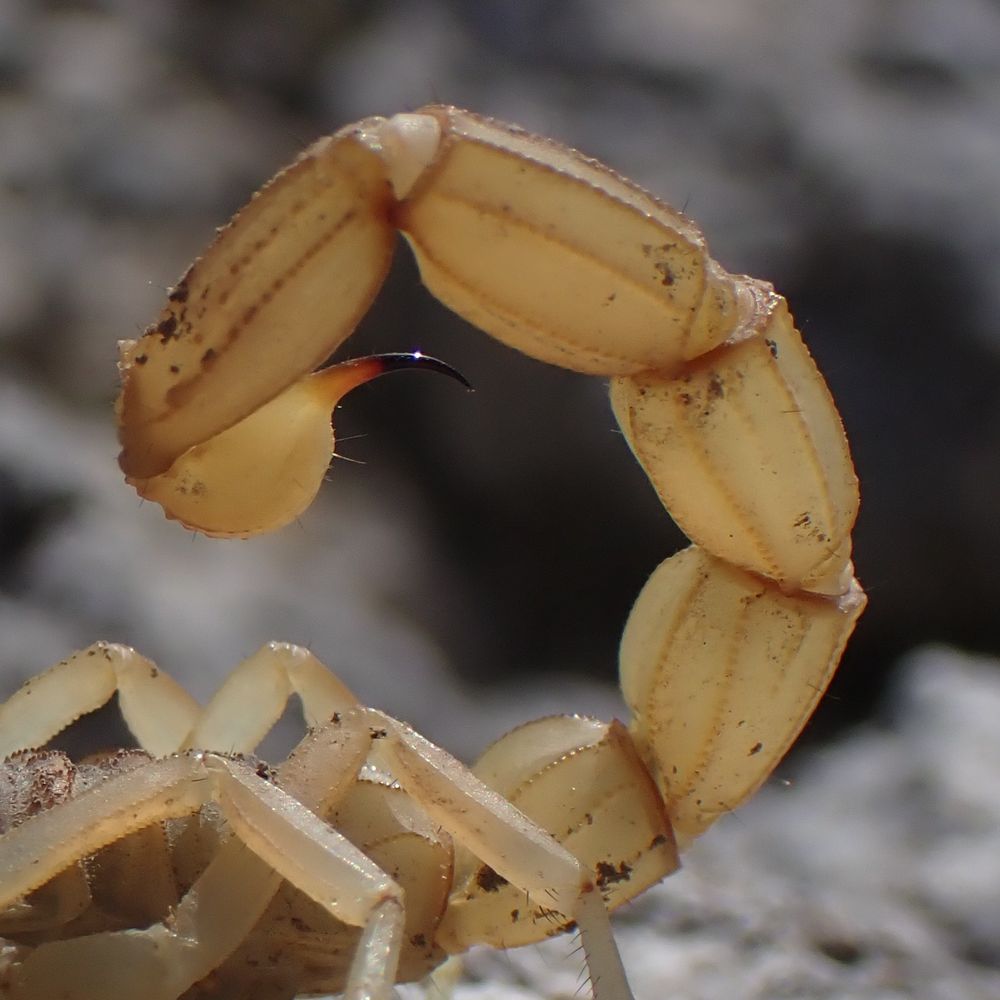
MASSIVELY excited to see Tityus achilles, South America's first #venom spraying #scorpion, finally described in
@zoojlinnsoc.bsky.social !
This new species from #Colombia can spray venom at potential predators, a striking case of convergent #evolution 🧵 (1/n)
academic.oup.com/zoolinnean/a...
17.12.2024 15:17 — 👍 9 🔁 3 💬 1 📌 1

An image showing a range of fossil scorpions, arranged by age. These are lovely fossils, ranging from scorpions in rocks, through ones dissolved out of rocks or resolved using CT scans, to photos of more recent scorpions in Amber. If you want the full details: (A) Palaeophonus caledonicus Hunter, 1886 (Dick Institute, Kilmarnock, UK) from the mid-Silurian (Llandovery to Wenlock) of Lesmahagow, Scotland, UK, image courtesy of Lyndsay C. Jess, and by permission of East Ayrshire Council/East Ayrshire Leisure Trust, and a reconstruction from Pocock (1901). (B) mid-Silurian Eramoscorpius brucensis Waddington, Rudkin & Dunlop, 2015 from Canada. (C) Proscorpius osborni Whitfield (1885b), Yale Peabody Museum (YPM IP 545850); photo by Jessica Utrup 2019. (D) Lower Devonian Waeringoscorpio hefteri Størmer (1970, image source Poschmann et al., 2008). (E) Pulmonoscorpius kirktonensis from the Lower Carboniferous of the UK (courtesy of Andrew Jeram). (F) Compsoscorpius buthiformis from the Upper Carboniferous of the UK (left: courtesy of Lorenzo Prendini, AMNH; right: Legg et al., 2012). (G) Carboniferous taxon Cyclophthalmus senior from the Yale Peabody Museum collections (YPM IP 029827), photo by Jessica Utrup 2013. (H) Mesophonus perornatus from from the Triassic of the UK (courtesy of Lorenzo Prendini, AMNH). (I) Protoischnurus axelrodorum from the Cretaceous Crato Formation, Brazil (courtesy of Christian Neumann, Berlin). (J) Centruroides knodeli from Neogene Dominican amber (courtesy of Wilson Lourenço, Paris). (K) Tityus azari from Neogene Dominican Amber (courtesy of Wilson Lourenço, Paris).
For #FossilFriday have you ever considered the scorpion fossil record? This is surprisingly rich, but how we categorize these animals transcends being a hot mess. It's a spicy disaster. My colleague Jason and I wrote a paper on it which came out today:
peerj.com/articles/185...
⚒️🧪🦀🦑 #evosky
06.12.2024 15:43 — 👍 105 🔁 33 💬 2 📌 1


For anyone interested in our work on Utah’s mid-Cambrian Marjum Formation and its extraordinary fossil biota, here’s a short article detailing the project’s genesis and significance. Many thanks to the Museum of Comparative Zoology at Harvard for highlighting this research in their annual report.
25.11.2024 15:21 — 👍 6 🔁 1 💬 0 📌 0
Paleontologist and department head at the University of Tennessee, Knoxville who is happiest hanging out with my family, my students, my brachiopods, and thinking about all things paleoecology, biogeography, and evolutionary in (mostly) the Ordovician.
Senior Research Associate @ZoologyMuseum & @Cambridge_Uni • Invertebrates & crustacean evolution 🦀🦞 •Tropical Palaeontology 🌎* Latino in STEM 🇨🇴🔬
Arthropod paleontologist, father, science educator in western New York. Teaches paleontology, Earth history, stratigraphy, and more at SUNY Fredonia. University of Iowa and Yale G&G alum. WIU refugee.
M.S.c in conservation ecology & research in Arachnology, France. I've always been passionate about the biology and ecology of the arachnids of the world. Particularly fond of Linyphiidae, Scorpions, Uropygi, Amblypygi & others.
https://linktr.ee/jtchi
Palaeobiologist | Principal Researcher @nhm-london.bsky.social | Editor-in-Chief @journalsystpal.bsky.social | Honorary Associate @morethanadodo.bsky.social | he/him
https://www.nhm.ac.uk/our-science/departments-and-staff/staff-directory/imran-rahman.html
BSc in Natural Sciences and MSc in Palaeobiology and Evolutionary Biology. PhD in Evolutionary Biology. Studying vision in octopuses at SZN.
3D modeling - Animal Phylogenetics - Integrating Paleontology with Molecular Biology.
I do science with fossils, X-rays and computers at the Unviersity of Manchester and Natural History Museum, UK. Working at Museum für Naturkunde, Berlin until September '25. Run the Palaeontological Association web systems.
russellgarwood.co.uk
Worm palaeobiologist & fossil enthusiast. Associate Prof and NERC independent fellow. If I had any views they would be my own.
Palaeontologist studying the origins of life's rich diversity
Palaeobiologist, Associate Professor at West Virginia University • Arthropod paleobiology, phylogenetic paleoecology • An Englishman in America
Formerly: AMNH, Yale, U of Kansas, U of Bristol, U of Birmingham
Opinions my own (he/him)
jameslamsdell.com
Emeritus Professor of Palaeontology. Fossils, stratigraphy and fieldwork. Recreational swimming and hill walking, tasting malt whisky and listening to opera
Paleontologist at the St. George Dinosaur Discovery Site in SW Utah @stgeorgedino. I'm 🇨🇦, love hockey and Rock n' Roll!
Paleontologist, evolutionary biologist, & punk rock enthusiast. Assistant Professor & Curator of Invertebrate Paleontology. U Oklahoma/Sam Noble Museum of Natural History. Macroevolution, phylogenetic methods, echinoderms https://daveyfwright.wordpress.com
Early Life Geobiology & Palaeobiology | Associate Professor of Natural History & Royal Society University Research Fellow, University of Oxford | Fifty-Pound Fellow, All Souls College
Professor @ Boston U, History & Philosophy of Science—esp Philosophy of Geosciences, Director Phi-Geo Research Group, Assoc @ Harvard U. Hist Sci, Radcliffe Fellow Alum. Settler, wife, & mother. 📸s my crappy phone.
Webpage: https://bokulich.org/
The "starfish guy"(but also a little about a lot of marine invertebrates, #echinoday #echinoderms. Kaiju, comics enthusiast. Marine scientist, taxonomist, deep-sea researcher. Statements/posts made here are my own & DO NOT REPRESENT HOST organizations
State Paleontologist for Utah; exploring and promoting the history of life in our southwestern deserts for the public good and the wonder of it all
Paleobotanist at @CNRSecologie.bsky.social & @umramap.bsky.social | (re)posts about fossil & living plants 🌲🌿🍂⛏️ Old posts are deleted.
Utah's official museum of natural history. We illuminate the natural world and the place of humans within it.
Curiosity awaits at: nhmu.utah.edu