I look forward to that Jannice!
02.02.2026 15:12 — 👍 1 🔁 0 💬 0 📌 0
Oops…@jenncoughlan.bsky.social
02.02.2026 06:25 — 👍 0 🔁 0 💬 0 📌 0

Mimulus in flower, growing along a small water rivulet on Sawdon Station, a working sheep station (2 February 2026).
Speak of the devil…
Mimulus—invasive here (MacKenzie District, South Island, NewZealand)
@jenncouglan.bsky.social, @jannicefriedman.bsky.social, @davidlowry.bsky.social
02.02.2026 06:20 — 👍 3 🔁 0 💬 2 📌 0
Yes, shout out to JKK, with whom I was privileged to work with and learn from.
01.02.2026 23:58 — 👍 1 🔁 0 💬 0 📌 0
👋
01.02.2026 23:36 — 👍 2 🔁 0 💬 1 📌 0

View of a hillside forest, tree ferns and a large mature rimu.
Magical morning spent in the Blue Duck Scenic Reserve north of Kaikoura (New Zealand). Logging was banned in ~1902, so the place is full of emergent podocarps, including miro, matai, kahikatea, rimu, and totara. Bellbird songs galore.
31.01.2026 04:23 — 👍 20 🔁 3 💬 0 📌 0
If you can only visit one place at Harvard, make it the glass flower exhibit at the Museum of Natural History.
4000 models, 847 species.
Commissioned by the university for teaching botany and created by the Czech father and son Leopold and Rudolf Blaschka 1887 through 1936.
29.01.2026 16:13 — 👍 50 🔁 18 💬 2 📌 1

A photo of a book open on a page showing illustrations related to colour theory. From "The Communicating Scientist" by Olle Bergman, Sarang Park, and Joanna Bagniewska, with illustrations by Dorota Paczesniak

A complex figure with a digital illustration and text boxes. Shows soil cross-section and a plant with above-ground and below-ground parts visible. The plant has four stalks: one with a bud, flower, and fruit, and one with brown and dried leaves that are falling off. This is to signal the main theme of the paper, i.e. phenology.
The text boxes are divided into two main categories: above-ground and below-ground and briefly explain the difference between these two environments in resource gradients, plant–soil functionality, and coupling to photosynthesis.
Morris, K., & Nair, R. (2025). Below the leaves: Integrating above- and below-ground phenology for earth-system predictability. Functional Ecology, 00, 1–19. https://doi.org/10.1111/1365-2435.70057

A photo of a leaflet open to show the first and the last page. This is an infographic for the Conservation Genetics Workshop titled „Types of genetic markers: What can they reveal?”
The first page features an illustration of the three levels of biodiversity: genes, species and ecosystems.
The last page has an info box about open and FAIR data.
Citation:
Buser CN, Weber AAT, Feulner PGD, Richman S, Fischer MC, Grossen C, Naciri Y, Paczesniak D, Paerli R, Reutimann O, Tschan J, Widmer A & Gugerli F. (2025). Types of genetic markers: What can they reveal? (Conservation Genetics Workshop, Infographic 1). Swiss Federal Institute for Forest, Snow and Landscape Research WSL. https://doi.org/10.55419/wsl:40663

An infographic titled: “Tree breeding - from wild to genetically improved forests”. There are four coloured panels with illustrations and diagrams, and grey text boxes surrounding them. The panels depict
1. Wild forest
2. Breeding
3. Mass propagation
4. Cultivated forest
Developed by Luke (Natural Resources Institute Finland) and the University of Helsinki. Graphic design: Dorota Paczesniak
Hello #PortfolioDay 🐡 I’m a scientific illustrator with a PhD in biology and research experience in ecology and evolution. My work includes infographics, illustrations, learning materials, and branding
I’m open to commissions and/or a full-time job in communications or educational design
13.01.2026 19:41 — 👍 31 🔁 14 💬 0 📌 0
👋
12.01.2026 14:41 — 👍 1 🔁 0 💬 0 📌 0
Nice write up and fun to see Lobelia cardinalis as the poster child in the photo. My colleagues @andreacase.bsky.social and C. Blackwood are using iNat to address questions about the distribution, soil types, flowering times, etc. for this and several other Lobelia. Such a useful source!
09.01.2026 16:58 — 👍 2 🔁 0 💬 0 📌 0
Yep, the key thing when giving a talk is to make your audience feel smart.
06.01.2026 18:26 — 👍 2 🔁 0 💬 0 📌 0

Three male side-blotched lizard with three neck colors: orange, blue, and yellow
Lizards have evolved their own version of rock-paper-scissors. Here's my story on the genetics behind nature's games. Gift link: nyti.ms/493KGMI
06.01.2026 16:21 — 👍 136 🔁 40 💬 5 📌 5

View from the 21st story of downtown Chicago at night
Chicago
02.01.2026 23:16 — 👍 9 🔁 0 💬 0 📌 0
Kartoffel
02.01.2026 22:03 — 👍 2 🔁 0 💬 0 📌 0
So lovely to see you all!
01.01.2026 14:33 — 👍 1 🔁 0 💬 1 📌 0
How’s that Berlin winter treating you Matt?
30.12.2025 17:51 — 👍 0 🔁 0 💬 1 📌 0
Avocados are hermaphroditic…
26.12.2025 02:12 — 👍 3 🔁 1 💬 0 📌 0
Joke: there were 5 cats in a boat that capsized. Which cats sank? …
24.12.2025 16:51 — 👍 0 🔁 0 💬 0 📌 0
Your photos always blow me away — the color, the composition, the finding of small unappreciated things of beauty.
24.12.2025 15:17 — 👍 0 🔁 0 💬 0 📌 0
See you in Cleveland in June!
24.12.2025 15:14 — 👍 1 🔁 0 💬 0 📌 0
Your perspective is one I always value Gina.
24.12.2025 15:07 — 👍 1 🔁 0 💬 1 📌 0
This is sad news. I never met him but I was influenced by the clarity of thought in his papers.
22.12.2025 13:26 — 👍 1 🔁 0 💬 0 📌 0
If you would like to work with me on figures for YOUR paper, grant proposal, book, or outreach project I’m open to commissions - let’s talk!
—-
Dorota Paczesniak
Drawing to explain and inspire
20.12.2025 19:59 — 👍 0 🔁 1 💬 0 📌 0
Thanks Kayla
19.12.2025 18:27 — 👍 1 🔁 0 💬 0 📌 0

A comic style illustration of the Red Queen running with a startled-looking snail and a strange creature that is a trematode parasite. It is based on the original illustration by John Tenniel from Lewis Carroll’s “Through the Looking-Glass”
The Red Queen running with the snail Potamopyrgus antipodarum and its trematode parasite. It’s quite niche #SciArt, but if you know, you know
#ArtAdventCalendar
18.12.2025 20:49 — 👍 17 🔁 3 💬 2 📌 0
Happy to talk if you’re interested.
17.12.2025 22:26 — 👍 1 🔁 0 💬 0 📌 0
Kinda like how pollen grain size is positively correlated with style length in plants...
17.12.2025 16:03 — 👍 1 🔁 0 💬 0 📌 0

Stadt Bern
Offizielle Website der Stadt Bern
Postdoc opportunity to study sex determination in Xiphophorus species at the University of Bern. Skills in bioinformatics needed. Email CV to Peichel & Kirkpatrick. Funding options available. Deadline: Jan 23, 2026. More info: https://www.bern.ch/ #postdoc
17.12.2025 05:50 — 👍 3 🔁 3 💬 0 📌 1
I couldn’t agree more Dustin. She is a treasure.
15.12.2025 14:44 — 👍 3 🔁 0 💬 0 📌 0
Scientific illustrator for research & publications
Biologist (PhD) | former researcher
Helping scientists communicate their work visually
Illustrations for papers, books & posters
Get in touch: lazaroillustration@gmail.com
Web: www.lazaroillustration.com
Studying viruses at Indiana University.
Enjoying non-science life as well.
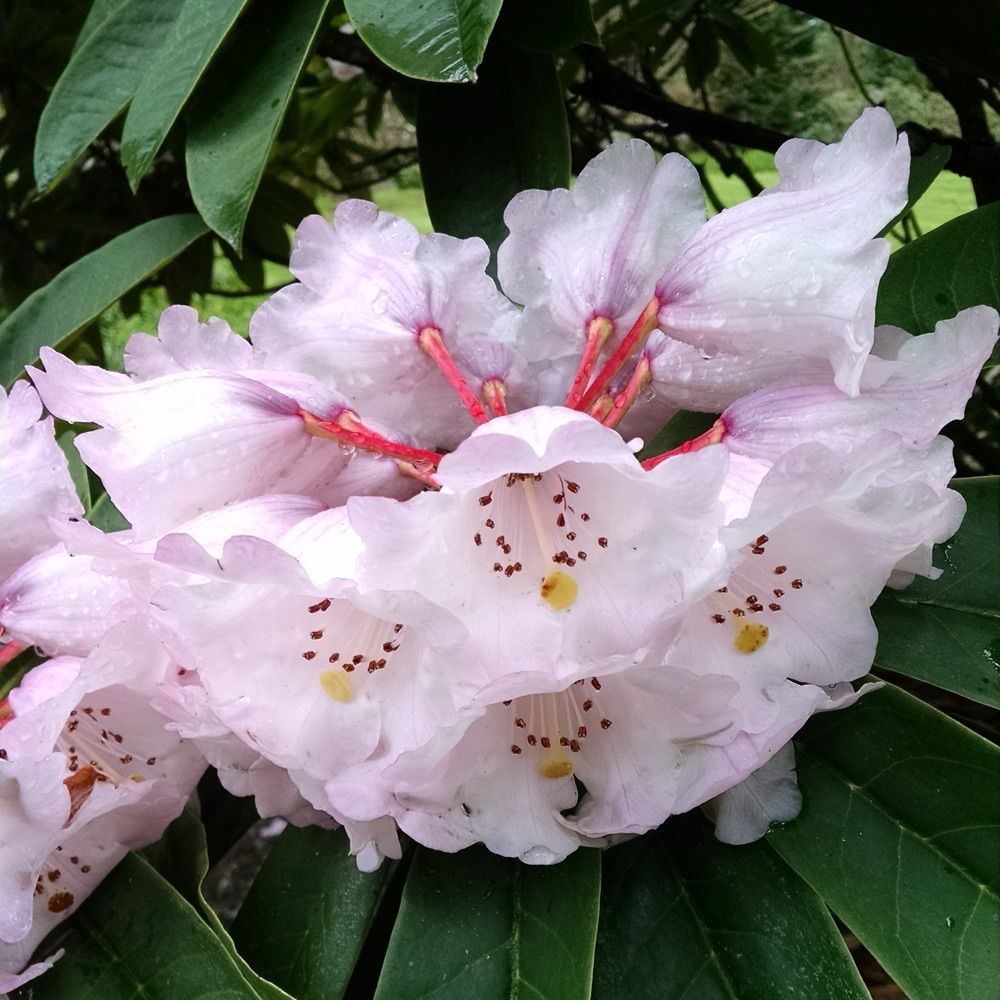
Research group investigating physiology, ecology, evolutionary biology and conservation of genus Rhododendron. Sharing research, gardens, plant exploration, art, culture, events, anything and everything Rhododendron
🇧🇷🇺🇸Evolutionary Cell Mechanobiology of Archaea.
Associate Professor at Indiana University.
Standing tall on the shoulders of tiny (salty) bugs.
Lab Website: bissonlab.com
Research on behavior, genomics, and evolution in birds. Often thinking about sex diversity and variation. Assistant Professor at Duke Biology
We (@joannakacprzyk.bsky.social and @ucdflowerpower.bsky.social) post one plant memory every day from our survey of plant biologists.
Read the paper here: https://doi.org/10.1002/ppp3.70156
Mexican Historian & Philosopher of Biology • Postdoctoral Fellow at @theramseylab.bsky.social (@clpskuleuven.bsky.social) • Book Reviews Editor for @jgps.bsky.social • https://www.alejandrofabregastejeda.com • #PhilSci #HistSTM #philsky • Escribo y edito
Sharing the science of biology through emojis. Managed by @jacobphd.bsky.social
https://adaptivediversity.wordpress.com/wp-content/uploads/2020/01/emoji_guide_to_human_genetic_diversity.pdf
Evolutionary biologist enthralled by the superlative diversity of life in the tropics.
Speciation | Hybridisation | Genome evolution | Biogeography | Ecology
Progressive political commentator (print, radio, podcasts) in US for years, now in Canada. I post (A LOT) breaking news + legit info you can use, prone to snark. Bite me, Musk.
Now where's my trough of wine? 🍷🇨🇦
Assistant Prof at Indiana University (starting Jan 2026)
neuroethology | spiders | animal behavior | spiders | sensory systems | ALAN | art | spiders
Evolutionary biology, population genetics. Marie Curie fellow at the Institute of Science and Technology Austria
Owner of MSW Media, host of The Daily Beans, UnJustified, and Cleanup on Aisle 45 podcasts. #Leguminati. Veteran. She/Her Substack: muellershewrote.com Secure contact: FedOath@pm.me
Signal: muellershewrote.23
Podcast: https://link.chtbl.com/TheDailyBeans
Institute for Advanced Study | Impressum: http://wiko-berlin.de/impressum/ | Datenschutz: http://wiko-berlin.de/datenschutz
Current Climate Fellow @ UVA's Environmental Institute & Blumstein/Bergland lab member • Former Black Rock Forest Postdoc Fellow w/ Carnaval/Reinmann labs at CUNY • PhD in the Galloway lab
Neurobiologist
Indiana University Bloomington, Department of Biology
@iubiology.bsky.social
https://fernandez.lab.indiana.edu
Evolutionary Biologist studying the coevolutionary dynamics underpinning generalist, species-rich mutualism.
Watercolorist • travel sketcher • desert rat🏜️
👇Prints, portfolio and etc
https://szimart.carrd.co
Systems Biology PhD Student @Harvard, Labs of Michael Desai @mmdesai.bsky.social & Michael Baym @baym.lol | Trinity College Cambridge Alum | Evolution & Microbes