New preprint!
Why do people disagree about what looks beautiful, even when viewing the same stimulus?
We show that shared aesthetic experience is linked to shared gaze during naturalistic viewing: www.biorxiv.org/content/10.6...
1/4
12.02.2026 10:25 — 👍 8 🔁 3 💬 1 📌 1

📢 Workshop announcement.
We are super excited to announce the workshop Perceptual Inferences, from philosophy to neuroscience, organized by Alexander Schütz and Daniel Kaiser.
📍 Rauischholzhausen Castle, near Marburg, Germany
🗓️ June 8 to 10, 2026.
1/4
10.02.2026 09:00 — 👍 35 🔁 14 💬 1 📌 1
🧨 Preprint alert
Is it easier to find a ball than a shoe? The answer lies in how variable we think these objects are in the real-world. www.biorxiv.org/content/10.6...
w/ the amazing @dkaiserlab.bsky.social & @luchunyeh.bsky.social 🦄
🧵1/8
09.02.2026 10:26 — 👍 19 🔁 8 💬 1 📌 2

On biological and artificial consciousness: A case for biological computationalism
The rapid advances in the capabilities of Large Language Models (LLMs) have galvanised public and scientific debates over whether artificial systems m…
🎊📜 NEW PAPER 📜🎊
Can we seriously build synthetic consciousness?
And if so, where do we start?
I’m super excited to present recent publication in Neuroscience & Biobehavioral Reviews where @jaanaru.bsky.social and I confront this challenge head on.
1/n
18.12.2025 17:25 — 👍 77 🔁 24 💬 7 📌 6
🚨 New preprints out!🚨
Excited to share two new preprints from my #MSCA project. With Daniel @dkaiserlab.bsky.social , Marius @peelen.bsky.social , and Belma Seferovic, we show how contextual associations shape real-world object representations and guide everyday visual task performance.
👇👇👇 1/n
16.12.2025 11:50 — 👍 17 🔁 3 💬 1 📌 1
These results provide a novel, mechanistic explanation of how perceptual and neural alignment across individuals is shaped by idiosyncrasies in prior experience.
04.12.2025 14:27 — 👍 2 🔁 0 💬 0 📌 0
Moreover, variations in participants' internal models predicted inter-subject correlations in BOLD time courses in the lateral occipital and lateral prefrontal cortices.
04.12.2025 14:26 — 👍 0 🔁 0 💬 1 📌 0
Individuals with more similar internal models showed more similar scene categorization performance and judged several scene properties (typicality, usability, and complexity) more similarly.
04.12.2025 14:26 — 👍 1 🔁 0 💬 1 📌 0
We then used the inter-subject similarities in internal models to predict inter-subject similarities in perceptual task performances and neural responses to a fully independent set of natural scenes.
04.12.2025 14:25 — 👍 1 🔁 0 💬 1 📌 0
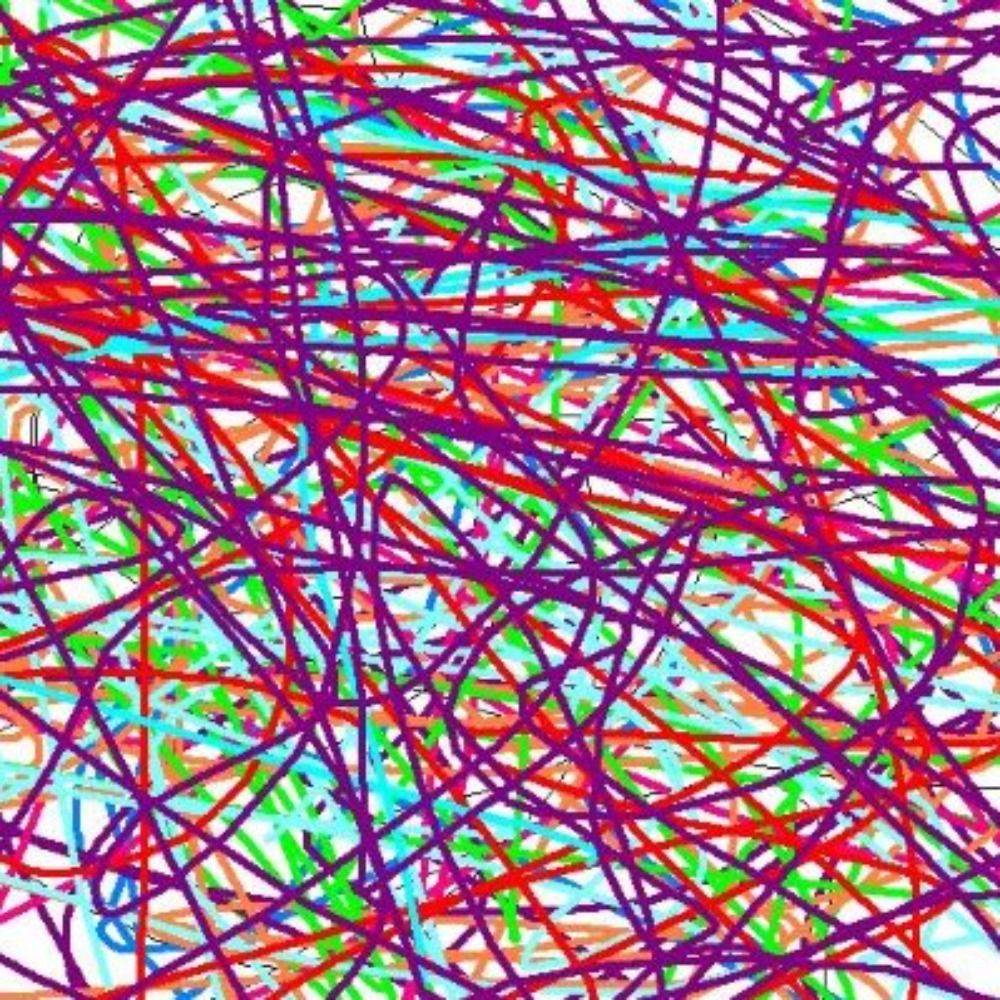
To characterize these internal models, participants drew what they considered the most typical version of a given scene category. Using a combination of deep learning tools, we quantified inter-subject similarities in these drawings.
04.12.2025 14:25 — 👍 0 🔁 0 💬 1 📌 0
Here, we propose that idiosyncrasies in internal models—mental representations of what the world should look like—shape how individuals perceive and process natural scenes.
04.12.2025 14:24 — 👍 0 🔁 0 💬 1 📌 0
Every individual person perceives the visual world in their own unique way, yet we still know little about the origins of these individual differences.
04.12.2025 14:24 — 👍 0 🔁 0 💬 1 📌 0
I’m excited to share the first preprint from my PhD project!
Together with Daniel Kaiser (@dkaiserlab.bsky.social), we investigated how internal models shape inter-individual differences in the perception and neural processing of natural scenes.
Preprint: osf.io/preprints/ps...
1/n
04.12.2025 14:23 — 👍 21 🔁 7 💬 1 📌 1
In this paper we present flexible methods for participants to express their expectations about natural scenes.
08.10.2025 09:13 — 👍 9 🔁 1 💬 0 📌 0
Visual perception, psychology, aesthetics, open science! Postdoctoral researcher @gestaltrevision.bsky.social. Creator of the #octatoolbox
Web: elinevg.github.io
LinkedIn: eline-van-geert-55004a129
Fediverse: @elinevg.bsky.social@bsky.brid.gy
Cognitive neuroscience post-doctoral researcher. Using movie-watching in fMRI and EEG to understand human vision
Cognitive neuroscientist.
Professor at College de France in Paris.
Head of the NeuroSpin brain imaging facility in Saclay.
President of the Scientific Council of the French national education ministry (CSEN)
Cognitive Neuroscientist working on perception attention and consciousness using cognitive psychology, EEG, MEG and fMRI. Professor at Université Paris Cité @upcite.bsky.social and CNRS @cnrs.fr. Website : https://sergent-consciousness-lab.u-paris.fr/
associate professor | philosophy @ York University | All we have is behavior. -Paul Walker (The Fast and the Furious)
Vision scientist. Professor at the Centre for Cognitive Science, Technical University of Darmstadt, Germany. 🇦🇺🇩🇪. pronoun.is/he
https://www.psychologie.tu-darmstadt.de/perception
comp neuro, neural manifolds, neuroAI, physics of learning
assistant professor @ harvard (physics, center for brain science, kempner institute) + @ Flatiron Institute
https://www.sychung.org
Postdoc JLU Giessen — how is cognition realized by the brain? Oscillations aficionado, mind sciences omnivore, hip-hop head
sandervanbree.com
Professor Vrije Universiteit Amsterdam, Director Institute Brain and Behavior Amsterdam, human brain and mind, attention, predictive processing, action, consciousness, meditation
www.heleenslagter.com
Philosophy of mind (especially consciousness) & philosophy of science. Azrieli Postdoc Fellow at Tel Aviv University; PhD from Monash University.
Maastricht University. Predictive processing, learning/memory, cognitive computational neuroscience. He / him / all pronouns 🏳️🌈
PhD student researching active vision and cognition at @rolfslab/HU Berlin, currently venturing into metacognition at the @LSP-ENS Paris. 🇩🇪 🇫🇷
she/her.
Research Project on qualia. https://en.qualia-structure.jp/
Mathematical Neuroscientist. Biologically Inclined
Postdoc Researcher @ Destexhe Lab, CNRS, Paris-Saclay
Exploring brains and minds, in humans and machines.
consciousness . synthetic systems . emergence . computation . information . autonomy . causality
I'm a philosopher, psychologist, and neuroscientist studying vision, mental imagery, consciousness and introspection. As S.S. Stevens said "there are numerous pitfalls in this business." https://www.subjectivitylab.org
PhD Student in Vision Science at JLU Giessen. Interested in the brain's cartography of the world, as well as our cartography of the brain 👀🗺️
University of Maryland (just PhDed); Peking U (BS&BA). Interested in the neuro-cognitive basis of vision, language & memory, with EEG/SQUID & OPM MEG/.... Personal website: https://sites.google.com/view/xinchiyu/home
neuromantic - ML and cognitive computational neuroscience - PhD student at Kietzmann Lab, Osnabrück University.
⛓️ https://init-self.com
Haptic perception 🖐🏽| Multisensory interplay 🖐🏽👁👂🏼| Timing ⏳| Affective touch 🤗 | Group leader Prof. Dr. Knut Drewing, Giessen University, Germany
https://sites.google.com/view/haplab-giessen/home