The Prediction Paradox: Limited Reflexivity (Axiom A6)
This is Part 7 of the Computational Macrohistory series.
Social science isn't just observation.
It's participation.
But participation within modelable bounds.
Predictions change reality—but not infinitely, not randomly.
Full article: open.substack.com/pub/galenfon...
#Reflexivity #Prediction #SocialScience #GameTheory
5/5
14.02.2026 10:12 — 👍 0 🔁 0 💬 0 📌 0
This means we can find "fixed points":
P* such that P*(E | P*) = P*
A prediction that remains accurate AFTER actors respond to it.
Like Nash equilibrium—stable because no one wants to deviate.
Reflexivity is real. But it's not fatal.
4/5
14.02.2026 10:12 — 👍 0 🔁 0 💬 1 📌 0
The formula:
X(t+) = X(t-) + G(P(E))
When prediction P is published, the system shifts by G.
Key claim: G is LIMITED and PATTERNED.
Not everyone hears predictions.
Not everyone responds.
Responses often cancel.
Institutions move slowly.
3/5
14.02.2026 10:12 — 👍 0 🔁 0 💬 1 📌 0
The opposite case:
Predict a pandemic. Governments prepare. Containment works. Pandemic averted.
Your prediction was "wrong."
But was it failure—or success?
Self-defeating prophecies are the GOAL of early warning systems.
A prevented disaster is a victory, not an error.
2/5
14.02.2026 10:12 — 👍 0 🔁 0 💬 1 📌 0

🧵 Predict a bank will fail.
Depositors panic. They withdraw money. The bank collapses.
Did you predict the failure—or cause it?
This is the paradox of social prediction.
New article: Axiom A6 — Limited Reflexivity
1/5
14.02.2026 10:12 — 👍 0 🔁 0 💬 1 📌 0
... well onto Turchin's integrative-disintegrative cycle. This is exactly why early-warning systems matter: recognizing where we are in that cycle before the amnesia sets in.
Thanks for sharing the event — it must have been a fascinating discussion!
14.02.2026 08:34 — 👍 0 🔁 0 💬 0 📌 0
Your observations connect directly to what structural-demographic theory captures mathematically — elite overproduction and regulatory capture are precisely the mechanisms driving the disintegrative phase of secular cycles.
The 'three-generation amnesia' maps...
14.02.2026 08:34 — 👍 0 🔁 0 💬 1 📌 0
Thank you! Always glad to connect with someone interested in cliodynamics. Feel free to ask questions or share thoughts as you explore the work — that kind of exchange is what makes this research worthwhile.
13.02.2026 21:53 — 👍 2 🔁 0 💬 1 📌 0
CMH models causes, not triggers. We can identify dry tinder. We cannot predict which spark will ignite it.
This isn't a limitation. It's honesty about what science can and cannot do.
#ComputationalSocialScience #History #Prediction #Causality
13.02.2026 15:30 — 👍 0 🔁 0 💬 0 📌 0
Both had youth unemployment. Both had authoritarian regimes. Both had social media. Both saw the same news.
Triggers are unpredictable—the specific spark, the specific moment, the specific person.
Causes are structural—youth bulges, inequality, regime illegitimacy, state capacity.
13.02.2026 15:30 — 👍 0 🔁 0 💬 1 📌 0

The difference between triggers and causes is everything.
Mohamed Bouazizi was the trigger of the Tunisian revolution. His self-immolation on December 17, 2010 sparked the uprising.
But the trigger doesn't explain why Tunisia exploded while Saudi Arabia didn't.
13.02.2026 15:30 — 👍 0 🔁 0 💬 1 📌 0

What is Computational Macrohistory?
Why we need a science of large-scale historical dynamics—and what it can (and can't) tell us
First post explores what Computational Macrohistory is (and isn't):
galenfontaise.substack.com/p/what-is-co...
If you're interested in evidence-based approaches to social dynamics, I'd love your thoughts.
#ComplexSystems #DataScience #QuantitativeSocialScience #Research
13.02.2026 08:22 — 👍 0 🔁 0 💬 0 📌 0
How:
Mathematical modeling, statistical analysis, complexity science, historical databases—all with rigorous validation and transparent uncertainty.
Current focus:
Arab Spring case study. Could we predict which countries would experience revolution in 2010-12 based only on structural conditions?
13.02.2026 08:22 — 👍 1 🔁 0 💬 1 📌 0

I'm excited to launch CMH Bulletin—a new project applying quantitative methods to understand large-scale historical dynamics.
What we study:
- Revolutions and political instability
- Economic cycles - crises
- Demographic pressures - social change
- Patterns in the rise - fall of civilizations
13.02.2026 08:22 — 👍 0 🔁 0 💬 1 📌 0
If you're into quantitative history, complex systems, cliodynamics, or simply understanding why societies collapse — glad to have you here.
-Galen Fontaise
5/5
13.02.2026 08:05 — 👍 1 🔁 0 💬 1 📌 0
The framework rests on 8 foundational axioms defining when historical systems become scientifically tractable.
Currently in empirical validation: Arab Spring 2010-2012 as proof-of-concept case study.
3/5
13.02.2026 08:05 — 👍 1 🔁 0 💬 1 📌 0
CMH applies math, statistics & dynamical models to history to identify recurring patterns and compute probability distributions for critical socio-political events.
No deterministic forecasts — honest probabilities only.
2/5
13.02.2026 08:05 — 👍 1 🔁 0 💬 1 📌 0
🧵 Hi Bluesky!
I'm Prof. Fontaise, founder of FICSS (Lugano) & creator of Computational Macrohistory (CMH) — a quantitative science of large-scale historical systems.
A short intro:
1/5
13.02.2026 08:05 — 👍 3 🔁 0 💬 1 📌 0
Professor, Santa Fe Institute. Research on AI, cognitive science, and complex systems.
Website: https://melaniemitchell.me
Substack: https://aiguide.substack.com/
SUNY Empire Innovation Professor at Binghamton University https://tendrel.binghamton.edu
President Complex Systems Society @cssociety.bsky.social
Luiz Pessoa, University of Maryland, College Park
Neuroscientist interested in cognitive-emotional brain
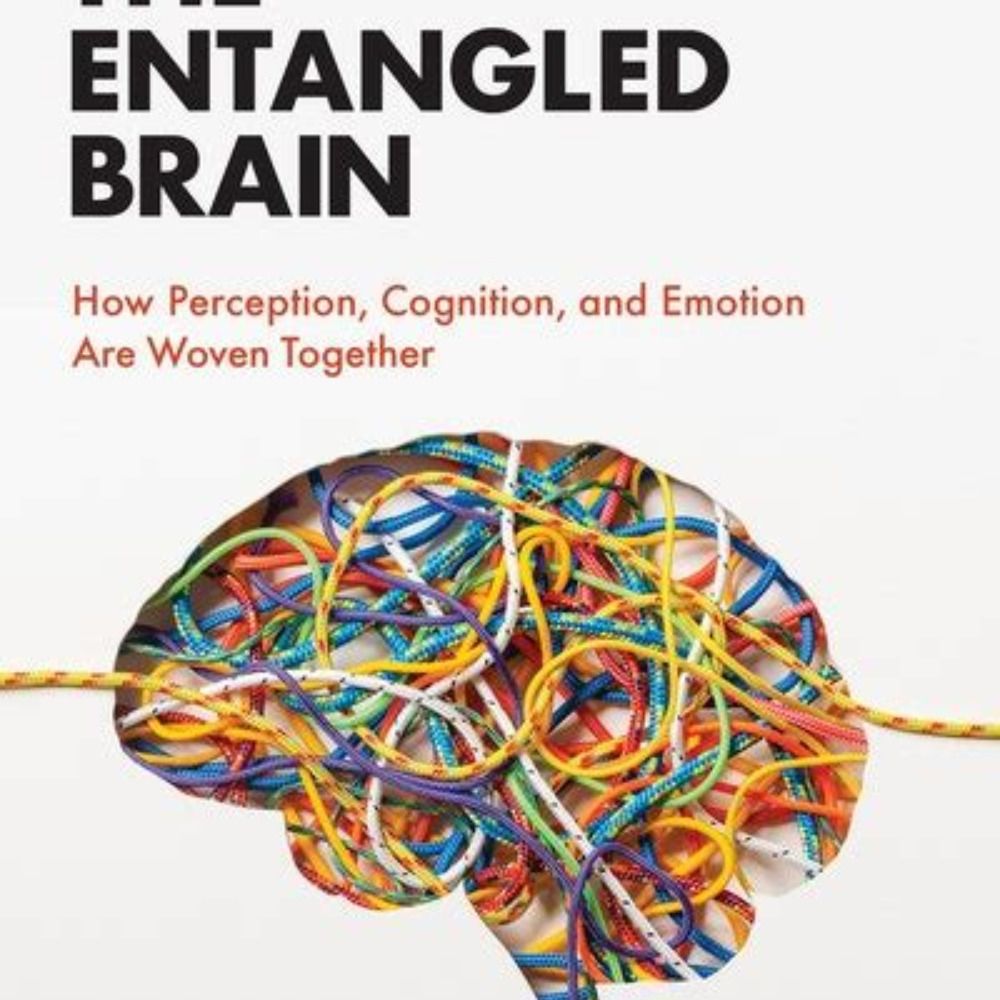
Author of The Entangled Brain, MIT Press, 2022
Author of The Cogitive-Emotional Brain, MIT Press, 2013
Neuroscience & Philosophy Salon (YouTube)
Simplifier of things. bridgewalker. Island-person. Nets and Complexity. Prof of Biodiversity Theory. Former Prof. of Computer Science, Reader in Eng. Maths. Once a Physicist. Interested in art and language and generally making the world a better place.
Dreaming of a cloudy sky | Associate Prof. | Computer Science & BioFrontiers, CUBoulder | Ext. Faculty, Santa Fe Institute | www.peleglab.com
Head of Research @ Utah AI Policy Office // math PhD // networks, complex systems, machine learning, and all things AI // mom & cat lady
Director of Complexity Economics at INET Oxford; Baillie Gifford Professor of Complex Systems Science at the Smith School of Enterprise and the Environment, University of Oxford; external faculty at the Santa Fe Institute; Chief Scientist, Macrocosm
web: http://maxim.ece.illinois.edu
substack: https://realizable.substack.com
Network scientist; director of the &-Lab at Northeastern University; data justice fellow at the Institute on Policing, Incarceration & Public Safety at Harvard University.
brennanklein.com
Semi-automatically curated list of new publications in Network Science by @allard.bsky.social. For details, comments or suggestions, see http://antoineallard.info/networkspapers
Physicist. Topology, complex networks, neuroscience. Angoleiro and wine-drinker by passion. He. Professor NetSI @ Northeastern University London. PI @ Project CETI.
lordgrilo.github.io - nplresearch.github.io
#ComplexNetworks · #ComplexSystems · #Cities
Associate Professor @ Network Science Institute, Northeastern University London.
Associate professor at Uni Trento. Infectious disease modeling | computational social science.
Associate professor at Université Laval (Québec). Sentinelle Nord research chair holder. He/him. Network theory, nonlinear dynamics and statistical physics. antoineallard.info
Reader in Applied Mathematics at Queen Mary University working on Network Science, Data Science, and digital Epidemiology. Website: www.nicolaperra.com
Research Associate Professor at The Roux Institute and the Network Science Institute, Northeastern University. He/him.
Professor at the Vermont Complex Systems Institute, External Prof at the Santa Fe Institute, Editor-in-Chief of npj Complexity. Likes networks, contagions, complexity, public health, animals, hockey, horror, & black metal
Lab: https://joint-lab.github.io
Research group @ IT:U, Austria, focusing on inverse problems in network science and complex systems.
https://skewed.de/lab
Led by Tiago Peixoto (@tiago.skewed.de).
Researcher studying nonequilibrium thermodynamics, information theory, origin of life, complexity. Currently at Universitat Pompeu Fabra in Barcelona, Spain