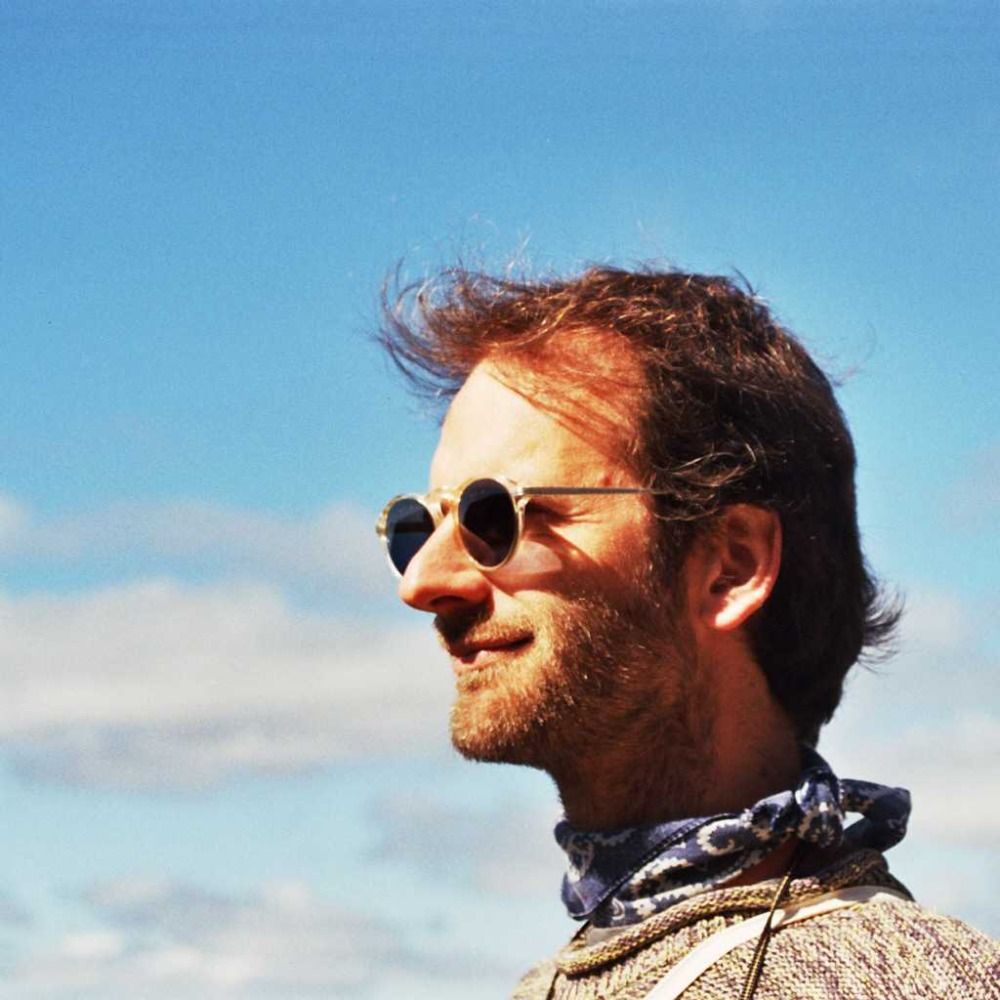
Photo of me holding a Mastodon tusk - apparently it’s a smaller one from a female.
“Do you want to hold this Mastodon fossil” me “yeah, sure!” #Megabiota
13.02.2026 20:43 — 👍 9 🔁 0 💬 0 📌 0
@bjenquist.bsky.social
Biodiversity | Ecology | Physiology | Theory | Climate Change | Macroecology | Scaling | biendata.org; Prof. EEB Univ of Arizona, External Prof Santa Fe Institute, Assoc Res Oxford Univ UK; Proud father, 🌵🇺🇸🇬🇧🇸🇪🌲 Gift med en svensk
Photo of me holding a Mastodon tusk - apparently it’s a smaller one from a female.
“Do you want to hold this Mastodon fossil” me “yeah, sure!” #Megabiota
13.02.2026 20:43 — 👍 9 🔁 0 💬 0 📌 0On the publication bias discourse, I regret that metascience has become a source of decontextualized, low-res, bean-counting-focused `science is in crisis' narratives. It is largely uncurious abt science, desperately lacking in theory & measurement. I'll quote a few takes I liked & add my thoughts🧵
13.02.2026 00:41 — 👍 84 🔁 26 💬 3 📌 6🎉 Today is Darwin’s birthday! This is an actual wild tomato plant that he collected, over 180 years ago! 🍅
We have millions of specimens like these in our collection, but did you know you can now see them on our new Data Portal, for free!? 👇
👉 https://ow.ly/2ZuW50YcG4Z
#DarwinDay

Smiling in front of the statue of Charles Darwin in the London Natural History Museum
Happy #DarwinDay … celebrating here with @ymalhi.bsky.social
13.02.2026 03:38 — 👍 19 🔁 1 💬 0 📌 0
Book announcement for a science book called VERDANT, about plant evolution.
Hey! I’m writing another book!
VERDANT is about how plants have (literally) changed the world. Looking forward to working with @mitpress.bsky.social 🌾🧪🌿
Great opportunity to interact with the French Community of Ecological Theory: "Biodiversity in Equations" Conference in Montpellier, France on April 9 and 10, 2026, organized by GDR TheoMoDive and SFE2.
Registration is free! Find more info here: biodiveq.sciencesconf.org?forward-acti...
Job opportunities...
Newly launched Quantitative Biology Initiative in the Department of Biology at the University of Maryland, College Park seeks applications for three collaborative postdoctoral fellowships. Best consideration date 3/14.
Full Details:
umd.wd1.myworkdayjobs.com/en-US/UMCP/j...

Based on this really intriguing paper by Daniel Lusk et al. www.nature.com/articles/s41... 🧪🌐🌾📏🧮🌵
06.02.2026 18:24 — 👍 4 🔁 1 💬 0 📌 0👀 Global maps of 37 plant #FunctionalTraits as defined in the TRY Plant Trait Database with a resolution of 1 km and a global extent 🌐🧪 📏🧮🌮 global-traits.projects.earthengine.app/view/global-...
06.02.2026 18:23 — 👍 20 🔁 15 💬 1 📌 0A postdoc position in Biogeography and Macroecology is available at Palacky University, Czech Republic, with an application deadline of March 15, 2026. For details, contact prof. Vladimir Remes at vladimir.remes@upol.cz. More info: https://vladremes.github.io #postdoc
05.02.2026 13:10 — 👍 6 🔁 9 💬 0 📌 0
An article from WHYY reports on New Jersey’s newly finalized coastal building regulations that require new construction in flood-prone areas along the Jersey Shore to be built significantly higher to account for future sea level rise driven by climate change ...
Read more at tinyurl.com/yh8b7j9s

Why does life explore so few of the forms it could possibly take? Using fractal descriptors, this #scienceadvances paper shows that Earth’s biosphere clusters around simple shapes, reflecting deep evolutionary constraints. @artemyte.bsky.social @manlius.bsky.social www.science.org/doi/pdf/10.1...
11.01.2026 13:22 — 👍 229 🔁 76 💬 5 📌 6Interested in long-term forest plot dynamics in one of the longest running big tropical forest plots? Comparisons with other #ForestGeo plots? Check out the SEFDP forestgeo.si.edu/sites/san-em...
04.02.2026 23:13 — 👍 18 🔁 2 💬 0 📌 0The truly visionary thing for Simons to do would be to map the collaboration graph of submitted proposals, find the bridges between large connected components, and offer them unrestricted awards
03.02.2026 09:07 — 👍 22 🔁 2 💬 0 📌 2me too. Its coming
03.02.2026 00:02 — 👍 2 🔁 0 💬 0 📌 1Hang in there. You are not alone. Its always darkest before the dawn
02.02.2026 23:38 — 👍 7 🔁 0 💬 1 📌 0If you are a student whose NSF GRFP application was returned without review for vague 'eligibility' reasons:
1) Let your department chair & Graduate School know. Encourage them to contact NSF & congress
2) Write to your congressional reps.
3) Write to grfp@nsf.gov to request re-consideration;
Sadly, there is much truth here 👇 Public funding of science is a foundational but often understated corner stone of a free and prosperous democratic society
01.02.2026 19:38 — 👍 6 🔁 0 💬 0 📌 0Ecologists! Plz share! **ESA abstracts due Feb 19th this year - meeting is last week in July in Salt Lake City** This is a change from our normal first week in August bc this is rescheduled from COVID cancelled 2020 meeting. We're hard at work to prepare a great meeting for you.
01.02.2026 16:03 — 👍 8 🔁 4 💬 0 📌 0
A year ago this week, an Executive Order came out on a Friday afternoon/evening that reduced all indirect costs rate recovery to 15% the following Monday. In this article I discuss what would have happened across the U.S. if this had not been halted. www.psychologicalscience.org/publications...
01.02.2026 16:13 — 👍 22 🔁 12 💬 0 📌 2
This is figure 3, which shows forest plot and regional changes in richness.
A study in Nature Ecology & Evolution shows the long-term changes in tree species diversity across tropical forests in the Andes and Amazon. go.nature.com/45FPc1M 🌍 🧪
31.01.2026 23:08 — 👍 43 🔁 18 💬 0 📌 0
The path of 14C from cosmic rays to cellulose.
Carbon uptake, storage, and allocation patterns contribute to blurring of annual 14C signals in tree rings
📖 nph.onlinelibrary.wiley.com/doi/10.1111/...
#TansleyReview by Hessl et al.
@WIleyPlantSci #PlantScience
Another awesome scientist joins ecologist and climate change researcher @meganorourke.com (NJ-7, a tossup district, running against Tom Kean) in running for Congress from NJ ( @samwang.bsky.social, running to succeed @repbonnie.bsky.social in NJ-12)!
Go @meganorourke.com and @samwang.bsky.social!

Who loves the #tropics more than we do? Magnolias, apparently😜🍹💮
Xie et al. show that higher diversification rate, rather than longer speciation time, explains the high #diversity of Magnoliaceae in the tropics.
doi.org/10.1111/jse....
@wileyecology.bsky.social
#PlantScience #evolution #EcoEvo

Excited to share our latest research now out in @OikosJournal! 🌿
This paper leverages the anisotropy of environmental variation at habitat edges to disentangle community assembly drivers
doi.org/10.1002/oik....
#Ecology #Metacommunity #SoilBiology #Biodiversity #DNAbarcoding #Oikos #Macrofauna

"A federal judge on Friday ruled the Energy Department violated the law when Secretary Chris Wright handpicked five researchers who reject the scientific consensus on climate change to work in secret on a sweeping government report on global warming."
Gift link.

"Texas A&M University said on Friday that it would end its women’s and gender studies program, and that the syllabuses for hundreds of courses had been altered under new policies limiting how race and gender ideology may be discussed in classrooms" (gift article)
30.01.2026 19:31 — 👍 150 🔁 113 💬 29 📌 53
Green Botanical Society of America graphic titled “BSA Awards with February Deadlines!” A list of awards appears in white text with leaf icons beside each item. • Corresponding Member Awards — Deadline Feb. 2, 2026 • $10,000 Donald R. Kaplan Dissertation Award in Comparative Morphology — Deadline Feb. 2, 2026 • $10,000 Graduate Student Dissertation Award in Phylogenetic Comparative Plant Biology — Deadline Feb. 2, 2026 • $1,500 Graduate Student Research Awards: J.S. Karling Graduate Student Research Award and AJ Harris Graduate Student Research Award — Deadline Feb. 16, 2026 • Public Policy Award — Deadline Feb. 20, 2026 At the bottom is the URL “www.botany.org/home/awards.html,” the Botanical Society of America logo, and a large green leaf image. A QR code appears in the lower right corner.
Several BSA award deadlines are coming up fast in February, including $10,000 dissertation awards, grad student research awards, and public policy awards.
Our new BSA Member Toolkit video shows you how to apply, step by step:
youtu.be/vRZdmrb-cFs?...
Apply today!
www.botany.org/home/awards.html 🌱

A year later, we're hitting the streets again, stronger and more determined.
For our families, our freedoms, and our futures.
For science and for democracy.
Rally with us to TAKE BACK SCIENCE!
March 7th, 2026 in Washington DC
standupforscience.net/march7
#takebackscience #standupforscience 🧵/3
If you can only visit one place at Harvard, make it the glass flower exhibit at the Museum of Natural History.
4000 models, 847 species.
Commissioned by the university for teaching botany and created by the Czech father and son Leopold and Rudolf Blaschka 1887 through 1936.