My alma mater is hiring a microbiologist! Assistant/Associate Prof. 👇👇
17.08.2025 11:54 — 👍 21 🔁 32 💬 0 📌 0
@michaelshiloh.bsky.social
Physician-scientist at UT Southwestern Medical Center (Infectious Diseases; Immunology; Microbiology; Neuroimmunology). All views my own. Lab website: https://labs.utsouthwestern.edu/shiloh-lab
My alma mater is hiring a microbiologist! Assistant/Associate Prof. 👇👇
17.08.2025 11:54 — 👍 21 🔁 32 💬 0 📌 0Many thanks to @niaidnews.bsky.social for their support for this work. This project was done at UTSW @utswim.bsky.social in the Division of Infectious Diseases @utswinfdis.bsky.social.
08.08.2025 18:05 — 👍 1 🔁 0 💬 0 📌 0Together, these results identify USP15 as a conserved and targetable suppressor of xenophagy. Inhibiting USP15 could boost the host’s own ability to control Mtb, indicating a potential path for host-directed TB therapy to augment existing antibiotics or shorten treatment duration.
08.08.2025 18:05 — 👍 0 🔁 0 💬 1 📌 0A selective small-molecule USP15 inhibitor mimicked the genetic effects of knocking down USP15 in most human donors tested, lowering Mtb burden without harming the host cells.
08.08.2025 18:05 — 👍 0 🔁 0 💬 1 📌 0We saw the same effects in primary mouse macrophages and in human monocyte-derived macrophages. Even partial knockdown of USP15 reduced Mtb growth and increased LC3 targeting.
08.08.2025 18:05 — 👍 0 🔁 0 💬 1 📌 0The picture became clearer when we looked at PARKIN. This E3 ligase normally promotes K63 ubiquitination of Mtb, leading to it's destruction. Depleting PARKIN reversed the enhanced antibacterial effects seen in USP15-deficient cells, pointing to a direct antagonism between PARKIN and USP15.
08.08.2025 18:05 — 👍 0 🔁 0 💬 1 📌 0Restoring wild-type USP15 to macrophages genetically lacking USP15 rescued Mtb growth, while a catalytically inactive mutant did not — highlighting the importance of USP15's enzymatic activity for its immune-suppressive role.
08.08.2025 18:05 — 👍 0 🔁 0 💬 1 📌 0
LC3B (green) surrounding intracellular Mtb (red) in macrophages lacking USP15
Without USP15, K63 ubiquitin piled onto Mtb-associated structures, LC3 recruitment increased, and bacterial replication was reduced. Blocking autophagy initiation removed this benefit, showing the effect depends on canonical autophagy.
08.08.2025 18:05 — 👍 0 🔁 0 💬 1 📌 0We screened murine deubiquitinases for effects on intracellular Mtb growth. One stood out — USP15. Knocking it down or knocking it slowed the growth of Mtb in macrophages.
08.08.2025 18:05 — 👍 0 🔁 0 💬 1 📌 0Macrophages can mark Mtb-associated structures with K63-linked ubiquitin, drawing in LC3 and the autophagy machinery to degrade the bacteria. But some host enzymes remove these marks, tipping the balance in favor of the pathogen.
08.08.2025 18:05 — 👍 1 🔁 0 💬 1 📌 0
Congratulations to Kathryn Rahlwes and the rest of the team on the new preprint from our group. We identify USP15, a deubiquitinase, as a key brake on macrophage immunity to Mycobacterium tuberculosis (Mtb). Remove it, and macrophages control Mtb far more effectively.
www.biorxiv.org/content/10.1...
Congrats @samuelalvarez.bsky.social and the entire team on this work characterizing established (i.e. M cells) and new cells in the mucosal immune system! The new cells we named WISP cells as they are found in both adenoid and tonsils. Read the paper to find out so much more!
31.07.2025 22:17 — 👍 0 🔁 0 💬 0 📌 0
Similar to this study.
academic.oup.com/ofid/article...
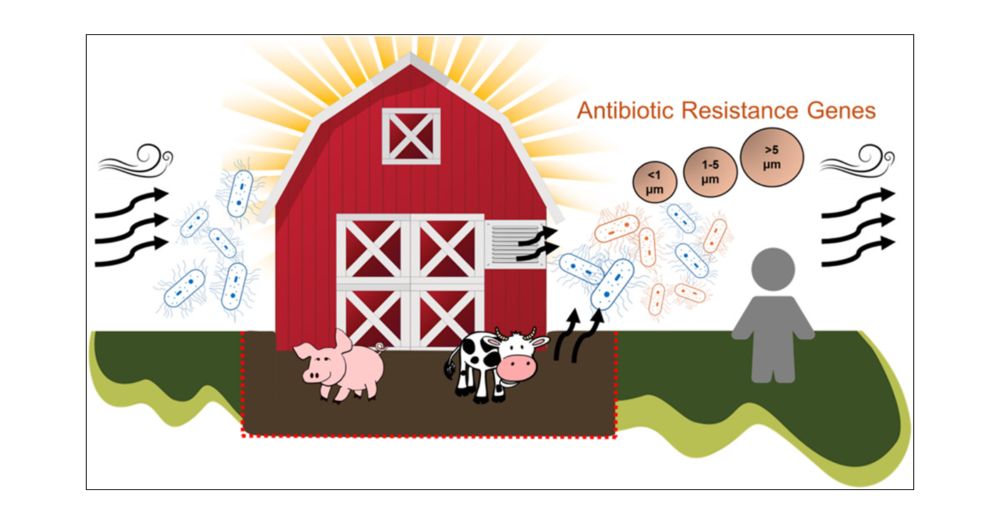
Quantifying Dissemination of Antibiotic Resistance Genes in Air from a Dairy Farm and Swine Farm, led by PhD student David Kormos, now published! We found ARGs in a range of particle sizes, indicating potential for inhalation exposure and long-range transport.
pubs.acs.org/doi/10.1021/...
Congrats to Dhananjay Naik from @tedpricethepainguy.bsky.social's lab at UT Dallas on their new preprint deeply characterizing the nociceptive activity of SL-1 on mouse & human neurons.
www.biorxiv.org/content/10.1...
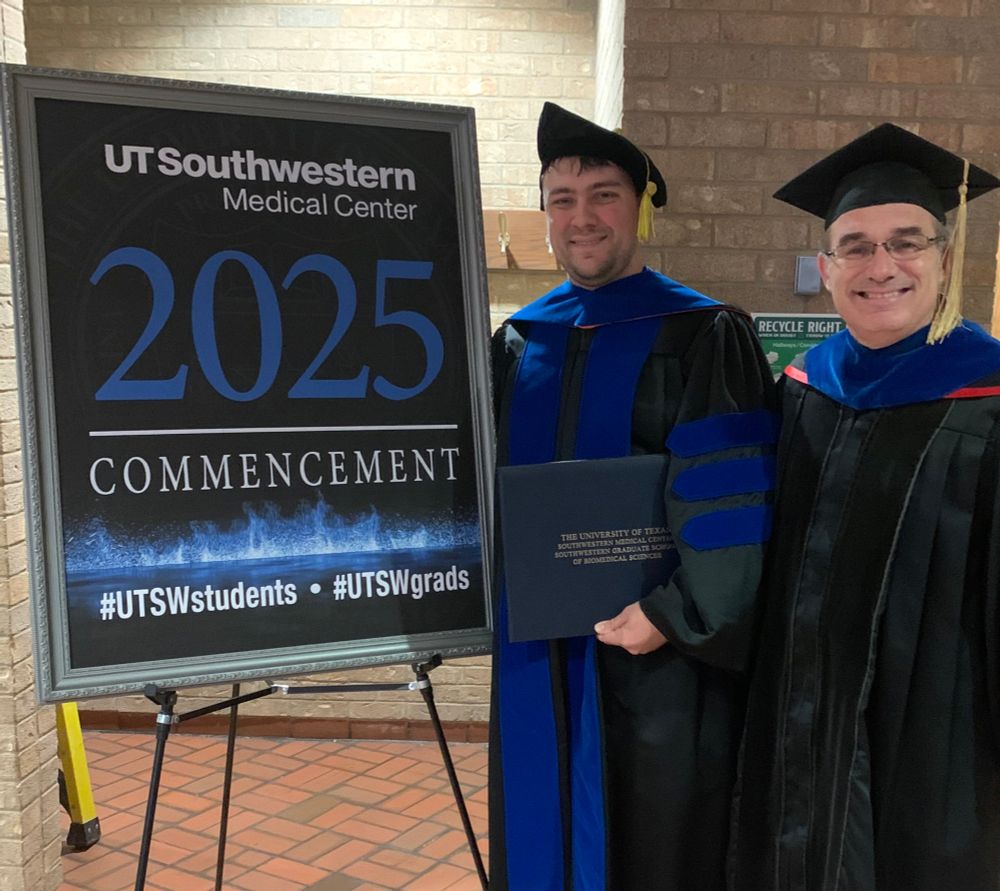
Enjoyed celebrating John Neff’s PhD graduation ceremony yesterday.
23.05.2025 23:27 — 👍 4 🔁 0 💬 1 📌 0I get the cartoonist's point, but, if I'm going to be pedantic (and scientifically accurate), since measles is an airborne disease with the highest transmissibility of all pathogens, the girl on the left would have been exposed/infected in the top left panel.
09.05.2025 20:04 — 👍 1 🔁 0 💬 0 📌 0I wish I could find it online, but 30 years ago my PhD advisor had a cartoon on his door (maybe New Yorker?), with 3 spinning-wheels. On one was "eggs, butter, fat, sugar, coffee, etc.", then "causes, cures, etc." and the last "cancer, heart disease, stroke, etc." So, I think the answer is "yes".
08.05.2025 19:08 — 👍 3 🔁 0 💬 0 📌 0Thank you Olivier!
07.05.2025 11:44 — 👍 1 🔁 0 💬 0 📌 0Thank you Kat!
07.05.2025 11:43 — 👍 2 🔁 0 💬 0 📌 0
This project would not have been possible without the financial support of @niaidnews.bsky.social ws.bsky.social, @bwfund.bsky.social nd.bsky.social, and @thewelchfoundation.bsky.social. 14/14
tenor.com/view/ted-las...
All credit belongs to Kubra Naqvi, PhD (not yet on Bluesky), who led this project from the start. We are also indebted to our chemistry collaborators at @unileiden.bsky.social and neuroscience collaborators @utdpaincenter.bsky.social. 13/14
06.05.2025 18:11 — 👍 2 🔁 0 💬 1 📌 0
Please check out and share our preprint relating to the aerobiology of one of the most successful human pathogens, Mtb. 12/14 @idsainfo.bsky.social sky.social @utswinfdis.bsky.social is.bsky.social @carlzimmer.com
#InfectiousDisease #Purinergic #DrugDiscovery
www.biorxiv.org/content/10.1...
We propose that Mtb evolved to produce multiple neuron activating molecules to co-opt the host cough reflex, thus facilitating its own spread from person to person. Therapeutically, P2X3 antagonists may help reduce airborne transmission of Mtb. 11/14
06.05.2025 18:11 — 👍 1 🔁 0 💬 1 📌 0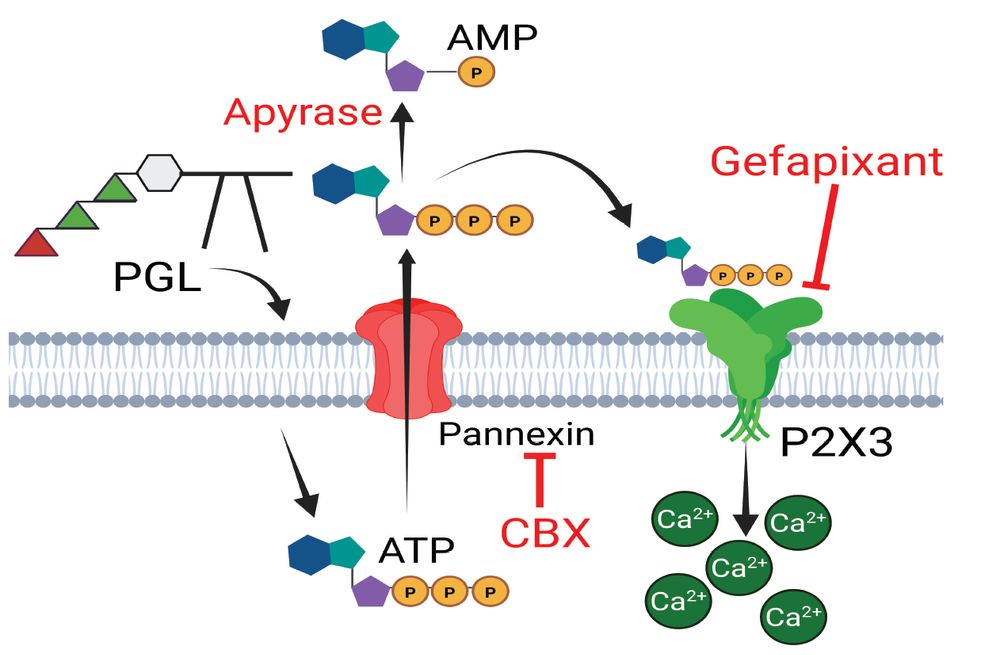
An image showing the role of ATP in neuronal activation
PGL triggers rapid extracellular ATP release from host cells through pannexin channels. ATP then binds neuronal P2X3 purinergic receptors. Blocking P2X3 with a specific antagonist inhibits PGL-mediated neuronal activity. ⚠️. #anti-tussive 10/14
06.05.2025 18:11 — 👍 2 🔁 0 💬 1 📌 0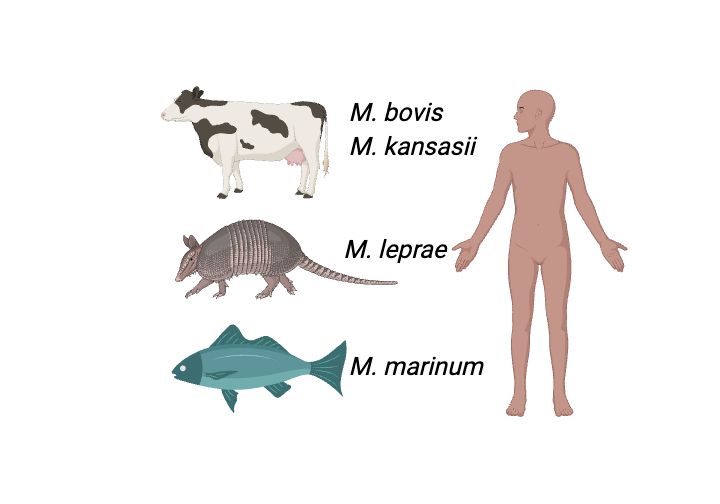
A picture of animals and their mycobacterial hosts
PGL is also made by other mycobacteria, like M. bovis, M. leprae, M. marinum and M. kansasii. By organically synthesizing PGL analogs, we found that neuroactivity is proportional to saccharide chain length & structure. Mtb PGL triggers the most robust activity with the lowest EC50, 30 pM! 9/14
06.05.2025 18:11 — 👍 1 🔁 0 💬 1 📌 0
Combining PGL + SL-1 ➡️ super-activation of neurons. This suggests that Mtb HN878 uses a “one-two punch” to maximize cough and transmission. 8/14
tenor.com/view/balthaz...
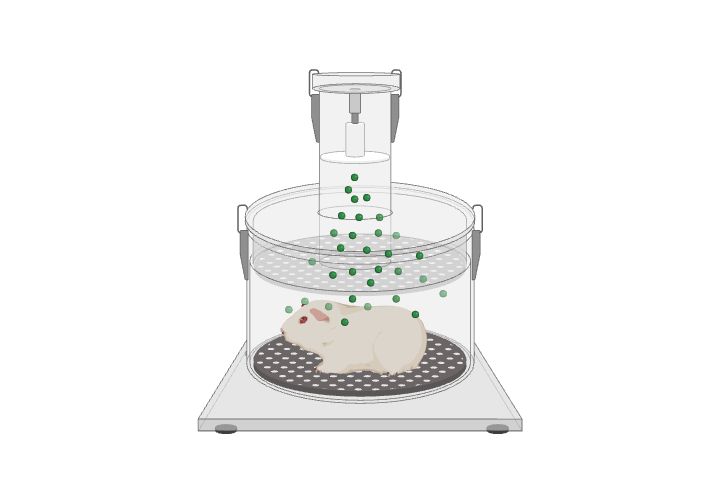
An image of a guinea pig being exposed to PGL
We used whole body plethysmography in guinea pigs (the best model of human cough reflexes) to show that PGL is sufficient to induce cough 🚀. #cough #plethysmography #physiology 7/14
06.05.2025 18:11 — 👍 1 🔁 0 💬 1 📌 0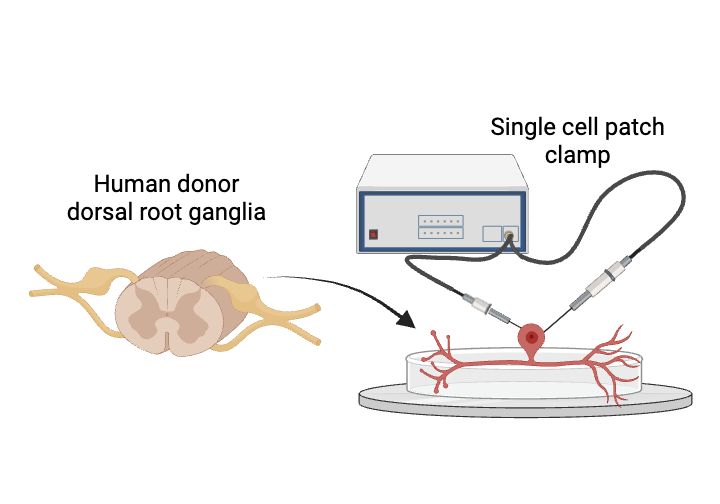
An image of human dorsal root ganglia being used in patch clamp experiments.
Together with @tedpricethepainguy.bsky.social’s lab at @utdpaincenter.bsky.social, we also found through single cell recording in human nociceptive neurons that PGL treatment raises the resting membrane potential, thereby increasing excitability. #electrophysiology 6/14
06.05.2025 18:11 — 👍 3 🔁 0 💬 1 📌 1We used live cell calcium imaging in mouse and human nociceptive neurons to show that PGL alone → robust neuronal firing. Shown here a representative live cell calcium imaging experiment with a nociceptive neuronal cell line. Cells become green once activated → increased intracellular calcium. 5/14
06.05.2025 18:11 — 👍 2 🔁 0 💬 1 📌 0