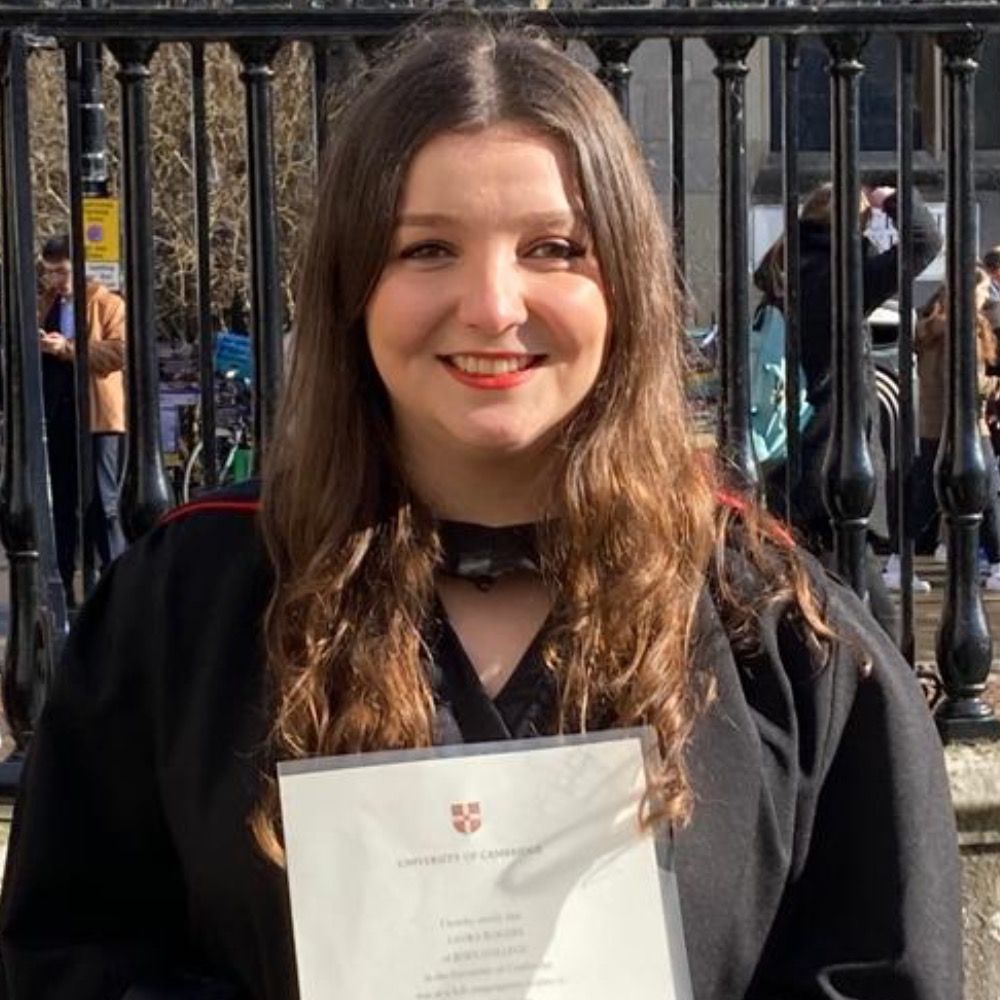
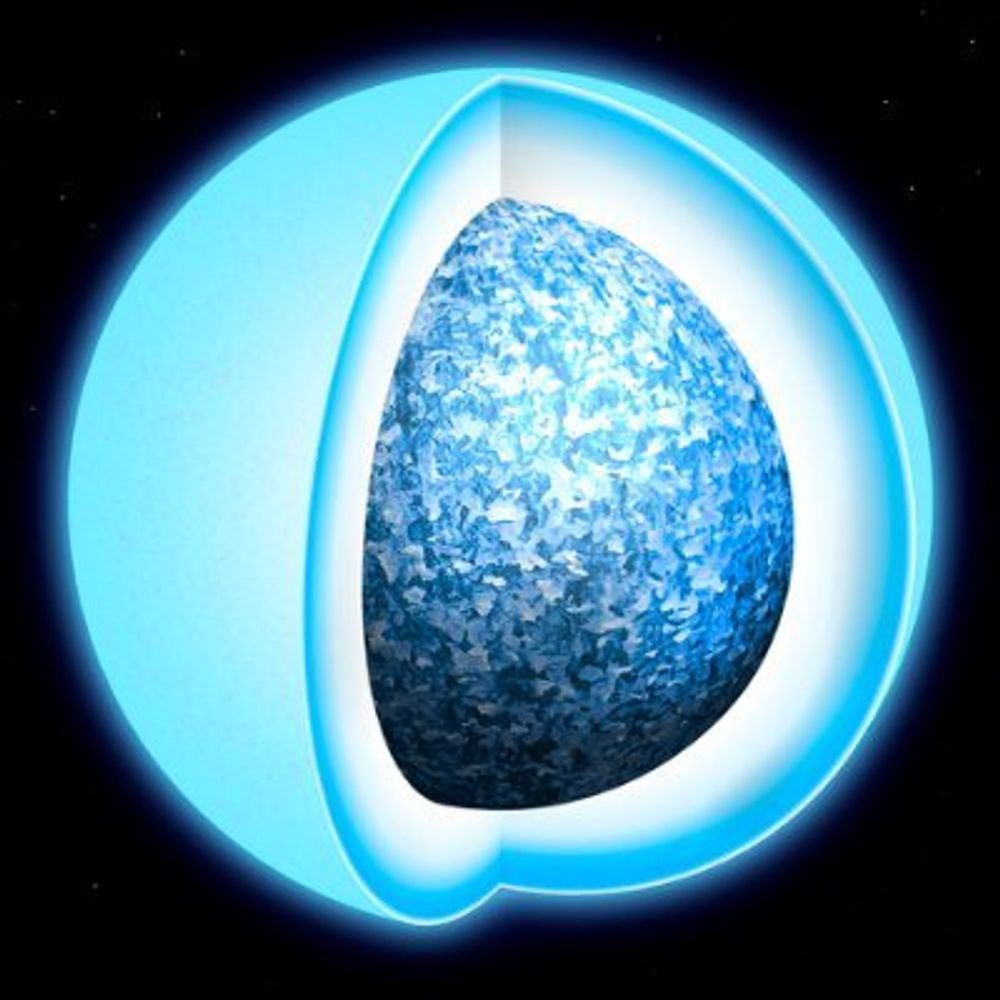
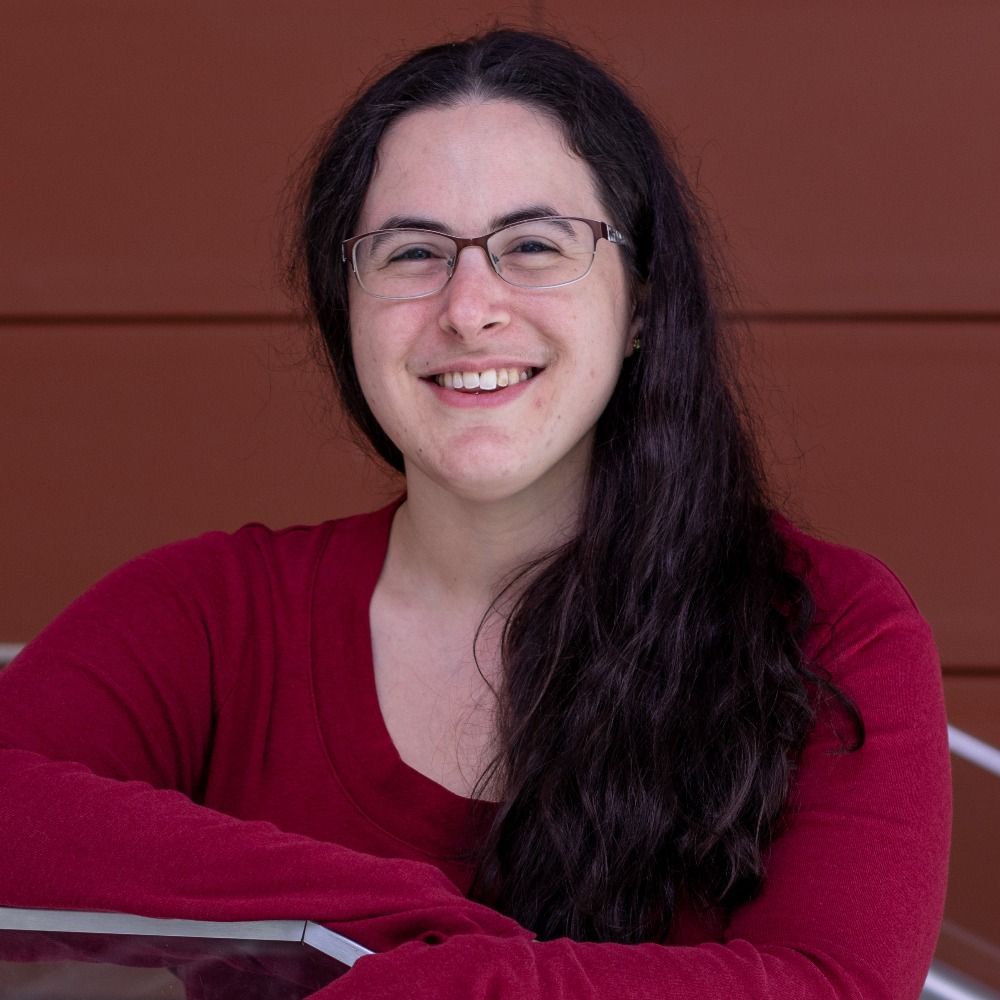
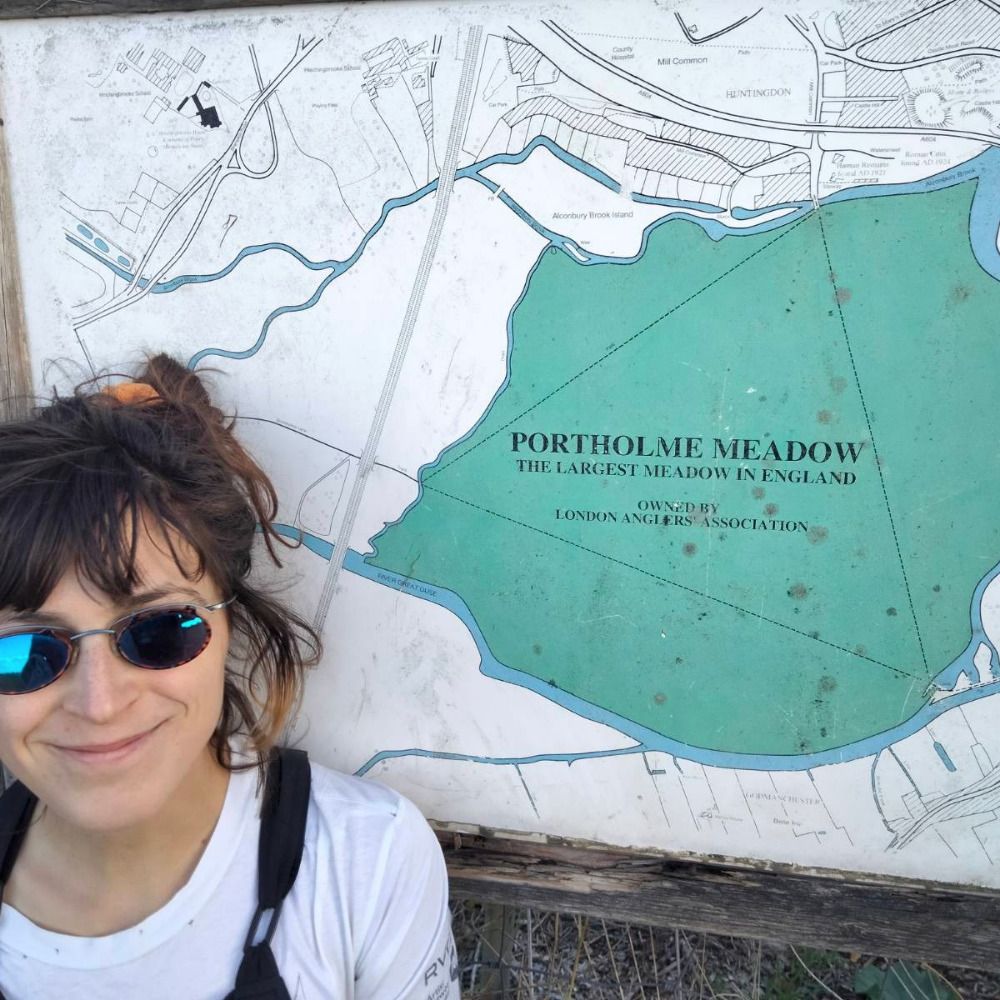
A picture of Laura Rogers next to the Space Drafts #106 logo and underneath Laura's talk title: "Dead Planets Around Dead Stars".
Space Drafts #105 is happening TONIGHT (4/15) at 7:30pm Tucson time at Borderlands Brewing Downtown and bit.ly/SpaceDrafts106. Dr. Laura Rogers (@astroloz.bsky.social) from NSF NOIRLab will be talking about dead planets around dead stars and then we have trivia!
15.04.2025 19:27 — 👍 2 🔁 3 💬 0 📌 0
First day as a postdoc at NoirLab in Tucson today, keen to connect with US researchers and if anyone wants a talk about white dwarf planetary systems let me know! 🔭🪐
30.12.2024 22:33 — 👍 29 🔁 1 💬 1 📌 0
Such a great astrobite on our recent paper! Pollution is definitely not all bad :)
19.11.2024 20:14 — 👍 5 🔁 0 💬 0 📌 0
And, one of the teams was formed at the last EuroWD conference 2 years ago, so it seems fitting that we find out we got accepted during this year’s EuroWD conference!
09.07.2024 06:27 — 👍 2 🔁 0 💬 1 📌 0
It’s a great day to wake up as PI of 2 new Hubble programs! Bring on the white dwarf science! 🎉
09.07.2024 06:24 — 👍 11 🔁 0 💬 1 📌 0
Some great arxiv papers for April fools day, my favourite this year is ‘multi-messenger astrology’ - arxiv.org/abs/2403.19749
01.04.2024 11:31 — 👍 4 🔁 0 💬 0 📌 0
Zach Vanderbosch has the final talk of #DustDevils24 who is presenting a census of white dwarfs hosting transiting planetary debris, there are now 21 systems split into two categories: those near/within the Roche radius and those beyond the Roche radius
29.03.2024 19:11 — 👍 0 🔁 0 💬 0 📌 0
Akshay Robert talks about the frequency of transiting planetary systems around polluted white dwarfs by searching for transits in the TESS lightcurves and found a planet fraction of 0.8%. Also finds short-period Kronian planets are unlikely to occur around WDs #DustDevils24
29.03.2024 18:59 — 👍 0 🔁 0 💬 1 📌 0
I am up next talking about the white dwarf opportunity: which rocks and minerals make up a planet? #DustDevils24
29.03.2024 18:30 — 👍 1 🔁 0 💬 1 📌 0
Jay Farihi talks about dust disc observations over the years from early observations of Spitzer to brand new JWST spectra #DustDevils24
29.03.2024 18:29 — 👍 0 🔁 0 💬 1 📌 0
Ayaka Okuya talks about modelling white dwarf dust disks. There is excess NIR emission, if you add amorphous carbon the increase in the NIR radiation is negligible, but adding metallic Fe does increase the NIR radiation #DustDevils24
29.03.2024 18:17 — 👍 0 🔁 0 💬 1 📌 0
Érika Le Bourdais talks about improving models of WD1145, a polluted white dwarf with a circumstellar disk. Érika has a disk model and a white dwarf model and discovers 18 elements in the planetary material that accreted onto WD1145 (8 new) and it resembles CI chondrites #DustDevils24
29.03.2024 18:01 — 👍 0 🔁 0 💬 1 📌 0
Final talk of session 1 from Gergely Hajdu who presents work on RR Lyrae stars, when looking at 27,000 RRL lightcurves, found 87 candidate binaries, and in doing so additionally found that some change mean brightness with time #DustDevils24
29.03.2024 17:19 — 👍 0 🔁 0 💬 1 📌 0
Brenda Matthews talks about a survey of 23 GPI imaged disks showing outliers with lots of asymmetries, and some show examples of planet-disk interactions. More results are presented in Brenda’s advisees papers: Crotts et al. 2022 and 2023 #DustDevils24
29.03.2024 17:03 — 👍 0 🔁 0 💬 1 📌 0
They grind the sample to dust and use laboratory equipment to measure the absorption spectra. The shock going through the atmosphere doesn’t propagate to the interior so the material composition is preserved :)
29.03.2024 16:57 — 👍 0 🔁 0 💬 1 📌 0
Jonathan Marshall talks about searching for variable near and mid infrared photometry and finds with NEOWISE photometry a handful of new variable candidates within 200pc volume (and confirms some already known variable systems) #DustDevils24
29.03.2024 16:48 — 👍 0 🔁 0 💬 1 📌 0
Kate Su talks about extreme debris disks and new JWST data that shows some extreme debris disks have mid-infrared features dominated by silica dust and some by forsterite dust, all a work in progress and we look forward to the conclusions in the next meeting! :) #dustDevils24
29.03.2024 16:39 — 👍 0 🔁 0 💬 1 📌 0
Andrew Swan kicks off the final day of #DustDevils24 with a review on Extreme Debris Disks (those systems with fractional luminosities > 1%) - including lots of fun information on white dwarf disks, a topic close to my heart
29.03.2024 16:12 — 👍 2 🔁 1 💬 1 📌 0
William C. Danchi talking about the MATISSE instrument and its capabilities for detections of discs, and spoke about recent mid-infrared studies of HD 144432 that find iron-rich dust fits better to the mid infrared data than carbon rich dust #DustDevils24
29.03.2024 00:15 — 👍 0 🔁 0 💬 0 📌 0
Vasuda Trehan talks about predictive models that can be used to work out if a planet is habitable or not. These trained machine learning models can be used to predict the conditions of the habitable zone and quantify/model the effects of exozodiacal dust #DustDevils24
28.03.2024 23:59 — 👍 0 🔁 0 💬 1 📌 0
Philippe Priolet talks about VLTI observations of Beta Pic which detects circumstellar emission in the L band and modelling of the dust which provides spatial constraints on the data #DustDevils24
28.03.2024 23:42 — 👍 0 🔁 0 💬 1 📌 0
Thomas Stuber talks about how large dust grains could have a significant impact on the observational appearance of host dust and therefore should be considered when modelling exozodiacal dust #DustDevils24
28.03.2024 23:28 — 👍 0 🔁 0 💬 1 📌 0
Kevin Ollmann talks about how hot exozodiacal dust has an impact on close-in exoplanets for certain dust grain radii, larger dust mass, and certain phase angles, but there are different polarimetric signatures for hot exozodiacal dust and close-in planets
28.03.2024 23:14 — 👍 0 🔁 0 💬 1 📌 0
Post coffee break, Germain Garreau talks about constraining the exozodiacal dust disk around θ Boo with the LBTI. Modelling of 3 observations show changes that may be due to outside dust moving to the habitable zone via PR drag #DustDevils24
28.03.2024 23:03 — 👍 0 🔁 0 💬 1 📌 0
Mark Wyatt on where is the exozodi dust coming from? Wyatt 2005 paper says PR drag not important, but new and improved models say it seems to be. To test models looked at the dust distribution in Fomalhaut - it is consistent with PR drag #DustDevils24
28.03.2024 22:13 — 👍 0 🔁 0 💬 1 📌 0
Yu-Chia Lin on how dust within the inner working angle can impact observations using high contrast imaging, and a correction factor is needed which depends on the design of the coronagraph and the observed wavelength #DustDevils24
28.03.2024 21:56 — 👍 0 🔁 0 💬 1 📌 0
John Debes on how we need to understand exozodis more as they have significant impacts on direct imaging surveys for habitable zone planets. Architectures will be picked soon for e.g. Habitable Worlds Observatory so it is important to focus on understanding exozodis - see the upcoming SAG 23 report
28.03.2024 21:41 — 👍 0 🔁 0 💬 1 📌 0
Back after lunch with a session on Exozodiacal Dust, Virginie Faramaz started off with a great review talk on the topic #DustDevils24
28.03.2024 21:17 — 👍 1 🔁 0 💬 1 📌 0
Sai Krishanth Pulikesi Mannan discussing how Non-Negative Matrix Factorisation (NMF) is better for debris discs as you get a better contrast, SNR, throughput, and it conserves morphology better. NMF is computationally difficult but if you use GPUs then it is easier/more feasible #DustDevils24
28.03.2024 18:35 — 👍 0 🔁 0 💬 1 📌 0
Postdoctoral Research Fellow at the University of Exeter.
Postdoc on Exoplanets and Stellar activity at Oxford
astronomer & science communicator, 🇦🇺➡️🇸🇪➡️🇨🇱, he/him
https://adrains.github.io/
Mapping the Universe since 1998. Featuring @milkywaymapper.bsky.social, @blackholemapper.bsky.social, and @localvolumemapper.bsky.social. We'll let you know when we are done.
sdss.org
Astronomy and Astrophysics group at Warwick, UK
Astrophysicist at Flatiron CCA & Stony Brook working on accretion and planet formation. Also Mr. Pisconti / Nico’s dad / hiker / Zwifter / (lapsed) photographer
Extragalactic observer (black holes, galaxies, galaxy clusters, stellar pops) that also dabbles in planetary astronomy. Really, basically a pixel pusher.
✨ A public talk series hosted at Zerai’s International Bar with stargazing, trivia, and beer in Tucson, AZ ✨ part of the international network of @astronomyontap.bsky.social ✨
51 Pegasi b Fellow at Arizona State University and jazz enthusiast
⭐ PhD Astronomer. Seeking a new role in astro or as a data analyst or project manager. Open to a variety of career directions. ⭐
Low-mass stars, exoplanets, & observational astronomy at NASA, Navy.
https://www.linkedin.com/in/michele-silverstein-48089337
Astronomer focused on Galactic archaeology, Muay Thai enthusiast and lover of bees
Astrophysicist (at least in theory) and beagle dad! (he/him)
UKRI Hawking Fellow & Senior Lecturer at University of Hertfordshire.
Views are my own.
Staff Astronomer at Lawrence Livermore National Laboratory
Astrophysicist. Postdoctoral researcher at the MPIA. Exoplanet atmospheres. (he/him/his)
www.duncanchristie.net
exploring exoplanets one atmosphere at a time 🪐 | She / her 🏳️🌈
4th yr. Graduate Student at the University of Arizona. Transiting exoplanet observer. Cactus fan with many spikes in hand. Are your terminators homogeneous??
Postdoc and incoming Junior Research Fellow at the University of Oxford. Using geophysics and geochemistry to understand rocky exoplanets.
Assistant Professor at University of Maryland studying transiting exoplanets with telescopes on the ground and in space. Amateur runner, chocolate addict, and devoted cat mom. She/her
Research Scientist @MIT studying transiting exoplanets and their stars