Binge-watching of "Breaking Bad" can continue without interruption.
#spaceweather
#g7izu
01.03.2026 19:35 —
👍 0
🔁 0
💬 0
📌 0

Sapce Weather dashboard

Space Weather
Several active regions are in view on the solar disc, but none show signs of significant activity.
Geomagnetic conditions at Earth are quiet. Minor substorms have affected high-latitudes.
No significant activity is predicted.
01.03.2026 19:35 —
👍 0
🔁 0
💬 1
📌 0
Space Weather
Breaking the silence: An M2.3 flare erupted from a new active region on the east limb, peaking at ~15h50 UT 25 Feb.
#spaceweather
#g7izu
Video: https://universeodon.com/@g7izu/116132136713793906
25.02.2026 16:13 —
👍 0
🔁 0
💬 0
📌 0
#spaceweather
#g7izu
23.02.2026 22:19 —
👍 0
🔁 0
💬 0
📌 0

30 day graph plot from Hamclock showing the current sunspot number of zero.

SWPC Solar Synoptic Chart
Space Weather
The sun is spotless for the first time since 2022! This is definitely a sign that we're on the long slide back down to solar minimum. The official synoptic map is currently showing no active regions on the visible disc!
23.02.2026 22:19 —
👍 2
🔁 0
💬 1
📌 0
There have been minor substorms and minor geomagnetic activity with aurora visible at high-latitudes, thanks to the fast solar wind from a coronal hole.
#spaceweather
#g7izu
22.02.2026 21:53 —
👍 0
🔁 0
💬 0
📌 0

Potzdam Hp30 index

Solar wind speed and density

Soalr X-ray flux colourgramme - last six days
Space Weather
Space weather is currently fairly quiet. The X-ray flux has not exceeded C3 level in over six days. There has been some CME activity but none Earth-directed.
22.02.2026 21:53 —
👍 0
🔁 0
💬 1
📌 0
To understand how they form, you have to picture the Sun as a rotating lawn sprinkler, spraying out streams of plasma at different speeds.
#spaceweather
#g7izu
19.02.2026 17:52 —
👍 0
🔁 0
💬 0
📌 0

NASA/SDO AIA193
Space Weather
A new coronal hole will be facing Earth an a day or two. This CH will push out a fast solar wind which is negatively polarised, so it should be good for aurora in 4-6 days.
19.02.2026 17:52 —
👍 2
🔁 1
💬 1
📌 0
Two far side CMEs are also visible, at 05h and 09h UT 18 Feb. A C1.5 flare occurred at the same time as the 05h CME but I couldn't find the source, so I assume it was off the limb.
The white flashes are likely caused by the limb of the Earth.
#spaceweather
18.02.2026 10:22 —
👍 0
🔁 0
💬 1
📌 0
Space Weather
GOES-19's CORS1 solar imager caught the moon dancing around the sun this morning, as seen in this timelapse.
18.02.2026 10:22 —
👍 0
🔁 0
💬 1
📌 0
Enjoy the videos and music you love, upload original content, and share it all with friends, family, and the world on YouTube.
- YouTube
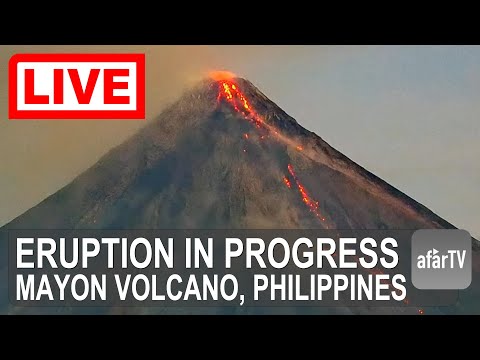
Volcanic eruption: Mayon volcano in the Philippines is erupting in spectacular fashion.
See the live Youtube feed here; https://www.youtube.com/watch?v=UDAZWxehMAI
#mayon
#volcano
#g7izu
17.02.2026 12:40 —
👍 0
🔁 0
💬 0
📌 0

Nordkapp, Finland

Kiruna magnetometer
Space Weather
A moderate G2 geomagnetic storm is in progress. The fast solar wind from a large coronal hole is now influencing the Earth's magnetic field.
Aurora is visible at high-latitudes.
#spaceweather
#aurora
#g7izu
16.02.2026 20:22 —
👍 0
🔁 0
💬 0
📌 0

Nordkapp, Finland

Kiruna magnetometer

Potsdam HP30 index

Hamclock showing the aurora map
Space Weather
Aurora Alert: Aurora may soon be visible to mid-latitudes as a effects of a coronal hole and glancing CME take hold. Aurora is currently visible at high-latitudes. A moderate substorm is in progress at Kiruna.
#spaceweather
#aurora
#g7izu
14.02.2026 21:34 —
👍 1
🔁 0
💬 0
📌 0
A trans-quatorial coronal hole is transiting center-disc. The fast solar wind from this and a possible glancing blow from a CME (coronal mass ejection) may cause disturbed geomagnetic conditions from today 14 Feb until Monday 16 Feb.
#spaceweather
#g7izu
14.02.2026 12:16 —
👍 1
🔁 0
💬 0
📌 0
Space Weather
Solar and geomagnetic conditions are currently mostly quiet.
14.02.2026 12:16 —
👍 1
🔁 0
💬 1
📌 0
The next few days will be mostly quiet with substorms possible, but returning active regions may produce flare activity above M-level as they come back into view. Radio noise will be moderate this week.
#spaceweather
#g7izu
10.02.2026 22:10 —
👍 0
🔁 0
💬 0
📌 0

Space Weather Dashboard
Space Weather
Forecast: A small solar storm was launched by AR4371 which could raise geomagnetic activity on 12/13 Feb. Aurora may be visible at high latitudes.
10.02.2026 22:10 —
👍 0
🔁 0
💬 1
📌 0

Solar X-ray Flux plot

NASA/SDO AIA131
Space Weather
Solar Flare Alert: There were three flares from AR4366 above M-level in the last few hours.
M1.7 @11h19 UT 08 Feb
M1.7 @11h47 UT 08 Feb
M2.7 @13h47 UT 08 Feb
The M2.7 flare was eruptive, producing a 10.7cm radio emission. There appears to be no earthward CME.
#spaceweather
#g7izu
08.02.2026 15:41 —
👍 0
🔁 0
💬 0
📌 0
Twofurther minor CMEs, will likely cause disturbed conditions to continue through to 10 Feb.
#spaceweather
#g7izu
07.02.2026 18:35 —
👍 0
🔁 0
💬 0
📌 0

G7IZU Solar Flare Colourgram for the last 6 days.

NOAA ENLIL solar wind model
Space Weather
AR4366 finally calmed down . It's not produced any flares greater than M-level for two days.
07.02.2026 18:35 —
👍 1
🔁 0
💬 1
📌 0

Plot of solar wind speed and velocity

Plot of Interplanetary Magnetic Field Bx, By & Bz at L1.
Space Weather
CME Arrival: An interplanetary shock has been detected at ACE/DISCOVR (L1) indicating the arrival of the CME which originated from the X8.1 flare late on 01 Feb. The IMF strength is 22nT.
A G1 geomagnetic storm warning is in effect for 05-07 Feb (UT).
#spaceweather
#aurora
#g7izu
04.02.2026 14:46 —
👍 0
🔁 0
💬 0
📌 0

Solar XRay Flux Colourgram

Plot of solar XRay Flux

NASA/SDO AIA094
Space Weather
Solar Flare Alert: A strong X4.2 flare peaked at 12h10 UT 04 Feb. This is the second strongest X-flare over the last four days.
#spaceweather
#g7izu
04.02.2026 12:28 —
👍 1
🔁 1
💬 0
📌 0

Solar XRay Flux

NASA/SDO AIA304
Space Weather
The second flare got no larger, peaking to M7.2 at 14h56UT 03 Feb.
#spaceweather
#g7izu
03.02.2026 15:40 —
👍 0
🔁 0
💬 0
📌 0

G7IZU Space Weather Dashboard
Space Weather
Solar Flare Alert: An X1.5 flare peaked at ~14h05UT 02 Feb,. Another large flare is approaching X-level as I type this at 15h UT (currently at M7.2).
#spaceweather
#g7izu
03.02.2026 15:04 —
👍 1
🔁 2
💬 1
📌 0
I checked the NOAA definition for a solar flare, and actually they do count *every* peak (based on certain parameters), so apologies for my error.
#spaceweather
#g7izu
03.02.2026 12:28 —
👍 0
🔁 0
💬 0
📌 0
Solar Flares: There have been around 19 flares exceeding M level since 10h UT 02 Feb (yesterday). The largest was an M7.2 peaking at 07h UT 02 Feb.
AR4366 continues to be very active. It's looking a little less potent now but the potential for large flares continues.
#spaceweather
#g7izu
03.02.2026 12:22 —
👍 0
🔁 0
💬 1
📌 0

NOAA ENLIL solar wind model

Euphoria solar wind model

Magnetogram image of active region AR4366 (courtesy Marko Rummesburg)
Space Weather
CME update: NOAA (US) and Euphoria (European) solar wind models suggest the CME imact could be a little later than the early NASA model.
03.02.2026 12:22 —
👍 0
🔁 0
💬 1
📌 0
Yes I agree, I can't see any actual event coverage in the radio schedules. It can only be a budgetary thing as there's really very little money left in the pot to do actual broadcasting any more. It's a fact across all our outputs. It's very sad.
03.02.2026 07:53 —
👍 1
🔁 0
💬 0
📌 0